Clone a Bootable USB Drive in Windows
How to Clone Bootable USB Drive to Another Drive
Launch Qiling Backup and click "Clone".
You can choose the disk clone method that suits your needs.
Choose the bootable USB drive as the source disk.
Choose the new USB drive as the destination disk.
You can now edit disk partitions at any time after cloning.
How Can I Make an Exact Copy of a Bootable USB Flash Drive
Copying a bootable USB drive to another USB drive will indeed create a duplicate bootable drive, assuming the second USB drive is blank and has enough space to hold the contents of the original drive. This is because the process of copying involves writing the exact same data, including the boot sector and partition information, to the new drive. However, if the second USB drive is already formatted or contains data, the copy process may not work as intended, and the resulting drive may not be bootable. This is because the copy process may overwrite existing data or partition information on the second drive, rather than creating a new, identical copy. So, in short, copying a bootable USB drive to another USB drive will create a duplicate bootable drive, but only if the second drive is blank and has enough space to hold the contents.
To copy a bootable USB drive to another, you can use the built-in Windows feature called "Disk Management" or a third-party software like Qiling Backup. To do this in Disk Management, go to Start > type "Disk Management" and press Enter, then select the source USB drive and the target USB drive, and right-click on the source drive to select "Copy". Then, right-click on the target drive and select "Paste". Alternatively, you can use Qiling Backup, which allows you to create a full disk image of the source USB drive and restore it to the target USB drive.
To make a bootable USB drive, you need to copy the ISO file of the operating system onto the USB drive, not just copy the contents of the original drive. This is because the original drive has the OS installer, but you need the ISO copy to install on other USB sticks. You can clone the bootable USB drive by copying the ISO file to the new drive, which will create a duplicate of the original drive. This is the correct process for making a bootable USB drive.
Why Do You Copy/Clone Bootable USB Drive in Windows 10/8/7
To preserve a bootable flash drive, you can't simply copy and paste it to another, but instead, cloning is a more effective method. This is especially useful for backup and disaster recovery purposes, allowing you to create a duplicate of the original drive. USB flash drives and drives are also portable and convenient, making them ideal for solving unbootable issues on-the-go. By cloning, you can ensure a reliable backup of your bootable drive, providing peace of mind and quick recovery in case of any issues.
To make it happen, you can copy a bootable USB drive with a USB clone tool, making it easy and convenient to back up your USB drives.
What's the Fastest Way to Clone a Bootable USB Drive
Windows doesn't have a built-in disk cloning feature, so users rely on third-party software like Qiling Backup, which is known for being the fastest and easiest USB image tool, to clone USB drives, including bootable ones.
Highlights:
- Automatically back up your files to protect privacy.
- Back up Windows system along with user settings.
- Clone disk or partition in Windows 10/8/7
How to Copy/Clone Bootable USB Drive in Windows 10/8/7
To clone a bootable USB to another, simply connect both the bootable USB drive and the other storage device to your computer, and then follow the guide.
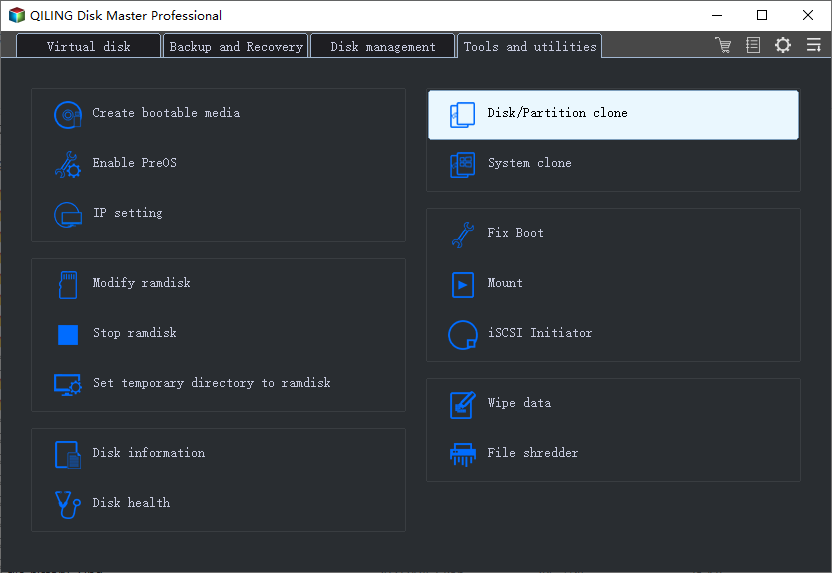
Step 1. Launch Qiling Backup and click "Clone".
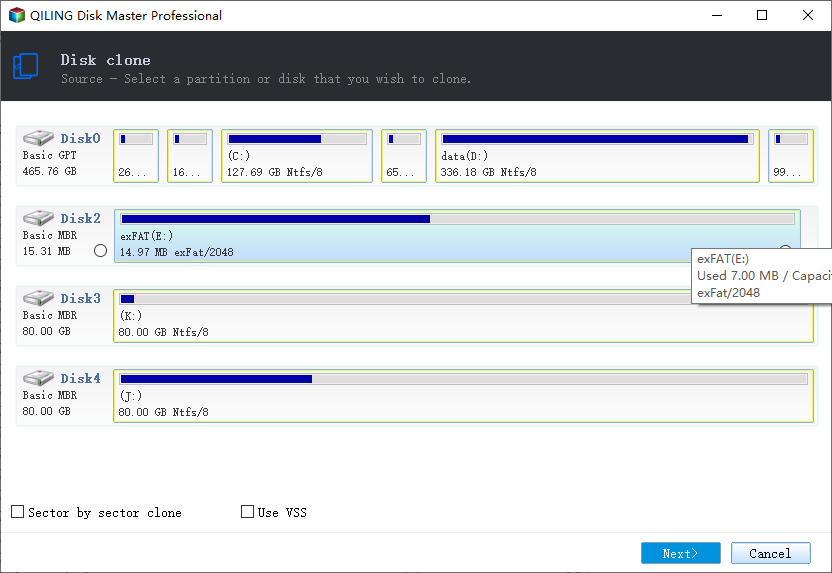
Step 2. In the new window, choose the bootable USB drive as the source disk and then click "Next" to continue.
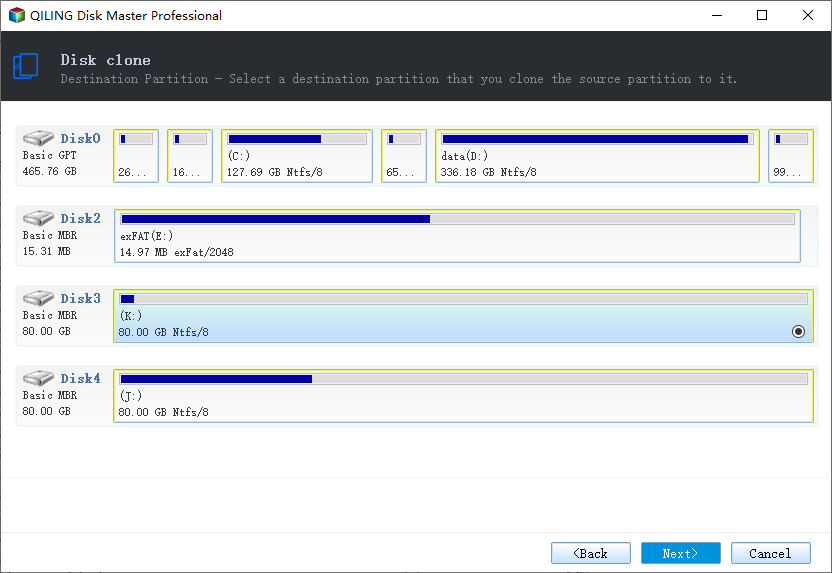
Step 3. Choose the destination disk or partition. It must have enough space to save your data.
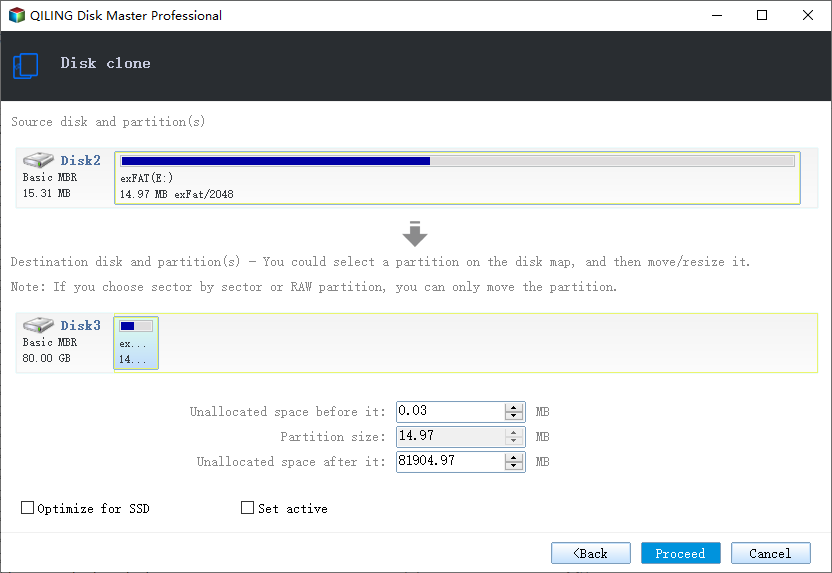
Step 4. Preview the disk layout and click "Proceed" to clone the bootable USB drive.
Conclusion
You can easily clone a bootable USB drive to another USB or hard drive using Qiling Backup, which offers many advanced features, including migrating Windows 10 to an SSD, creating an emergency disk, making automatic backups, wiping data, and more. If you encounter any issues with cloning a bootable USB drive, please contact us for assistance.
Clone Bootable USB Drive Frequently Asked Questions
Here are some frequently asked questions about cloning a bootable USB drive, you can read on to get additional help.
Can you copy a bootable USB to another USB?
You can copy a bootable USB drive to another USB using Qiling Backup, although you can't simply copy and paste a bootable flash drive. Instead, you can easily achieve the goal by cloning the original drive.
- Open Qiling Backup
- Choose the Clone method according to your own demands.
- Choose the bootable USB drive as the source disk.
- Choose the new USB drive as the destination disk.
- You can now edit disk partitions or do it at any other time after cloning.
How do I clone my SSD to a flash drive?
To clone SSD to USB flash drive:
Step 1. To clone a disk with Qiling Backup, launch the program and click "Clone". In the new window, select the SSD as the source disk and then click "Next" to proceed.
Step 2. Choose the USB drive. It must have enough space to save your data.
Step 3. Preview the disk layout and click "Proceed" to clone the SSD.
Is it better to clone or image a hard drive?
Cloning is great for fast recovery, but imaging gives you more backup options, allowing you to save multiple images without taking up too much space, which can be helpful in case of a virus and needing to roll back to an earlier disk image.
Is cloning faster than copying?
Cloning a drive is not necessarily faster than copying individual files, as it involves reading and writing the entire drive's contents, which can be a time-consuming process, especially if the drive is large or has a high density of data. This can be slower than copying individual files, which can be done in parallel and take advantage of multiple CPU cores and disk I/O. Additionally, cloning a drive may also involve additional overhead such as verifying the integrity of the cloned data, which can further slow down the process. Therefore, the statement that cloning is always faster than copying individual files is not necessarily true.
Related Articles
- USB Bootable Software & Bootable USB Creation Tool
- Backup Files & Programs before Factory Reset Windows 10 PC
- How to Migrate Dual Boot OS to New HDD/SSD
- How to Copy and Backup Files without Admin Rights
- 7 Best Free Imaging Software for Windows 10/8/7
- How to Solve Lenovo OKR Button Not Working
lenovo onekey recovery not working problem may be caused by system upgrade, boot partition resizing, recovery partition damage or deletion, etc. The best way to solve this is to find an alternative of Lenovo OKR.
Products
Articles & Tutorials
- Data Recovery
- Data Backup
- File Recovery
- File Backup
- System Backup and Restore
- Disk and Partition Clone
- Technical articles
- Mobile articles
- Disk Master Help
- Windows Data Recovery Tutorials
- Windows Secure Delete Tutorials
- Windows Partition Management Tutorials
- Windows File Backup and Restore Tutorials
- Windows System Backup and Restore Tutorials
- Windows Disk Backup and Restore Tutorials
- Windows Clone Tutorials