Cloned SSD Won't Boot? Make Cloned SSD Bootable [5 Ways]
Here are the 5 effective ways to make SSD bootable again in Windows 10/8/7:
SSD Not Booting After Clone - Full Guide Content:
- Method 1. Correctly Install the Cloned SSD with a SATA Cable
- Method 2. Change Boot Order in BIOS, Make SSD Bootable as the Boot Disk
- Method 3. Set System Partition as an Active Partition - for MBR OS Disk Only
- Method 4. Re-Clone HDD to SSD
- Method 5. Customize 1-to-1 Service to Make Cloned SSD Bootable
If you're experiencing issues with your SSD not booting after cloning, you're not alone. This post provides a comprehensive explanation of why a cloned SSD won't boot and offers 5 effective solutions to resolve the SSD unbootable error.
Causes - Why Is Cloned SSD Not Booting
If your SSD won't boot after cloning, it's likely due to one of several reasons. If you're experiencing this issue, stay here and follow the fixes below to resolve it. The possible reasons are listed below.
- The SSD is connected to the PC via USB, allowing it to be used as an external disk.
- The cloned SSD is not set as the boot disk.
- BIOS boot mode is incompatible with the SSD.
- The disk cloning process was corrupted or interrupted.
- Incomplete clones, missing boot partitions, or boot components.
- The source disk is unbootable.
- The SSD needs specific drivers, etc.
Solutions - How to Fix Cloned SSD Won't Boot Issue, Make SSD Bootable
If your SSD is not working after cloning, there are several methods to resolve the issue. You can try the step-by-step guides to make the cloned SSD boot normally. These methods can help resolve the problem for specific reasons, such as cloning errors or boot issues.
Method 1. Correctly Install the Cloned SSD with a SATA Cable
The disk clone software may not ensure a smooth boot when using a USB cable, but connecting devices via SATA is recommended for optimal performance.
Step 1. Use a SATA cable instead of a USB connection cable.
Step 2. Install the SSD to the computer correctly via the SATA cable.
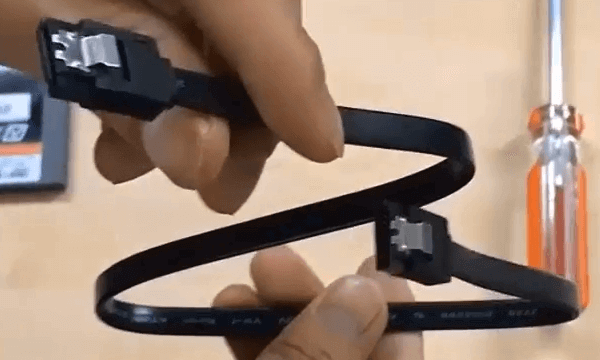
Step 3. Close the computer case and restart the computer.
If the SSD boots up, congratulations. Your problem gets resolved. If not, continue with Method 2.
Method 2. Change Boot Order in BIOS, Make SSD Bootable as the Boot Disk
To set your cloned SSD as the first boot option in BIOS, follow these steps:
Step 1. Restart the PC. When the startup screen appears, constantly press F2/F12/DEL to enter BIOS.
Step 2. Use the arrow key to select the Boot tap and choose the cloned SSD as the first boot option.
Step 3. Press F10 to save and exit BIOS. And restart your computer.
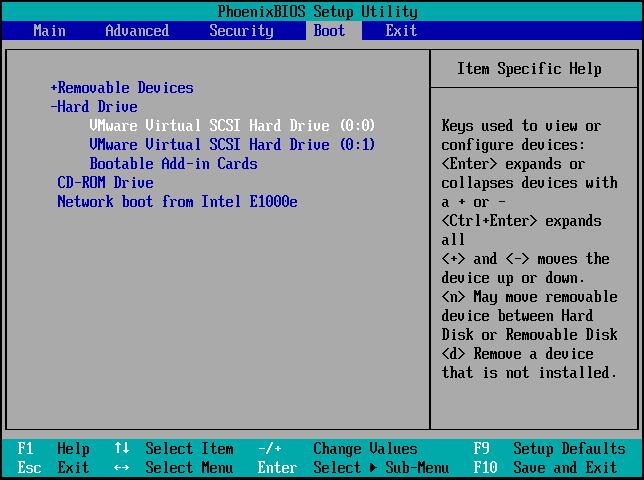
If your computer boots up normally after waiting patiently, congratulations - the problem has been resolved.
If your original boot disk is MBR, you'll need to set the partition active on the SSD after cloning to make it bootable. This can be done in a subsequent step.
Method 3. Set System Partition as an Active Partition
To ensure that Windows 10 can boot from a cloned SSD, the system partition must be set as the active partition. If this is not done, Windows 10 will not be able to boot from the cloned SSD. This can be easily achieved using a partition manager in the WinPE environment, which allows you to set the system partition as an active partition.
#1. Create a bootable disk and boot PC from it
To reboot your PC and set it to boot from the Qiling bootable disk, follow these steps: Press the F2, F8, or Del key to enter the BIOS settings, then navigate to the boot order section and select the Qiling bootable disk as the primary boot device. Save the changes and exit the BIOS settings.
#2. Set SSD system drive as active
Step 1. Run Qiling partition manager software. On the disk map in the disk management page, click the traget partition.
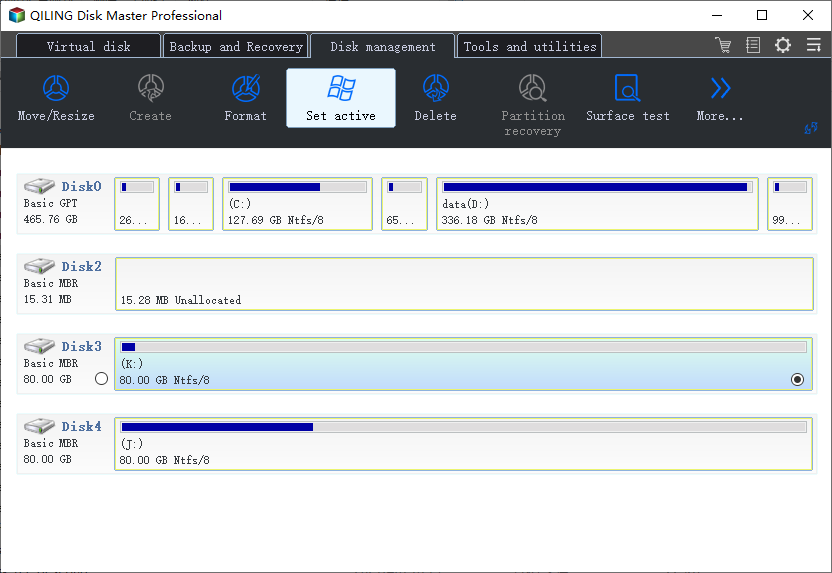
Step 2. To set an active partition, first select the partition you want to make active. Then, select "Set Active" from the tool bar. The software will automatically execute the operation and create an active partition for you.
#3. Set PC to boot from cloned SSD
To clone a computer's hard drive, you need to reboot the PC, press F2/F8/Del to enter the BIOS, set the PC to boot from the cloned solid-state drive (SSD), and then reboot the PC again. This process allows you to transfer the operating system, programs, and data from the original drive to the new one, effectively creating a duplicate of the original drive.
After cloning the SSD, your computer should be able to boot up from the cloned SSD, allowing you to access and use all the cloned files on the new disk again.
Notice:
If you've tried the previous methods and your SSD still isn't booting, it's possible that the SSD has a problematic clone of your old hard drive, which could be the cause of the issue.
The best way out is to re-do the clone. And we'll show you the process in the next Method.
Method 4. Re-Clone HDD to SSD
Cloning an SSD can result in a cloned SSD that won't boot if the cloning process is incomplete or fails. Additionally, if the boot partition wasn't cloned, the cloned hard drive will also be unable to boot.
Qiling Backup, a reliable disk cloning software, allows for re-execution of the disk cloning process, ensuring that the cloned hard disk is bootable after the HDD to SSD clone.
Your Backup Windows Software
- Support smart file backup, system backup, disk, and partition backup.
- Support clone USB, external hard drive, HDD, and SSD.
- To clone an operating system from a larger HDD to a smaller SSD without re-installing, you can use a cloning software such as Qiling Backup. These tools allow you to create an exact copy of your existing HDD onto the smaller SSD, preserving all installed programs, settings, and data.
- Create a Portable USB to take your Windows anywhere.
Step 1: Download, install and run Qiling Backup on your PC, click "Disk/Partition clone" to start cloning.
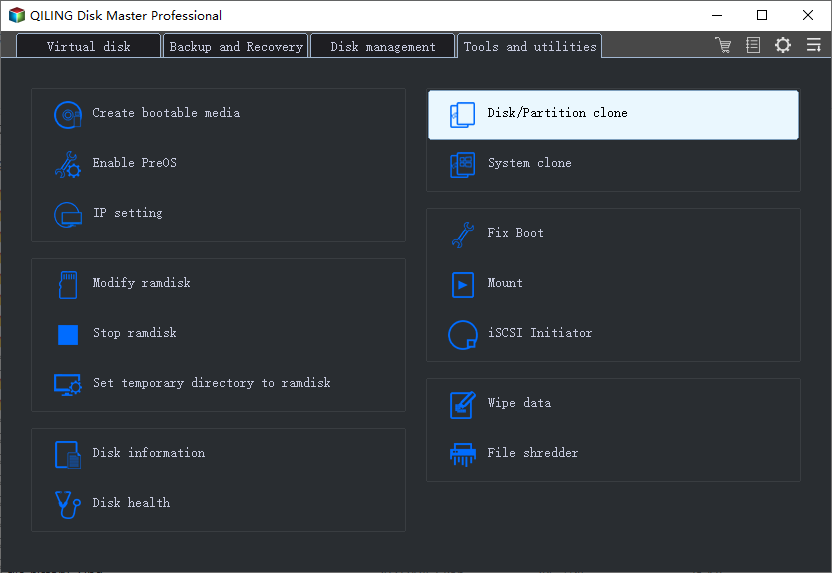
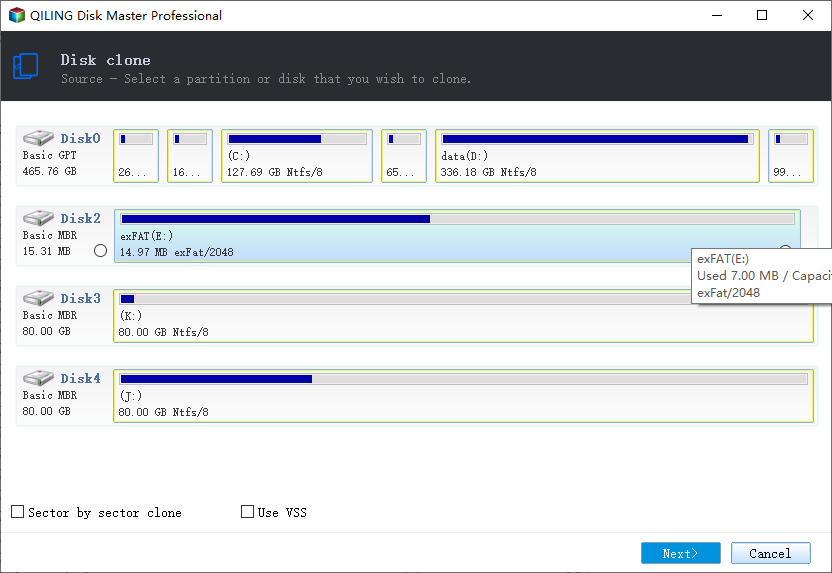
Step 2. Select the source disk( the SSD) you want to clone and click "Next".
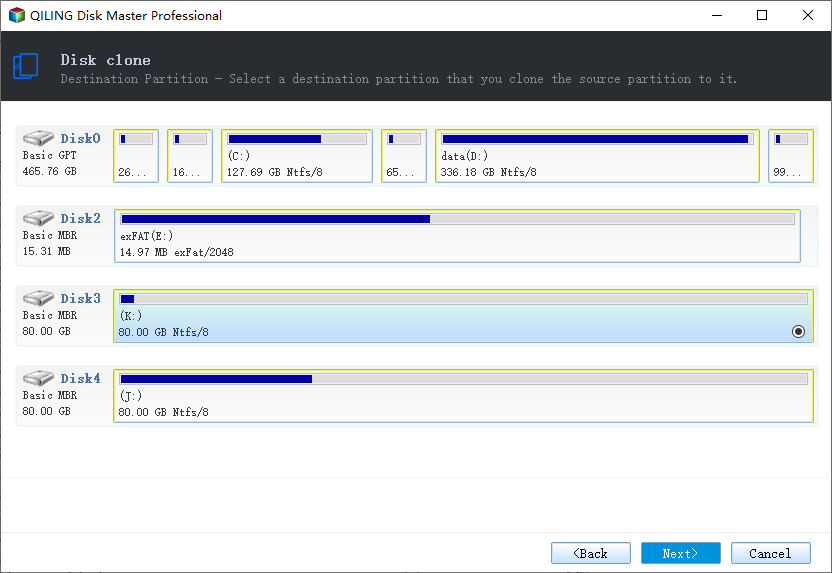
Step 3. Choose the destination disk( the larger solid state drive).
Note: The destination disk should be at least as large as the source disk, if not larger, to successfully copy or clone the source hard disk.
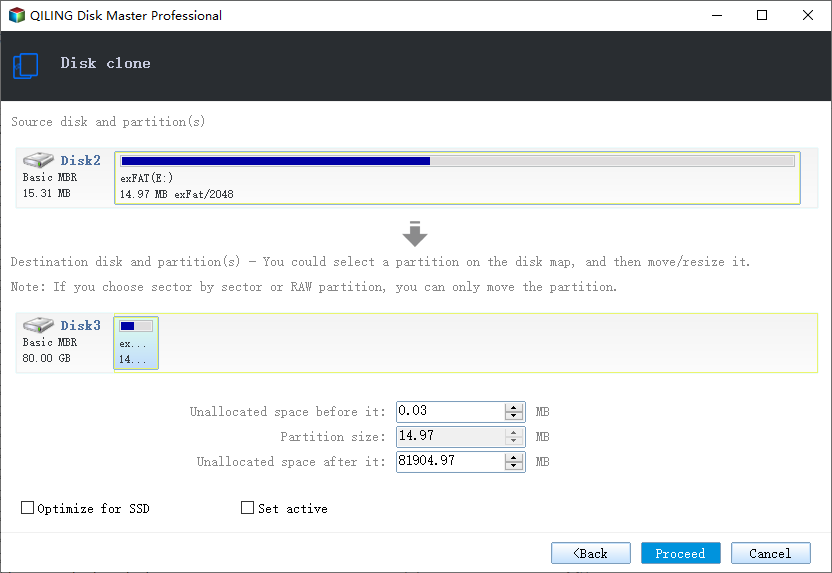
Step 4. Confirm the disk layout and settings for the source and destination disk, then click Proceed to execute the disk clone of your SSD.
The Tick Optimize for SSD feature optimizes the performance of a new Solid-State Drive (SSD) by adjusting the tick count to match the drive's capabilities, ensuring optimal performance and efficiency.
A message now appears, warning you that data will be lost. Please confirm this message by clicking "OK".
If you replace the system disk with a larger SSD or HDD, make sure to change the boot order in the BIOS settings from the old system disk to the new one, or you may encounter system boot failure errors.
To install the cloned SSD correctly into your computer and set it as the boot drive, repeat the process of Method 1 and Method 2. This involves physically inserting the cloned SSD into your computer, either by swapping it with your existing drive or by adding it as a secondary drive.
Reboot the PC and the SSD will boot up successfully.
Method 5. Customize 1-to-1 Service to Make Cloned SSD Bootable
If you've tried cloning a SSD using the four methods mentioned earlier, but the cloned SSD still won't boot or shows a black screen, you're dealing with a complex issue.
Qiling's technical support team can be contacted for assistance via 1-to-1 remote assistance, allowing for prompt help.
Stay Calm If Cloned SSD Won't Boot, Follow Fixes to Make SSD Bootable
To fix the cloned SSD won't boot error, try one of the 5 reliable methods we've collected. If you're looking for the best method to make the cloned SSD bootable again, consider trying each option to see which one works best for you.
Here is Editor's Pick:
1. To correctly install an SSD and set it as a boot drive, follow Method 1 and Method 2. This involves installing the SSD and setting it up as a boot drive using the correct steps and procedures outlined in these methods.
2. If the OS disk was MBR, follow Method 3 to set the SSD OS drive as active.
Once the new SSD is installed, you can plug it in and restart your computer. The computer should automatically detect the new SSD and boot from it.
3. If the cloned drive is not booting or working properly, try re-cloning the drive using Qiling Backup. If the issue persists, further troubleshooting may be necessary to identify the root cause of the problem.
Related Articles
- Partition Backup|How to Backup Partition with Windows Partition Backup Software
- 2021 Windows XP Backup Software & Backup Utility Free Download
- Download Free NAS Backup Software for Windows 10/8.1/8/7
- Solutions for Intel Data Migration Software Not Working
- Tutorial | Windows 7/8/10 System Image Backup and Restore
Learn how to create and restore a Windows 7 system image backup, protect the full system, and recover Windows after disk failure or serious errors. - Best Backup Software for Server 2012(R2) - Qiling Disk Master Server
You can find powerful backup software for Server 2012 (R2) in this post. It also works on with other operating systems such as Server 2016, 2019, 2022, etc.
Products
Articles & Tutorials
- Data Recovery
- Data Backup
- File Recovery
- File Backup
- System Backup and Restore
- Disk and Partition Clone
- Technical articles
- Mobile articles
- Disk Master Help
- Windows Data Recovery Tutorials
- Windows Secure Delete Tutorials
- Windows Partition Management Tutorials
- Windows File Backup and Restore Tutorials
- Windows System Backup and Restore Tutorials
- Windows Disk Backup and Restore Tutorials
- Windows Clone Tutorials