How to protect your valuable data with continuous data backup software
Continuous data protection
Continuous data protection (CDP) involves automatically saving a copy of every change made to data, capturing every version of the data, allowing for restoration to any point in time.
CDP (Continuous Data Protection) is a service that captures changes to data and stores them in a separate location. This can be done using various methods and technologies, catering to different needs. CDP-based solutions offer flexible restore options, allowing for fine-grained recovery of objects such as crash-consistent images, files, mailboxes, messages, database files, and logs.
Differences from RAID/replication/mirroring
Continuous data protection differs from RAID, replication, or mirroring in that these technologies only protect the most recent copy of data, failing to detect and correct corrupted data that may not be immediately noticed.
Continuous data protection protects against data corruption by allowing restoration of a previous, uncorrupted version of the data, but transactions between the corrupting event and restoration are lost, and can be recovered through journaling.
Continuous back up valuable data with Qiling Backup
Losing a presentation just before completion can be a nightmare. It's easy to accidentally delete the document, amend the data, or experience a program failure that prevents the file from saving. Additionally, bugs or viruses can maliciously destroy your data while working. Even expensive RAID hard-disk systems can't protect against the relatively rare technical failures of hard-disks, and regular system backups are often overlooked.
Qiling Backup is a user-friendly program that continuously backs up your daily work, supplementing regular daily, weekly, and monthly backups. While you're working, it automatically saves your important data, ensuring that your files are always up-to-date and secure.
Qiling Backup allows for automatic hard drive backup at a set time or upon specific events, with options for scheduling and continuous backup to protect system and important data, and also offers additional backup functions such as differential and incremental backups, disk and partition cloning, and recovery to dissimilar hardware.
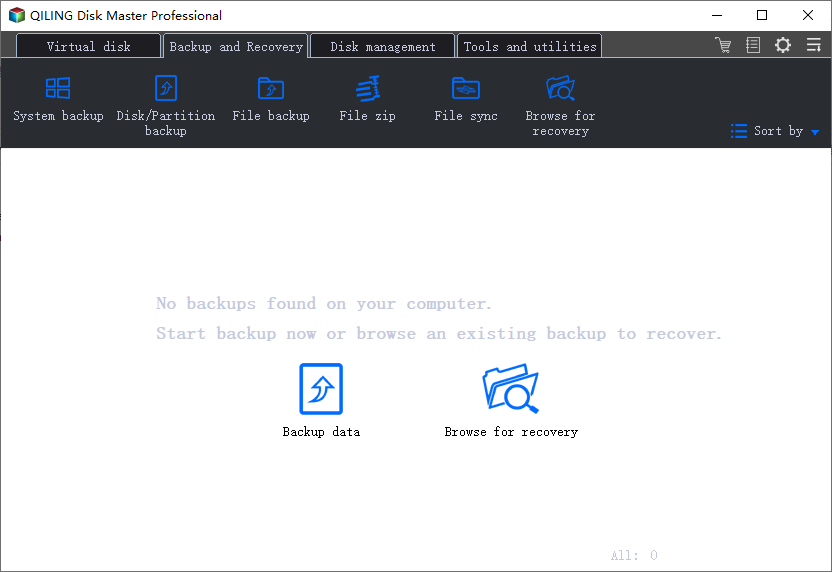
Step 1: Open Qiling Backup and select "File backup" as the backup mode.
As time passes, you accumulate a significant amount of important data, including documents, photos, music, and videos. It's a good habit to regularly back up this data to prevent unexpected loss. File Backup is a reliable option for safeguarding your information.
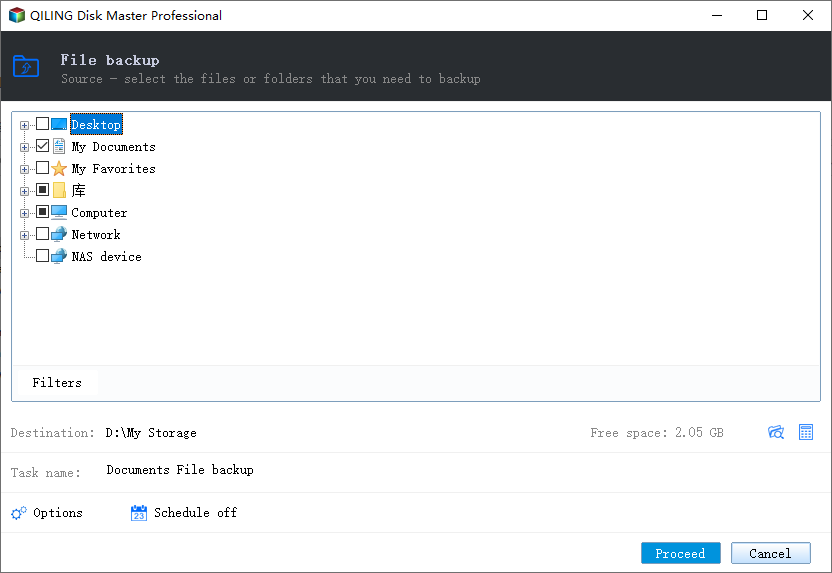
Step 2: Select the files that you want to back up.
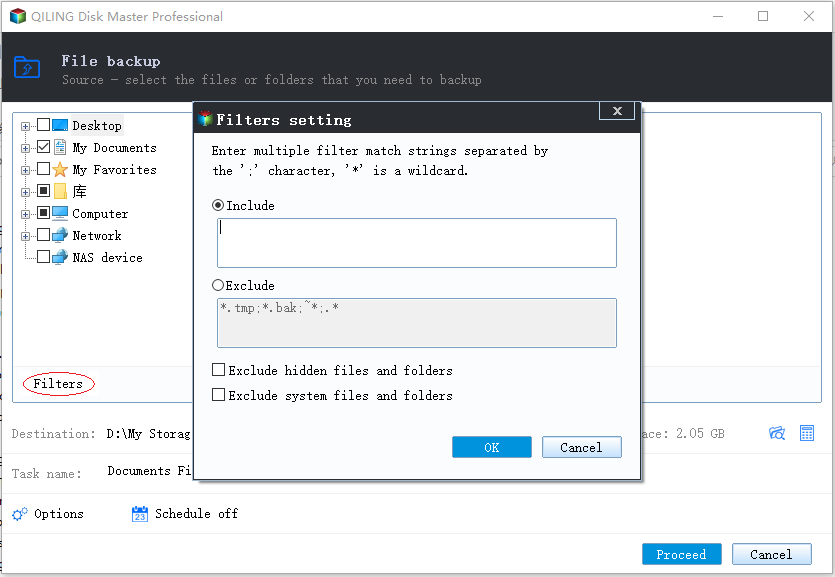
To access the filter option, click on the left corner where the filter icon is located. This allows you to browse through your computer or external storage device and select specific file types to back up.
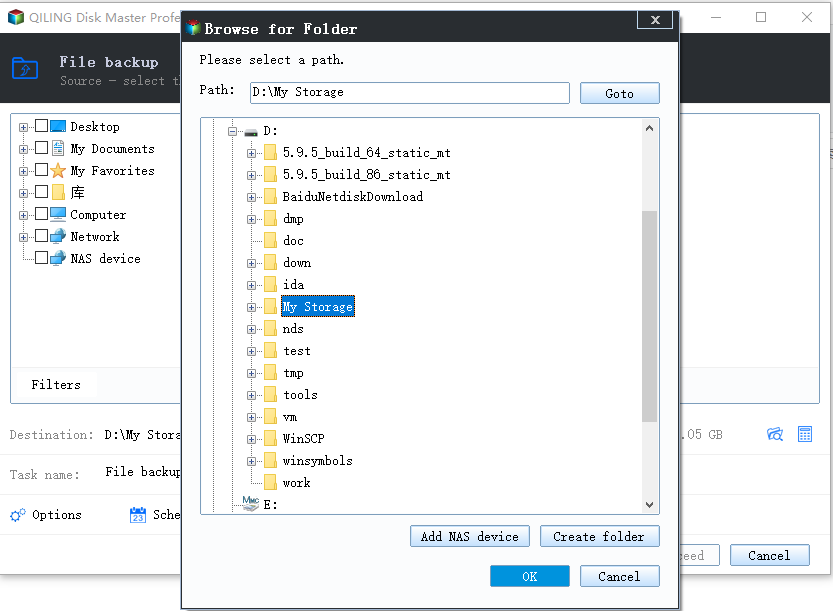
Step 3: Select a destination to save your backup file.
To avoid potential data loss, create a backup file in a separate storage media or drive, ensuring the original file remains intact and safe from any potential damage or corruption.
Step 4: Click "Proceed" to execute your operation.
For more detailed information about how to configure the scheduling with Qiling Backup, please check the link to learn how to schedule a backup task.
Related Articles
- Reset Lenovo Laptops with OneKey Recovery Without Data Loss
- Free Download Qiling Backup Full Crack + Serial/Keygen
- How to Back Up Network Shared Files Using Network Backup Software
- How to Backup Windows Data to QNAP NAS Drive
- How to Create and Restore (Windows 10) System Image to Different Computer
- Can You Replace HDD with SSD Without Cloning? Tips Are Here
Replacing a traditional Hard Disk Drive (HDD) with a Solid State Drive (SSD) can be achieved through disk cloning, which is a straightforward method, or by installing a new operating system (OS) directly on the SSD, offering an alternative.
Products
Articles & Tutorials
- Data Recovery
- Data Backup
- File Recovery
- File Backup
- System Backup and Restore
- Disk and Partition Clone
- Technical articles
- Mobile articles
- Disk Master Help
- Windows Data Recovery Tutorials
- Windows Secure Delete Tutorials
- Windows Partition Management Tutorials
- Windows File Backup and Restore Tutorials
- Windows System Backup and Restore Tutorials
- Windows Disk Backup and Restore Tutorials
- Windows Clone Tutorials