How to Create a Mirror Image of My Computer on Windows? Best Solutions
Have you ever imagined what you would lose if the system crashed? Have you realized the importance of backing up your data? It would be huge trouble to recover these files or data if you don't backup them. So, creating a mirror image of your computer is necessary. And creating a mirror image can help you copy all your important data to avoid data loss. In the following passage, I'll introduce more details about how to create a mirror image of my computer.
Why do I Need to Create a Mirror Image of My Computer
A mirror image is a file format that contains all the files on your computer, essentially saving all disks and operational programs. Creating a mirror image of your computer provides several benefits, such as being able to easily restore your system to its current state in case of a crash or data loss, and also allows for quick backups and disaster recovery. This can be especially useful for businesses or individuals with critical data, as it ensures that all important files and programs are safely preserved.
- When your system crashes or you need to format it, having a mirror image can help you recover your data, preventing loss.
- Protecting your data is crucial, and a system image can be a lifesaver. If you accidentally delete important files or a virus infects your computer, having a system image can help you recover your data, ensuring that your valuable information is safe and secure.
- You don't need to re-download all the programs when reinstalling the system. Instead, you can create a system image of Windows 10 for another computer and directly restore the original system settings.
How Do I Create a Mirror Image of My Computer
After knowing the necessity of creating a mirror image of my computer, it's time to understand to do that. In this guide, I'll introduce two ways of creating a mirror image: one system image software and one built-in program of Windows 10. And before going into the details of the procedure, let's look at the two solutions and compare which is more suitable for you to create a mirror image.
Method 1: Mirror Image Software- Qiling Backup
Qiling Backup Home is a third-party backup software that specializes in professional system backup and recovery, protecting data by quickly backing up systems, disks, and partitions, and allowing for system image recovery and cloning hard drives to SSDs.
Method 2: Windows 10 Mirror Image Backup- Backup and Restore
Windows has two backup systems: File History and Backup and Restore. File History primarily backs up files, while Backup and Restore is mainly used to create system images. Despite being based on Windows 7's design, Backup and Restore can also be used in Windows 10 and 11.
Comparison of the two ways to Create a Mirror Image of My Computer
Both the `tar` and `rsync` methods have their own strengths and weaknesses. The `tar` method creates a single archive file that contains all the files and directories, which can be easily stored or transferred.
| Comparison | Backup and Restore | Qiling Backup |
|---|---|---|
| Speed | Backup content is large and it takes a long time to process. |
With multiple backup plans, efficiency is increased and speed is improved. |
| Backup Type | This way just supports full backup. | Differential backup and incremental backup are available. |
| Backup Location | Sometimes it can't recognize the external hard disk. | It can support all external hard drives. |
| System Restore | You can only restore the whole system instead of individual files. | It can help do partition backup and restore |
Recommendation:
While Windows built-in tool is sufficient for simple backup needs, it can be time-consuming and lacks advanced features. In contrast, Qiling Backup offers faster backup speeds, more flexible options, and enhanced security, making it a more reliable choice for protecting system files. Its user-friendly interface also simplifies the backup process, making it a wise decision for those seeking a more efficient and secure backup solution.
How to create a Mirror Image of My Computer with Qiling Backup
Qiling Backup is easy to operate and allows users to create a mirror image of their computer with minimal effort.
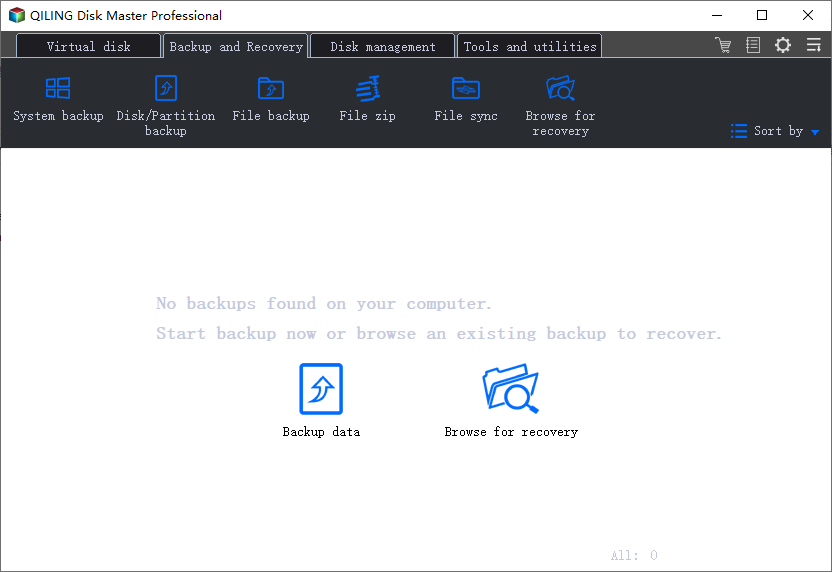
Step 1. To start backup, click the File backup button.
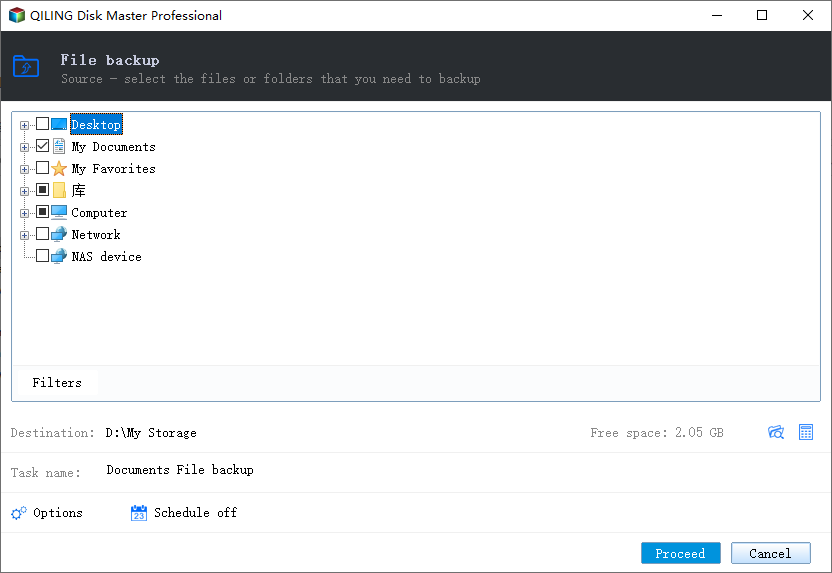
Step 2. On the left-hand side, you'll see a list of local and network files to be backed up, which can be expanded to select specific files within a directory.
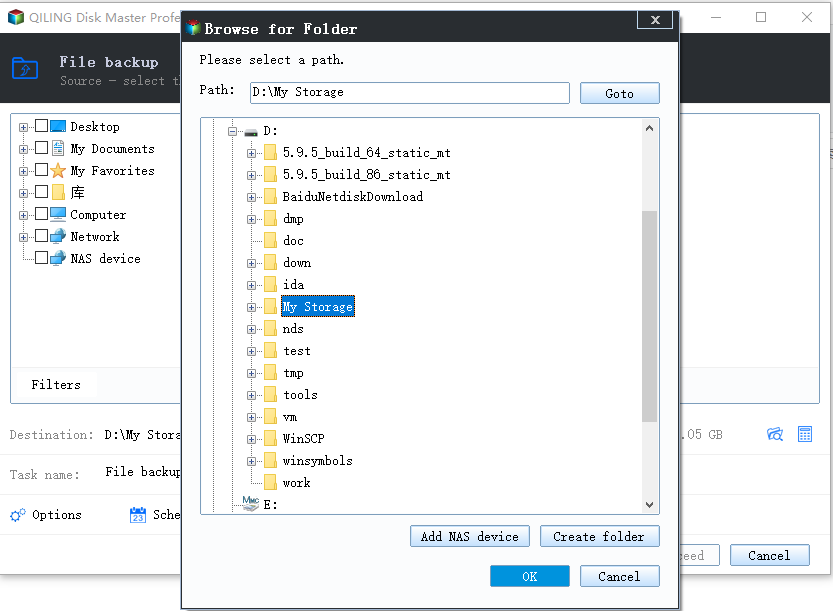
Step 3. Follow the instructions on the screen to select the location where you want to store the backup.
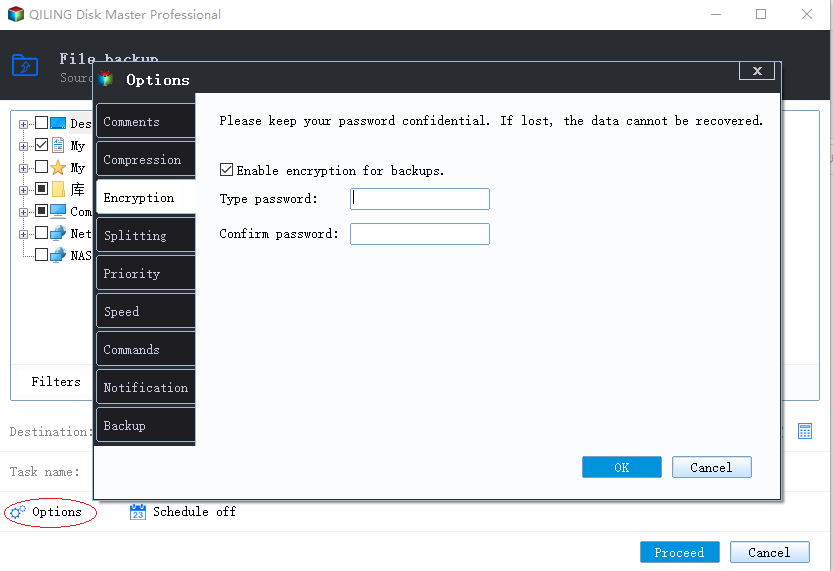
Step 4. In Backup Options, click Options to encrypt the backup with a password, allowing for customizable features to tailor the backup operation to meet specific requirements.
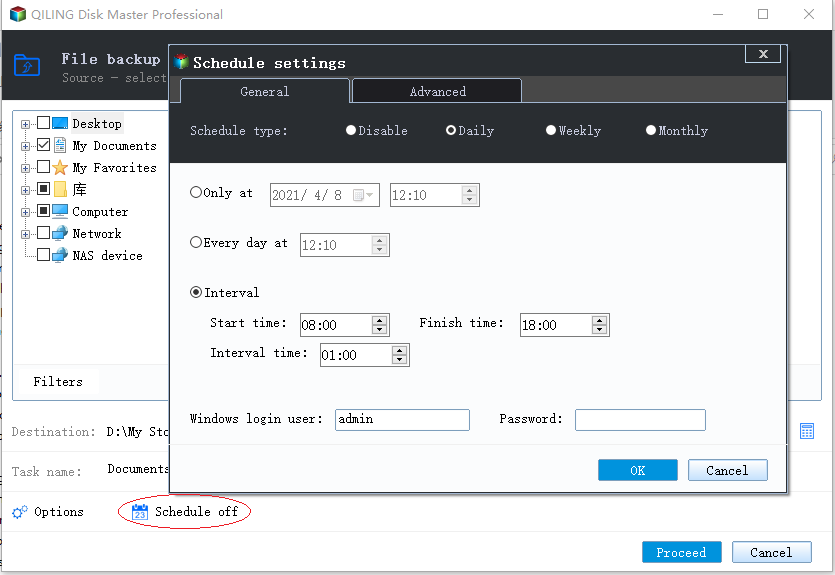
In the Backup Scheme section, you can specify the backup schedule and choose whether or not to start the backup at a certain event. This allows you to customize the backup process to suit your needs.
Step 5. Backups can be stored on a local disk, Qiling's cloud service, or a network attached storage device (NAS).
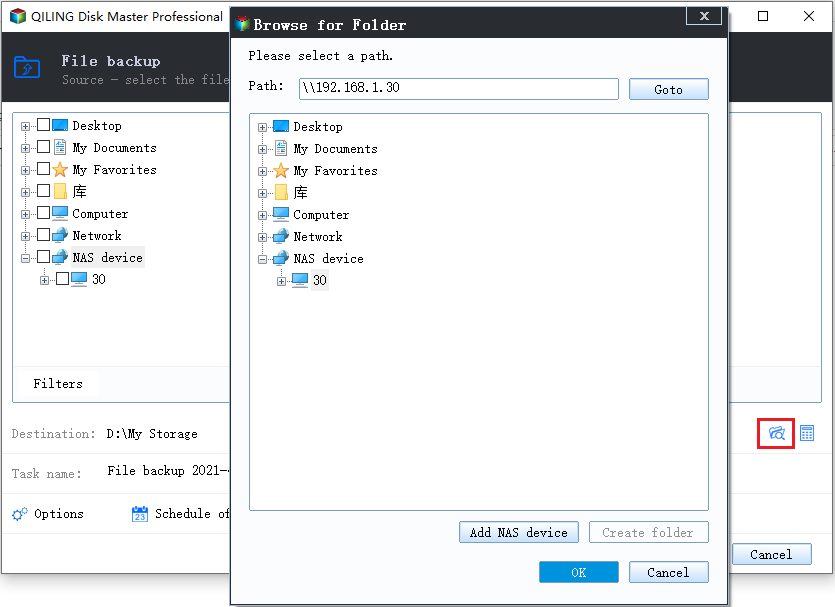
Step 6. Qiling Backup allows customers to back up data to a third-party cloud drive or the company's own cloud storage.
To back up your data to a third-party cloud drive, select Local Drive, scroll down to add Cloud Device, and enter your account information.
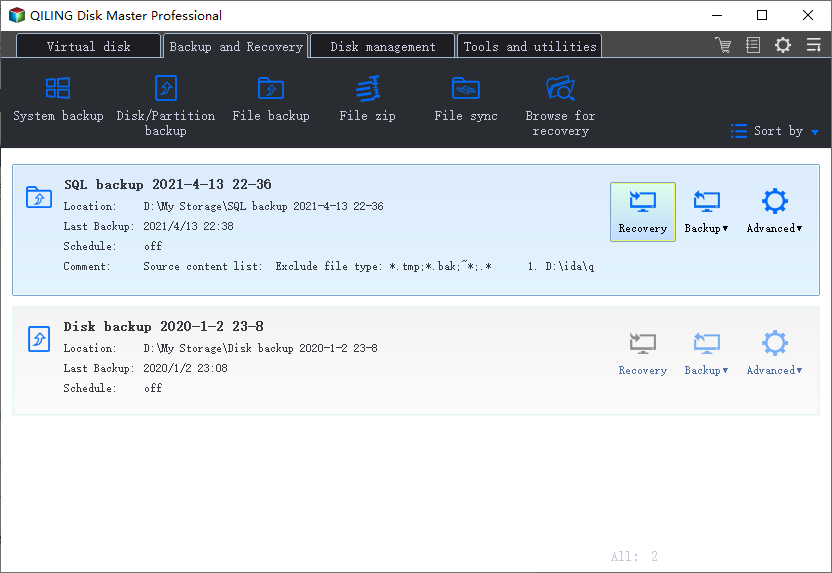
Step 7. To start a backup, click Proceed. Once the backup is complete, it will appear as a card on the left-hand side, and clicking on it will allow you to view the details of the backup job.
- Tip
-
Qiling Backup is a software that provides a comprehensive backup solution for users. It allows users to back up their data to a local drive, network drive, or cloud storage services such as Google Drive, Dropbox, or OneDrive.
1. Automatic Backup can be set to run daily, weekly, or monthly, allowing users to schedule regular backups of their system.
2. You can set a password for secure backup, and the system image will be compressed and encrypted for added security.
3. Comprehensive Backup supports all Windows systems and allows backup locations to be on an external hard disk, NAS, or cloud.
4. Flexible Backup: it supports full, incremental, differential backup.
How to create a Mirror Image of My Computer with Backup and Restore
With the built-To get started, you'll need to prepare an external hard drive with sufficient capacity. Once connected to your computer via USB, ensure it's working properly. After verification, you can proceed with the steps below.
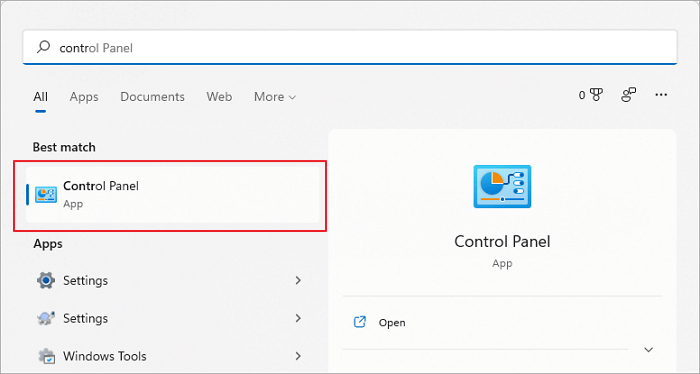
Step 1: Open your Windows setting and find "Control Panel" to begin to create a mirror image of my computer.
Step 2: To create a mirror image of your computer, click on "System and Security" in the Control Panel, and then select "Backup and Restore (Windows 7)" to start the process.
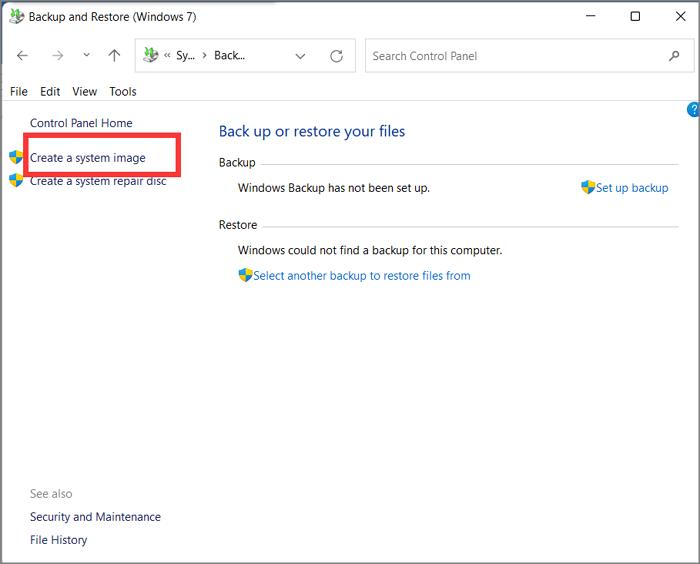
Step 3: After opening the "Backup and Restore (Windows 7)", you can find "Create a system image" on the left side, then choose it.
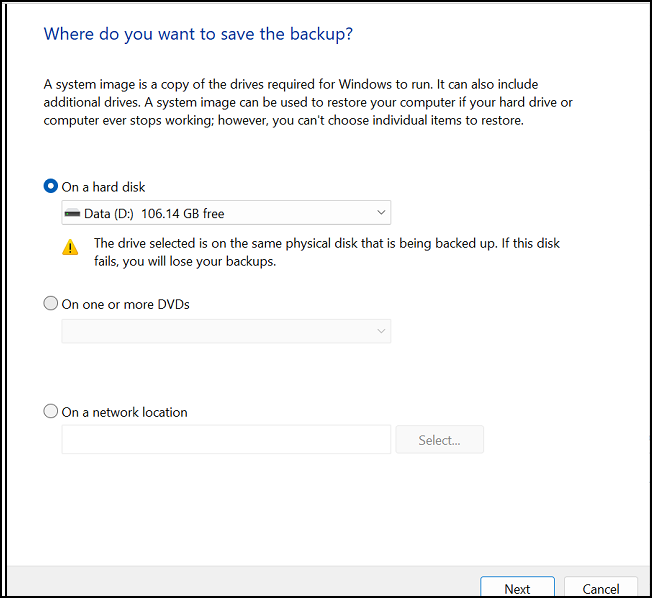
Step 4: Once you've selected the backup location, you'll see a pop-up window where you can choose where to save your backup. You can select a hard disk, a DVD, or a network location, among other options.
Step 5: To save a backup, you'll need to select the drives you want to include in the backup, which can be the system drive, user data drives, or other drives containing important files. This will ensure that all necessary data is included in the backup.
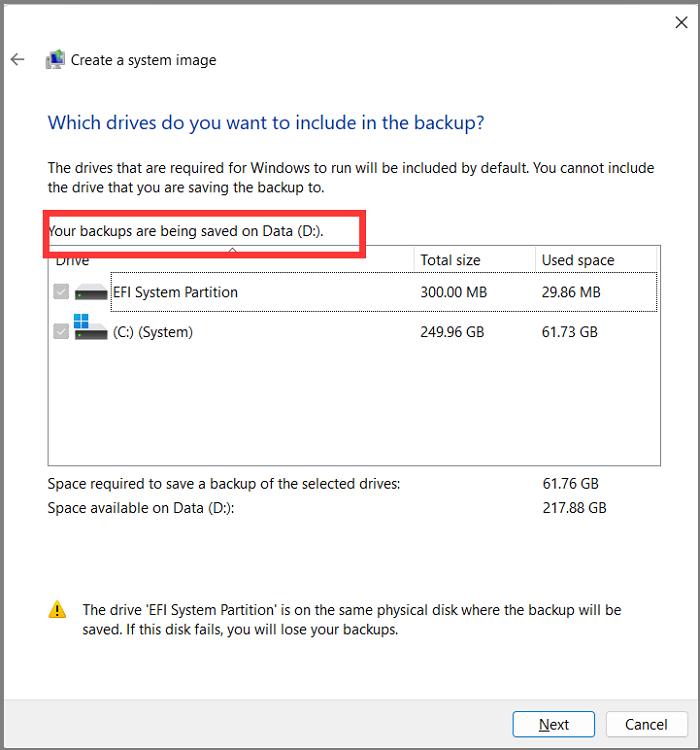
Step 6: Confirm your backup settings and click "Start Backup" to initiate the backup process.
- Notice:
-
If you want to backup the entire computer image, it will occupy most of the storage space.
To ensure your Windows 10 system is backed up and easily restorable, creating a system image on a USB drive is a recommended best practice. This process allows you to create a complete, bootable copy of your current system configuration, including all installed applications, settings, and files. By having this system image on a USB drive, you can quickly restore your system to its current state in case of a hardware failure, software corruption, or other issues.
Conclusion
Creating a mirror image of your computer is essential for routine work and protecting operational data. It's recommended to do it regularly to ensure everything is backed up. Qiling Backup is a reliable solution for this, and it's advisable to use it. If you want to learn more, you can download it or visit its official website.
FAQs of How to Create a Mirror Image of my Computer.
What is a mirror image of a computer? How does it differ from a regular computer? What is the purpose of creating a mirror image of a computer?
1. What is a mirror image?
A mirror image is a copy of your system files, operational data, and programs, allowing you to save all your important files by creating a duplicate of your entire system.
2. To make a mirror image of your hard drive, you can use built-in tools or third-party software. One option is to use the built-in "Backup and Restore" feature in Windows, which allows you to create a system image of your hard drive.
It's recommended to use third-party software to create a mirror image of your hard drive, which can then be copied. This approach ensures a complete and accurate backup of your data.
3. How do I mirror my computer?
You can easily mirror your computer's data using Windows' built-in tool or a reliable software like Qiling Backup. To do this with Windows, go to the "Control Panel" and navigate to "System and Security" to create a mirror image. Alternatively, you can use a trusted software to quickly complete the backup process.
Related Articles
- Top 10 Best Desktop Imaging Software [2022 Reviews]
- A Beginner's Tutorial on How to Make Windows 10 Backup to External Hard Drive
- One-click System Clone to HDD/SSD
- How to Backup NAS to Google Drive (2 Proven Ways)
- Bese Free SQL Backup Software
You can download a highly recommended free SQL Server backup software from Qiling and use it for free with a 30-day trial to effectively back up your SQL database. - Free disk cloning software for Windows 10/8/7
You can clone your hard disk drive partition with freely available software without losing any data. This process, combined with backup and restore, provides a complete solution to safeguard your hard disk drive partition data.
Products
Articles & Tutorials
- Data Recovery
- Data Backup
- File Recovery
- File Backup
- System Backup and Restore
- Disk and Partition Clone
- Technical articles
- Mobile articles
- Disk Master Help
- Windows Data Recovery Tutorials
- Windows Secure Delete Tutorials
- Windows Partition Management Tutorials
- Windows File Backup and Restore Tutorials
- Windows System Backup and Restore Tutorials
- Windows Disk Backup and Restore Tutorials
- Windows Clone Tutorials