How to Downgrade Windows 10 to Windows 8
Common System Downgrade Doubts
When downgrading Windows 10 to Windows 8, users may worry about losing important files, apps, and personal settings. Fortunately, the process can be done without losing any data, even if you haven't updated from Windows 8 to 10. You can downgrade back to 8 and keep all previous settings, making it a relatively smooth transition.
There are methods to save and restore personal settings, such as using a configuration file or a backup tool, to make it easier to downgrade systems.
Back up your system first, then let the system remember your previous settings to make downgrading Windows 10 to 8 a seamless process.
Solution 1. Apply system rollback software to downgrade Windows 10 to Windows 8
Qiling Backup is a tool that allows users to easily downgrade their computer system, such as reverting from Windows 10 to Windows 8, with a simple one-click process. It provides a safe and virus-free environment for users to upgrade or downgrade their system when needed, making it a perfect system setting recorder.
This system rollback software allows you to perfectly remember all your previous settings on Windows 8 or other OS, and keeps all applications and files, enabling you to downgrade to a previous system from the new one.
1. Download and launch Qiling Backup.
Choose System Backup to allow the program to remember your system setting before updating to Windows 10.
Step 1. Download and launch Qiling Backup.
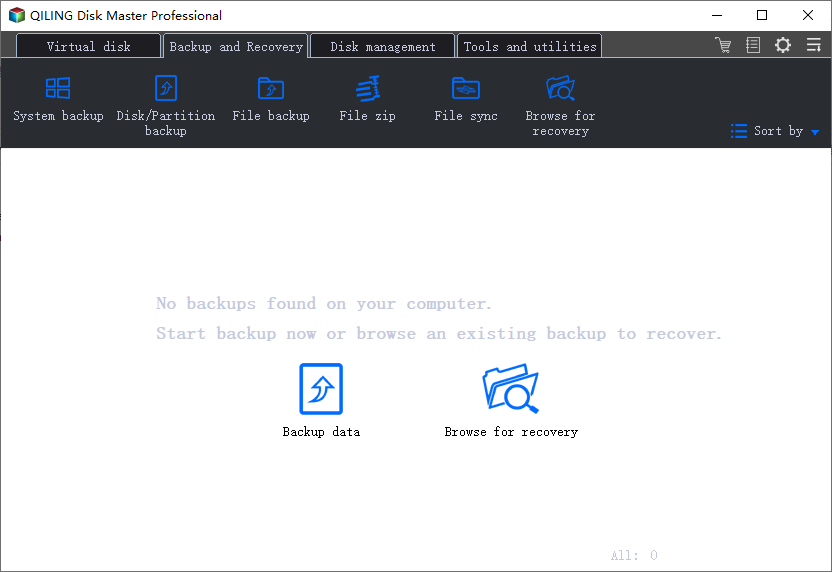
Step 2. To back up your Operating System, click "OS" on the home screen, and then proceed to the next window where the system will automatically detect and display your operating system information.
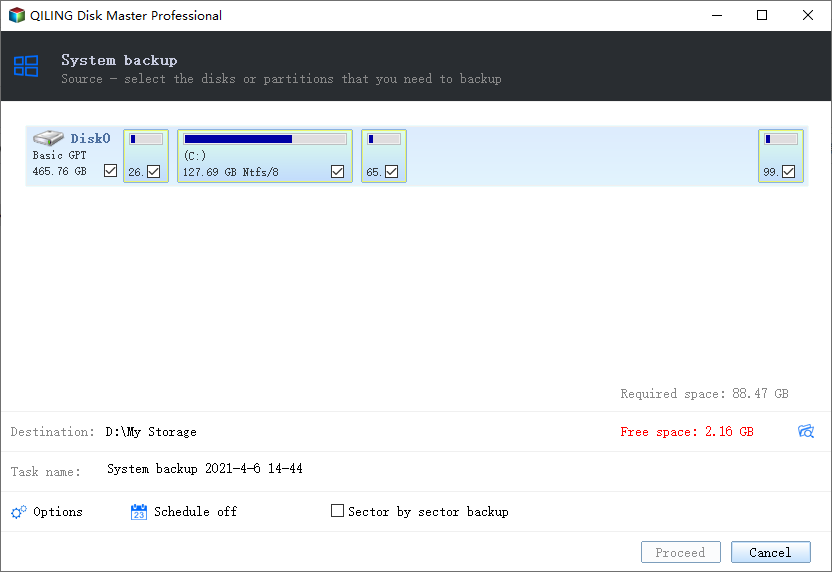
Step 3. Select the backup destination, the software will choose the most suitable location by default.
Step 4. To schedule a backup, click on the "Schedule" option, which opens the Backup Scheme window. Here, you can create a plan to back up your operating system at a later time, on a daily, weekly, or monthly basis, or even trigger a backup upon a specific event. This will enable your OS to be automatically backed up.
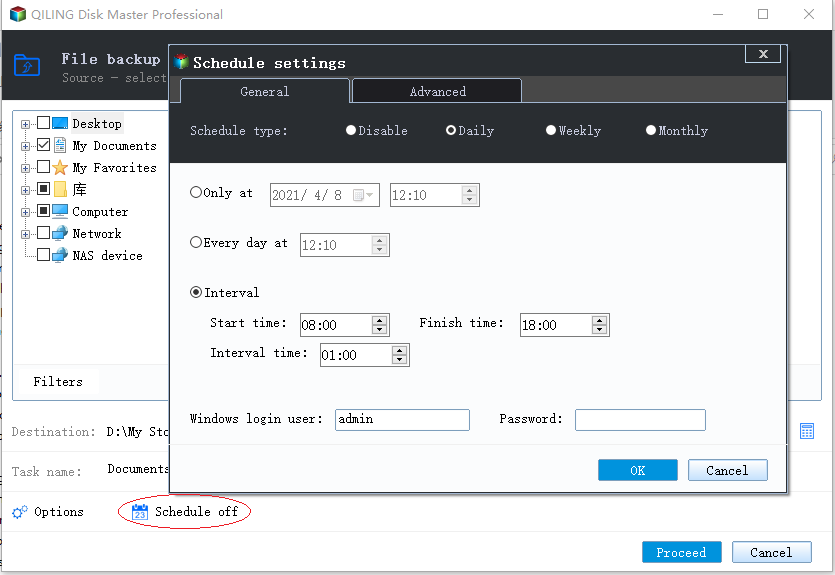
Step 5. Save all of the changes. Click "Proceed" to start Windows 10 system backup.
The system backup file and image can be accessed by clicking a link on the interface after the backup process is completed.
2. To downgrade Windows 10 to 8, you'll need to launch the system recovery software again and choose the "Go Back" option, which is just a single click away. This will initiate the downgrade process, successfully reverting your Windows 10 installation back to Windows 8.
Solution 2. Using Windows 10 Rollback Tool
1. To open the start menu, click on the start icon, which is usually located at the bottom left corner of the screen, and then select "Settings" from the menu.
2. Click "Update & Security" in the dialog box.
3. To revert to Windows 8 or 8.1, select "Recovery" and click "Go back to Windows 8 or 8.1".
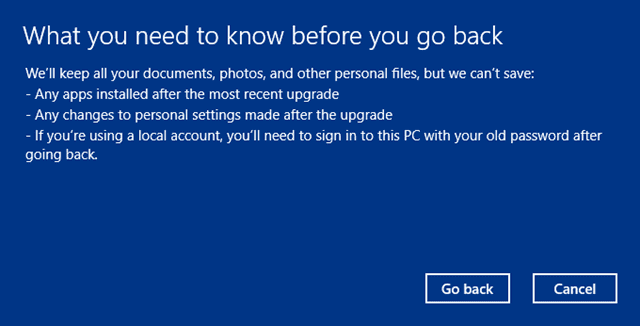
The Windows 10 rollback tool has a significant limitation - it only allows users to roll back to the previous OS within a month, after which the option is lost forever. Moreover, not all settings and apps can be retained through this method. Qiling Backup, on the other hand, provides a second chance to safely downgrade the system whenever needed, while preserving all previous settings.
Related Articles
- How to Free Backup Windows 10 to OneDrive
- How to Backup/Save Outlook Emails to Hard Drive Automatically in 3 Ways
- [Guide] Backup Windows 10 to USB | Create a Windows 10 Recovery Drive
- How to Upgrade Acer Aspire Laptop to SSD
- Where is the Save File Location for Hogwarts Legacy Cracked by Empress?
Are you wondering about where is the save file location for Hogwarts Legacy cracked by Empress? You can get your answer by reading this post. Also, you will learn how to back up this game with data backup software. - Why Clone Hard Drive to SSD | How to Clone Hard Drive to SSD in Windows 10
Learn why cloning a hard drive to an SSD can improve performance and how to move Windows and data to an SSD safely.
Products
Articles & Tutorials
- Data Recovery
- Data Backup
- File Recovery
- File Backup
- System Backup and Restore
- Disk and Partition Clone
- Technical articles
- Mobile articles
- Disk Master Help
- Windows Data Recovery Tutorials
- Windows Secure Delete Tutorials
- Windows Partition Management Tutorials
- Windows File Backup and Restore Tutorials
- Windows System Backup and Restore Tutorials
- Windows Disk Backup and Restore Tutorials
- Windows Clone Tutorials