File Backup Access Denied on an External Drive in Windows
“Access denied” during a file backup can refer to the source file, the destination folder, a network share, or a security policy. Identify the path in the error log first. Reformatting the external drive or taking ownership of every folder can make the problem worse.
Identify the denied path
If Windows Security specifically says Controlled folder access blocked the backup app, use the Controlled folder access backup checklist; that case differs from a denied folder permission on the external drive.
Step 1. Record the exact path and time from the backup log. If the path begins on C:, the source may be restricted or in use; if it points to the external drive, check the destination.
Step 2. In File Explorer, open both paths under the same Windows account. Create and delete a small test file in a new folder on the destination. Do not test write access inside the existing backup-image folder.
Step 3. Check the external drive's file system and free space. NTFS permissions behave differently from exFAT; a write-protected device or failing drive may return a different error.
Fix the cause without broadening access
If the denied destination is an NTFS folder, review its Security tab and grant the backup account only the permissions it needs. If Controlled folder access blocked the program, review Windows Security's protection history and allow only a trusted application after verifying its source. For a NAS, test the actual share credentials and write permission. If a source file is protected by another account or EFS, a normal backup may not be able to read it without that account's key.
Do not disable antivirus protection, turn off encryption, or grant Everyone full control merely to make one job run. If the disk reports I/O errors or disconnects, back up other accessible files first and investigate the hardware.
Recreate a verified Qiling file-backup task
Qiling Disk Master Pro's File backup does not bypass Windows access controls. Once the path issue is resolved, create a clean task targeting a writable folder on a separate drive.
Step 1. Open Backup and Recovery > File backup. Select the intended source folders directly from the tree; confirm that the denied file is within that selection.
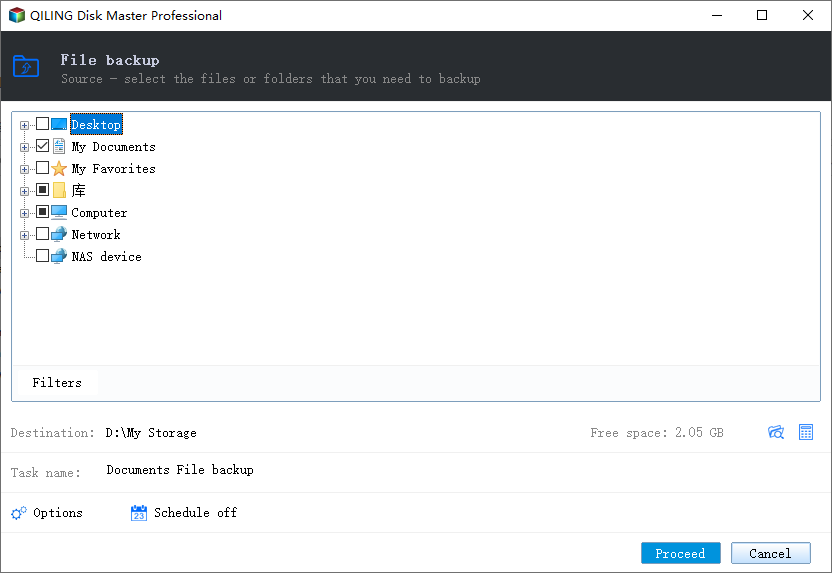
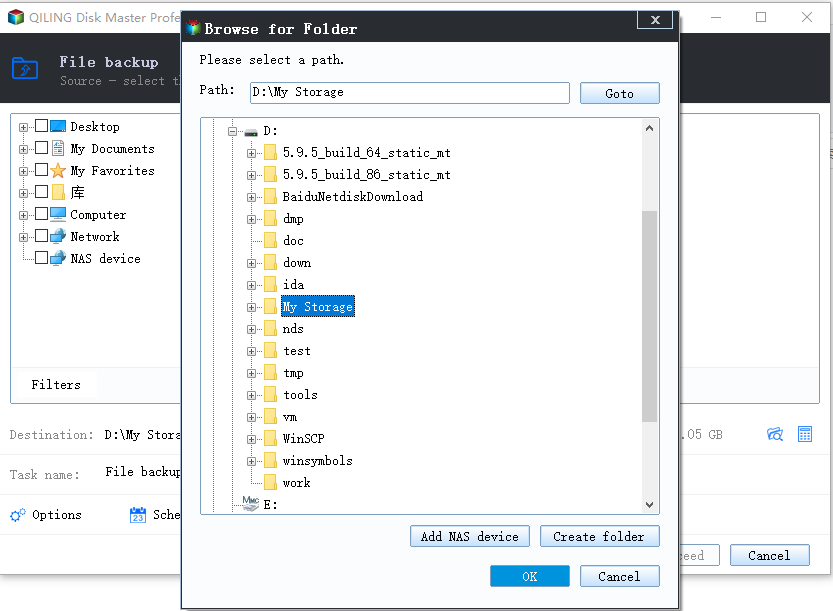
Step 2. Choose a new destination folder on the external drive, review filters and free space, and click Proceed.
Step 3. Check the result for skipped files. Browse the new backup point and restore one sample to a different folder. Resolve any remaining denied path individually before treating the task as complete.
Keep the backup reliable
Do not rely on a job that succeeds only after a manual privilege change each time. Document the account used by scheduled backups and keep an independent copy of the most important files. If access errors recur on the same external drive, inspect its cable, health, and connection history.
Related Articles
- External Drive Access Denied
Diagnose a drive-level access problem. - Missing Files in Backup
Check the source selection and backup point.
Products
Articles & Tutorials
- Data Recovery
- Data Backup
- File Recovery
- File Backup
- System Backup and Restore
- Disk and Partition Clone
- Technical articles
- Mobile articles
- Disk Master Help
- Windows Data Recovery Tutorials
- Windows Secure Delete Tutorials
- Windows Partition Management Tutorials
- Windows File Backup and Restore Tutorials
- Windows System Backup and Restore Tutorials
- Windows Disk Backup and Restore Tutorials
- Windows Clone Tutorials