How to Ghost a Hard Drive in 3 Steps
Is there any reliable program that I can use to ghost a hard drive
"I had a clean install Windows 10 on my computer just several minutes ago. Thinking that system problem and the accompanying unexpected data loss disaster can happen at any time, I intend to ghost the hard drive to backup the system and data. So even if anything bad happens one day in the future, I will not be troubled with system reinstalling & data recovery job. But I completely have no idea about how to ghost a hard drive? Is there any reliable Windows backup software that can make this job easier?"
System failures or crashes can happen unexpectedly due to various reasons such as virus and hacker attacks, hardware or software failures, or incorrect operations. To prevent data loss, it's essential to regularly backup your hard drive using third-party image backup software. This allows you to easily restore your system and data from the image file in case of a disaster, making the recovery process much simpler and more efficient.
3 steps to ghost a hard drive with Qiling Backup
Qiling PC backup program is a tool that allows you to copy the contents of one hard drive to another disk or create an "image" file, which can be used to restore the disk or partition when needed, and the process can be completed in just 3 simple steps.
Note: Before backing up a disk or partition, ensure that the target disk, partition, or external storage device is empty and has sufficient space to hold the backup images.
Step 1. To backup your hard drive disk or partition to an external storage device, simply connect the device to your PC or laptop.
Step 2. Launch Qiling Backup on your PC and click "Disk/Partition" on the home screen, or navigate to the menu icon at the top left corner and select Disk/Partition Backup.
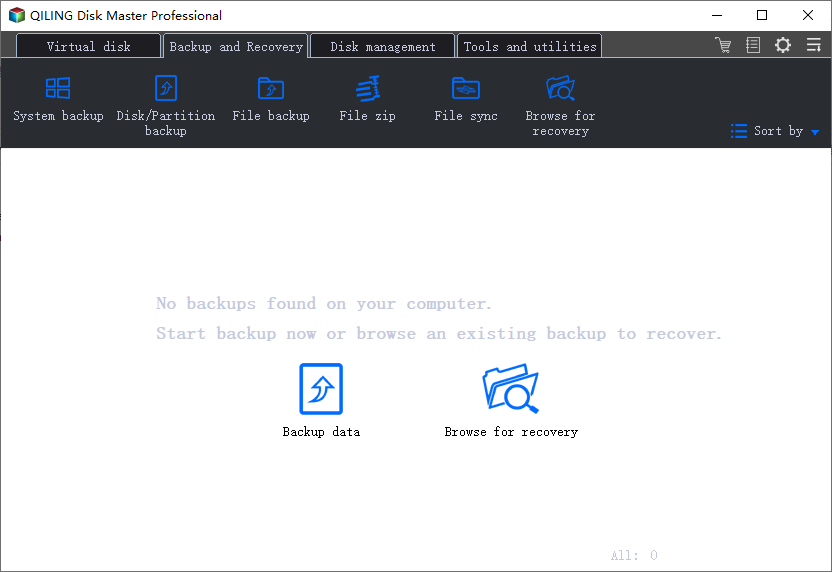
Step 3. Choose the disk or partition that you want to backup as the source disk.
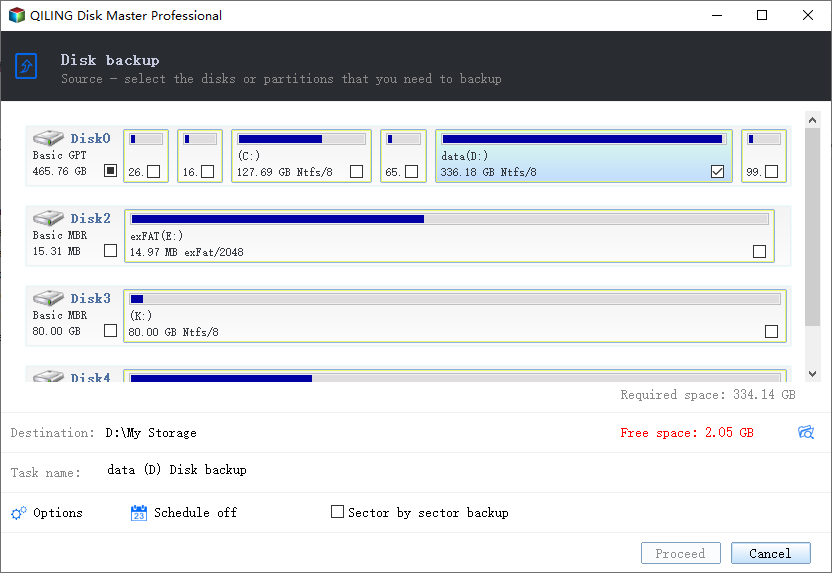
To save the backup image of the selected disk/partition, select a suitable external storage device or a big enough disk as the destination disk.
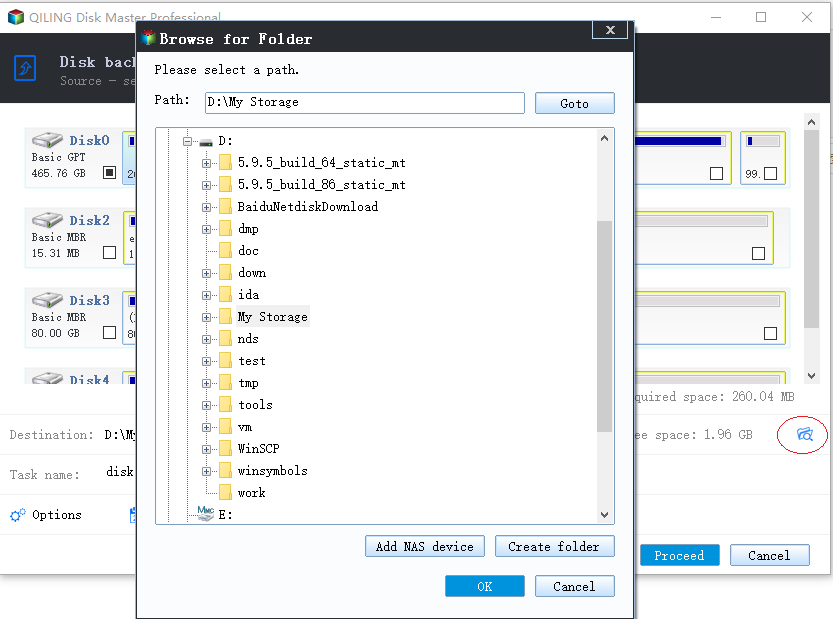
Step 4. Click "Proceed" to start the disk/partition backup process.
When the process finishes, you can unplug or disconnect the external storage device.
All data will be stored on the destination disk or storage device in a compressed form, occupying less space.
Related Articles
- Auto Backup Outlook 2016 with Ease
- WD SmartWare Backup Alternative for Windows 10/8/7
- Clone GPT Disk in Windows 10 - This Method Would Work!
- One-click System Clone to HDD/SSD
- How to Clone HDD to Solid-State Disk Without Reinstalling Windows
- Download Best SSD to SSD Cloning Software
- Top Three Backup Tools for Windows Servers (2012, 2016, 2019)
You can find three backup tools for Servers in this page. With Windows Server backups, many businesses can reduce a lot of losses and troubles. Want to know the detailed operations? Read on!
Products
Articles & Tutorials
- Data Recovery
- Data Backup
- File Recovery
- File Backup
- System Backup and Restore
- Disk and Partition Clone
- Technical articles
- Mobile articles
- Disk Master Help
- Windows Data Recovery Tutorials
- Windows Secure Delete Tutorials
- Windows Partition Management Tutorials
- Windows File Backup and Restore Tutorials
- Windows System Backup and Restore Tutorials
- Windows Disk Backup and Restore Tutorials
- Windows Clone Tutorials