How to Install Windows 10 from USB on New PC (2021 Updated)
Installing Windows 10 on a new PC from a USB drive is a straightforward process. There are three ways to do it: using the Media Creation Tool, using a Windows 10 installation media, or using a third-party tool. To get started, you'll need a USB drive with at least 8GB of free space. You can create the installation media using the Media Creation Tool, which can be downloaded from Microsoft's website.
| Workable Solutions | Step-by-step Troubleshooting |
|---|---|
| 1. To migrate your OS to install Windows 10 on a new PC, start by creating a Windows 10 installation media on a USB drive or CD/DVD. Then, boot from the installation media and follow the prompts to select your language, time and currency format, and keyboard layout. | Use Qiling partition management software to migrate OS to HDD/SSD with clicks to install Windows 10 on new PC without any boot issue...Full steps |
| 2. Install Windows 10 on new PC with bootable USB | Use a simple tool to create a Windows 10 installation USB, and then, install Windows 10 on a new PC from the bootable USB...Full steps |
| 3. Install Windows 10 from USB via Windows Media Creation tool | Windows Media Creation Tool to create a Windows 10 installation USB and install OS on new PC...Full steps |
How to Migrate OS to Install Windows 10 on New PC in a few clicks
To migrate Windows 10 to a new PC, you can use Qiling Partition Master to transfer the operating system to the new computer's hard drive or solid-state drive (SSD), which is a simpler and quicker method than installing Windows from a USB drive. This tool provides comprehensive solutions to manage and optimize your hard drive, enhancing your computer's performance and capabilities.
- Resize/move, merge, clone partition, and check file system error.
- You can clone a disk, convert it to GPT/MBR, convert it to dynamic/basic, and even wipe data using a tool like Disk Management or DiskPart in Windows, or `dd` and `parted` in Linux. These tools allow you to create an exact copy of a disk, change the partition table from MBR to GPT or vice versa, convert a disk from basic to dynamic or vice versa, and even securely wipe all data on the disk.
- Migrate OS to HDD/SSD, increase partition space, and more
Preparations:
- A computer running on Windows 10
- Connect the system disk from your new PC to the Windows 10 computer. Remove the system disk from your new PC and connect it to the Windows 10 computer.
- Download Qiling Partition Master
Step-by-Step Guide to Migrate Windows 10 to HDD/SSD
Steps to migrate OS to HDD/SSD:
Step 1: Run Qiling Partition Master, select System clone from the tools page.
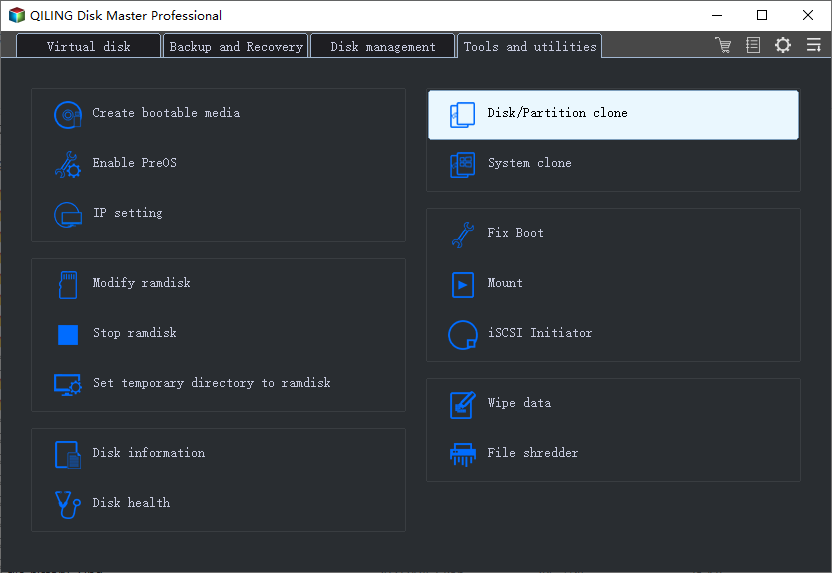
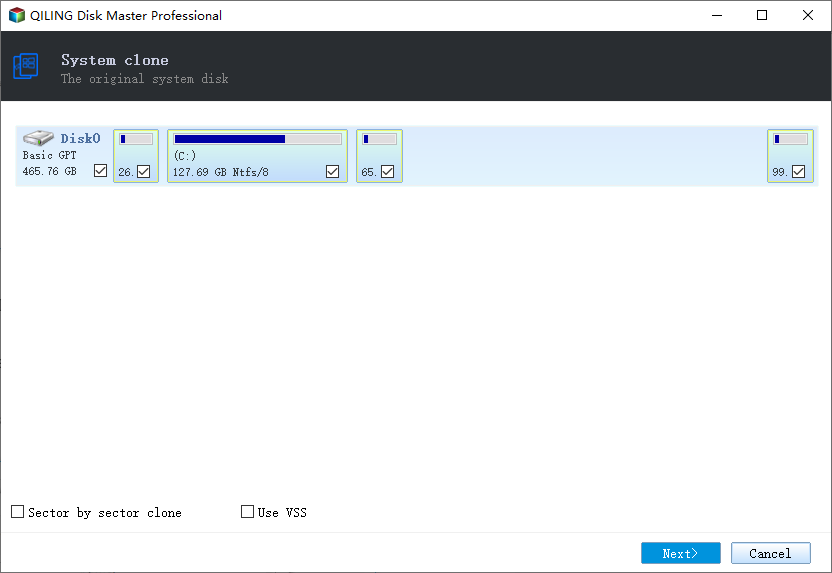
Step 2. The hard drive that have system OS will be automatically selected. Click Next to continue.
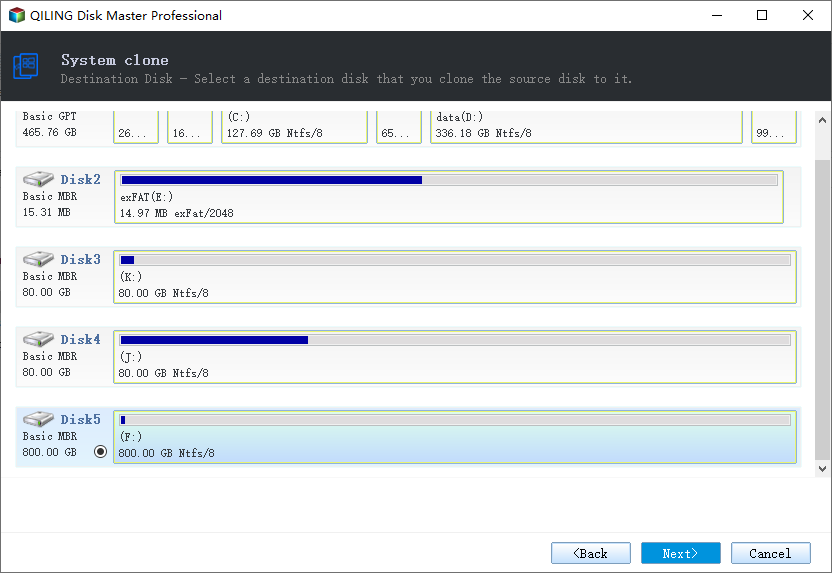
Step 3. Select the destination disk where you want to clone the system OS and click Next to continue.
To copy or clone a hard disk, the destination disk should be at least as large as the source disk, if not larger. This ensures that all data from the source disk can be fully replicated to the destination disk, including any existing files, operating systems, and applications.
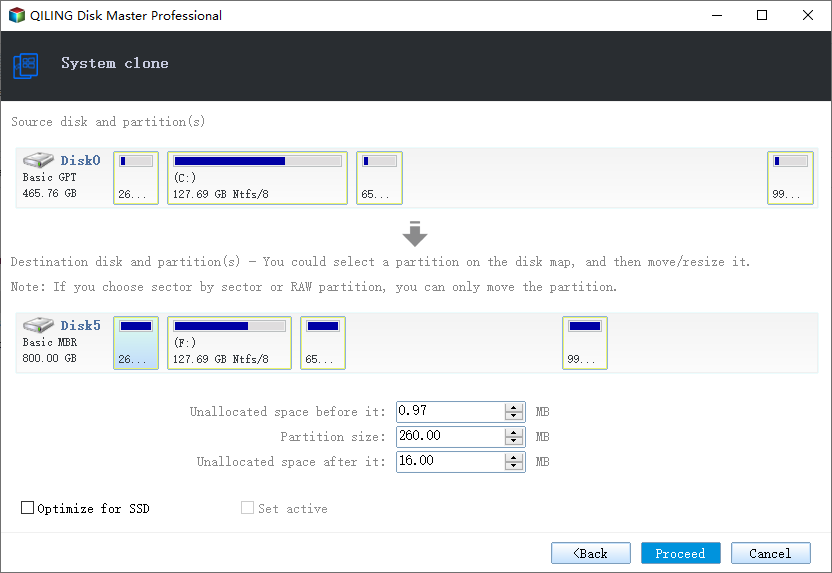
Step 4: Check and edit the disk layout.
If your destination disk is an SSD drive, make sure to select the "Optimize for SSD" option when targeting an SSD.
Step 5: Click "Proceed" to start the hard drive cloning process.
A warning message informs you that the data on the destination disk will be overwritten. If you don't have important data on the destination disk, click "OK" to proceed.
Note: When migrating your operating system to a new SSD or HDD, be aware that the process will erase all existing partitions and data on the target disk if there's not enough unallocated space. This means any important files or data currently on the target disk will be lost. To avoid this, it's essential to back up any crucial data to an external hard drive before proceeding with the migration.
After cloning the system, reconnect the disk to the new PC and start it with Windows 10. If it doesn't start, enter the BIOS and set the cloned disk as the boot device.
- To resolve the issue, restart your PC and immediately start pressing the F2, F12, or DEL key repeatedly as the startup screen appears, which will allow you to enter the BIOS settings.
- Use the arrow keys to navigate to the Boot tab, select the cloned hard disk as the first boot option, and then press Enter to save the changes.
- Save the settings and restart your computer.
How to Install Windows 10 from a Bootable USB Flash Drive
If you're looking for a tutorial on how to install Windows 10 on a new PC using only a USB flash drive, keep reading. This guide will walk you through the process of installing Windows 10 from a bootable USB or using the Windows 10 ISO file created with the Media Creation Tool.
This section guides you through creating a bootable Windows 10 installation USB and installing the OS on a new PC.
3. Create a Windows 10 Installation USB
4. How to Install Windows 10 from USB
1 - Preparations:
- UltraISO - a tool to create Windows 10 bootable USB
- A USB flash drive with at least 8GB free space
- An idle computer where you'll format the USB flash drive
- Qiling Partition Master - the best USB format tool
- Your new PC - which you'll install Windows 10 on it
To install Windows 10 on a new PC, you'll need to create a bootable USB drive with the Windows 10 installation media. This can be done by downloading the Windows 10 media creation tool and following the prompts to create the bootable USB drive.
2 - Format the USB Drive and Set the Primary Partition as Active
Click the download button and install Qiling Partition Master tool on the idle computer, which can be your old one or your friend's.
Step 1. Select the USB drive to format.
To format a USB drive, connect it to your computer and download the Qiling partition software. Once installed, launch the software and select the USB drive you want to format. Clicking the "Format" button will erase all data on the drive and prepare it for reuse.
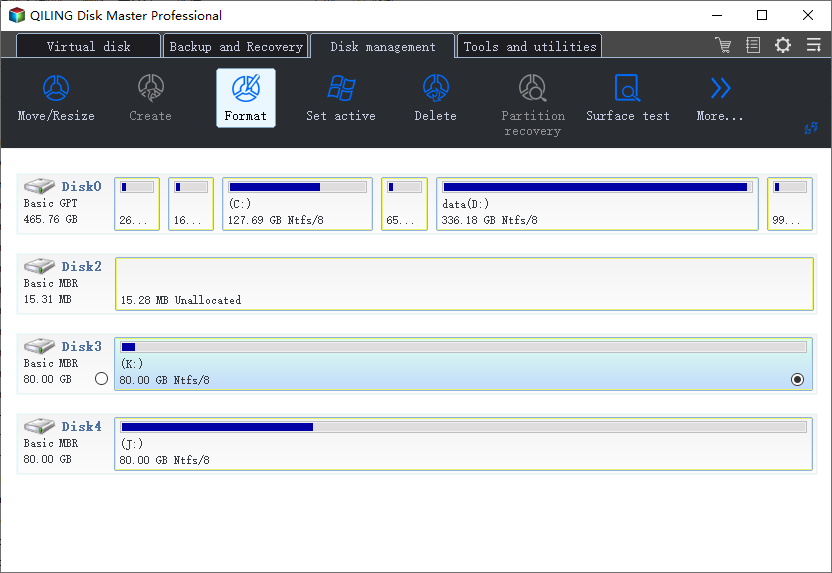
Step 2. Set the drive letter and file system.
Assign a new partition label, file system (NTFS, FAT32, EXT2, EXT3), and cluster size to the selected partition. Click "Proceed" to confirm.
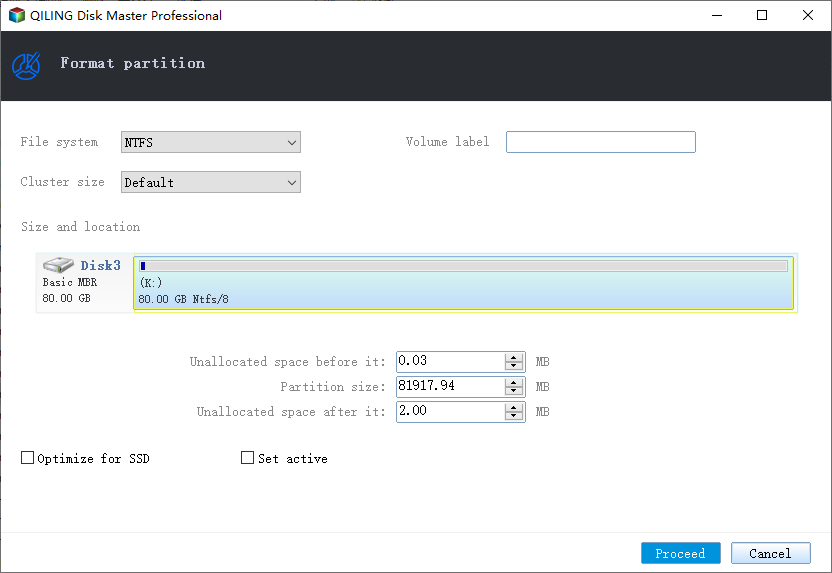
Notice:
The Set active option is only available when the USB flash drive's partition style is Primary. If marking the partition as active fails, you might need to convert the logical partition to the primary partition.
To format a USB flash drive to install Windows 10 from USB, you can use the following method: Insert the USB drive into your computer and open the File Explorer. Right-click on the USB drive and select "Format" from the context menu.
1. Connect the USB flash drive to your technician PC.
2. Open Disk Management: Right-click on Start and choose Disk Management.
3. Right-click the USB drive partition, choose Format, and select the FAT32 file system to format the partition. This will allow the drive to be bootable on both BIOS-based and UEFI-based PCs.
4. To set the partition as active, right-click on the USB drive partition and select "Mark Partition as Active" from the menu. This will mark the partition as active, allowing it to be used as a boot device.
3 - Create a Windows 10 Installation USB Flash Drive
To create a Windows 10 bootable USB using UltraISO, you can follow these steps:
- Plug the empty formatted USB drive into the computer.
- Open the UltraISO tool, select "File" > "Open" to import the ISO installation source file of Windows 10, and proceed with the desired actions.
- To create a bootable USB drive, select "Bootable" from the main menu and then choose "Write Hard Disk Image" from the options. Next, select the USB drive you want to use as the boot device.
- To install Window10 on a USB flash drive, click the "Write" button on the Rufus software, then the USB flash drive will be burned and written into the Window10 system.
- After the burning is completed, you can use the USB as the installation disk to install the Windows 10 operating system.
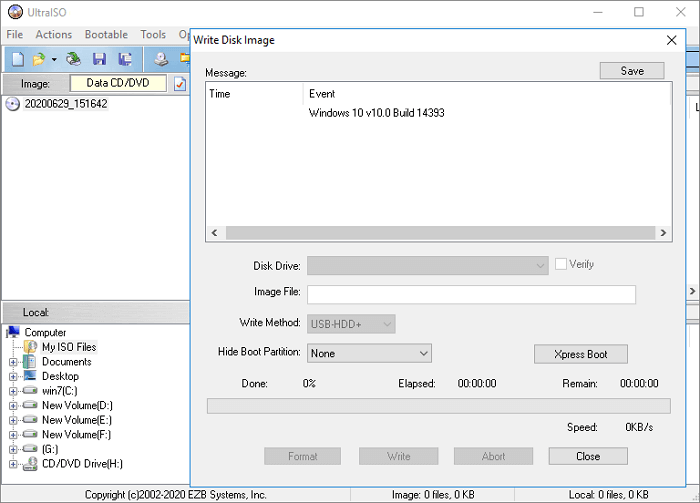
4 - How to Install Windows 10 from USB Flash Drive on New PC
To install Windows 10 from a USB drive on a new PC, you'll need a bootable USB flash drive with the Windows 10 installation files, a PC with a compatible BIOS or UEFI, and a USB drive with at least 8GB of free space. Once you have these requirements, connect the bootable USB flash drive to the new PC, ensure it's detected, and select it as the main boot device.
- Turn on the PC, press the key that opens the boot-device selection menu (usually Esc/F10/F12), and select the option to boot from the USB flash drive.
- Windows Setup starts, and you should follow the installation instructions. Note that some installation may continue after you log in, so be patient. After installation, be sure to check for Windows Updates (Settings > Updates & Security > Windows Update) to ensure everything is up to date.
- Remove the USB flash drive.
Sometimes, it's more convenient to install Windows 10 on an external hard drive, allowing you to use your customized OS on the go.
How to Install Windows 10 from USB with Windows Media Creation Tool
To install Windows 10 from USB using the Windows Media Creation Tool, you'll need to download the tool from Microsoft's website, run it, and select the USB drive as the installation media. The tool will then create a bootable USB drive with the Windows 10 installation files. Once the USB drive is created, you can boot from it and start the installation process. Simply insert the USB drive into your computer, enter the BIOS settings, and select the USB drive as the first boot device.
1. Download Windows 10 Tool to USB
2. Create Windows 10 Installation Media
3. Install Windows 10 from USB
1 - Download Windows 10 Tool to Install Windows 10 from USB
To get started, you'll need a Windows 10 license to install the operating system. After that, download the Windows 10 installation media creation tool, which will allow you to create a USB drive or ISO file to install Windows 10. Once you have the tool, follow the instructions provided to complete the installation process.
Before downloading the Windows 10 tool, ensure you have:
- A fast internet connection
- To ensure adequate data storage on a computer, USB, or external drive for downloading a tool, you can allocate a dedicated partition or folder on the device to store the tool and its associated files. This will help prevent clutter and ensure the tool remains easily accessible.
- A blank USB flash drive with at least 8GB of space or a blank DVD and a DVD burner for creating media.
Important:
To create Windows 10 installation media, use a blank USB or DVD to avoid deleting existing content on the device you're using.
If you're trying to burn a DVD from an ISO file and are told the disc image file is too large, you'll need to use Dual Layer (DL) DVD Media. This is because regular DVD media has a data storage capacity of 4.
2 - How to Create Windows 10 Installation Media
Step 1. Download and run the tool as an administrator.
Step 2. On the "What do you want to do?" interface, select "Create installation media for another PC", and then select "Next".
Step 3. Choose the language, edition, and architecture (64-bit or 32-bit) for Windows 10.
Step 4. Select media tool you want to use:
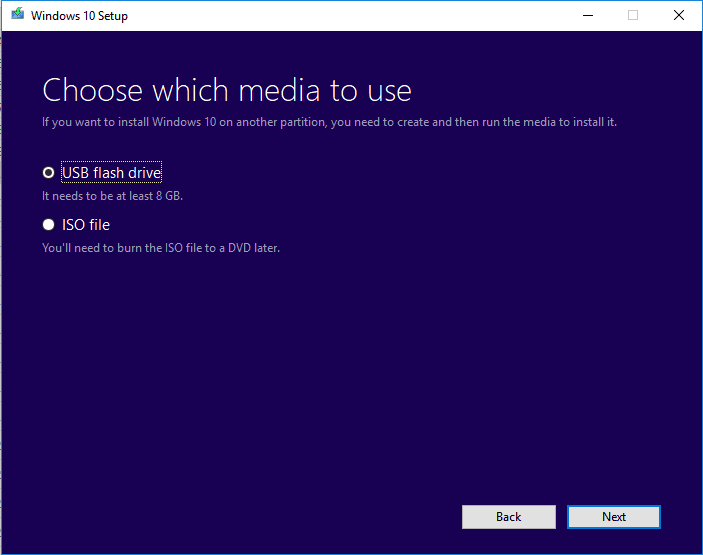
- USB flash drive Connect a blank USB flash drive with at least 8GB of space to your computer.
- ISO file Save an ISO file to your PC, which you can use to create a DVD. After the file is downloaded, go to the location where it is saved and use the Windows Disk Image Burner to create an installation DVD with simple steps.
To burn Windows 10 ISO file into a DVD
- Find the location where the ISO file is saved
- Right-To set up your computer to open ISO files, click on the ISO file, then select "Properties" from the context menu. In the Properties window, click on the "General" tab and then click on "Change" under the "Opens with" section.
- Right-click the ISO file and select "Burn disc image".
You can install Windows 10 on a new PC directly from the ISO file without using a DVD or USB flash drive by mounting the ISO file, which will perform an upgrade of your current operating system to Windows 10.
To mount the ISO file
- Find the Windows ISO file, right-click it and select "Properties".
- To change the default program to open ISO files, go to "Settings" > "System" > "Storage" > "Change how Windows 10 stores files" > "General" > "Change" > select "Windows Explorer" as the program to open ISO files and select "Apply".
- Right-click the ISO file and select "Mount".
- Open the ISO file and run the setup.exe file to start the Windows 10 installation process.
Once you have created the Windows 10 media tool, continuing using the steps below to install Windows 10.
3 - How to Install Windows 10 with the Media Creation Tool
Step 1. Connect the USB flash drive or insert the DVD to the new PC where you want to install Windows 10.
Step 2. To start, restart your PC and boot it from a USB or DVD drive. If that doesn't work, you'll need to press a specific key (like F2, F12, Delete, or Esc) as soon as you turn on your PC to access the boot menu and adjust the boot order.
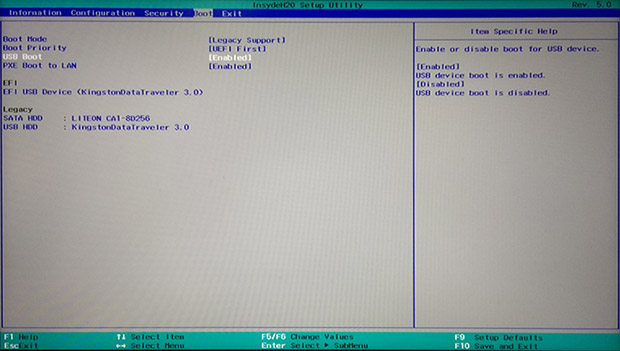
Tip: If the bootable USB drive is not showing up or recognized in Windows 10, check the tutorial to find a solution.
Step 3. Follow the on-screen instructions to complete the Windows 10 installation, and enter your Windows 10 license key when prompted with a product key during installation.
Step 4. After Windows 10 installation finishes, make sure you have all the necessary device drivers installed.
To check for updates, go to the Start button, then select "Settings", followed by "Update & Security", then "Windows Update" and finally "Check for updates".
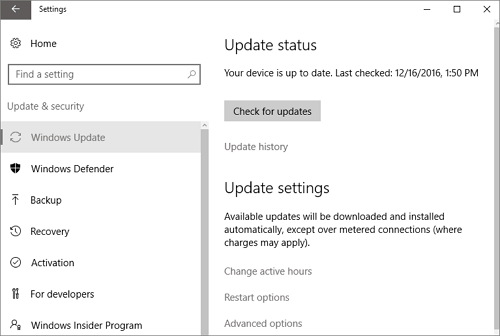
Installing Windows 10 from USB Conclusion
There are three common ways to install Windows 10 to a new PC: using a USB drive, using a CD or DVD, and using a digital license. To install using a USB drive, you'll need to create a bootable USB drive with the Windows 10 installation files, then boot your PC from the USB drive and follow the installation prompts.
- You can migrate your OS to install Windows 10 on a new PC with minimal effort by using the Windows 10 upgrade tool or a third-party cloning software. This process allows you to transfer your existing Windows installation, along with your settings, files, and applications, to the new PC, saving you time and effort in reinstalling everything.
- Install Windows 10 from a bootable USB.
- To install Windows 10 from a USB drive, you can use the Windows 10 Media Creation Tool. This tool allows you to create a bootable USB drive that can be used to install Windows 10 on a computer.
Installing Windows 10 from USB can be a complex process, so it's essential to follow the instructions carefully. If you encounter any issues, feel free to reach out to our technical support team via live chat or email at support@idiskhome.com for prompt and efficient assistance.
FAQs - How to Install Windows 10 from USB (Troubleshooting)
Some users are experiencing doubts when upgrading Windows 10 or installing it from a USB drive, prompting a need to troubleshoot these issues one by one.
How do I install Windows from a USB drive?
Step 1. Format the USB drive and set the Primary Partition as Active
Step 2. Download and run the Media Creation Tool on the idle PC (connected to the internet).
Step 3. Create a Windows installation media on empty USB.
Step 4. Install Windows 10 from the USB flash drive on your new PC.
Step 5. Follow the on-screen instructions to complete the Windows 10 installation.
How can I make USB bootable?
To create a bootable USB flash drive:
Step 1. Download and run the Media Creation Tool on the idle PC (connected to the internet).
Step 2. Create Windows Installation Media on empty USB.
Can I install Windows 10 using USB?
To use the newer version of Windows 10, you can create a USB drive that runs the operating system directly. This requires a USB flash drive with at least 8GB of free space, preferably 32GB, and a license to activate Windows 10 on the drive.
How do I install Windows 10 from USB to SSD?
- Shut down your system, remove the old hard drive (HDD), and install the solid-state drive (SSD). Ensure that only the SSD is attached to your system during the installation process. This will prevent any potential conflicts or issues during the installation of your operating system on the new SSD.
- Insert the Bootable Installation Media.
- To enable AHCI in BIOS, go into your computer's BIOS settings and look for the SATA Mode or SATA Operation setting. If it's not set to AHCI (Advanced Host Controller Interface), change it to AHCI. This will enable AHCI mode, which is required for AHCI-compliant operating systems like Windows 10 to properly recognize and utilize AHCI-capable storage devices. Save the changes and exit the BIOS settings. Note that if you're using an older system or a specific hardware configuration, you might need to check the motherboard manual for specific instructions. Additionally, some systems might require a reboot after changing the setting.
How to Partition a Windows 10 Hard Drive After Installing Windows 10 from USB?
You can easily resize, extend, shrink, or create a partition on a hard drive with Qiling Partition Master, a software that allows you to partition your Windows 10 hard drive with ease.
Related Articles
- How to Replace/Upgrade Laptop HDD with an SSD
- [Solved] Cloning Hard Drive/SSD Taking Forever
- Clone External Hard Drive to Another External Hard Drive in an Easy Way
- Easy and Step-by-Step Guide to Use SSD for OS Only
- Slow Boot Time! SSD Taking Long Time to Boot in Windows 11/10
- Learn to Merge Adjacent and Non-Adjacent Partitions in Windows Server 2016/2012 (NTFS and FAT32 Partition Available)
- 8 Fixes for There Is Not Enough Memory Or Disk Space to Run Word Error
Products
Articles & Tutorials
- Data Recovery
- Data Backup
- File Recovery
- File Backup
- System Backup and Restore
- Disk and Partition Clone
- Technical articles
- Mobile articles
- Disk Master Help
- Windows Data Recovery Tutorials
- Windows Secure Delete Tutorials
- Windows Partition Management Tutorials
- Windows File Backup and Restore Tutorials
- Windows System Backup and Restore Tutorials
- Windows Disk Backup and Restore Tutorials
- Windows Clone Tutorials