How to Disable Windows 10 Update in Every Way
Windows 10 20H2 October Update Rolls Out:
Microsoft is making the newest Windows 10 October Update available for mainstream users to install, starting October 20.
If you haven't received it yet, you can manually download it from a variety of channels.
To install the latest Windows 10 20H2 update, click on the "Download Latest Windows 10 Update" link from Microsoft's official site.
You can disable Windows 10 updates by going to Settings > Update & Security > Windows Update > Advanced options. From there, you can select the "Notify to check for updates but let me choose whether to download and install them" option. This will prevent your computer from automatically downloading and installing updates, but you'll still be notified when updates are available. However, keep in mind that disabling updates can leave your computer vulnerable to security risks, so it's generally recommended to keep your operating system up to date. If you're concerned about system and network resources, you might consider updating your computer during a time when it's not in use, or using a tool like the built-in "Disk Cleanup" tool to free up space on your hard drive. If you're still having issues, you may want to consider seeking further assistance from a tech support specialist.
All solutions to disable Windows 10 update:
Solution 1. Disable Windows Update Service
Solution 2. Change the Settings of the Group Policy Editor
Solution 3. Meter Your Network Connection
Solution 4. Change the Way of Windows 10 Updates Using Registry
"Windows Update is downloading and installing updates. This might take a few minutes.
- Install updates automatically
- Download Updates but choose when to install them
- You can check for updates on your device, but choose whether to download and install them, allowing you to control the update process and potentially delay or skip certain updates if desired.
What would you do? Here, we have the following solutions.
Tip:
Before proceeding, check your Windows 10 edition (Home, Professional, Education or Enterprise) by going to Settings -> System -> About. Then, find the most appropriate solution among the four options. Note that the fourth method, using Registry, is somewhat risky, so make sure to back up your data before attempting it.
How to Disable Windows 10 Update
Follow the methods below to disable Windows 10 update correctly.
Solution 1. Disable Windows Update Service
To temporarily halt Windows 10 cumulative updates, disable the automatic update service. This can be done by going to Settings > Update & Security > Windows Update, then clicking on the "Change active hours" option. From there, select the "Never" option to disable automatic updates. Additionally, you can disable the Windows Update service from the Services console.
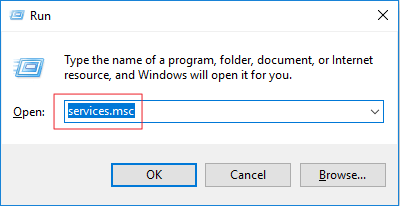
1. Press the Windows logo key + R at the same time to open the Run dialog box.
2. Type services.msc and press Enter.
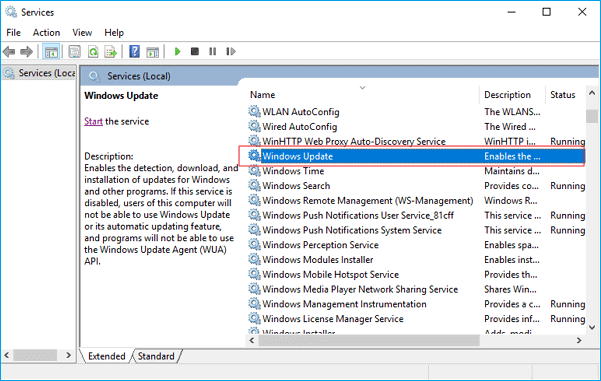
3. Scroll down to Windows Update, and double-click it.
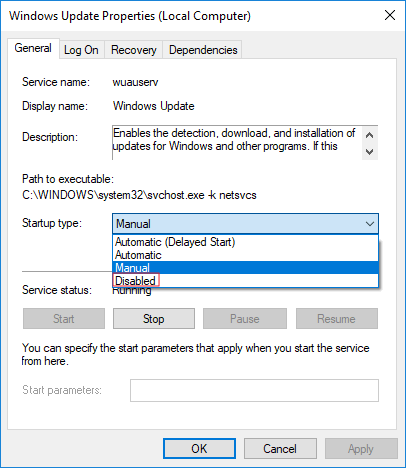
4. In the Startup type section, select "Disabled" and then click "Apply" and "OK" to save the changes.
Solution 2. Change the Setting of the Group Policy Editor
The Group Policy feature is not available in the Home edition of Windows 10. It can only be used in the Professional, Enterprise, or Education versions to prevent automatic updates, allowing users to be notified of new updates without automatically installing them.
- To open the Local Group Policy Editor, press the Windows logo key + R, then type gpedit.msc and click OK.
- To change the Windows Update settings, go to the "Computer Configuration" section, then select "Administrative Templates", followed by "Windows Components", and finally "Windows Update".
- Double-click "Configure Automatic Updates".
- To disable Windows automatic updates, select "Disabled" in Configured Automatic Updates on the left, and click Apply and "OK" to save the changes.
To update your Windows version, you can go to Settings, then click on Update and Security, followed by Windows Update, and finally select Check for updates. If any updates are available, they will be downloaded and installed automatically.
Solution 3. Meter Your Network Connection
To disable automatic updates on a Windows 10 computer connected to WiFi, you can try this method. However, please note that this method may not work for Ethernet connections.
1. To access the Settings app on your desktop, click the Start button located at the bottom left corner of your screen, then select the "Settings" app from the list of available options.
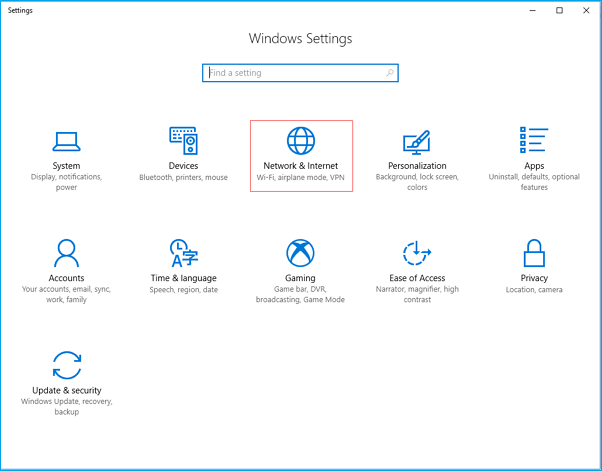
2. Click "Network & Internet".
3. Click WiF in the left pane, then click the name of your Wi-Fi connection in the right pane.
4. Click to turn on Set as metered connection.
Solution 4. Change the way of Windows 10 Updates Using Registry
Editing the registry can be risky and may cause irreversible damage to your installation if not done correctly. It's recommended to make a full backup of your computer before proceeding. To do this, use a backup software to back up your data in three steps.
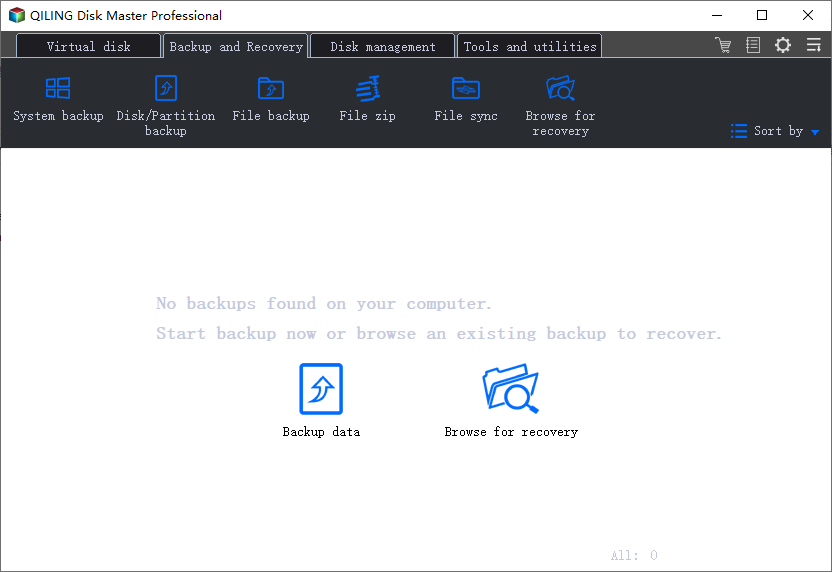
Step 1. Launch Qiling Backup software and then choose "File", "Disk/partition" or "OS" for different backup purpose.
Step 2. To back up your computer, choose the system, disk partition, files, or apps you want to save, and select a destination to store the backup file.
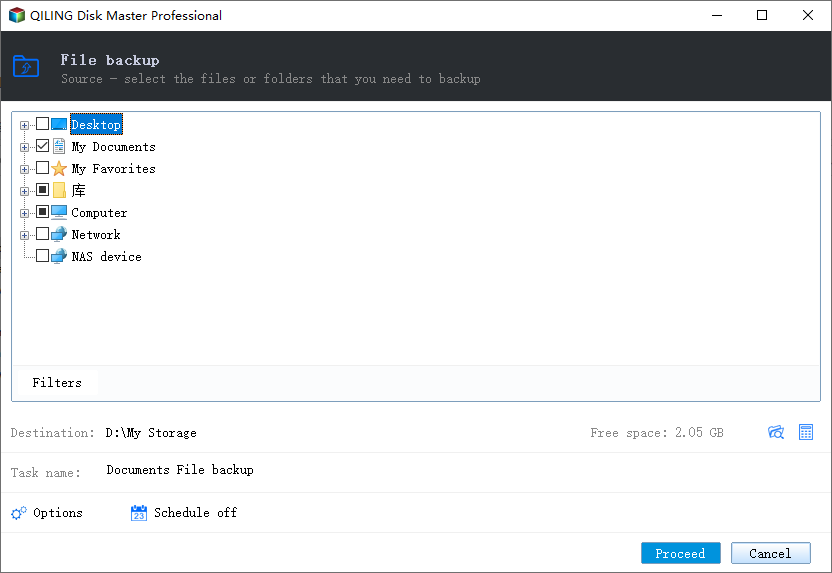
Step 3. Click "Proceed" to start the data backup process.
To customize Windows 10 updates without receiving forced updates, you can create a registry backup first, which will allow you to safely make changes to your update settings. Once you have a backup, you can proceed to customize your Windows 10 updates by making changes in the Registry.
1. The Windows key + R keyboard shortcut can be used to open the Run command.
2. Type regedit, and click OK to open the Registry.
Browse the following path: HKEY_LOCAL_MACHINE\SOFTWARE\Policies\Microsoft\Windows
3. Right-click the Windows (folder) key, select "New" and then click "Key".
4. Name the new key "WindowsUpdate" and press "Enter".
5. Right-click the newly created key, select "new", and click "Key".
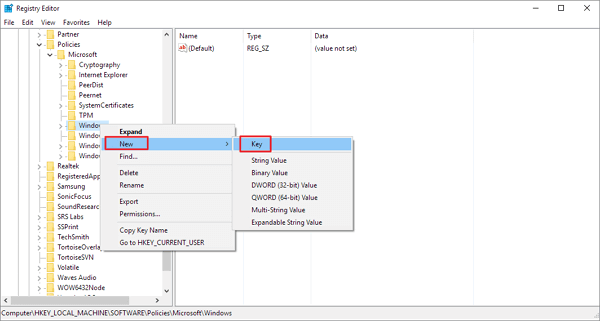
6. Name the new key AU and press Enter.
Inside the newly created key, right-click on the right side, select "New", and click on "DWORD (32-bit) Value".
7. Name the new key AUOptions and press Enter.
Double-Click the newly created key and change its value to 2. It's for "Notify for download and notify for install". Click "OK".
8. Close the Registry to complete the task.
To prevent Windows 10 from automatically downloading updates, you can set the value of the "AutoUpdate" DWORD to "0" in the Registry Editor. This will stop Windows 10 from downloading updates automatically and instead display a notification when new updates are available, giving you control over when to install them.
To disable Windows 10 updates, you can try various methods, each of which has been proven to work if you're willing to turn off all automatic updates. By following these steps, you can attempt to block Windows 10 from updating.
Related Articles
- Free Windows 10/8/7 Incremental Backup
- How to Clone GPT Disk to SSD in Windows 10/8/7 Without Boot Failure
- How to Backup SD Card to Google Photos [Everything Your Need to Know]
- How to Copy and Backup Files without Admin Rights
- How to Clone a Bootable Hard Drive in Windows 10/8/7
- Copy/Move Windows.old Folder to External Hard Drive
- 5 Methods to Reimage Dell Computer in Windows 10/8/7
If you fail to repair Windows operating system, it may be the time to factory reset it. Read the 5 methods to reimage Dell computer and find the most suitable one for your situation.
Products
Articles & Tutorials
- Data Recovery
- Data Backup
- File Recovery
- File Backup
- System Backup and Restore
- Disk and Partition Clone
- Technical articles
- Mobile articles
- Disk Master Help
- Windows Data Recovery Tutorials
- Windows Secure Delete Tutorials
- Windows Partition Management Tutorials
- Windows File Backup and Restore Tutorials
- Windows System Backup and Restore Tutorials
- Windows Disk Backup and Restore Tutorials
- Windows Clone Tutorials