[For All Users] How to Upgrade to Windows 11
| Page Content | Step-by-step Troubleshooting |
|---|---|
| Can I Update My Windows 10 to 11? | Check if you can upgrade to Windows 11 with...Full steps |
| Upgrade from Windows 10 to Windows 11 | Go to Settings > Update & Security > Windows...Full steps |
| Upgrade from Old Windows (7/8) to Windows 11 | There is no way for Windows 8 users to directly...Full steps |
| Essential Tool for Windows Upgrade | No matter you want to upgrade the system...Full steps |
| FAQs about Windows 11 Upgrade | Will I lose my files if I update Windows...Full steps |
Since the official release of Windows 11 on October 5, 2021, many users have upgraded to the latest operating system. As of January 2022, Windows 11 had a market share of 13.56%, which is a 3.41% increase from December 2021. Despite this progress, there are still a significant number of users who have not yet upgraded to Windows 11, prompting the need for a comprehensive guide to facilitate the upgrade process.
Can I Update My Windows 10 to 11?
To upgrade to Windows 11, you need to check if your current computer meets the minimum hardware requirements, which include a 4GB or greater RAM, UEFI system firmware with secure boot, and a TPM 2.0 version.
Qiling has developed a free gadget called Windows 11 Checker to help you quickly confirm if your computer meets the Windows 11 requirements. With this gadget, you can find out in minutes if your computer is compatible with the upgrade to Windows 11.
Step 1. Download Qiling Windows 11 Upgrade Checker.
Step 2. Click the Check Now button to start.
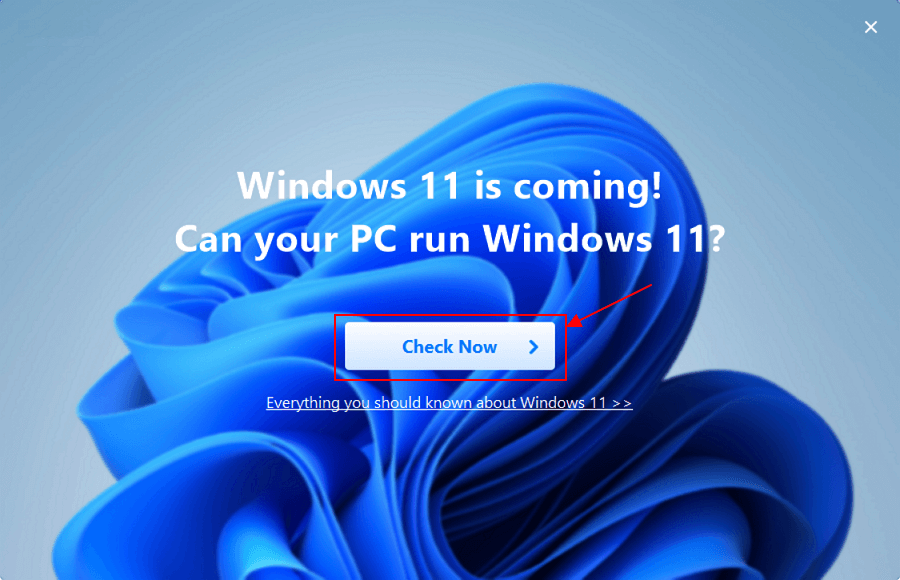
Step 3.The Windows 11 compatibility result window will soon appear, listing all incompatible and compatible configuration items.
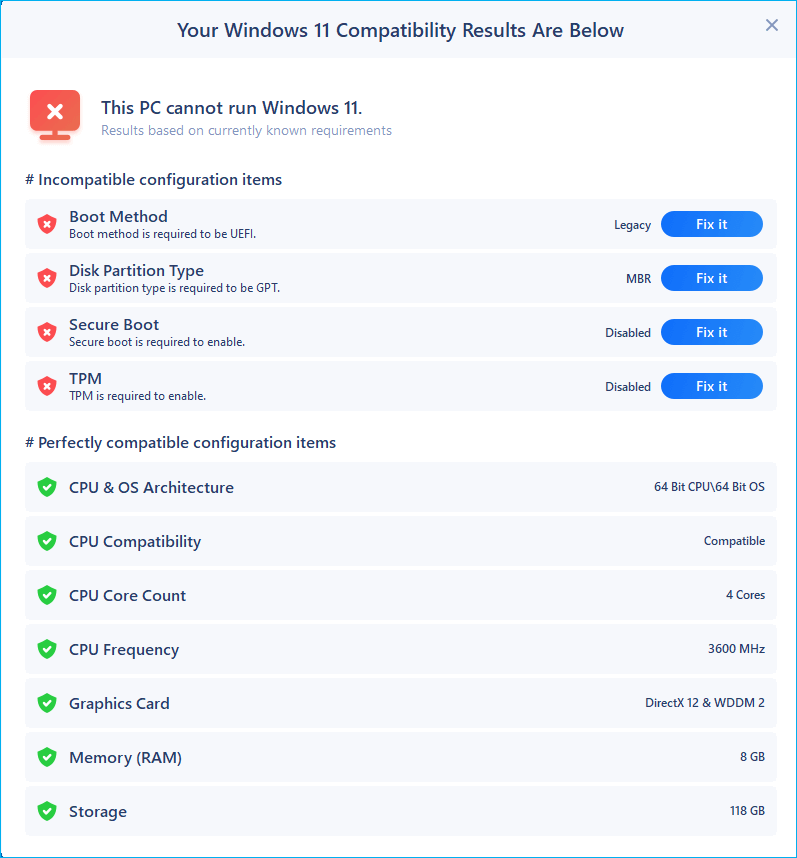
The main hurdles to upgrading to Windows 11 are TPM 2.0 and secure boot, with the latter being easily resolved by manual settings, but the former being more challenging to overcome. While some users may explore ways to bypass the TPM 2.0 check, Microsoft advises against doing so to obtain Windows 11 update permission.
How to Upgrade from Windows 10 to Windows 11
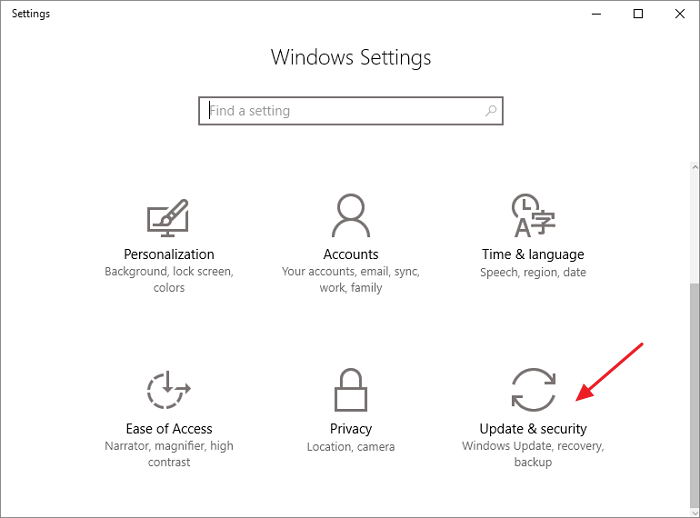
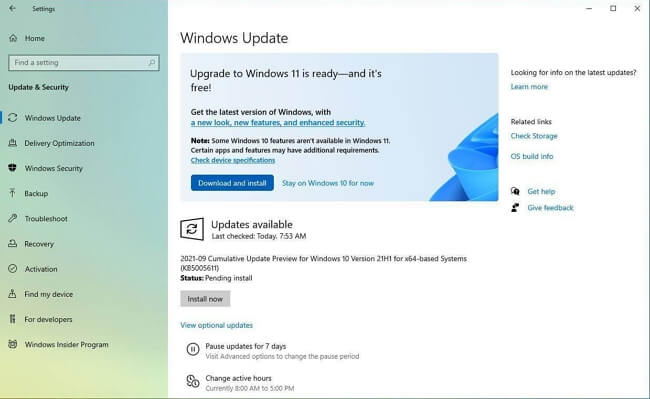
To upgrade from Windows 10 to Windows 11, go to Settings > Update & Security > Windows Update, where you'll find an update message allowing you to download and install Windows 11 for free. Click the "Download and install" button to begin the upgrading process.
If you don't see the notice, don't worry, click the "Check for updates" button and you'll know the latest available system.
Upgrade from Old Windows (7/8) to Windows 11
Some users are still using Windows 8 or Windows 7, but can upgrade to Windows 11 by taking a detour. (Note: I assume you meant to say Windows 8.1, not Windows 8, since Windows 8 is no longer supported)
Old Windows users can't directly download and install Windows 11, so they need to upgrade their computer to Windows 10 first. To do this, they can follow the steps to download and install Windows 10.
Step 1. To download Windows 10, go to Microsoft's Windows 10 download page and click on "Download tool now" under the "Create Windows 10 installation media" section. Note that the updating process requires running the tool as an administrator.
Step 2. Click the Download tool now button, and select Run. Read the precautions carefully.
Step 3. Read and accept the license term.
Step 4. When Windows prompts you, select the option to upgrade your PC now.
Step 5. The computer will then start downloading and installing Windows 10. This process may take a while, so be patient and let the computer do its job.
Step 6. When the system asks what to keep during the upgrade, you have three options: Keep personal files and apps, Keep personal files only, or Keep Nothing. If you want to preserve your data, choose Keep personal files and apps. If you already have a full backup, you can choose Keep Nothing for a clean install.
Step 7. After making your selections, choose the "Install" option. Your PC may restart several times during the upgrade process, so be sure to let it complete without shutting it down.
After upgrading to Windows 10, you can further upgrade to Windows 11 by following the upgrade tip. This will allow you to update to the latest version of Windows.
Essential Tools for Windows 11 Upgrade
Once and For All Data Protection - Qiling Backup
When upgrading the operating system or hard drive, preserving data is a top priority. System upgrades usually don't result in data loss, but upgrading from a hard disk drive (HDD) to a solid-state drive (SSD) requires a different approach. In this case, a tool like Qiling Backup can be used to both back up data and clone the hard drive, ensuring that all files and information are safely transferred to the new drive.
Free Data Backup: To create a free backup with Qiling Backup, follow the link provided to access the instructions on how to do so.
System/Disk Clone: To migrate an HDD to an SSD, follow the steps outlined in the article. This process typically involves cloning the contents of the HDD to the SSD, which can be done using software such as Qiling Disk Master.
FAQs about Windows Update
1. Will I lose my files if I update Windows?
You can upgrade your Windows without losing your personal files and apps, as long as you choose the "keep personal files and apps" option during the upgrade process. This ensures that your data remains intact.
Back up your system and important files using Qiling Backup software to make a precaution.
2. Will Windows 11 be a free Update?
For anyone who has purchased a Windows 10 license, the Windows 11 update is completely free.
3. Is it ok to upgrade to Windows 11?
Upgrading to Windows 11 from a PC that meets the minimum requirements is perfectly fine, as the new system has undergone rigorous testing before its official release, minimizing the risk of slowing down your PC.
4. Can I download Windows 11 now?
Windows 11 was officially released on October 5, 2021, and is available for download and installation from the Microsoft website.
5. Is Windows 10 being discontinued?
Microsoft is still supporting Windows 10 until 2025, allowing users to stay on the operating system even though Windows 11 has been released.
Related Articles
- Windows 10 Backup No Usable Drives Found [Updated Issue Solved!]
- What Is HP Cloud Recovery And How To Use It?
- Best Restore Point Creator for Windows & How to Use
- Upgrade Sony VAIO Laptop Hard Drive to SSD Step by Step
If your Sony VAIO laptop is experiencing system crashes or slow performance, upgrading or replacing the hard drive may be the solution. - 9 Fixes to 'Getting Windows Ready' Stuck in Windows 10/8/7
If you are stuck on the "Getting Windows ready don't turn off your computer" screen in Windows 10 or Windows 8, how to fix it? Here are some effective solutions.
Products
Articles & Tutorials
- Data Recovery
- Data Backup
- File Recovery
- File Backup
- System Backup and Restore
- Disk and Partition Clone
- Technical articles
- Mobile articles
- Disk Master Help
- Windows Data Recovery Tutorials
- Windows Secure Delete Tutorials
- Windows Partition Management Tutorials
- Windows File Backup and Restore Tutorials
- Windows System Backup and Restore Tutorials
- Windows Disk Backup and Restore Tutorials
- Windows Clone Tutorials