SSD vs HDD Durability for Gaming: What Matters
An SSD has no spinning platters and usually tolerates movement better than an HDD. That does not make it immune to failure, and gaming performance depends on more than the drive type.
Durability and game performance
HDDs contain moving parts that can be damaged by shock, especially while running. SSDs use flash storage, but their controller, firmware, or cells can also fail. An SSD generally improves loading and installation responsiveness; it does not guarantee higher frame rates when the CPU or GPU is the limiting factor.
Choose the right upgrade
- Check whether your PC supports a SATA or NVMe SSD and whether the slot or cable can fit the new drive.
- Estimate space for Windows, current games, future updates, and temporary installation files. Leave room for the SSD to operate normally.
- Decide whether you are replacing the entire system disk or moving only a game library. These are different migrations.
- Back up game saves separately. Steam Cloud or another launcher may not contain every local save or mod.
Move games without cloning Windows
For a game library, use the launcher's storage settings to create a library on the SSD and move supported installations. Verify one game launches from the new location before removing its old copy. If you are replacing the entire Windows disk, a disk clone may be more appropriate.
Keep either drive reliable
Monitor drive health, avoid sudden unplugging, keep firmware and Windows updated, and maintain a separate copy of saves. A brand-new SSD is still a single point of failure.
Clone the Disk with Qiling Disk Master
If the games and Windows share the HDD and you are replacing that whole disk, a disk clone can transfer the complete installation. For games only, prefer the launcher's move feature.
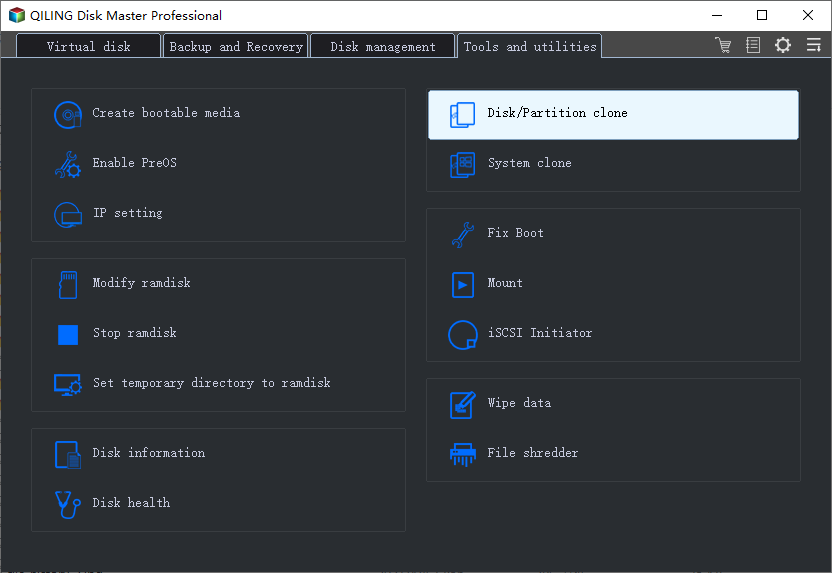
Step 1. Connect the destination drive. Open Tools and utilities in Qiling Disk Master and choose Disk/Partition clone. For a boot-drive replacement, choose the entire disk rather than only C:.
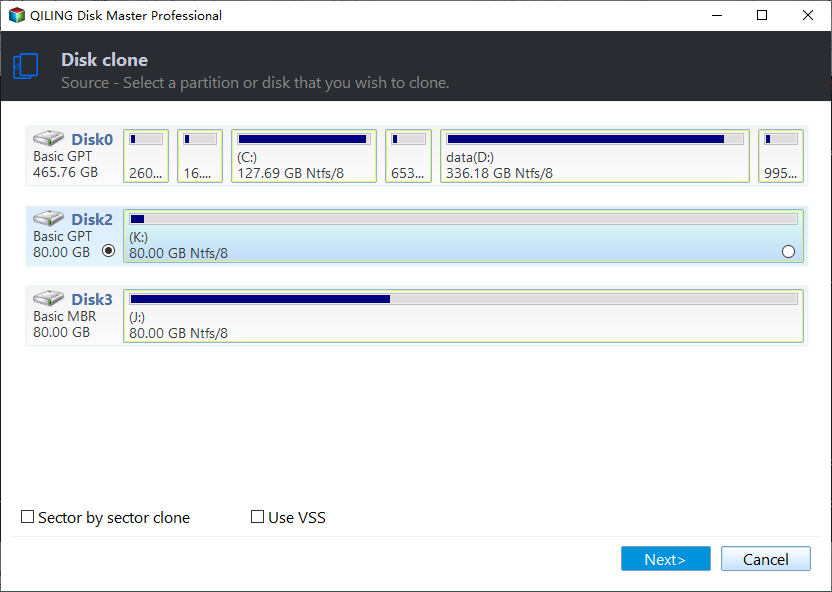
Step 2. Select the existing system disk as the source. Compare its model, capacity, and partition map; include the boot and recovery partitions. Click Next.
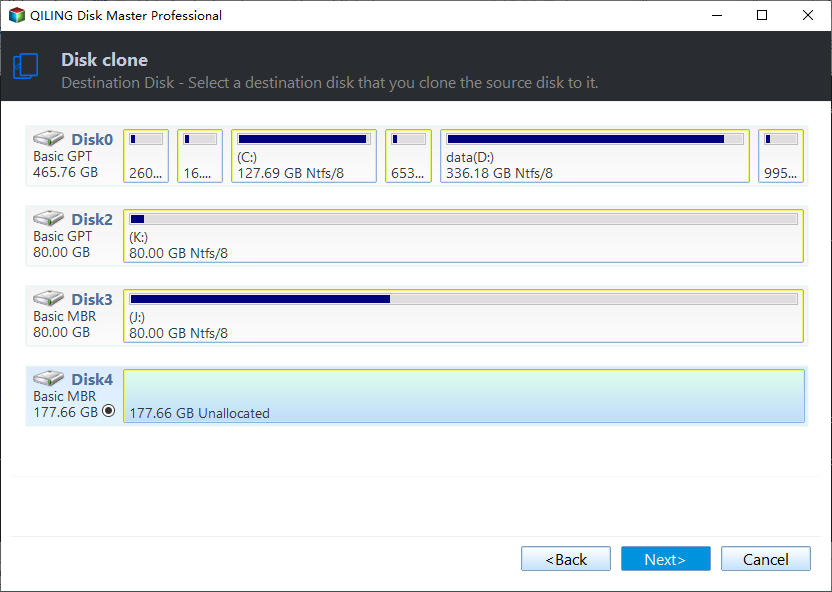
Step 3. Select the new drive as the destination by model and capacity, then click Next. Cloning overwrites this disk, so move its useful files elsewhere first.
Step 4. Inspect the source-to-destination layout. Ensure the required partitions fit; use Optimize for SSD when the destination is an SSD and that option is available. The screenshot illustrates the preview controls; verify your own whole-disk partition map.
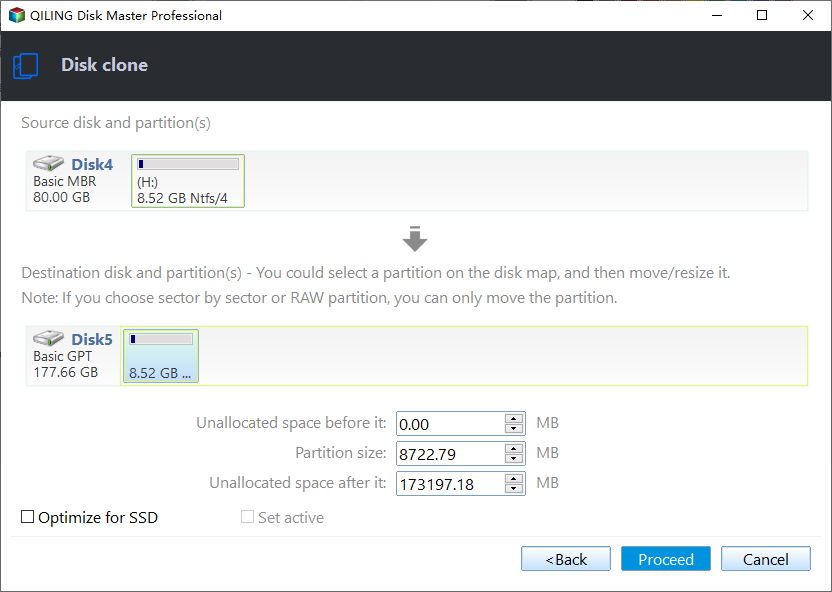
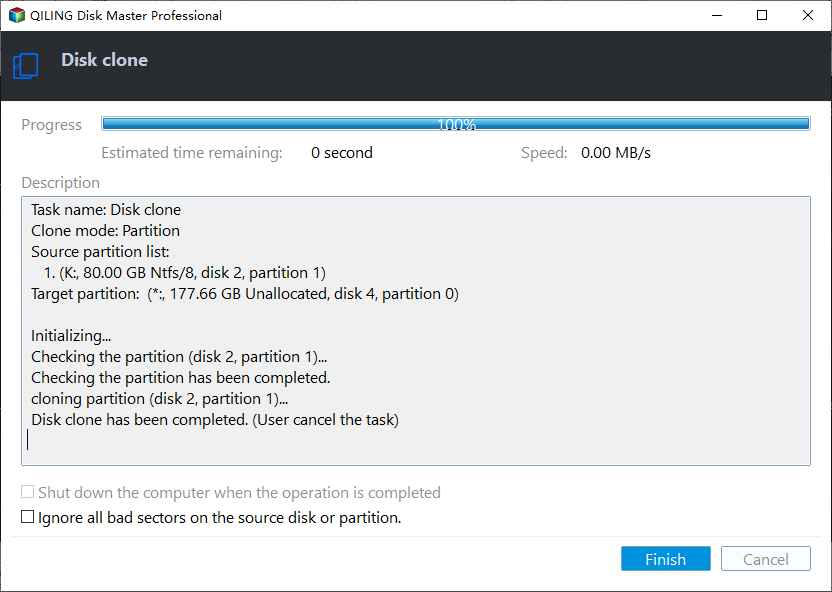
Step 5. Click Proceed. Read any overwrite warning and confirm only after rechecking the target disk. Keep both drives connected until the progress screen reports completion; then boot-test the destination before reusing the source.
Frequently Asked Questions
Will an SSD increase FPS? Usually the largest difference is load time; frame rates depend mainly on the rest of the PC.
Do SSDs need backups? Yes. Neither SSDs nor HDDs are failure-proof.
Conclusion
An SSD is usually a better gaming drive for loading and resistance to physical shock, but neither drive type eliminates the need to back up saves.
For the gaming impact of adding a 1TB SSD, read Will Adding a 1TB SSD Improve Laptop Gaming?
For a performance comparison rather than a durability comparison, see how HDD and SSD speeds differ in real workloads before deciding whether an upgrade will help.
Related Articles
- Windows Cloning Tutorials
Review practical HDD-to-SSD and system disk migration guides. - Windows Disk Backup and Restore Tutorials
Explore disk image backup and restoration workflows for Windows drives. - Windows System Backup and Restore Tutorials
Find system image, recovery drive, and restore guides for Windows.
Products
Articles & Tutorials
- Data Recovery
- Data Backup
- File Recovery
- File Backup
- System Backup and Restore
- Disk and Partition Clone
- Technical articles
- Mobile articles
- Disk Master Help
- Windows Data Recovery Tutorials
- Windows Secure Delete Tutorials
- Windows Partition Management Tutorials
- Windows File Backup and Restore Tutorials
- Windows System Backup and Restore Tutorials
- Windows Disk Backup and Restore Tutorials
- Windows Clone Tutorials