[New] How to Install and Run 64 Bit Programs on 32 Bit Windows 10/8/7
32-bit operating systems, like Windows 7, can run 32-bit programs, but not 64-bit programs. However, 32-bit operating systems can run 64-bit programs through a compatibility layer called WoW64, which allows 64-bit programs to run on 32-bit operating systems, but not the other way around.
If you have the same needs, you can find the answers you're looking for by following the content navigation below.
PAGE CONTENT:
- Can I Run 64-Bit Software on a 32-Bit System
- Solution 1. Download and Install 32-bit Version of Programs on 32-Bit OS
- Solution 2. Upgrade Windows 10/8/7 from 32-Bit to 64-Bit
- Solution 3. Use VMware to Run 64-Bit Programs, Application, and Software
Can I Run 64-Bit Software on a 32-Bit System?
Unfortunately, it's not possible to run a 64-bit program on a 32-bit system. However, you can upgrade your Windows 10 from 32-bit to 64-bit for free. To do so, go to Settings > Update & Security > Activation, and click on "Update now" under the "Update now" button. This will download and install the 64-bit version of Windows 10, allowing you to run 64-bit software. Please note that this process will erase all your files, so make sure to back up your data before proceeding.
Unfortunately, it's not possible to run a 64-bit game on a 32-bit Windows operating system. The 64-bit architecture is not compatible with the 32-bit architecture, and Windows 10 32-bit cannot support 64-bit applications. You may want to consider upgrading your Windows operating system to a 64-bit version if you need to run 64-bit games. Alternatively, you can also consider using an emulator or a virtual machine to run the 64-bit game, but this might not be the most efficient or recommended solution.
Many Windows users experience a warning when trying to install 64-bit software on their 32-bit computers, with Microsoft advising them to check with the software publisher for a compatible version.

Due to the 32-bit and 64-bit limitations on Windows operating systems, software and applications that don't match the system's version cannot be run on Windows 10, 8, 7, Vista, or XP.
64-bit software can't be installed on a 32-bit computer, but 32-bit software can be installed on a 64-bit computer if the OS is compatible with 32-bit apps.
Yes, it is possible to fix the issue. You can find the solution by continuing to read this text, where answers will be provided.
3 Solutions to Run 64-Bit Programs on 32-Bit Windows 7/8/10
Here are three solutions to run 64-bit programs on 32-bit Windows 7/8/10:
#1. Download and Install 32-Bit Version of Program on 32-Bit OS - Normal Way
To upgrade Windows 10/8/7 from 32-bit to 64-bit, you can follow these steps: First, go to the Microsoft website and download the Windows 10/8/7 64-bit ISO file. Then, create a bootable USB drive or CD/DVD with the downloaded ISO file. Next, boot your computer from the USB drive or CD/DVD and follow the installation prompts to upgrade to Windows 10/8/7 64-bit.
#3. Use VMware to Run 64-Bit Programs, Application, and Software - Alternative
Note that the provided methods work in different situations. Please pick up the right one to resolve your problem.
IMPORTANT: Backup Important Files on 32-Bit OS
As for upgrading 32-Upgrading from a 32-bit OS to a 64-bit OS, installing 64-bit programs on a 32-bit computer, or performing daily operations on computers may cause data loss. To avoid this, it's essential to back up vital data and even the OS before taking any action.
Qiling Backup allows Windows users to easily back up their data with a few clicks, making it a convenient option for users with Windows 10, 8, or 7 operating systems.
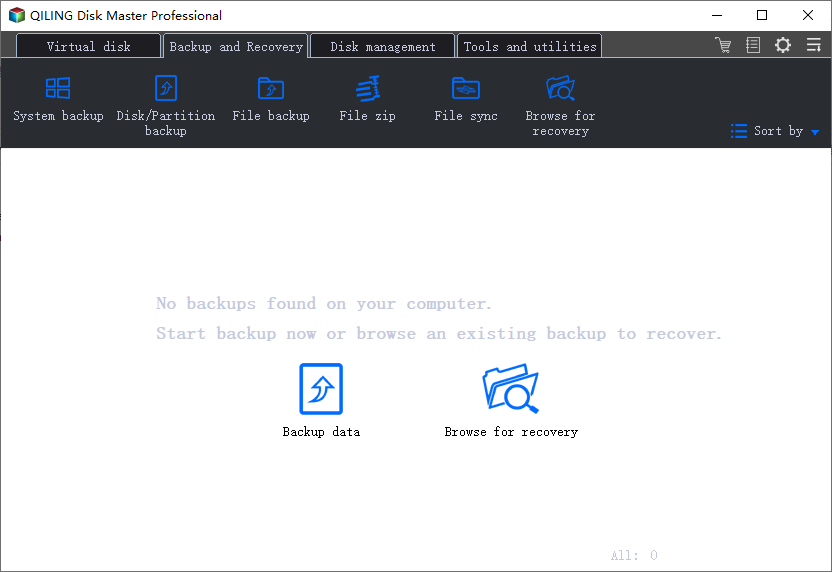
Step 1. Open Qiling Backup and select "File backup" as the backup mode.
You have a lot of important data like documents, pictures, music, and videos that you want to protect, so it's a good idea to back them up regularly. This can help you recover from unexpected data loss.
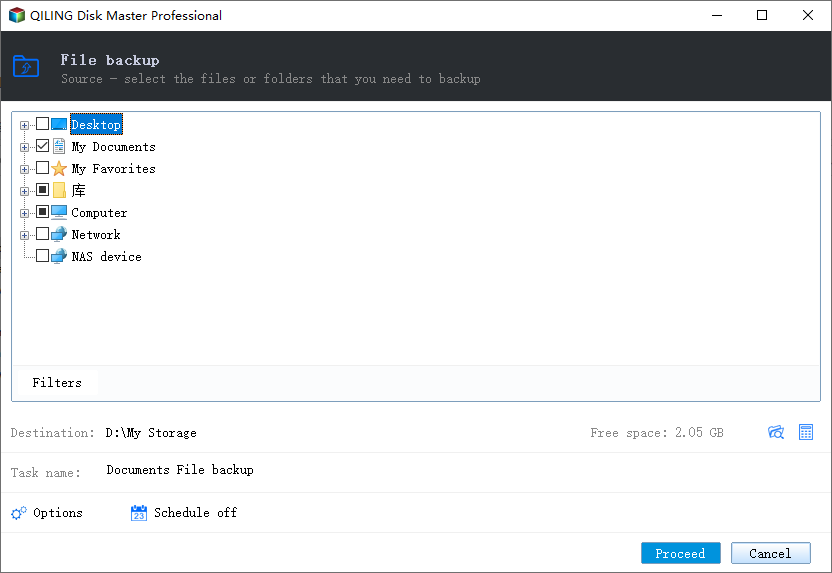
Step 2. Select the files that you want to back up.
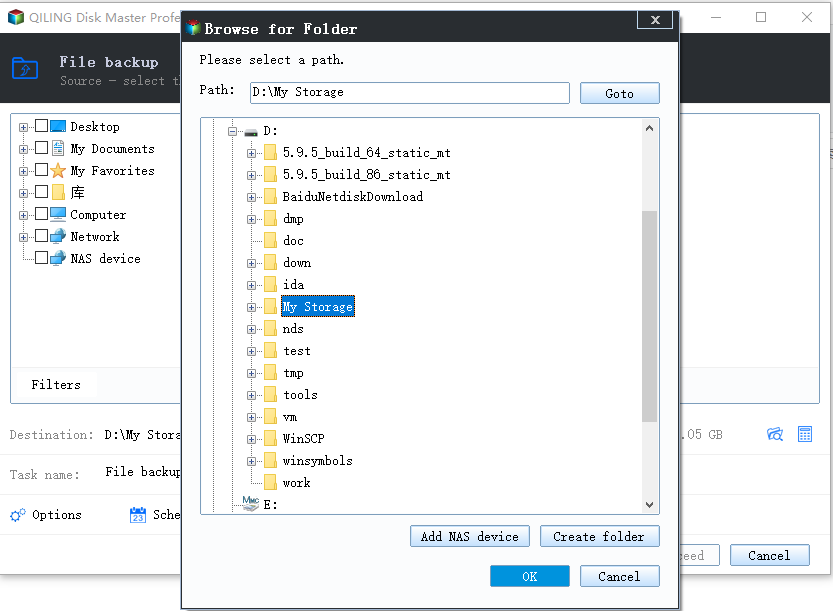
Step 3. Select a destination to save your backup of the selected files.
To minimize the risk of data loss, it's recommended to create a backup file in a separate storage media or drive, ensuring that the original data and backup are kept in different locations. This way, even if one location is compromised, the other will remain intact.
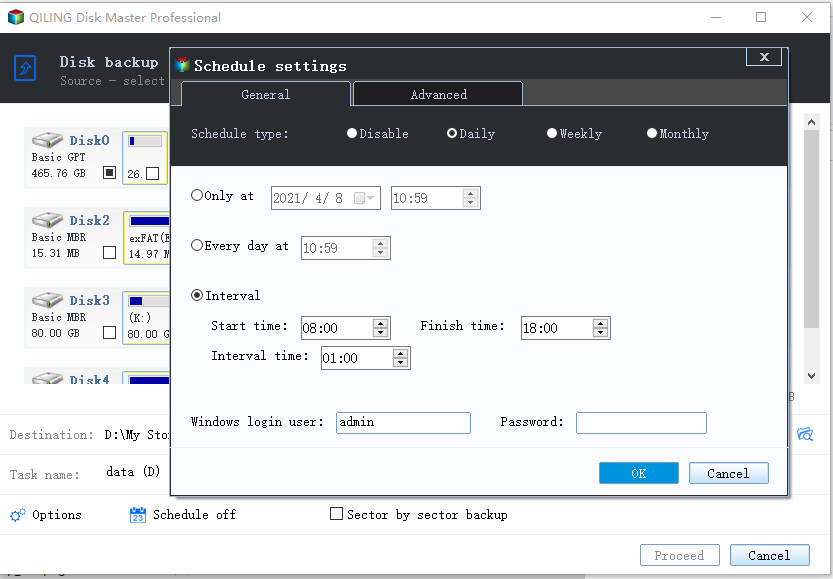
Advanced backup settings offer a flexible and automatic backup plan, allowing you to tailor your backup routine to suit your specific needs.
The schedule is to create an automatic backup plan.
The Image-The strategy is to reserve the limited image based on the image retention rule.
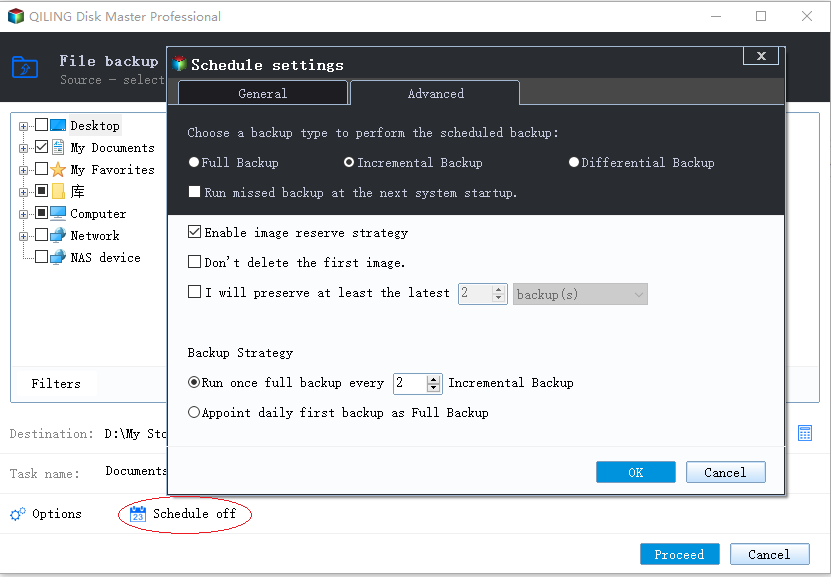
Backup options are to edit the advanced parameters.
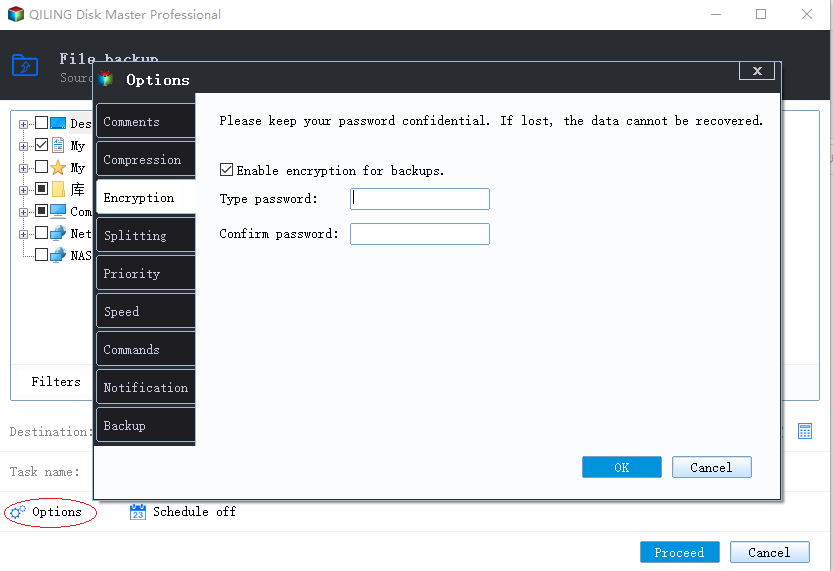
Advanced backup settings are typically used to customize and fine-tune the backup process, but they are not necessary for the initial backup to be successful. Users can still perform a basic backup without configuring these settings.
Step 4. Click "Proceed" to execute your operation.
Solution 1. Download and Install 32-bit Version of Programs on 32-Bit OS
To resolve software compatibility issues, download and install 32-bit programs and applications on 32-Bit Windows 7/8/10, use the following approach: Install the 32-bit version of the program or application, which is compatible with the 32-bit operating system. This will ensure that the software runs smoothly without any compatibility issues.
To avoid OS compatibility issues, install the correct version of software and applications on your corresponding operating system version.
- On 32-Bit OS: Install 32-Bit Version of Programs
- On 64-Bit OS: Install 32-Bit Version of Applications
Here are the steps to download 32-bit programs on your 32-bit computer:
If you download programs from the Windows Store, it will automatically list the 32-bit version for you, eliminating the need to check for it separately.
Step 1. Open Windows Store and search the programs, software, applications that you need.
Step 2. Download and install the found application, program, software on your 32-bit computer.
Step 3. After downloading, run and activate the downloaded 32-bit of apps on your PC.
You can also search the internet or contact the software producer to find a 32-bit version of your program, download it, and run it immediately.
Solution 2. Upgrade Windows 10/8/7 from 32-Bit to 64-Bit
Applies to: Upgrade 32-Bit of OS to 64-Bit so to install and run 64-Bit Programs.
If a game or program only has a 64-bit version, or if you don't want to buy a 32-bit version, you can still use it on a 32-bit system by using a compatibility mode or a virtual machine. This way, you can run the 64-bit program on your 32-bit system without needing to purchase a separate 32-bit version.
To convert a 32-bit operating system to 64-bit, you can follow a two-phase process. First, you'll need to upgrade your Windows 7, 8, or 10 to a 64-bit version, which involves installing a 64-bit version of the operating system. This will allow you to run 64-bit programs and take advantage of the increased memory capacity. The second phase involves installing the 64-bit version of the operating system, which will replace the existing 32-bit version, and you'll be able to run 64-bit programs and take advantage of the increased memory capacity.
Phase 1. Check if Your PC Is 64-bit Compatible
Before you upgrade 32-To upgrade from a 32-bit OS to a 64-bit OS, you need to confirm that your computer's hardware, processor, and CPU are compatible with 64-bit, as well as the drivers.
#1. Check if PC Is 64-Bit Capable
Step 1. Open the search menu and search for System Information.
Step 2. Click to open System Information.
Step 3. Click "System Type" to check if your computer is capable of running the 64-bit version of Windows.
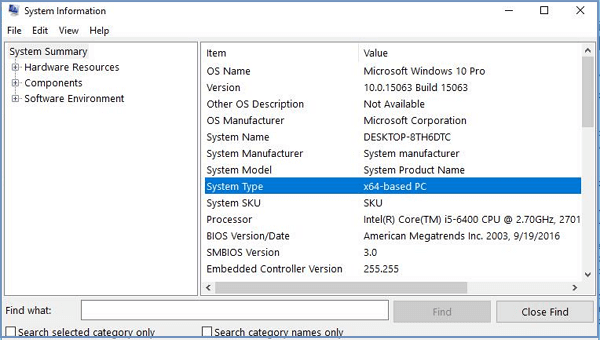
If you see x64-If your computer is labeled as an x64-based PC, it can run a 64-bit version of Windows. However, if it's labeled as an x86-based PC, it can only run a 32-bit version of Windows.
#2. Check if Processor Supports Windows 64-Bit
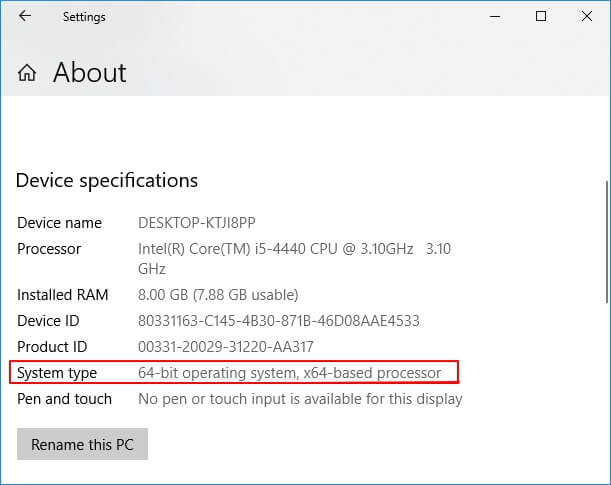
Step 1. Open Settings, click on "System" > "About".
Step 2. Check if the Installed RAM is 2GB or higher.
If you have less than 2GB of RAM, we recommend sticking with a 32-bit operating system to ensure compatibility and optimal performance.
Step 3. Check if the System type details.
If it reads as the x64-64-bit processor allows running 64-bit operating systems and applications, which can utilize more RAM and provide better performance. This means that you can upgrade your computer from 32-bit to 64-bit, enabling it to handle more demanding tasks and run more applications simultaneously.
#3. Determine Drivers Compatibility
In addition to the processor, it's also crucial to ensure that other essential components, such as graphics and sound cards, as well as disk drivers, are compatible with the 64-bit version of Windows OS. This will help prevent potential issues and ensure a smooth installation and operation of the system.
To do so, you need:
- If you're running Windows 10 32-bit on relatively new hardware, the 64-bit version of drivers is likely compatible with it.
- Check your device manufacturer's website to confirm if the components have drivers available for 64-bit systems.
If your PC is compatible with a 64-bit operating system, you can proceed with the next steps.
Phase 2. Upgrade to Windows 7/8/10 64-bit
To upgrade from a 32-bit Windows OS to 64-bit, let's take installing Windows 10 as an example. The process involves upgrading the 32-bit OS to 64-bit, and here are the steps:
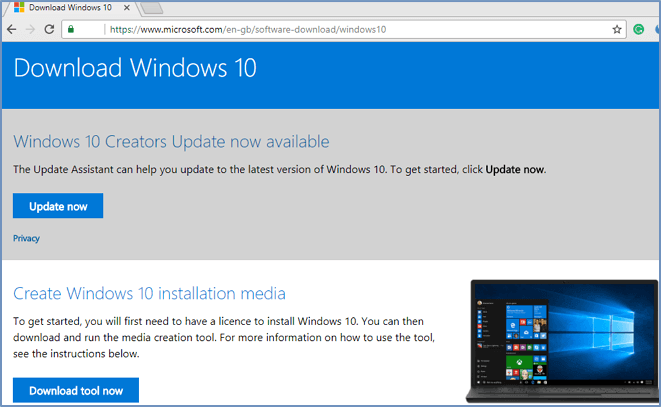
Step 1. Go to the Microsoft official site to download the Windows 10 media creation tool.
Step 2. Connect an empty USB with at least 8GB to your PC.
Step 3. Double-click to run MediaCreationTool.exe follow the on-screen guidelines to create the Windows 10 64-bit Installation media on USB.
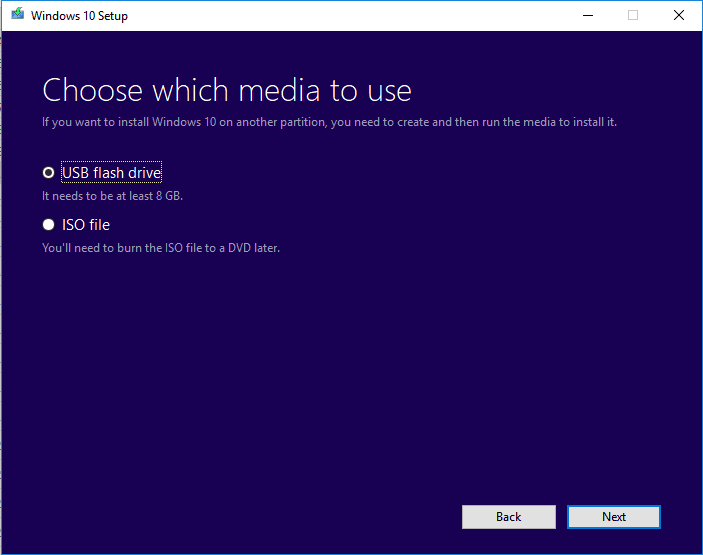
Step 4. Restart PC and set to boot the computer from the USB installation media.
Step 5. Start installing Windows 10 64-bit on your 32-bit computer by setting the language, edition, architecture, etc.
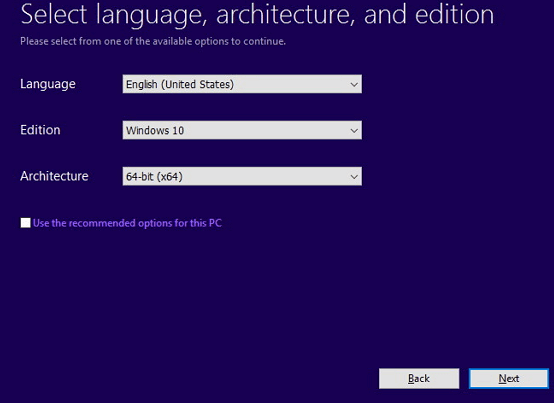
Step 6. Follow the on-screen instructions to complete installing Windows 64-bit OS on your 32-bit computer.
Notice:
After installing the software, double-check that your data are secure on the computer.
If you lost precious data, you can recover lost data from backup using Qiling Backup.
Solution 3. Use VMware to Run 64-Bit Programs, Application, and Software
Applies to: Running 64-To run a 64-bit OS on a 32-bit computer without reinstalling Windows, you can use a VMware machine. This involves installing VMware on your 32-bit computer, then creating a virtual machine and installing a 64-bit OS within it.
Virtual machines allow you to run an operating system on your desktop computer without replacing the old operating system, essentially creating a virtual environment that can coexist with the existing one.
You can keep both the old 32-bit OS and run a 64-bit OS on the same computer via a VMware machine. This allows you to install and run all types of 64-bit programs, applications, and software on the 32-bit computer without any issues. The 64-bit OS running in the VMware machine provides a separate environment where you can take full advantage of 64-bit capabilities, while still being able to run 32-bit programs and applications on the original OS.
If you are running a 32-64-bit OS on 64-bit hardware can run 64-bit guests, and 64-bit OS on 32-bit hardware can also run 32-bit guests, but a 32-bit OS on 64-bit hardware can only run 32-bit guests, and a 32-bit OS on 32-bit hardware can only run 32-bit guests. However, a 64-bit OS on 64-bit hardware can run 32-bit guests using VMWare. A 64-bit guest can run on a 32-bit host if the hardware supports it.
Step 1. Pick up and install a suitable virtual machine.
There are several virtual machine programs available, including VirtualBox, VMware Player, VMware Fusion, and Parallels Desktop, which allow users to run multiple operating systems on a single computer.
VMware is widely used by Windows users.
Step 2. Download the 64-bit Windows ISO file and run the VMware machine.
Step 3. Select to install the 64-bit version of OS.
Step 4. Set a hard drive to install the 64-bit OS on.
You'll be guided through the process by a wizard that first asks which OS you'll be installing. Simply choose the 64-bit version OS and follow the virtual machine's directions.
Step 5. Restart the VMware machine once you complete installing the OS.
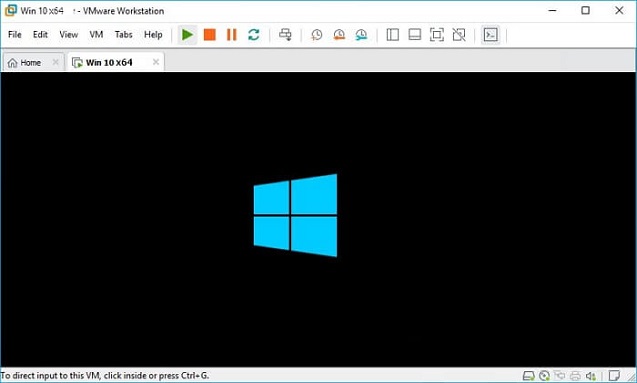
Step 6. Download and install to run the 64-bit programs, apps, and software on your computer.
After this, you can run the 64-bit programs on your 32-bit computer then.
To Wrap It Up
Windows doesn't allow you to directly run a 64-bit program on a 32-bit computer, but there are three resolutions to help you fix this issue.
Before using any method to transfer data, make sure to create a full backup of your important data in advance. This will ensure that your files are safe, and you can try using Qiling Backup for a reliable transfer process.
For those who want to stay with Windows 32-bit, downloading and installing a 32-bit version of applications is the best option.
You can install a 64-bit version of Windows on a 32-bit computer using a VMware machine, and then run 64-bit programs on the 32-bit computer.
If your computer supports 64-64-bit programs can be run on a 32-bit computer by either upgrading the OS to 64-bit or by running the 64-bit programs in a virtual machine, but the safest and most straightforward method is to clean install a 64-bit OS on the 32-bit computer. This approach ensures that the computer is fully compatible with 64-bit programs and doesn't require any additional software or configuration. It's a clean slate, allowing the 64-bit programs to run smoothly without any issues.
Related Articles
- Windows 10/8/7 System Restore Points Not Working
- Backup NAS Files with Best Free NAS Backup Software
- [Download] Windows 10 Recovery Tool for 32 Bit and 64 Bit
- Hard Disk Backup in Windows 10/8/7 [Beginners' Guide]
- Can I Still Use Windows 7 After 2020 and Get Security Updates?
Can I still use Windows 7 after 2020? Definitely, you could use it as before but you need to do so at your own risk. So please learn more about Windows 7 end of life extended and make your decision. - How to Clone Windows 7 to Multiple Computers Simultaneously?
You will learn how to easily clone Windows 7 to multiple computers with all-in-one backup software. Also, it is able to clone Windows 7 to new computer.
Products
Articles & Tutorials
- Data Recovery
- Data Backup
- File Recovery
- File Backup
- System Backup and Restore
- Disk and Partition Clone
- Technical articles
- Mobile articles
- Disk Master Help
- Windows Data Recovery Tutorials
- Windows Secure Delete Tutorials
- Windows Partition Management Tutorials
- Windows File Backup and Restore Tutorials
- Windows System Backup and Restore Tutorials
- Windows Disk Backup and Restore Tutorials
- Windows Clone Tutorials