Best Windows Schedule Backup Software for Automatic Backup
- You don't have time to back up the data right now, but don't worry, you can set a schedule to back up later. This way, you can ensure that your important files and data are safely stored and protected, even if you're unable to do it manually.
- Set a regular schedule to back up your computer's important data to prevent loss in case of a system failure or other issue.
- Your system undergoes significant changes, including an operating system upgrade, which can be a major overhaul.
Why Do You Need Schedule Backup
A schedule backup plan allows you to automatically backup your computer data and hard drive partition files in Windows 10/8/7 and Server machines, providing convenience and peace of mind.
While some might consider using File History for scheduled backups, a more efficient and time-saving approach is to use powerful backup software to automate the process.
File History and backup software serve different purposes. File History is a built-in feature in Windows that automatically backs up files to an external drive, but it lacks the flexibility and features of a dedicated backup software. Backup software, on the other hand, offers a range of advanced features, including scheduling, encryption, and versioning, making it a more powerful and reliable choice for protecting your data.
Recommended Schedule Backup Software
Automatically backing up personal files, essential data, and even encrypted files on your computer can give you a second chance to restore your data in case it's lost or your computer dies.
To create a scheduled backup, you can use Qiling Backup, a reliable software that allows you to automate your backups.
| Overview | Backup Option | Schedule Option |
|---|---|---|
|
>Supported OS: Windows 10/8.1/8/7/XP/Vista Supported Backup Modes: File Backup, Disk Partition Backup, System Backup |
Backup at System startup Ignore bad sector Support deduplicate data Password protected data |
Schedule Type: One-Tine Backup Schedule Type: Daily Schedule Type: Weekly Schedule Type: Monthly |
PLUS: If you're a Server User in need of Windows Server scheduling backup software, I can assist you with that. Please refer to the relevant information for help.
- Qiling Backup Server version for Download
- And follow Schedule backup - automatically perform a backup on Windows Server for a guide.
How to Perform Scheduled Backup Tasks with Qiling Backup
1. Launch the Qiling backup program, then click to select the desired backup mode from the options: File Backup, Disk Partition Backup, or System Backup.
2. To ensure your important files and data are protected, consider creating a scheduled backup plan for your files, hard drive partition data, or even the entire System itself. This will safeguard against data loss in case of hardware failure, software corruption, or other unforeseen events.
3. Click "Schedule: Off" to start setting your automatic backup task now.
Regardless of whether you're creating a file backup schedule or a disk/partition backup schedule, select the data you want to backup and then follow the examples below.
To automatically backup files to a USB drive using Qiling Backup, follow these steps: First, download and install Qiling Backup software. Then, connect your USB drive to the computer.
To automatically back up files to a USB drive, you can use a schedule backup software. This software will allow you to set up a backup routine that runs at regular intervals, such as daily, weekly, or monthly, to save your important files to an external USB drive.
Preparations:
- Connect your USB to your computer
- Download Qiling Backup
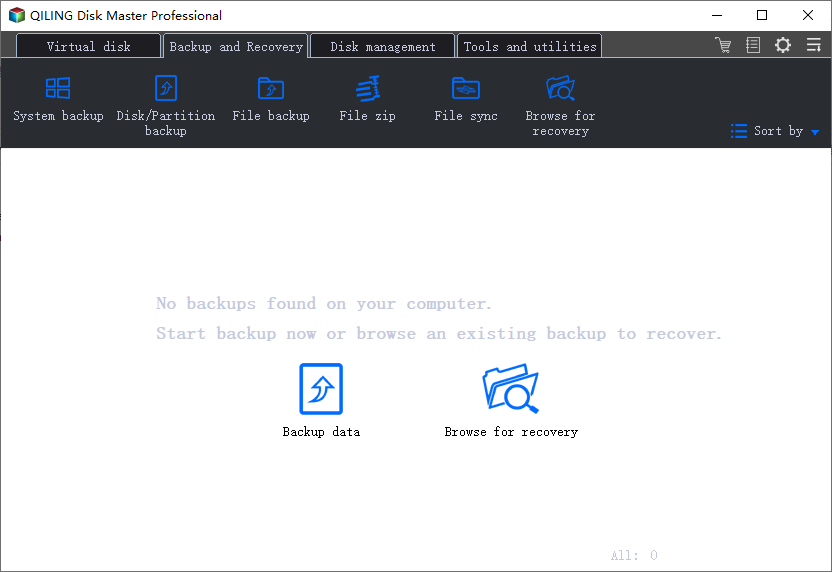
Step 1. Launch Qiling backup software and choose "File backup" on the window to make USB auto copy files.
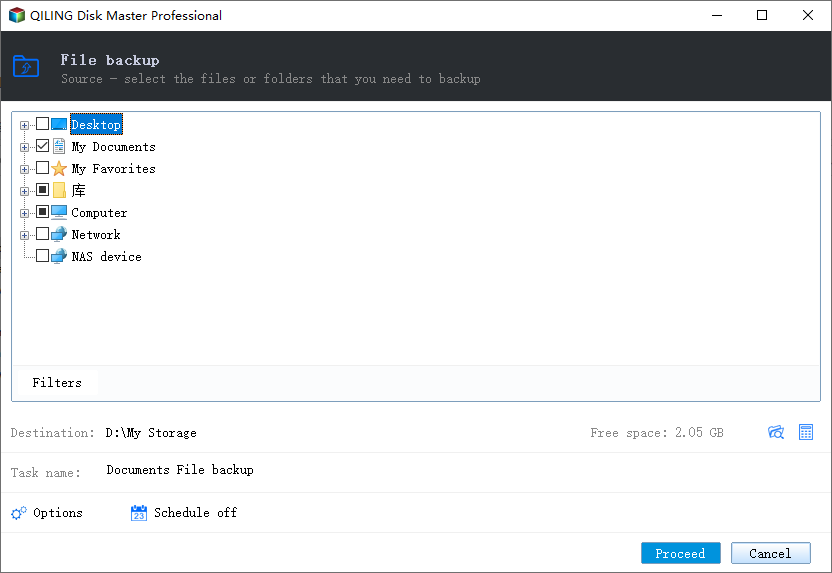
Step 2. Select the files or folders you want to backup, then choose the external hard drive as the destination for the backup.
You can enter a "Plan name" and "Description" to specify your file backup.
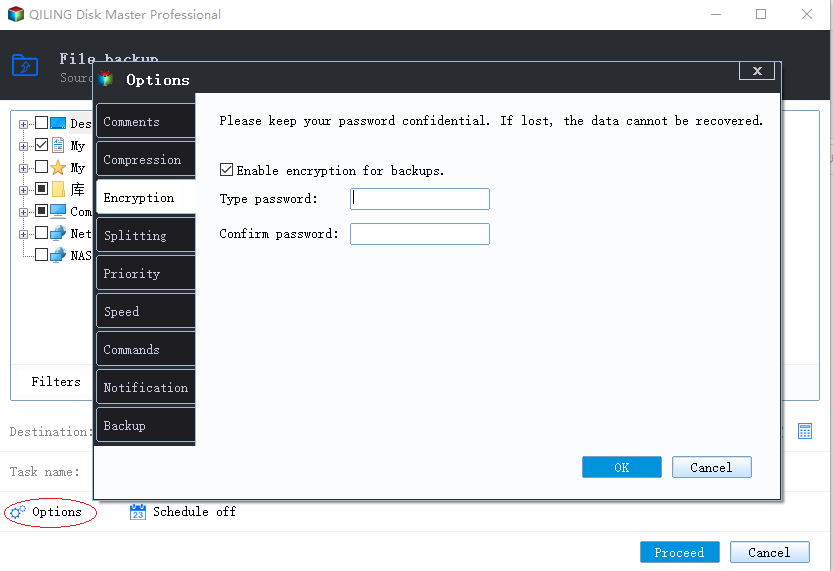
The software offers advanced backup plans in the "Options" section, allowing users to compress the backup image, encrypt it for privacy protection, and even perform a sector-by-sector backup.
Step 3. To create a scheduled backup plan, click the "Schedule" option to open the Backup Scheme window, where you can set up a plan to automatically backup files at a later time, on a daily, weekly, or monthly basis.
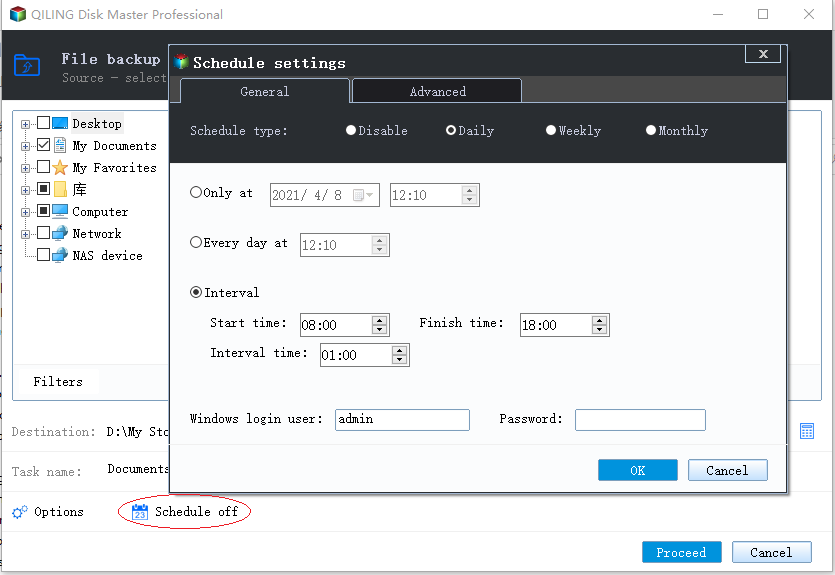
The schedule is for creating an automatic backup plan, which is not a prerequisite for backup.
The "Advanced > Enable image reserve strategy" feature allows for efficient management of growing backup images, enabling the preservation of backups based on setup time or quantity.
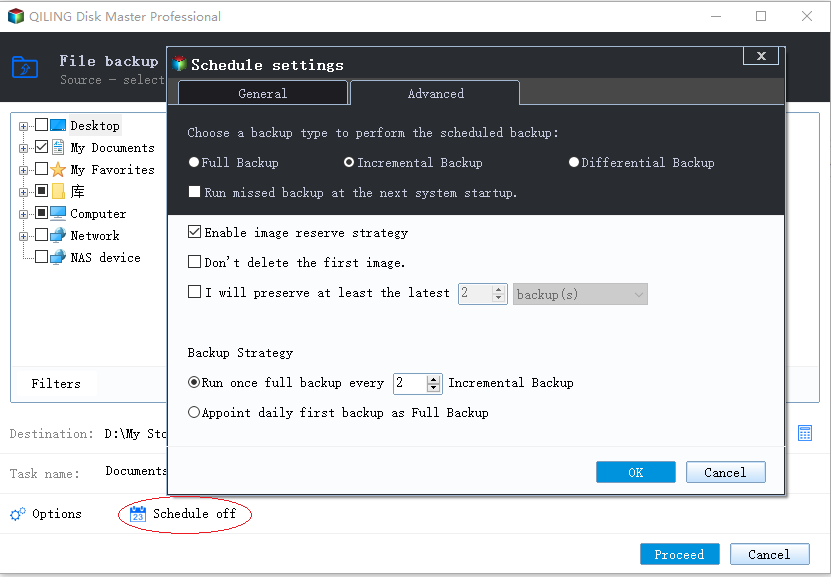
Step 4. Click "Proceed" to back up folders or files to the external hard drive.
Related Articles
- How to Clone Windows 10/8/7 to Another Computer
- Ghost Windows 7 Using Hard Drive Ghost Software
- How to Ghost Windows 10 64-bit System and Applications Easily
- Restore Windows 10/8/7 System Image to New/Different Computer
- How to Clone a Hard Drive on Windows & Mac [2021]
- How to Fix Windows 7 via Startup Repair or CHKDSK from Command Prompt?
This article helps to disable Windows 7 Startup Repair and fix Windows 7 Startup Repair loop via CHKDSK or Bootrec command prompt.
Products
Articles & Tutorials
- Data Recovery
- Data Backup
- File Recovery
- File Backup
- System Backup and Restore
- Disk and Partition Clone
- Technical articles
- Mobile articles
- Disk Master Help
- Windows Data Recovery Tutorials
- Windows Secure Delete Tutorials
- Windows Partition Management Tutorials
- Windows File Backup and Restore Tutorials
- Windows System Backup and Restore Tutorials
- Windows Disk Backup and Restore Tutorials
- Windows Clone Tutorials