How Do I Upgrade Gaming PC? [Beginners Guide]
Get ready to upgrade your gaming PC! This tutorial provides a detailed and beginner-friendly guide to help you boost your computer's performance and take your gaming experience to the next level. Whether you're looking to upgrade your hardware, optimize your system, or simply learn more about PC gaming, we've can help.
Here, we'll discuss upgrading the following 4 hardware devices in your gaming PC:
PAGE CONTENT
Detailed steps with warming update tips will all be included. Let's start!
#1. Upgrade CPU in Gaming PC
To select a suitable CPU, consider the type of tasks you'll be using your computer for, such as gaming, video editing, or general productivity. Look for a processor with a high clock speed (measured in GHz) and a sufficient number of cores (at least 4) to handle multiple tasks simultaneously. Also, consider the architecture and generation of the processor, as newer generations often offer improved performance and power efficiency.
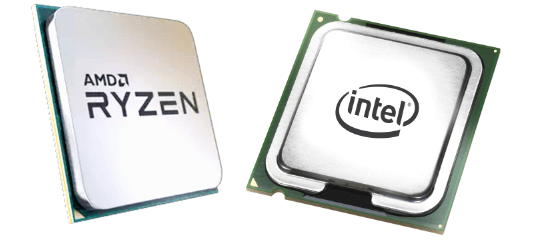
Tips for selecting a proper CPU to upgrade the gaming PC:
- CPU must be compatible with the motherboard in your PC.
- When it comes to gaming, clock speed is more crucial than the number of cores. This is because a higher clock speed allows for more instructions to be executed per second, making it easier to render graphics and perform other computationally intensive tasks.
- A strong CPU is as important as your RAM, graphics, and storage.
- If you have a higher budget, consider choosing AMD over Intel. AMD processors tend to be faster in tasks like video editing and running other demanding programs, making them a good option if you need a powerful machine.
Referral List of Top Gaming CPUs:
- Intel Core i5-11600K
- AMD Ryzen 9 5950X
- AMD Ryzen 9 5900X
- Intel Core i5-11400
- AMD Ryzen 3 3300X
- AMD Ryzen 5 3400G
Steps to Upgrade CPU in Gaming PC:
Step 1. Remove the Side Panel of your gaming computer.
Step 2. Locate and remove the CPU cooler - computer fan.
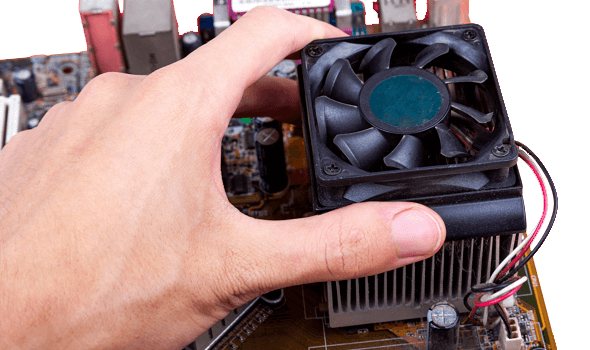
If the fan is covered with dust, clean it by the way. If the fan is not turning on, check the power source and make sure it's properly plugged in.
Step 3. Clean the Contact Patch of the CPU cooler.
Step 4. Lift the retention arm of the CPU socket.
Step 5. Remove the old CPU and insert the new CPU.
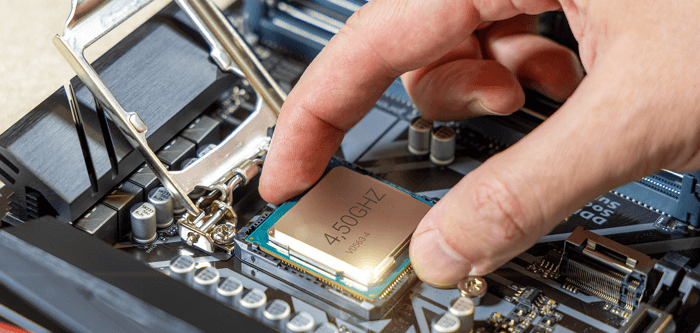
Step 6. Apply the thermal paste and install the CUP cooler.
Step 7. Re-attach and fasten the side panel.
#2. Upgrade RAM Memory
Good RAM guarantees that your gaming computer can achieve peak performance. For a peculiar RAM, you can check deeper into the following specifics.
- Speed
- Timing
- CAS Latency
- Voltage
- DIMMs
Tips for Selecting RAM Memory Stick:
- The speed of both new and old RAM sticks should be the same.
- Timing also should be the same.
- RAM memory stick from the same manufacturer provides better compatibility.
- 16GB or 32GB of RAM with a speed of 3200MHz is a great combination that works well with both Intel and AMD processors, providing excellent performance.
Referral List of TOP RAMs for Gaming PC:
- TEAM XTREEM ARGB 16GB DDR4-3600MHz C14
- Corsair Dominator Platinum RGB 32GB DDR4-3200MHz
- G.Skill Trident Z Neo 32GB DDR4-3600MHz
- Colorful CVN Guardian 16GB DDR4-3200
- G.Skill Trident Z Royal 16GB DDR4-4000MHz
Steps to Upgrade RAM in Gaming PC:
Step 1. Shut down your gaming computer and wait for it to cool down.
Step 2. Remove computer side panel, unplug all cords, cables, and accessories.
Step 3. Find the RAM slots in your computer and gently insert the new RAM, fasten it with the RAM with clips.
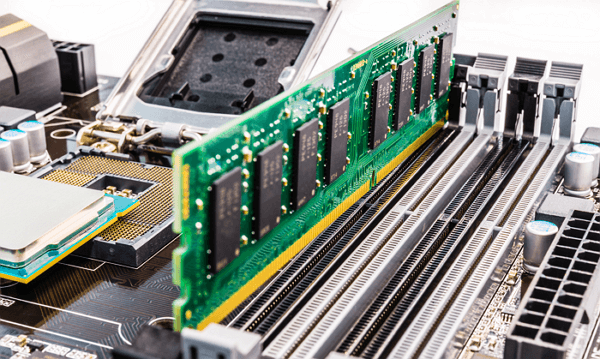
Step 4. Re-attach the computer case, plug all cables and all connectors back in.
Step 5. Reboot the gaming computer.
#3. Upgrade Graphics Card for Gaming PC
A graphics card, paired with a CPU, directly affects the smoothness and picture quality of gaming experiences.
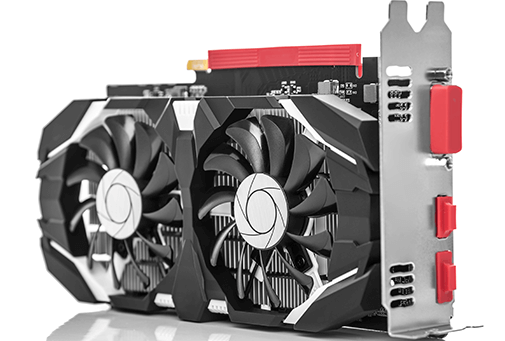
Tips for Selecting Graphics Card:
- The more pixels you're pushing, the more performance you need. Choose a graphics card that meets the requirements of the games you play most.
- Make sure the power supply has enough juice to power the GPU and has the right 6- and/or 8-pin connector(s).
- 6GB and 8GB video memory models are more recommended than a 4GB card.
- FreeSync or G-Variable refresh rate technology synchronizes your GPU's frame rate with your screen's refresh rate, either through the screen or the GPU.
- To enhance visuals, consider selecting graphics cards that support ray tracing, allowing for more realistic and detailed graphics.
- To ensure the motherboard has the right slot for the graphics card, you should check the motherboard's specifications and compare them to the graphics card's requirements. The motherboard should have a slot that matches the graphics card's interface, such as PCIe x16, or the graphics card should have a compatible adapter.
Referral List of TOP Graphics Cards for Gmaing PC:
- Nvidia GeForce RTX 3090 (152.7 fps)
- AMD Radeon RX 6900 XT (148.1fps)
- AMD Radeon RX 6800 XT (142.8 fps)
- Nvidia GeForce RTX 3080 (142.1 fps)
- AMD Radeon RX 6800 (127.3 fps)
- Nvidia GeForce RTX 3070 (116.6 fps)
Steps to Upgrade Graphics Card in Gaming PC:
Step 1. Shut down the gaming computer and unplug all the cables.
Step 2. Remove the computer side panel and lay the computer on its side.
Step 3. Locate the graphics card, unplug its power cable and set it aside.
Step 4. Remove the screws that secure the graphics card and set them aside.
Step 5. Hold the graphics card and gently pull it out of the motherboard slot.
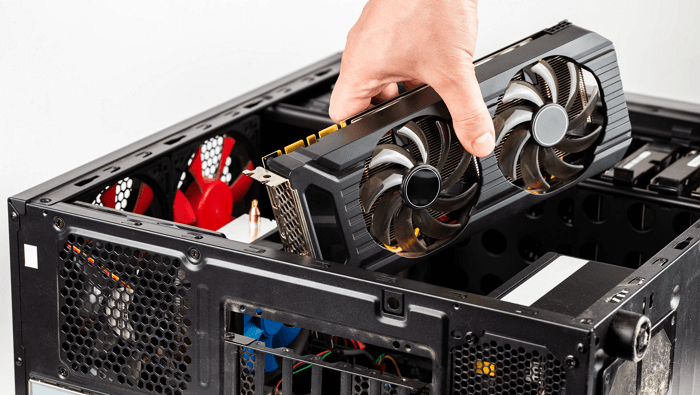
Step 6. Plugin the new card into the motherboard, fasten it with screws, plug in all cables.
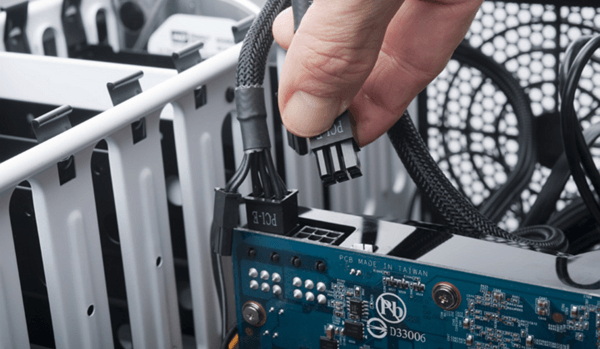
Step 7. Put back the computer case.
#4. Upgrade Hard Disk to SSD in Gaming PC
A hard drive and an SSD work similarly to load a computer and its components, providing a smooth gaming experience. However, an SSD outperforms a hard drive in reading and writing data, loading the operating system and its components. See also: HDD vs SSD.
Upgrading to a high-performance SSD is the most effective way to improve gaming performance, providing the fastest loading times and smoothest gameplay experience.
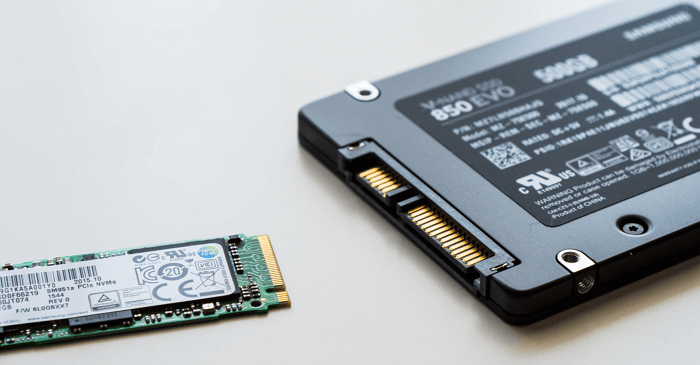
Tips for Selecting SSD:
- The capacity of the new drive should be larger than the combined total of the OS drive and the game drive, with 1TB and 500GB being suitable sizes.
- The SSD interface is M.2, PCI-E, and SATA, so ensure you have the correct slot available for installation.
- A faster SSD (Solid-State Drive) with higher reading and writing speeds can significantly improve your computer's performance, especially when it comes to loading games. With a quicker SSD, your computer can load games faster, resulting in smoother video quality and a more enjoyable gaming experience.
- SATA is a more affordable option but comes with slower speeds. If your computer supports NVMe/PCle or Optane drivers, it's worth investing in one. In general, SSDs are at least three times faster than hard drives in everyday scenarios.
Referral List of TOP SSDs for Gaming PC:
- The WD Black SN750 1TB is a high-performance M.2 PCIe 3.0 x4 SSD with sequential read and write speeds of 3,470 MB/s and 3,000 MB/s respectively.
- The Samsung 970 EVO Plus 500GB is a high-performance M.2 NVMe SSD with a 3-bit MLC interface, supporting sequential read and write speeds of up to 3,500 MB/s and 3,200 MB/s respectively, utilizing the M.2 PCIe 3.0 x4 interface.
- The WD Black SN850 1TB NVMe SSD uses PCIe Gen4 x4, offering sequential read and write speeds of 7,000 MB/s and 5,300 MB/s, respectively.
- 1TB Crucial MX500 SATA SSD with sequential read and write speeds of 560 MB/s and 510 MB/s, respectively.
Steps to Upgrade Graphics Card in Gaming PC:
1. Install or Add SSD into the Gaming PC
Step 1. Shut down the gaming computer and unplug all the cables.
Step 2. Remove the computer side panel and lay the computer on its side.
Step 3. Install and connect the SSD to your computer correctly.
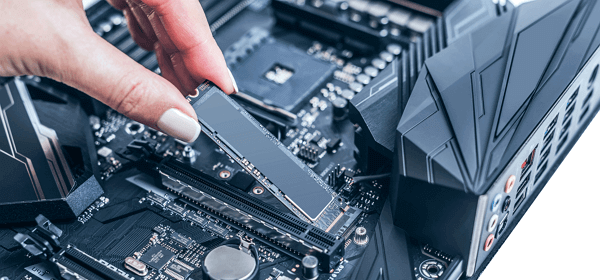
Step 4. Put back the computer case and fasten it with screws, plug in all cables.
After you've removed the old hard drive, you can reboot the PC and proceed with the next part, which involves setting up the new computer. This is where you'll install the operating system, drivers, and other software, and configure the PC to your liking.
2. Set Up SSD for Gaming
A newly installed SSD will appear as unallocated space in Disk Management and won't be visible in File Explorer, but using Qiling Partition Master can help migrate the OS and transfer games to the drive.
First. Migrate OS & Transfer C Drive Games to SSD
The operation of migrating an operating system to an SSD or HDD will delete and remove existing partitions and data on the target disk if there is not enough unallocated space. It's essential to back up important data to an external hard drive before proceeding.
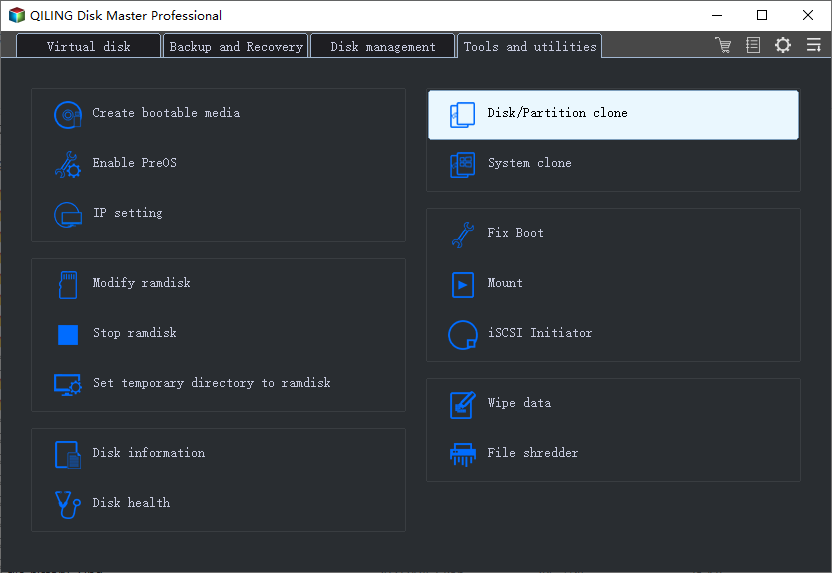
Step 1. Download, install and run Qiling Partition Master on your PC.
On Qiling Partition Master, click "System clone" to start cloning.
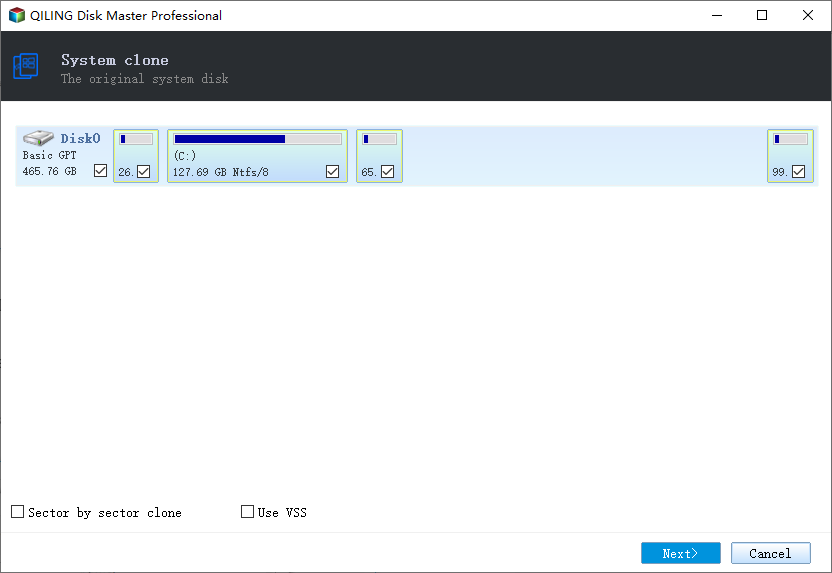
Step 2. The current system partition (Windows 10) and boot partition will be automatically selected and click "Next".
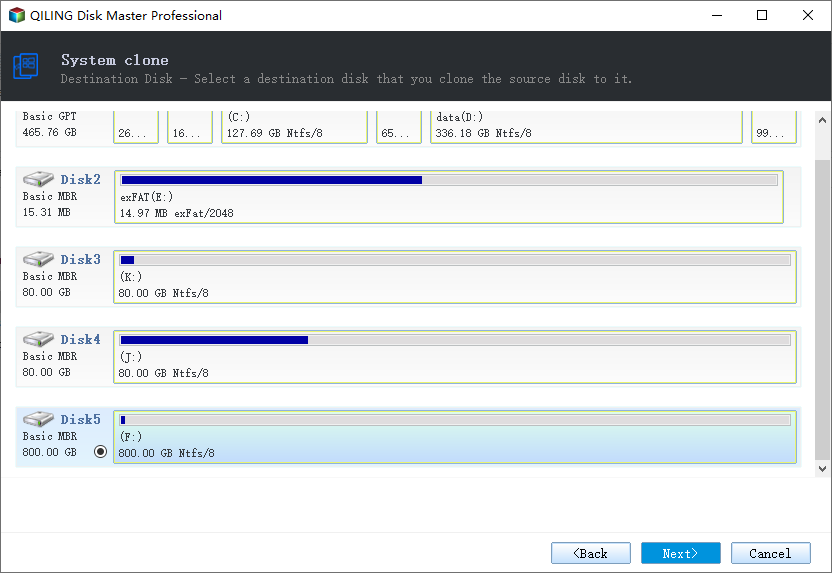
Step 3. Choose the wanted SSD as your destination and click "Next" to continue.
Step 4. Check and edit the disk layout by dragging the left or right border of the partition to manage the disk layout of the destination disk.
To optimize for SSD, you can use Tick Optimize, which will enhance the performance of the new SSD.
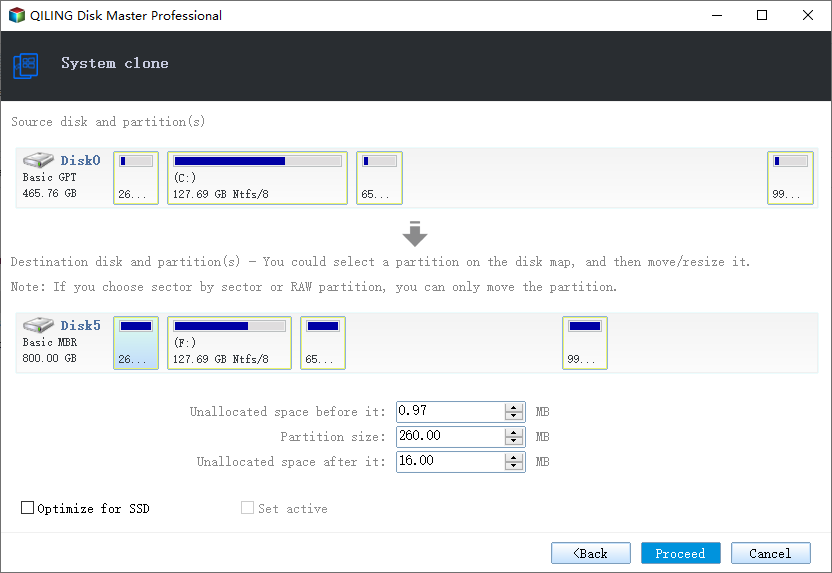
Step 5: Click "Proceed" to start the hard drive cloning process.
A message now appears, warning you that data will be lost. Please confirm this message by clicking "OK".
With Qiling Partition Master, you can easily migrate your OS and all C drive installed games to a new SSD, making the process a success.
Last. Set SSD as Boot Drive in Gaming PC
To boost your gaming computer's performance, set up a new SSD as the boot drive by accessing the BIOS settings. This involves entering the BIOS menu, navigating to the boot settings, and configuring the SSD as the primary boot device.
Step 1. Restart the gaming PC, press the F2/F8/F11 or Del key to enter BIOS.
Step 2. On the Boot menu, set the cloned SSD as the boot drive in BIOS Boot Priority.
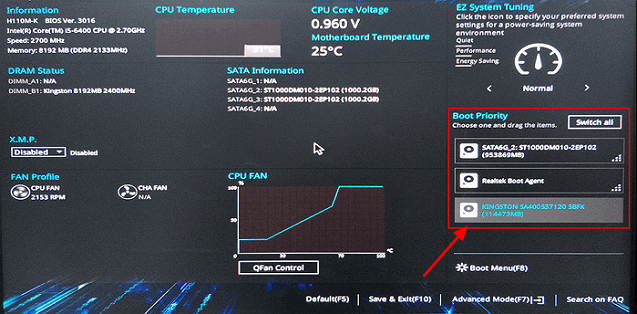
Step 3. Save the changes and boot the gaming PC.
After upgrading your gaming PC with a new SSD, the computer will boot up with the operating system from the new storage device. Upon booting, you'll have successfully upgraded your gaming PC, and you can enjoy playing games on the new hardware, taking your gaming experience to the next level.
Suggestions in Upgrading Gaming PC
Upgrading a gaming PC can be done through hardware and software improvements. On this page, we provide hardware improvement tips and guidelines, including replacing the CPU, RAM, Graphics Card, and SSD, to enhance the gaming experience.
Here are two tips to help you upgrade your gaming PC when you don't know where to start:
- If you're on a tight budget, focus on upgrading the hardware that makes a significant difference in your gaming experience. This might mean prioritizing a better graphics card or a faster processor, as these components tend to have a more noticeable impact on gameplay. By upgrading these key areas, you can enjoy smoother and more immersive gaming sessions without breaking the bank.
- Upgrading a gaming computer, the top priorities are often the RAM and graphics, as they have a significant impact on performance and overall gaming experience.
- Set up hardware for gaming based on the requests of the game that you are about to play.
Upgrading a gaming PC is a relatively straightforward process, as long as you identify the specific issue that's slowing it down and choose the right components to address it. By following the tips provided, you can easily upgrade your PC and improve its performance.
Related Articles
- HDD RAW Copy Tool: Upgrade Disk, Copy Disk, Recover Disk
- Windows OS Migration Software: Migrate OS to New Hard Drive
- Download Free Toshiba Format Tool and Format Toshiba Device with Ease
- Easy VHD to Physical Disk Solution
- Fixes for 'File Is Too Large for Destination File System' on USB/External Hard Drive
- USB Partition Tool/Manager: Partition USB or Create Portable USB Drive
- Does Creating a Recovery Drive Delete Everything?
Does creating a recovery drive delete everything? Do you know the answer? If not, you have come to the right page. This article will tell you whether creating a recovery drive will delete everything.
Products
Articles & Tutorials
- Data Recovery
- Data Backup
- File Recovery
- File Backup
- System Backup and Restore
- Disk and Partition Clone
- Technical articles
- Mobile articles
- Disk Master Help
- Windows Data Recovery Tutorials
- Windows Secure Delete Tutorials
- Windows Partition Management Tutorials
- Windows File Backup and Restore Tutorials
- Windows System Backup and Restore Tutorials
- Windows Disk Backup and Restore Tutorials
- Windows Clone Tutorials