Best Windows 10 Imaging Software for System Backup
What Is Windows Imaging Software?
Imaging software is a type of backup software that allows you to create backups of everything on your PC, including the operating system, personal data, and files, for reuse in case the original is lost or damaged. This type of software can also be used to make a backup image of your SSD, making it a practical and convenient option for you.
The imaging software can help restore an image to the same or a new drive, and can also compress files for space conservation. It is safe to store the image on the same drive it was made from, or on a separate drive in case of drive failure.
Why Do You Need Windows 10 Imaging Software?
As computers become increasingly advanced, they provide immense convenience, but also introduce problems like system crashes and ransomware attacks, resulting in significant data loss or harm to the devices.
Protecting our data on a computer is crucial, especially when dealing with potential data loss or damage. Imaging software can be a lifesaver in such situations, allowing users to back up and recover data without having to reinstall the operating system and other applications. Windows 10 imaging software, in particular, provides a simple and effective way to safeguard computer data.
Imaging software can help prevent data loss or damage caused by a ransomware attack, system crash, or system failure by creating a snapshot of the system at a specific point in time, allowing for a quick and easy recovery of the system and its data.
Five Best Imaging Software for Windows 10 Computer Backup
Here are the five best free imaging software for you, which have their own limitations but are great options:
Top 1. Qiling Backup Free
The Qiling Backup Free is an all-in-one and easy-to-use backup software that allows users to create system backup, disk backup, file backup, and more, even for those without extensive computer knowledge.
Available platform: Windows 11/10/8.1/8/7/XP/Vista
Highlighted features:
- To back up your computer, start by opening the backup software, such as Windows Backup or Time Machine. Then, select the files and folders you want to back up, and choose a location to save the backup. Next, click the "Backup" button to start the process. Finally, wait for the backup to complete, and verify that the backup was successful by checking the backup software's status.
- Multi-Path storage options allows you to store backups in multiple locations, including local drives, NAS devices, a secure zone, and the cloud.
- A powerful backup function that can back up everything on your computer, including the operating system, applications, files, partitions, etc.
- This backup tool allows for various backup modes, including full, incremental, and differential backups.
How to back up data on your computer with this free imaging software.
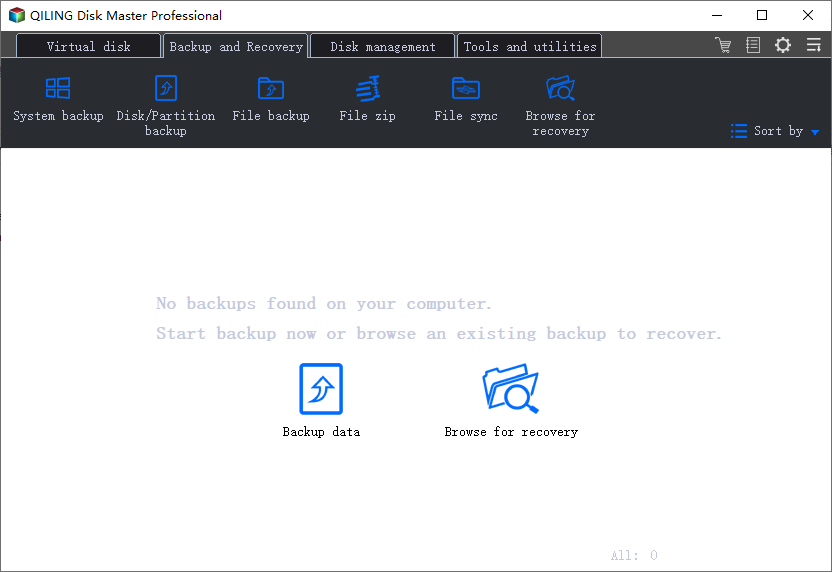
Step 1. Launch Qiling Backup and select the "System Backup" option from the home page.
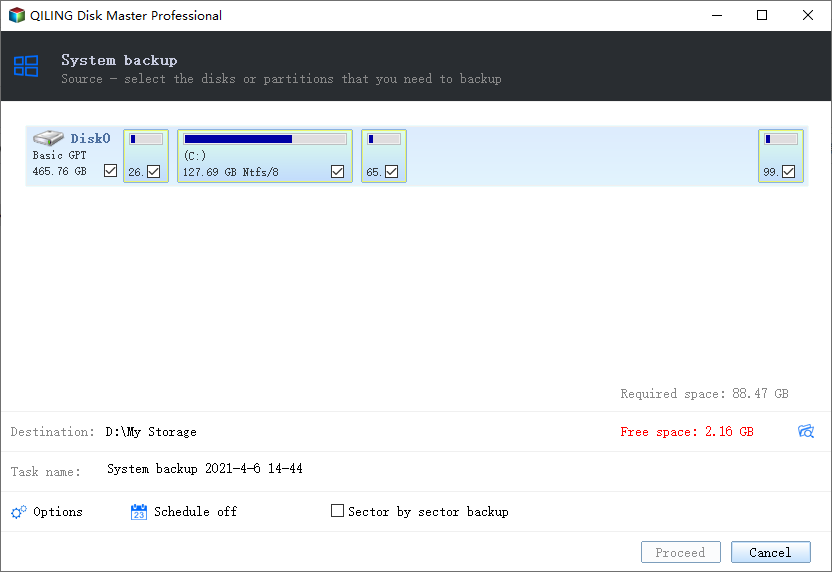
Step 2. The system partition will be automatically selected, you only need to select the location to install the OS.
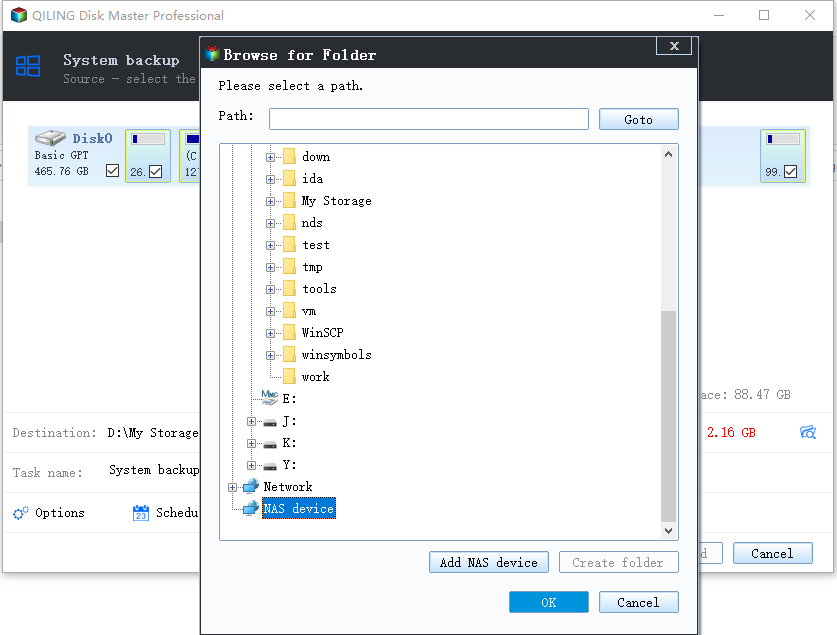
Step 3. You can save your backup file to your local drive, cloud storage, or network-attached storage (NAS), and even connect an external hard drive to keep your system backup files safe.
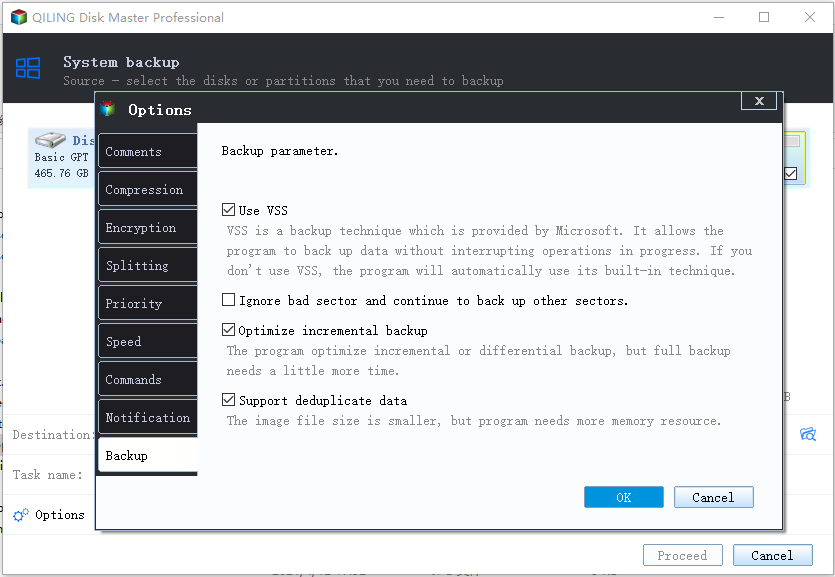
Step 4. To customize settings, go to the left bottom and click on "Options". Then, click "Proceed" to start the process.
After completing the backup process, you can view the backup status, restore, access, or remove the backup by selecting the backup task from the list.
Top 2. Iperius Backup
Iperius Backup is a Windows-only software that provides disk imaging, copying, and incremental/differential backup functions, with the ability to back up to cloud services like OneDrive and Google Drive.
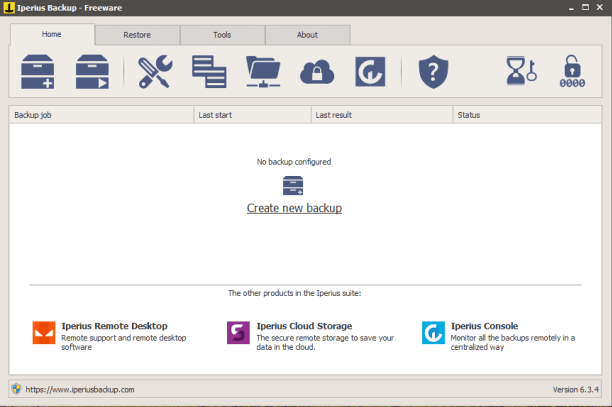
Available platform: Windows 10/8/7
Highlighted features:
- It can help copy an entire disk image.
- It can create incremental and differential backups.
- It has centralized management (Iperius Console).
- It can automatically back up to cloud storage.
Top 3. Active Disk Image
Active Disk Image is a free disk imaging software that allows users to clone disk images and partitions with a user-friendly interface, albeit one that may appear somewhat outdated.
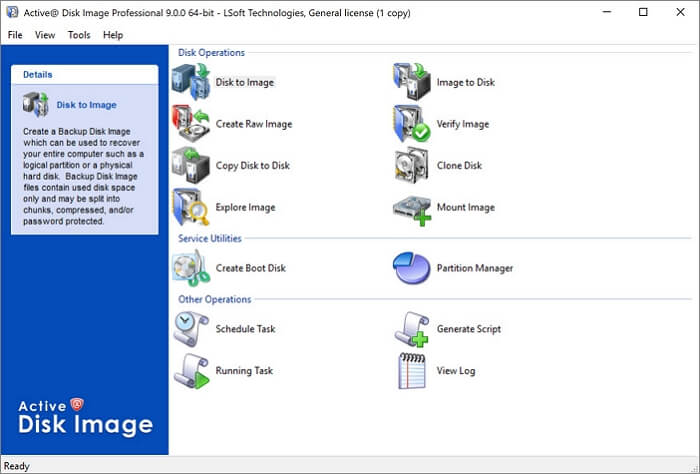
Available platform: Windows 10/8.1/8/7/XP
Highlighted features:
- It has a scheduled backup.
- It can perform incremental and differential backups, but requires an upgrade to the Standard version for around $39.
- The software has a log report feature that provides a detailed list of actions taken during the backup process.
- It can clone disk images and partitions.
Top 4. Barracuda Intronis Backup
Barracuda Intronis Backup is a cloud-based service and software that manages backup and restore operations, offering a wide range of backup services suitable for small-and middle-size businesses. A 14-day free trial is available to get started with this software.
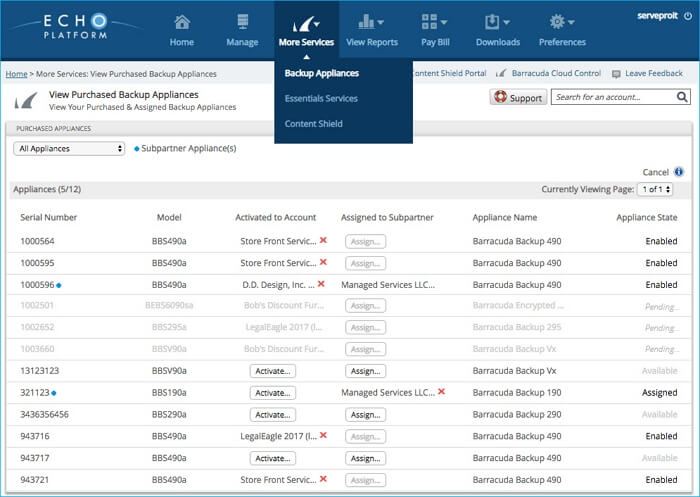
Available platform: Windows/Mac/Linux
Highlighted features:
- It has four options for backup.
- The company owns a system for creating a local backup or a remote backup, allowing users to store their data securely and access it from anywhere.
- The tool can process and analyze images of various types, including disks and servers.
- It has cloud storage space for backup plans.
Top 5. Clonezilla
Clonezilla is an open-Clonezilla is a free and open-source disk imaging software that enables users to create backups and restore their system. It also facilitates bare-metal recovery, and is available in three versions: Clonezilla Live, Clonezilla Lite server, and Clonezilla SE.
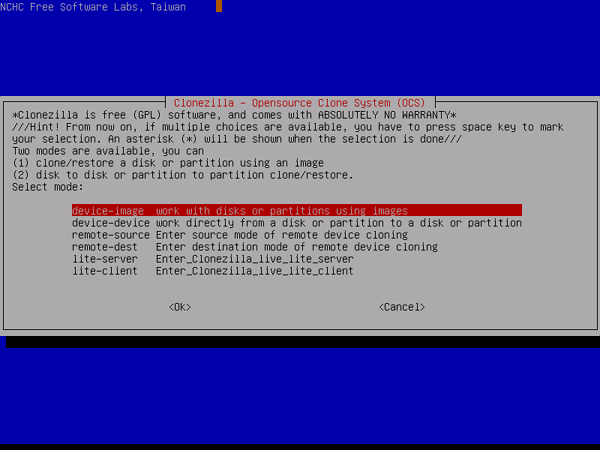
Available platform: Windows/Mac/Linux
Highlighted features:
- It can help make system backups.
- It can make a bare-metal recovery.
- It can clone 40 computers at once, using a server (Clonezilla Lite server or Clonezilla SE).
Qiling Backup: Highly Recommended Windows 10 Imaging Software
Qiling Backup stands out as one of the best free imaging software options, allowing users to easily create and restore backups to quickly recover data in the event of a system crash. With just a few clicks, it can make an image of the computer and even automatically back up SSD to HDD, making it suitable for both free users and home users.
Qiling Backup is a good imaging software for Windows 10, offering a reliable solution for creating backups of your system and data.
FAQs
1. What does imaging mean on a computer?
Computer imaging is a process of creating an image of the Operating System (OS) from a computer, which is essential for OS deployment using PC imaging software.
2. What are the disadvantages of using imaging software?
- Imaging takes a lot of time.
Imaging is a process to make an archive of huge amounts of data from one location to another, which can be time-consuming.
- An image is a huge file.
The imaging file contains all data from the target computer, including every single file.
3. Does Windows 10 have imaging software?
Some tried-Windows 10 has built-in imaging tools, including File History and Backup & Restore (Windows 7), which allow for system-wide backup and restoration in case of a system crash or hard disk failure.
4. What is the difference between cloning and imaging?
Cloning and imaging are two different methods of duplicating a drive's contents, with cloning creating a direct, exact copy and imaging creating a compressed archive.
Related Articles
- 2022 Windows XP Backup Software & Backup Utility Free Download
- Backup Data to Tape with Tape Backup Software
- How to Use the Best Kingston SSD Cloning Software to Clone HDD to SSD
- Outlook Backup and Restore in 2 Ways [with Video]
- The Best Alternate for Paragon Migrate OS to SSD 4.0 - Qiling Backup
This article will introduce a safe and powerful alternative to Paragon Migrate OS to SSD 4.0. For anyone who thinks the Paragon software is too expensive that wants to find a cracked version, read this article to see how Qiling Backup can help you in the system migrate. - The Best Alternate for Paragon Migrate OS to SSD 4.0 - Qiling Backup
Read this guide to learn more about The Best Alternate for Paragon Migrate OS to SSD 4.0 - Qiling Backup and related troubleshooting or backup steps.
Products
Articles & Tutorials
- Data Recovery
- Data Backup
- File Recovery
- File Backup
- System Backup and Restore
- Disk and Partition Clone
- Technical articles
- Mobile articles
- Disk Master Help
- Windows Data Recovery Tutorials
- Windows Secure Delete Tutorials
- Windows Partition Management Tutorials
- Windows File Backup and Restore Tutorials
- Windows System Backup and Restore Tutorials
- Windows Disk Backup and Restore Tutorials
- Windows Clone Tutorials