Hard Drive Click of Death: What to Do Before Data Is Lost
A repeated sharp click followed by spin-down, missing capacity, or read errors can indicate a mechanical HDD problem. Treat a drive containing unique files differently from a healthy drive that makes occasional normal seek sounds.
Distinguish normal sounds from failure
An HDD has moving parts, so a soft seek sound is not automatically a fault. Repeated rhythmic clicking, grinding, failure to spin up, intermittent detection, or a sudden change in sound is more concerning. SSDs have no moving heads; a noise near an SSD may come from another component.
Check whether the model and full capacity appear in firmware or Disk Management. Do not run a surface scan, repair command, or repeated power cycle merely to see whether the drive improves. Those actions can add wear to failing media.
Decide whether to stop immediately
If the drive holds irreplaceable data and clicks or disappears, power the computer off and contact a professional recovery service. Do not open the drive enclosure or swap platters at home; contamination and head damage can make recovery harder.
If the drive is stable, readable, and the sound is not recurring, prioritize copying the most valuable files to a separate healthy disk. Stop the transfer if noise, I/O errors, or disconnects appear. Keep a list of files that did not copy.
Replace the drive after data is safe
Check the replacement interface, form factor, and capacity. If you have a recent verified image backup, restore it to the new drive rather than repeatedly reading a failing source. If no image exists, reinstall Windows on the new drive and restore the files you saved.
After recovery, monitor the replacement drive and keep at least one separate backup. A copied file is only useful if it opens correctly; sample documents, photos, and archives before retiring the old disk.
Back Up Files from a Stable Drive with Qiling
Use this workflow only when the HDD remains steadily readable and does not make repeated abnormal clicks. It is a file backup, not a repair for mechanical damage. For a clicking or disappearing drive, power off and seek professional help.
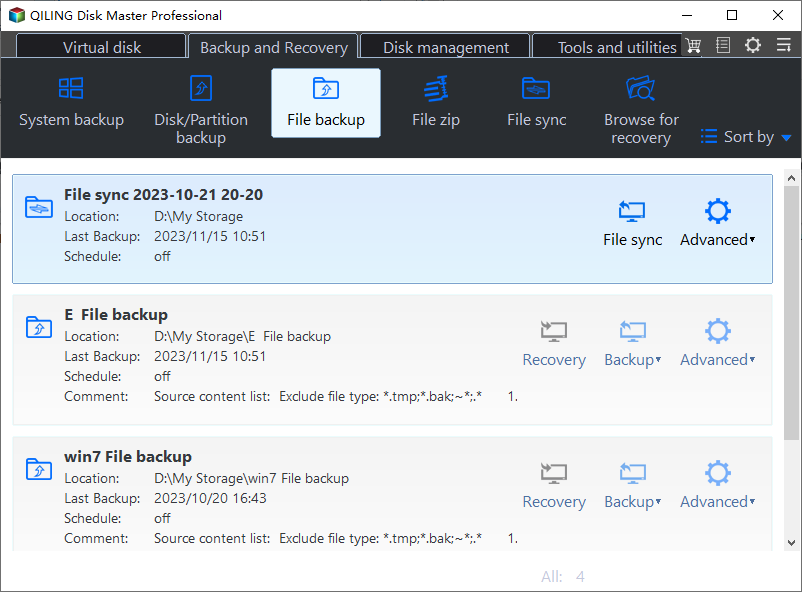
Step 1. On a working Windows PC, connect a separate backup drive with enough free space. Open Qiling Disk Master and choose Backup and Recovery > File backup. Avoid installing software or saving the backup on the questionable HDD.
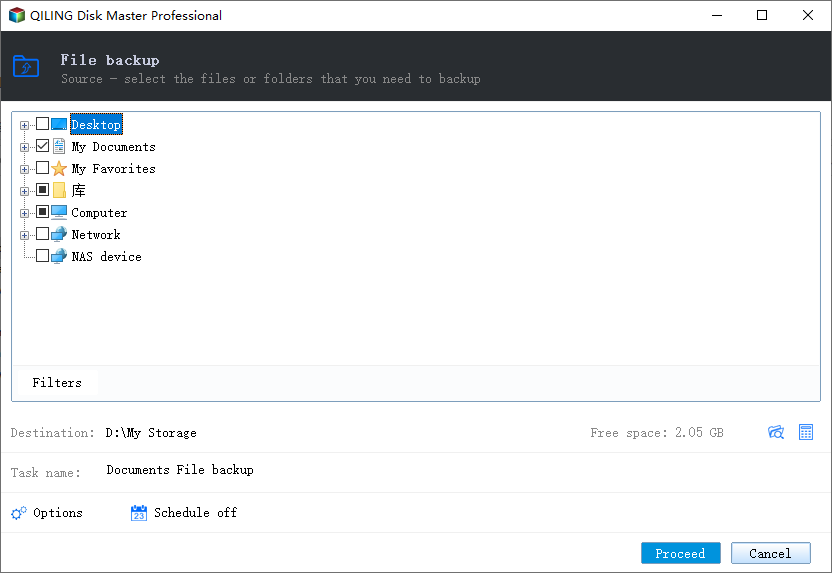
Step 2. In the source tree, select the folders you actually need to protect. Start with irreplaceable documents, photos, and project folders rather than a full disk scan.
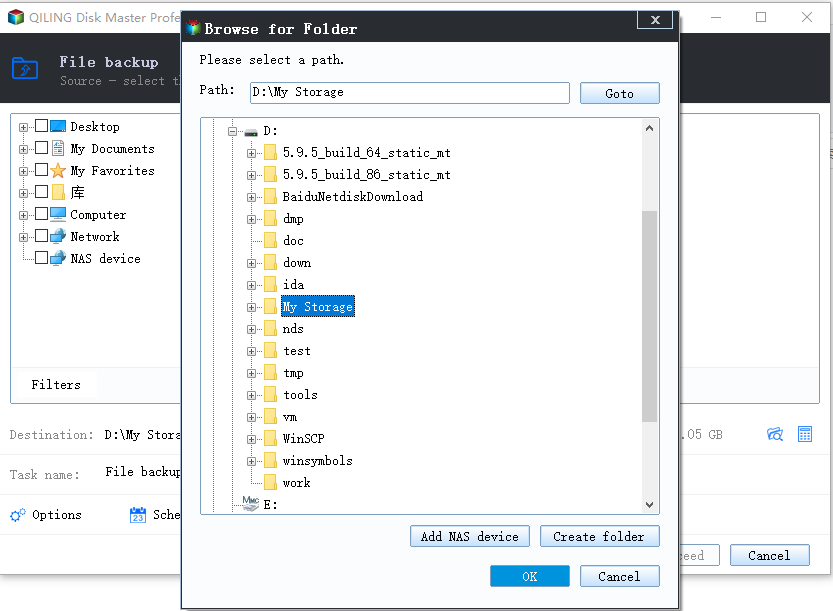
Step 3. Choose a destination on the separate drive, not the source volume. Confirm that the destination has room for the selected files. Use a healthy external disk or network location that is not on the same failing hardware.
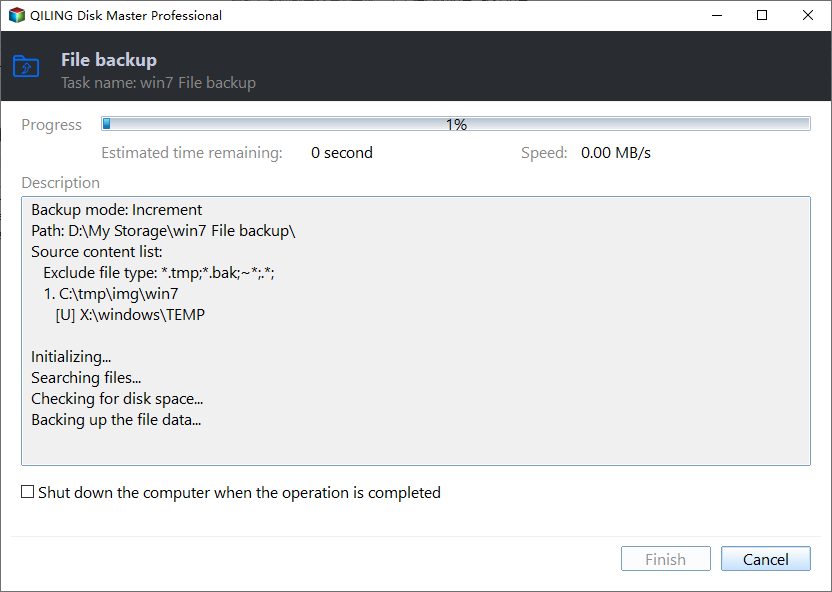
Step 4. Review the selected source and destination, then click Proceed. Leave both drives connected until the job completes. If errors increase or the drive begins clicking, stop the job instead of repeating it.
Step 5. Use the backup task's Recovery option to restore a small sample to a separate folder, then open those files to confirm that the backup is usable. Record any files that failed to copy and keep the source powered down until you decide on recovery or replacement.
A software clone cannot repair a head, motor, or platter. More retries can make physical recovery less likely.
Frequently Asked Questions
Can CHKDSK fix a clicking HDD?
CHKDSK addresses file-system structures, not failed mechanical parts; running it on an unstable drive may add reads and writes.
Is every clicking sound the click of death?
No. Judge the sound together with detection, read errors, capacity, and whether the behavior is new or worsening.
Conclusion
Protect the data first. Shut down a repeatedly clicking drive, use a specialist when the files matter, and replace the hardware after recovery.
Related Articles
- Hard Drive Making Noise
Compare failure sounds and safe next steps. - What to Do If a Hard Drive Fails
Plan data recovery and drive replacement.
Products
Articles & Tutorials
- Data Recovery
- Data Backup
- File Recovery
- File Backup
- System Backup and Restore
- Disk and Partition Clone
- Technical articles
- Mobile articles
- Disk Master Help
- Windows Data Recovery Tutorials
- Windows Secure Delete Tutorials
- Windows Partition Management Tutorials
- Windows File Backup and Restore Tutorials
- Windows System Backup and Restore Tutorials
- Windows Disk Backup and Restore Tutorials
- Windows Clone Tutorials