Hard Drive Clicking but Still Works: What to Do First
A working file list does not mean a clicking HDD is healthy. New rhythmic clicks, repeated spin-up, slow reads, and disconnects can precede failure; protect important data before running long tests.
Separate Harmless Sounds from Warnings
Some HDDs make brief seek or parking sounds during normal activity. A new repeated click, grinding, spin-up cycle, or sound paired with missing files and freezes is different. Note whether the sound comes from the hard drive or another fan or component, but do not spend hours benchmarking a suspect disk to prove the point.
Look for signs such as disappearing from BIOS or Windows, repeated read errors, and unusually long directory access. A SMART report can add context, but a normal report cannot guarantee that a mechanically damaged drive is safe. SSDs do not have moving heads, so clicking from an SSD-equipped PC may come from another component.
Reduce Risk Before Copying
Stop unnecessary writes, downloads, defragmentation, and full-surface scans. Save the most valuable files first to a separate healthy drive. Avoid opening the sealed HDD housing. If the drive is frequently disconnecting, unreadable, or contains irreplaceable business or personal data, power it down and consider a professional recovery service before further software attempts.
Do not repeatedly run CHKDSK or restart a failed whole-disk clone. Such operations may stress a deteriorating mechanism and can change file-system metadata. A file-level backup is reasonable only while the drive remains readable and stable enough to copy.
Back Up Readable Files with Qiling
These steps are for a stable, readable disk. Stop if clicking worsens, new errors appear, or the drive disconnects.
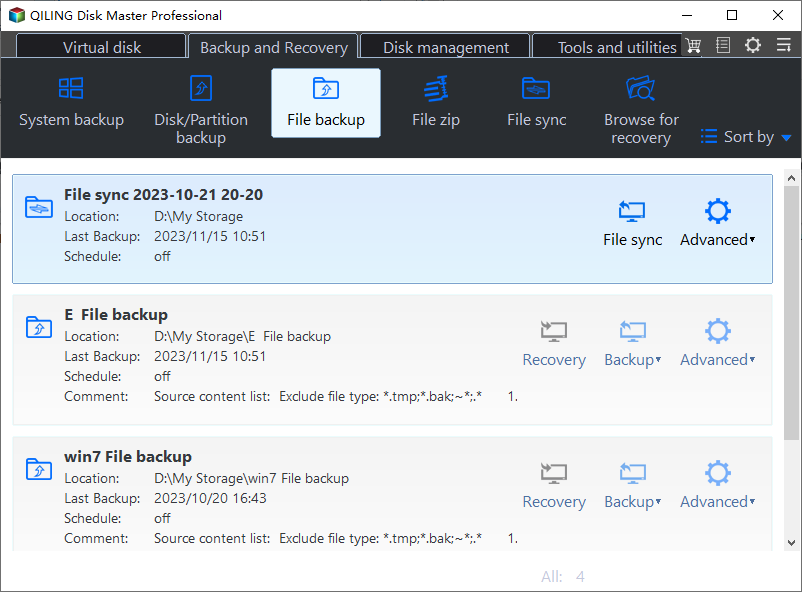
Step 1. Attach a separate healthy destination drive. Open Qiling Disk Master and choose Backup and Recovery > File backup.
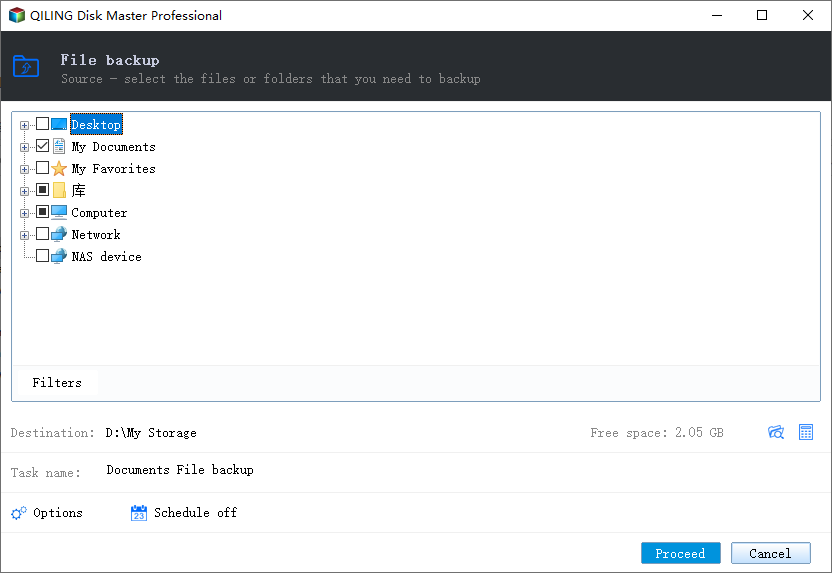
Step 2. Select the most important folders in the source tree first, such as documents, projects, and irreplaceable photos. Do not begin with large replaceable game downloads.
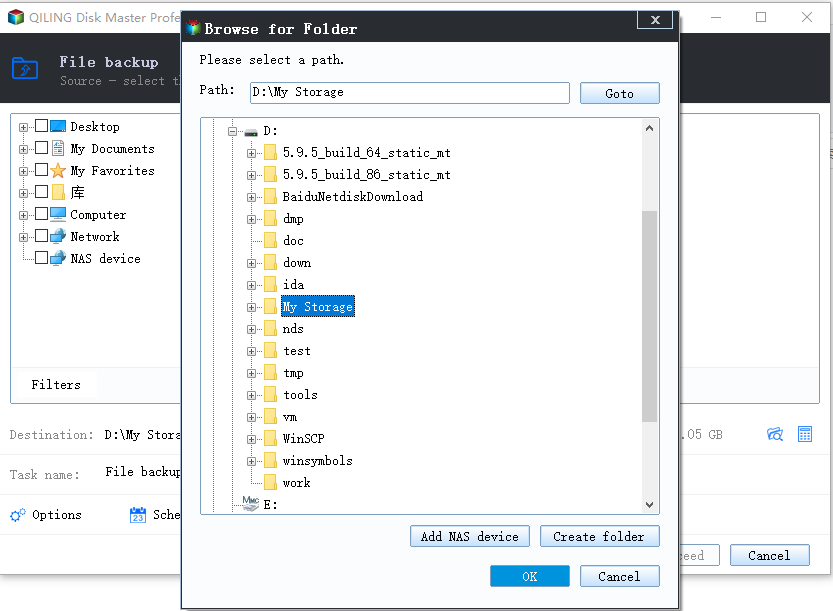
Step 3. Set the destination to the separate healthy drive and verify free space.
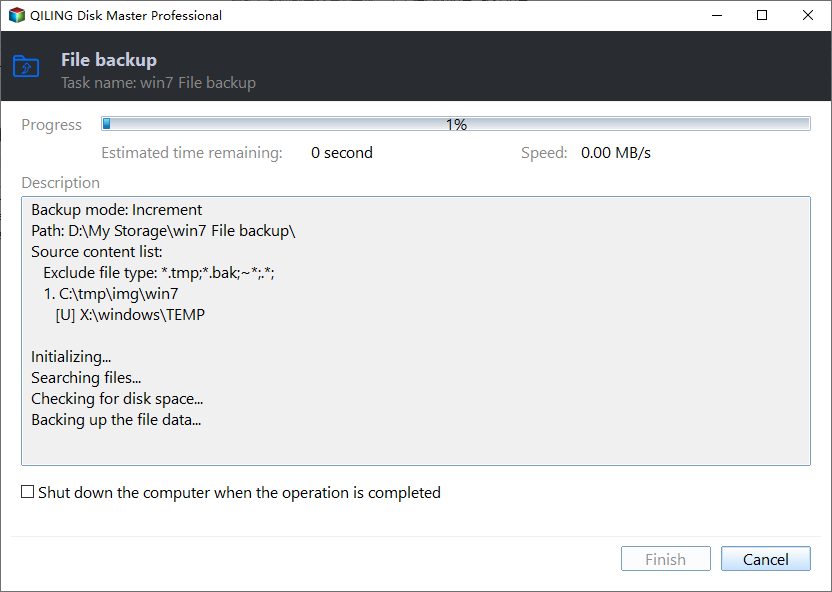
Step 4. Click Proceed and watch for read errors or disconnections. If these appear, stop rather than repeatedly restarting the job.
Step 5. Open a few copied files on the destination. Record what could not be copied and leave the original powered down until you choose recovery or replacement.
Decide When to Stop
If the drive stays stable and all required files are verified, replace it rather than returning it to routine use. If the copy fails or sounds worsen, do not escalate to a sector-by-sector clone without considering whether a specialist should handle the media.
Frequently Asked Questions
Can software repair a clicking read/write head?
No. Software can only copy readable data or address logical problems; it cannot fix physical mechanics.
Should I freeze or tap the drive?
No. These improvised actions can worsen damage and reduce recovery chances.
Conclusion
Treat a new click with symptoms as a data-protection event: copy essential files only while stable, then retire or professionally assess the disk.
Related Articles
- Hard Drive Click of Death: What to Do Before Data Is Lost
Compare severe mechanical failure signs. - What to Do If Your Hard Drive Fails in Windows
Plan the next step when a drive is failing.
Products
Articles & Tutorials
- Data Recovery
- Data Backup
- File Recovery
- File Backup
- System Backup and Restore
- Disk and Partition Clone
- Technical articles
- Mobile articles
- Disk Master Help
- Windows Data Recovery Tutorials
- Windows Secure Delete Tutorials
- Windows Partition Management Tutorials
- Windows File Backup and Restore Tutorials
- Windows System Backup and Restore Tutorials
- Windows Disk Backup and Restore Tutorials
- Windows Clone Tutorials