Fix Windows 11 No Sound (2026 Guide)
Audio is essential for watching videos, playing games, attending meetings, and listening to music on your Windows 11 PC. When Windows 11 has no sound—speakers are silent, headphones don't work, or the audio device is missing—it can be very frustrating.
This guide covers 9 proven solutions to fix no sound issues in Windows 11.
PAGE CONTENT
- Common Windows 11 Sound Problems
- Fix 1: Check Volume and Output Device
- Fix 2: Run the Audio Troubleshooter
- Fix 3: Set Default Audio Device
- Fix 4: Update or Reinstall Audio Drivers
- Fix 5: Restart Windows Audio Service
- Fix 6: Disable Audio Enhancements
- Fix 7: Check for Windows Updates
- Fix 8: Roll Back Audio Driver
- Fix 9: Use Generic Windows Audio Driver
- FAQs About Windows 11 Sound Issues
- Back Up and Restore Windows with Qiling Disk Master
Common Windows 11 Sound Problems
Users report various sound issues in Windows 11:
- No sound from speakers or headphones
- "No audio output device is installed" error message
- Sound is very quiet or muffled
- Audio crackling, popping, or distorted
- Sound only plays from one speaker (left or right)
- Audio delays or lag
- Bluetooth headphones connect but no sound
- Sound works for some apps but not others
- Note
- Most sound issues are caused by incorrect audio settings, outdated or corrupted drivers, or the Windows Audio service being disabled. The fixes below address all these causes.
Fix 1: Check Volume and Output Device
First, check the basics: make sure the volume isn't muted and the correct output device is selected.
Step 1. Click the speaker icon in the taskbar (bottom-right corner).
Step 2. Make sure the volume isn't muted (no red X on the speaker icon) and the volume slider is above 0.
Step 3. Click the arrow next to the volume slider to see available output devices.
Step 4. Select the correct device (e.g., "Speakers (Realtek Audio)" or "Headphones").
Step 5. If you're using external speakers or headphones, make sure they're properly connected and powered on.
Fix 2: Run the Audio Troubleshooter
Windows 11 has a built-in audio troubleshooter that can automatically detect and fix common sound issues.
Step 1. Press Win + I to open Settings.
Step 2. Go to "System" > "Troubleshoot" > "Other troubleshooters".
Step 3. Find "Recording Audio" or "Playing Audio" and click "Run".
Step 4. Wait for the troubleshooter to scan for issues. It will try to fix them automatically.
Step 5. After it completes, check if sound works.
Fix 3: Set Default Audio Device
If you have multiple audio devices, Windows might be sending sound to the wrong one. Set the correct device as default.
Step 1. Press Win + R, type mmsys.cpl, and press Enter.
Step 2. In the "Playback" tab, find your speakers or headphones.
Step 3. Right-click your preferred device and select "Set as Default Device".
Step 4. Also right-click and select "Set as Default Communication Device" if available.
Step 5. Right-click any disabled devices and select "Enable" if you want to use them.
Step 6. Click "OK" and test the sound.
Fix 4: Update or Reinstall Audio Drivers
Outdated or corrupted audio drivers are the most common cause of no sound issues. Updating or reinstalling them usually fixes the problem.
Update Audio Drivers
Step 1. Press Win + X and select "Device Manager".
Step 2. Expand "Sound, video and game controllers".
Step 3. Right-click your audio device (e.g., "Realtek Audio" or "High Definition Audio Device") and select "Update driver".
Step 4. Choose "Search automatically for drivers" and follow the prompts.
Step 5. Alternatively, download the latest driver from your PC manufacturer's website (Dell, HP, Lenovo, Asus) or the audio chip manufacturer (Realtek, Conexant, Cirrus Logic).
Reinstall Audio Drivers
Step 1. In Device Manager, expand "Sound, video and game controllers".
Step 2. Right-click your audio device and select "Uninstall device".
Step 3. Check "Attempt to remove the driver for this device" if available.
Step 4. Click "Uninstall".
Step 5. Restart your PC. Windows will automatically reinstall the audio driver.
Fix 5: Restart Windows Audio Service
The Windows Audio service manages all audio operations. If it's not running, you'll have no sound.
Step 1. Press Win + R, type services.msc, and press Enter.
Step 2. Scroll down and find "Windows Audio".
Step 3. Right-click and select "Properties".
Step 4. Set "Startup type" to "Automatic".
Step 5. Under "Service status", if it shows "Stopped", click "Start". If it shows "Running", click "Stop" then "Start" to restart it.
Step 6. Also check "Windows Audio Endpoint Builder" and make sure it's running.
Step 7. Click "OK" and test the sound.
Fix 6: Disable Audio Enhancements
Audio enhancements can sometimes cause sound issues, especially with third-party audio software. Disabling them can help.
Step 1. Press Win + R, type mmsys.cpl, and press Enter.
Step 2. In the "Playback" tab, right-click your default device and select "Properties".
Step 3. Go to the "Enhancements" tab.
Step 4. Check "Disable all enhancements".
Step 5. Go to the "Spatial Sound" tab and make sure it's off or set to "Windows Sonic for Headphones" only if you're using headphones.
Step 6. Click "OK" and test the sound.
Fix 7: Check for Windows Updates
Microsoft regularly releases audio driver updates through Windows Update. Make sure your Windows 11 is up to date.
Step 1. Press Win + I to open Settings.
Step 2. Go to "Windows Update" > "Check for updates".
Step 3. Install any available updates, including optional driver updates.
Step 4. If a recent update caused the sound issue, uninstall it: go to "Update history" > "Uninstall updates" and remove the most recent update.
Fix 8: Roll Back Audio Driver
If the sound issue started after a driver update, rolling back to the previous driver can help.
Step 1. Press Win + X and select "Device Manager".
Step 2. Expand "Sound, video and game controllers".
Step 3. Right-click your audio device and select "Properties".
Step 4. Go to the "Driver" tab.
Step 5. If "Roll Back Driver" is available (not greyed out), click it and follow the prompts.
Step 6. If the button is greyed out, there's no previous driver to roll back to. Try reinstalling the driver instead (Fix 4).
Fix 9: Use Generic Windows Audio Driver
If the manufacturer's audio driver is causing issues, try using the generic Windows audio driver.
Step 1. Press Win + X and select "Device Manager".
Step 2. Expand "Sound, video and game controllers".
Step 3. Right-click your audio device and select "Update driver".
Step 4. Choose "Browse my computer for drivers".
Step 5. Choose "Let me pick from a list of available drivers on my computer".
Step 6. Select "High Definition Audio Device" (the generic Windows driver) and click "Next".
Step 7. Click "Yes" to confirm and restart your PC.
FAQs About Windows 11 Sound Issues
Why is there no sound on my Windows 11?
Common causes include muted volume, incorrect output device selected, outdated or corrupted audio drivers, or the Windows Audio service being disabled. Check the volume first, then try running the audio troubleshooter.
How do I fix "No audio output device is installed"?
This usually means the audio driver is missing or corrupted. Open Device Manager, expand "Sound, video and game controllers", and check if your audio device is listed. If it has a yellow exclamation mark, update or reinstall the driver.
Why does my Windows 11 sound crackle?
Audio crackling or popping is often caused by outdated drivers, audio enhancements, or high CPU/DPC latency. Update your audio drivers, disable audio enhancements (Fix 6), and close unnecessary background apps.
Why is my Bluetooth audio not working in Windows 11?
Make sure the Bluetooth headphones are connected and set as the default playback device. Go to Settings > Bluetooth & devices, remove the device, and re-pair it. Also check that the Bluetooth service is running.
How do I restart the Windows Audio service?
Press Win + R, type services.msc, find "Windows Audio", right-click and select "Restart". Also make sure "Windows Audio Endpoint Builder" is running.
Back Up and Restore Windows with Qiling Disk Master
Before you reinstall the audio driver, restart Windows Audio services, or switch to a generic driver, create a full system backup. A system image means you can undo every driver and service change in minutes if the sound gets worse instead of better. Qiling Disk Master handles both the backup and the restore.
Part 1: Create a Full System Backup
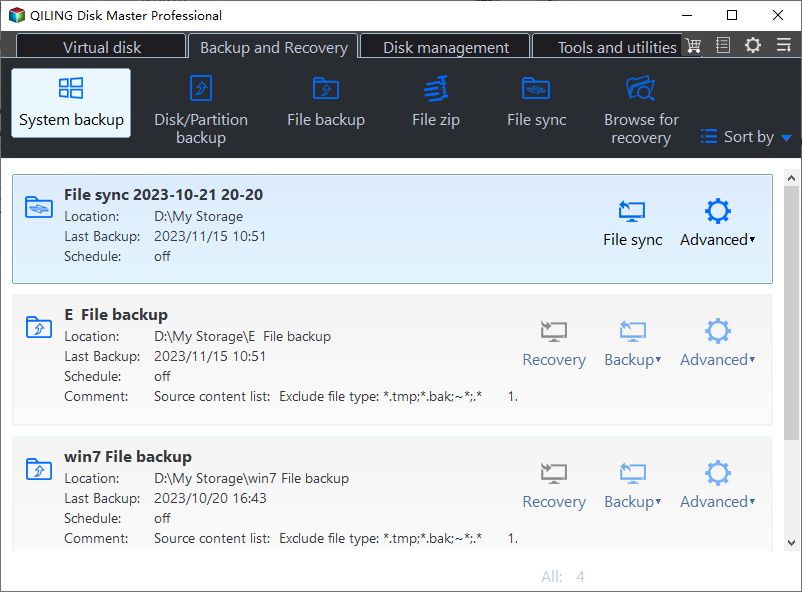
Step 1. Install and open Qiling Disk Master. On the home screen, open "Backup and Recovery" and choose "System Backup". This option automatically includes Windows and the hidden boot partitions, so you do not have to select them one by one.
Step 2. Check the source. The disk where Windows is installed and its system partitions are already ticked for you. If you only need your personal documents, run a separate "File Backup" task instead.

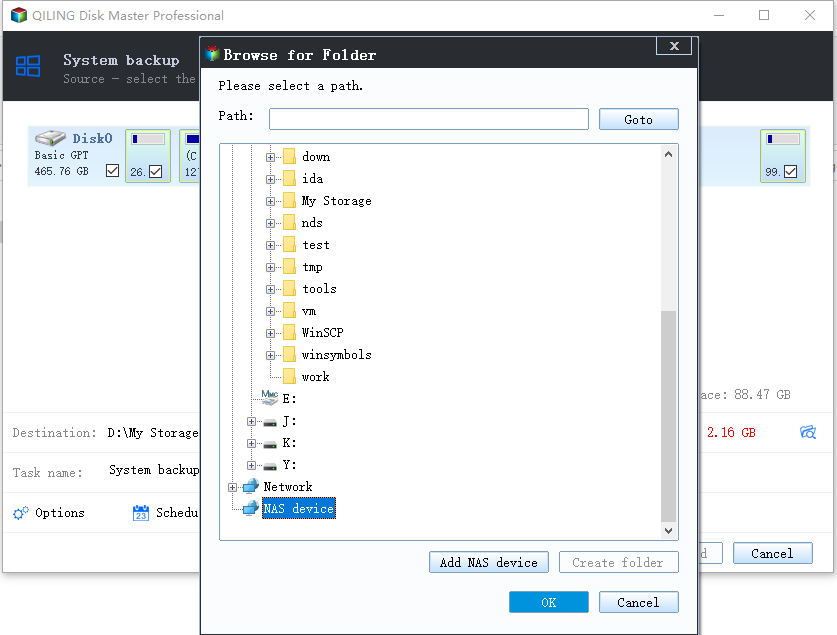
Step 3. Click the destination box and choose where the image should be saved. Use an external HDD or SSD, a NAS, or any drive other than the one you are about to repair, and make sure it has enough free space.
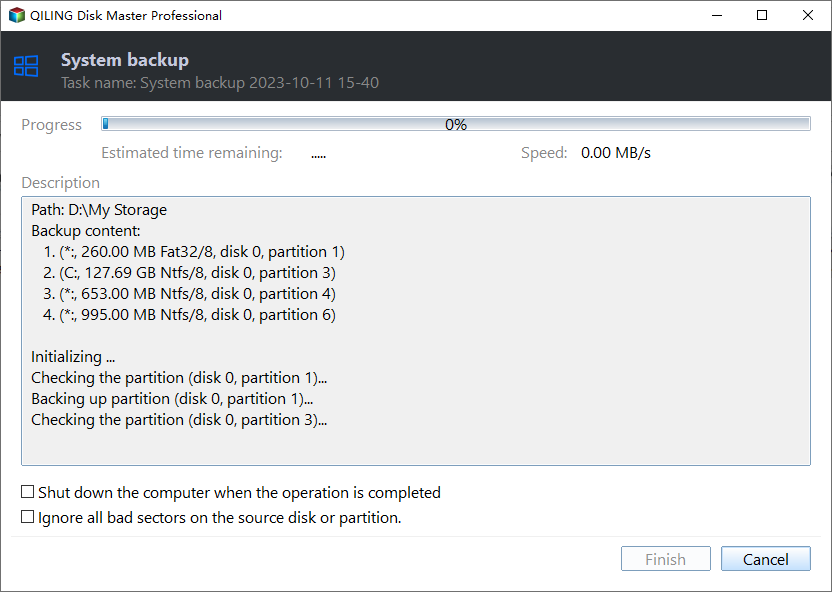
Step 4. Review the task summary and click "Proceed". Wait until the progress bar reaches 100%. Do not unplug the drive or turn off the PC while the backup is running.
Part 2: Restore Windows from the Backup
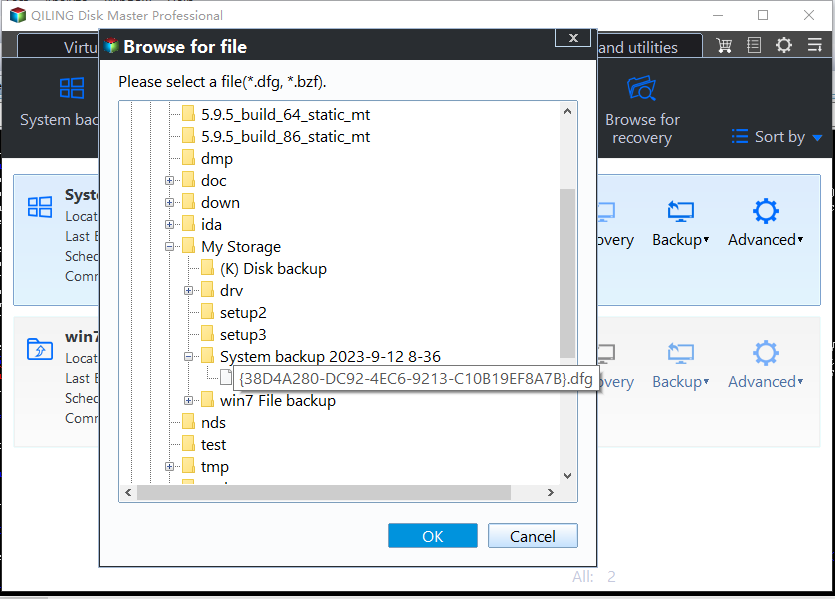
Step 1. Open Qiling Disk Master again, go to "Backup and Recovery", and select the recovery option. Your backup images are listed, so pick the one you created before the repair.
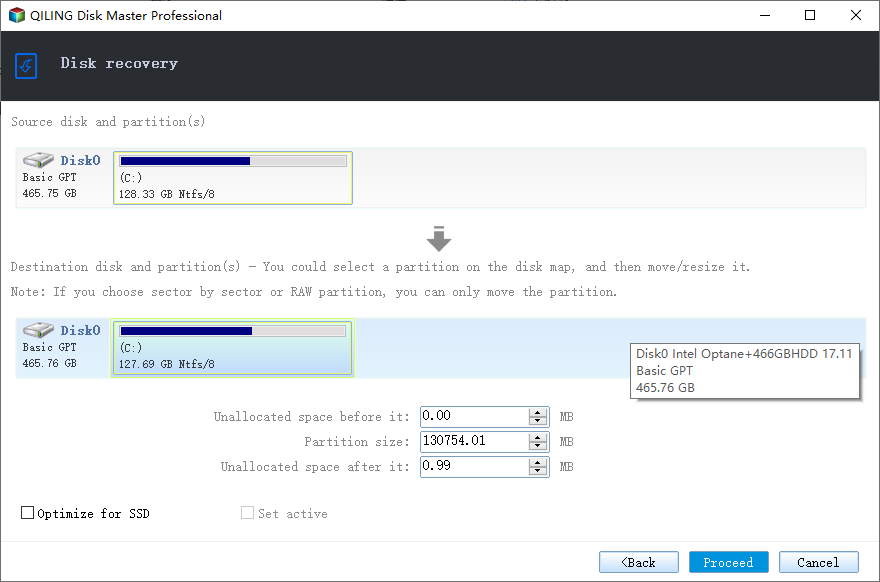
Step 2. Choose the target disk or partition. Normally you restore to the original system disk. If the drive was replaced, select the new disk instead, and the restore rebuilds Windows together with its boot partitions.
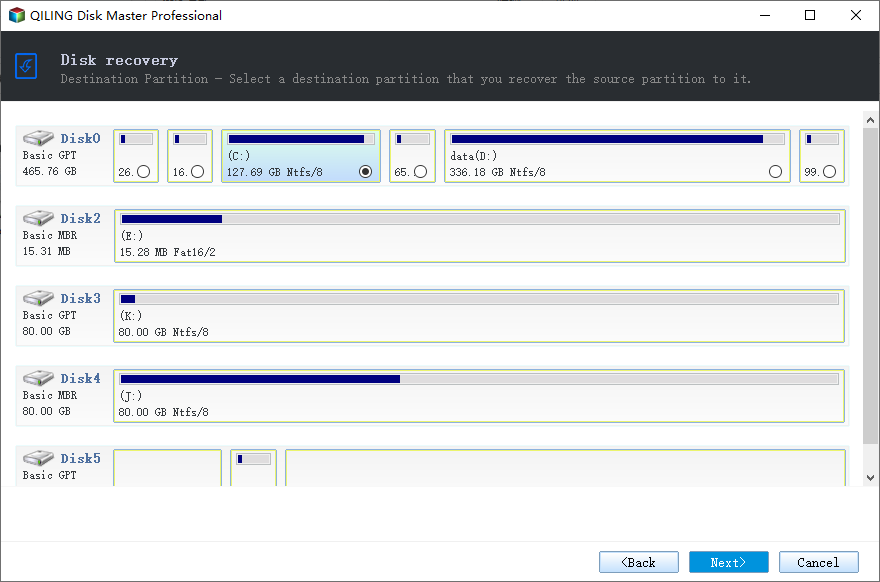
Step 3. Preview the restore plan, click "Proceed", and confirm the warning. The PC restarts to finish the job, and Windows comes back exactly as it was on the day the image was created.
- Note
- Keep the backup image on a separate drive, and refresh it before every major change, such as a Windows update, a driver upgrade, or a disk operation.
Conclusion
Windows 11 no sound is usually fixable by checking the volume and output device, running the audio troubleshooter, or updating the audio drivers. If the issue persists, restart the Windows Audio service, disable audio enhancements, or roll back the driver. For most users, one of these fixes will resolve the issue.
For more Windows 11 troubleshooting, see our guides on Bluetooth Not Working, Wi-Fi Not Working, and Windows 11 24H2 Problems.
Related Articles
- Fix Windows 11 Bluetooth Not Working (2026 Guide)
- Fix Windows 11 Wi-Fi Not Working (2026 Guide)
- Windows 11 24H2 Problems and How to Fix Them (2026 Guide)
- Fix Windows 11 Taskbar Not Working (2026 Guide)
- How to Fix Windows 11 Slow Startup
If Windows 11 starts up slowly after a sound issue, learn how to speed up boot time with these proven solutions including disabling startup programs. - 3 Ways | How to Reinstall Windows 10 Without CD
Need to reinstall Windows after persistent sound issues? Learn 3 ways to reinstall Windows 10/11 without a CD using Reset, installation USB, or system image.
Products
Articles & Tutorials
- Data Recovery
- Data Backup
- File Recovery
- File Backup
- System Backup and Restore
- Disk and Partition Clone
- Technical articles
- Mobile articles
- Disk Master Help
- Windows Data Recovery Tutorials
- Windows Secure Delete Tutorials
- Windows Partition Management Tutorials
- Windows File Backup and Restore Tutorials
- Windows System Backup and Restore Tutorials
- Windows Disk Backup and Restore Tutorials
- Windows Clone Tutorials