How to Fix Black Screen of Death Windows 10 in 8 Different Ways
What Is Black Screen of Death
Windows 10, Microsoft's most reliable operating system, has been plagued by errors worldwide despite its well-built and practical design. Users have reported several issues, including the infamous Blue Screen of Death (BSoD) and the black screen of death, showcasing the platform's vulnerabilities.
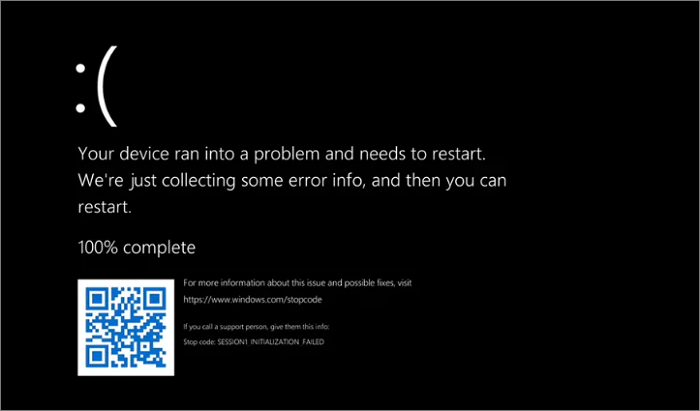
The Black Screen of Death is a Windows 10 issue where the system fails to boot, making all hard drives inaccessible. Unlike the Blue Screen of Death, it doesn't crash, but instead, displays a black screen with error messages like "No OS was discovered" or "A tiny problem with files on the boot drive." This error can occur during sign-in, software updates, or while performing tasks.
The Causes of Black Screen of Death on Windows 10
The Windows 10 black screen of death can occur due to various reasons, and without knowing the potential causes, there's no specific solution to try. Common causes of a black screen on Windows 10 include various reasons.
- Incomplete Windows 10 installation.
- Windows update.
- Software incompatibility error.
- Faulty driver.
- Graphics card problems.
- Malfunctioning hardware.
- Overheating.
- Display issues.
- Virus or malware attack.
A Windows computer can get stuck on the black screen due to various reasons, and any Windows 10 computer, whether a desktop or laptop, can be affected by this problem.
8 Ways to Solve Black Screen of Death on Windows 10
Here are some frequently used solutions to help you fix the black screen of death in Windows 10: Try to restart your computer in safe mode, check for any loose connections, and ensure that your display is properly connected to your computer. If you're using a laptop, try removing the battery and plugging it back in. You can also try booting your computer in a different mode, such as the last known good configuration. If none of these solutions work, you may need to perform a system restore or a clean installation of Windows 10.
- Fix. 1 Reboot Windows 10 Computer in Safe Mode
- Fix 2. Delete Faulty Windows Update
- Fix 3. Update or Roll Back Drivers
- Fix 4. Reinstall Display Driver
- Fix 5. Check External Devices
- Fix 6. Fix Software Incompatibility Issue
- Fix 7. Fix Overheating Problem
- Fix 8. Remove Viruses or Malware
Fix. 1 Reboot Windows 10 Computer in Safe Mode
Windows 10 Black Screen of Death is typically caused by hardware and driver issues. To fix the issue, booting into Safe Mode can be a feasible solution, as it only loads necessary system files and drivers. This allows you to troubleshoot and repair the problem without loading unnecessary drivers that may be causing the issue. To do this, follow the steps to boot into Safe Mode on Windows 10.
Step 1. To enter the Windows Recovery Environment, start and shut down your Windows PC three times in a row. This will initiate the Windows Recovery Environment, allowing you to access advanced troubleshooting tools and options.
Step 2. Select Troubleshoot > Advanced options > Startup Settings > Restart.
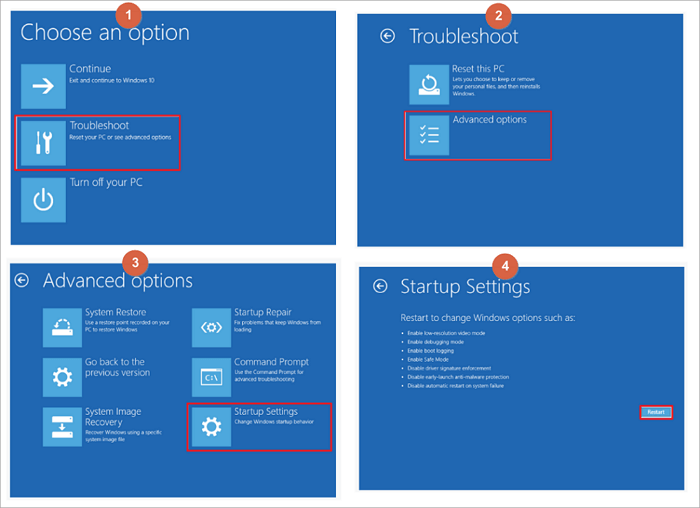
Step 3. To enter Safe Mode, press the corresponding F key (F4, F5, or F6) as indicated by the on-screen instructions. This will boot your computer in a minimal configuration, allowing you to troubleshoot and potentially resolve issues.
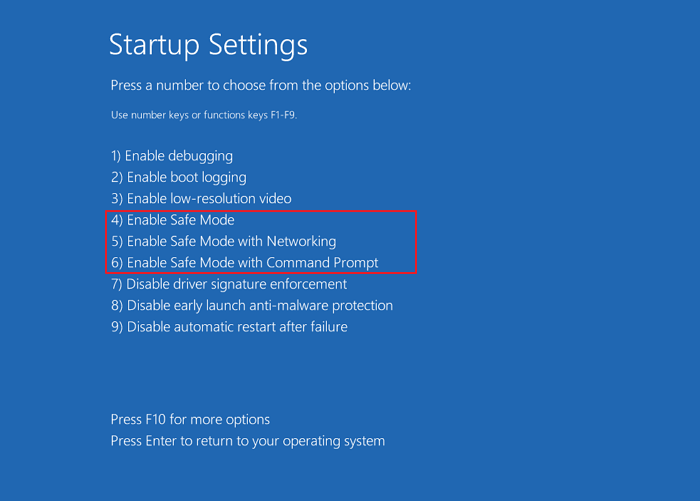
It may be a third-If Safe Mode doesn't resolve the issue, it could be related to a party program or driver issue, causing the black screen or infinite restart loop. In this case, you may need to use a System Restore point to a previous date when the computer was working normally, or try to boot in a minimal environment and then gradually add drivers and programs to identify the problematic one.
Fix 2. Delete Faulty Windows Update
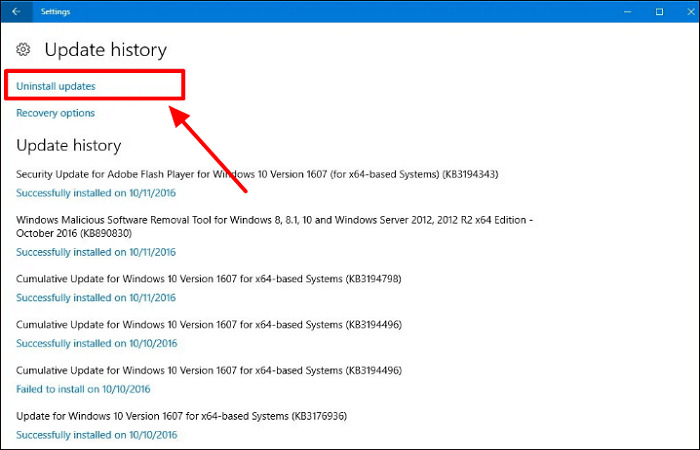
To resolve the Windows 10 black screen of death caused by a failed Windows update installation, try removing the faulty update. To do this, follow these steps:
Step 1. Go to settings.
Step 2. Select Update and Recovery > Windows Update > Update history.
Step 3. Under the Update History, click Uninstall updates.
Fix 3. Update or Roll Back Drivers
A faulty device driver can cause a black screen issue, but updating to the latest version or rolling back to a previous version can resolve the problem, potentially making the system bootable again.
Steps to update device drivers:
Step 1. Click on Start and search Device Manager, then click it.
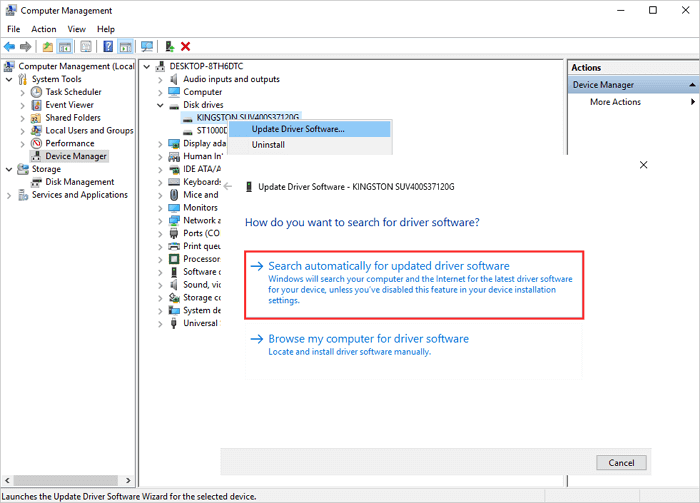
Step 2. To update the Disk driver, expand the Disk drivers by right-clicking on them, and then select Update Driver Software.
Step 3. Select Search automatically for updated driver software. This will prompt the PC to search for and install the latest driver software, streamlining the process and saving time.
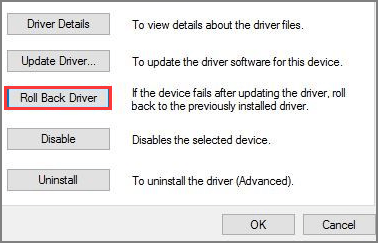
To roll back a device driver, select "Properties" and you will see the option to roll back to a previous version if a previous version was upgraded.
Fix 4. Reinstall Display Driver
To reinstall the display driver, start by booting your Windows 10 PC into safe mode, then follow the steps in Fix 1 to uninstall and reinstall the display driver.
Step 1. Press the Windows + X keys and click Device Manager.
Step 2. Expand Display Adapter.
Step 3. Right-click on the display device and select Update driver. If an update is unavailable, click on Uninstall device.
Step 4. Download and install a graphics driver.
Fix 5. Check External Devices
If your Windows 10 computer is experiencing a black screen error, try disconnecting all external devices plugged into your computer, including removable drives, hubs, SD cards, printers, and other peripherals, and then follow the instructions provided to resolve the issue.
Step 1. Unplug all external devices. Then restart your computer.
Step 2. If the black screen has disappeared, try plugging in the external devices to determine which piece of hardware is causing the problem. This could be the graphics card, a USB device, or another peripheral.
Fix 6. Fix Software Incompatibility Issue
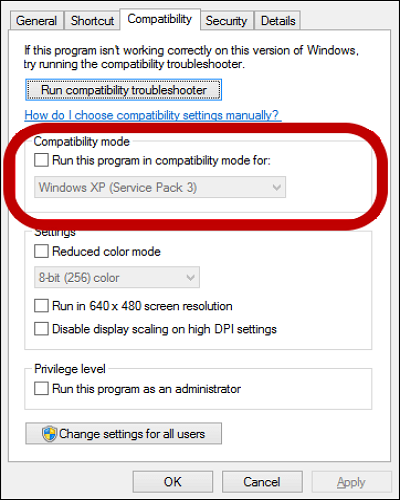
Running a program incompatible with Windows 10 may also cause the black screen of death error. In such cases, try launching the compatibility troubleshooter to run the apps in compatibility mode, which can help resolve the issue. To do this, follow the steps to run the apps in compatibility mode.
Step 1. Right-click on the software icon you need to start.
Step 2. Click go to Properties > Compatibility.
Step 3. Click on Run Compatibility Troubleshooter.
Fix 7. Fix Overheating Problem
Computers generate heat, which must be removed to keep the system running, and high temperatures can cause components to lock up and become damaged. If overheating causes a Windows 10 black screen error, shut down the computer, let it cool down, and then turn it back on.
Dust can cause overheating issues in laptops and PCs, so it's a good idea to clean out dust from the interior, especially if you're comfortable with opening the back panel. This can help improve airflow and reduce the risk of overheating.
Place your laptop and computer on an elevated and solid surface to circulate the air and keep the system cool.
Fix 8. Remove Viruses or Malware
If your Windows PC is showing a black screen due to a virus or malware, download and install a reliable antivirus program, run a full disk scan, remove any detected threats, and update your system with the latest patches to resolve the issue.
Bonus Tip: Backup Windows 10 PC for Data Security
To recover data after a Windows 10 black screen of death error, you can try using a data recovery software such as Deep Data Recovery Wizard or Recuva, which can help you recover lost files and data. Additionally, you can also try using a bootable USB drive or a Windows installation media to access your data, or use a cloud backup service if you have one. It's also a good idea to regularly back up your important files and data to an external hard drive or cloud storage to prevent data loss in the future.
Qiling Backup is a reliable and user-friendly third-party backup software that can help you create a backup of your Windows computer, making it a good practice to prevent data loss in case of a system crash or other issues.
Qiling Backup Home is an all-in-one backup and recovery utility for Windows that lets you automatically back up files, systems, disks, and more, while also enabling you to create a recovery partition, schedule backups, and even install Windows on a new SSD without a USB drive.
- Create a system image on USB on windows 10/8/7.
- Clone a hard drive.
- Create a WinPE emergency bootable disk.
- Save backups to multiple locations, such as a local drive, network-attached storage (NAS), a secure zone, and cloud storage, to ensure data safety and accessibility.
- 250GB free cloud storage.
- Migrate the Windows system to SSD.
The Bottom Line
To fix the black screen of death on Windows 10, try the methods outlined in this article. A black screen is a common issue on Windows computers, so having these tricks up your sleeve can help you get rid of it. Don't forget to back up your computer with Qiling Backup, a reliable backup and recovery tool, to avoid any risk of data loss.
FAQs
1. Is the black screen of death permanent?
The black screen of death is often caused by a software bug or Windows update, but is usually fixable. However, if it appears suddenly, it may be due to a severe hardware issue, requiring component replacement or repair.
2. What causes black screen crashes?
A black screen can occur due to issues with the graphics driver or incompatibilities with a new feature update, or even after a computer update with a defect.
Related Articles
- Fixed: ATA/SATA Hard Drive Not Detected or Recognized in BIOS
- How to Fix Error Code 2003F When Entering Recovery Mode on macOS 13/12/11
- How to Get Windows 10 for Free [Full Guide in 2022]
- [Fixed] Right Click Not Responding or Working on Windows 10
- How to Reinstall Failed/Cancled Updates in Windows 10
Windows 10 system update failed or canceled due to slow or stuck downloading? This page offers helpful tips and guidance on how to reinstall the failed Windows updates without affecting your computer's performance or data. - How to Turn Off Xbox Controller on PC
Learn 5 easy ways to turn off your Xbox controller on a PC, including disconnecting Bluetooth, removing the USB cable, long-pressing the Xbox button, removing batteries, and using third-party software.
Products
Articles & Tutorials
- Data Recovery
- Data Backup
- File Recovery
- File Backup
- System Backup and Restore
- Disk and Partition Clone
- Technical articles
- Mobile articles
- Disk Master Help
- Windows Data Recovery Tutorials
- Windows Secure Delete Tutorials
- Windows Partition Management Tutorials
- Windows File Backup and Restore Tutorials
- Windows System Backup and Restore Tutorials
- Windows Disk Backup and Restore Tutorials
- Windows Clone Tutorials