Comparison: Should You Backup to Cloud or Hard Drive
External hard drives and cloud drives are popular locations to back up important data like documents, pictures, videos, and music, helping to recover files in case of data loss or damage in your primary storage.
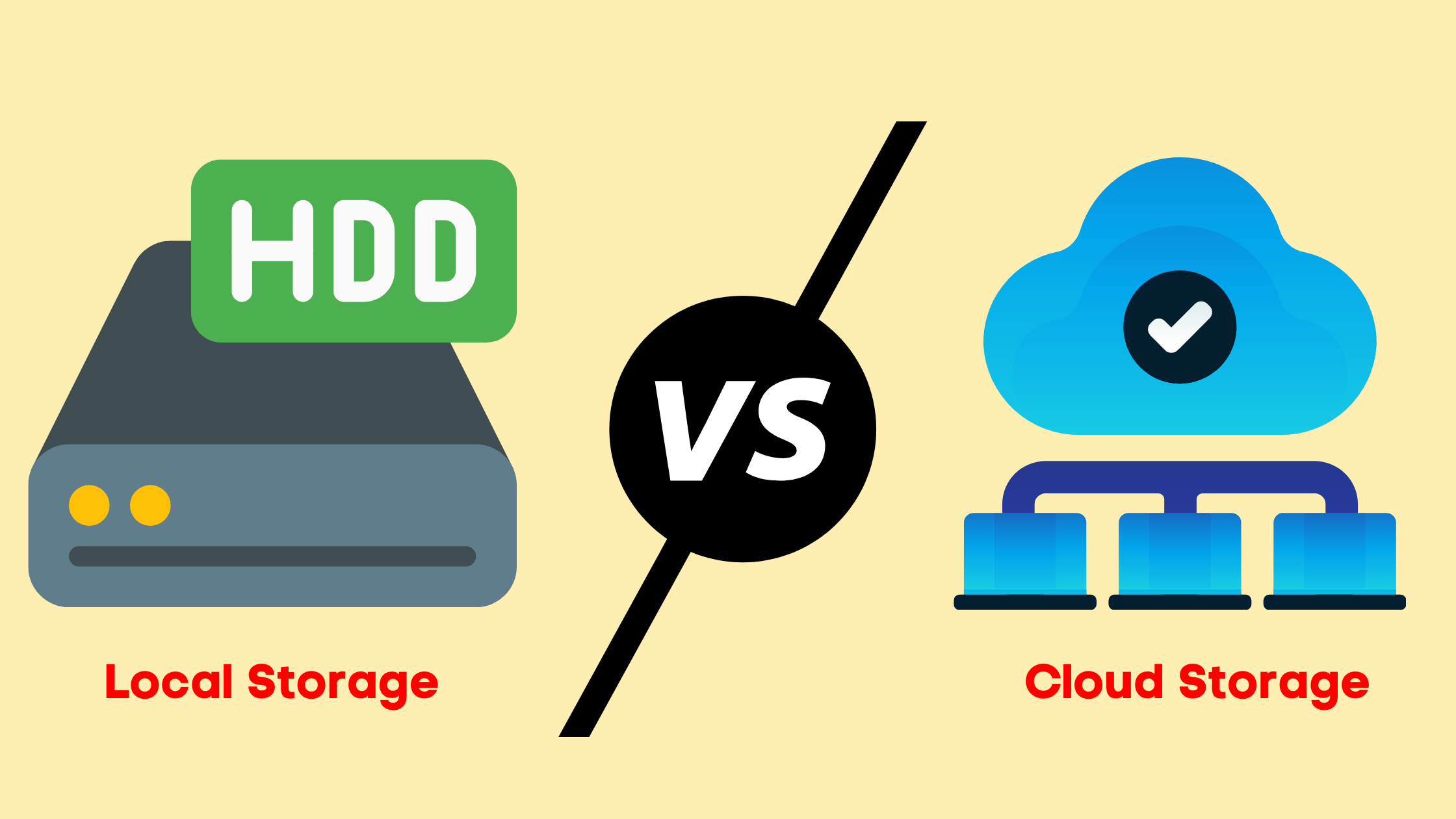
When deciding between cloud and external hard drive backup, most people get confused. However, this article aims to clear the air and recommend the best solution. We'll compare both methods based on universal access, security, and cost, to help you make an informed decision.
The article will also discuss an all-in-one backup tool for your data and files, specifically Qiling Backup Free, allowing you to read on and learn more.
Cloud vs. Hard Drive: Universal Access
When choosing a file backup strategy, accessibility is a key consideration. Cloud backup stands out in terms of accessibility compared to external hard drive backup, requiring only a stable internet connection to access and view files stored in the cloud.
To access your cloud storage account, you can use your smartphone or tablet to download saved content. In contrast, you'll need to physically access your hard drive to view or back up saved data.
Transferring data between devices can be time-consuming and labor-intensive, especially when using physical cables. In contrast, cloud backup provides universal access, allowing users to upload and access their data from any device with the correct login credentials, eliminating the need for physical connections.
See also:
Cloud vs. Hard Drive: Security
Cloud storage systems now use 256-bit AES encryption to secure data on local storage, and once uploaded, a zero-knowledge encryption strategy is applied, where only users know their encryption keys, protecting their data in the cloud.
An external hard drive has significant security features, making it difficult for unauthorized access. Data on the hard drive can only be accessed when it's connected to a computer, and even if hackers gain access to cloud storage, they can't view encrypted files due to zero-knowledge encryption.
The reliability of external hard drive security features is a concern, as most modern hard drives can fail before their warranty expires, putting saved data at risk in the event of physical damage or internal disk failure.
Cloud vs. Hard Drive: Cost
External hard drives offer a cost-effective backup solution for most users, requiring only an initial purchase cost without any ongoing subscription fees like cloud storage. However, the initial lower price of external hard drives may not be the only expense, as recovering lost data can be costly.
Using cloud storage can be a cost-effective option for data recovery, as it minimizes the risk of losing data altogether. Unlike relying on a single, potentially expensive expert for data recovery, cloud storage services automatically save multiple copies of your data across different sites. This means that even if access to one site becomes problematic, you can easily switch to another, reducing the likelihood of data loss and the associated costs.
They offer advanced recovery options to access deleted files without incurring extra costs, as long as you have a paid monthly subscription.
Cloud vs. Hard Drive: Final Conclusion
Both cloud storage and external hard drives offer efficient backup solutions, but they differ in cost and recovery efficiency. While external hard drives provide a cost-effective way to back up data without monthly subscription fees, they also come with the risk of data loss if the drive is damaged. In contrast, cloud backup is a more reliable option that eliminates the need for expensive data recovery from damaged hard drives.
Backing up your data in the cloud is recommended due to its benefits, including more frequent backups and enhanced security through data encryption. This approach also provides universal access to your files from any device, making it a more convenient option than relying solely on external hard drives.
To meet the 3-2-1 backup strategy requirements, consider backing up your data on both platforms, such as cloud and hard drive backup. This would ensure that your data is safe and accessible in case of any issues. A chart comparison between cloud and hard drive backup can be helpful in making an informed decision.
| Hard Drive Backup | Cloud backup | |
|---|---|---|
| Security | Basic password protection without any encryption feature | Provides multi-layered encryption |
| Cost | One-time purchase cost | Ongoing monthly costs at affordable rates |
| Transfer speed | Fast | Based on your network speed and file size |
| Scalability | No scalability | Free space of between 2-50GB |
| Real-time collaboration | Not supported | Support real-time collaboration between students or coworkers |
| Portability | Portable | Accessed from anywhere |
| Durability | Short disk life of 3-4 years | Durable |
All-in-one Backup Tool: Qiling Backup
Qiling Backup free is a tool that combines cloud backup and external storage backup, allowing you to create backups of your files, OS, disk, and partitions. You can save the backups on local drives, Qiling cloud, or NAS, and the free version offers advanced backup options such as.
- Incremental and differential backup
- Encrypted backup
- Predefined backup frequency
- Scheduled backup
Qiling Backup Free allows users to restore back up data, including a bootable backup feature that helps recover data in case of a computer crash or failure to boot, and enables data restoration to an original or specified location.
Cloud storage offers flexibility, security, and cost-effectiveness, providing 250GB of free space to back up data without time limits.
Additional Features of Qiling Backup Free
Other features of the software include the following:
- Simple backup management through merging, deleting or compressing files.
- Bootable backup and recovery through WinPE bootable disk.
- Encrypted backups to enhance security and privacy.
- You can't restore a system backup image from one computer to another with dissimilar hardware. System backups are tied to the specific hardware they were created on, so restoring a system backup to a computer with different hardware will result in a non-functional system.
- Multi-path backup strategy meets the 3-2-1 backup requirements.
To back up your data with this intelligent software, simply follow these steps: download the software, create an account, select the data you want to back up, choose a backup location, and initiate the backup process. The software will then securely store your data in the chosen location, allowing you to easily recover it if needed.
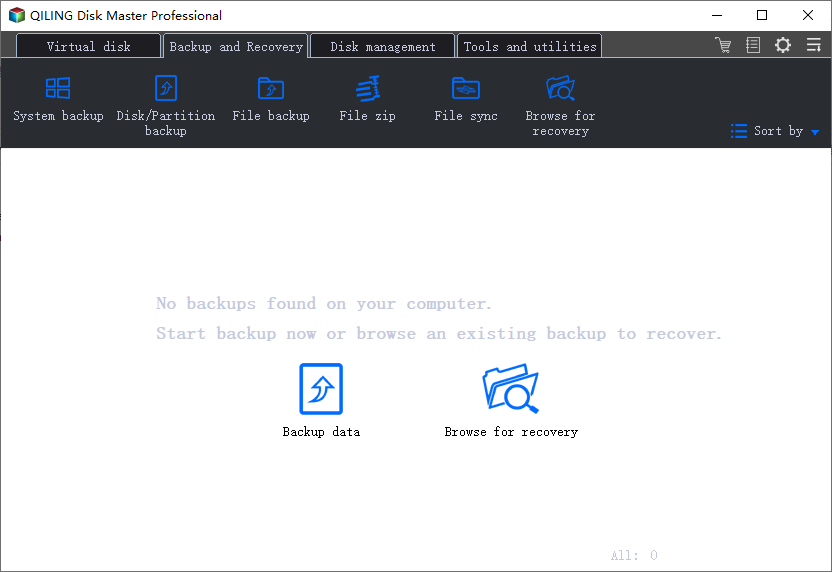
Step 1. Click the "File backup" button to start backup.
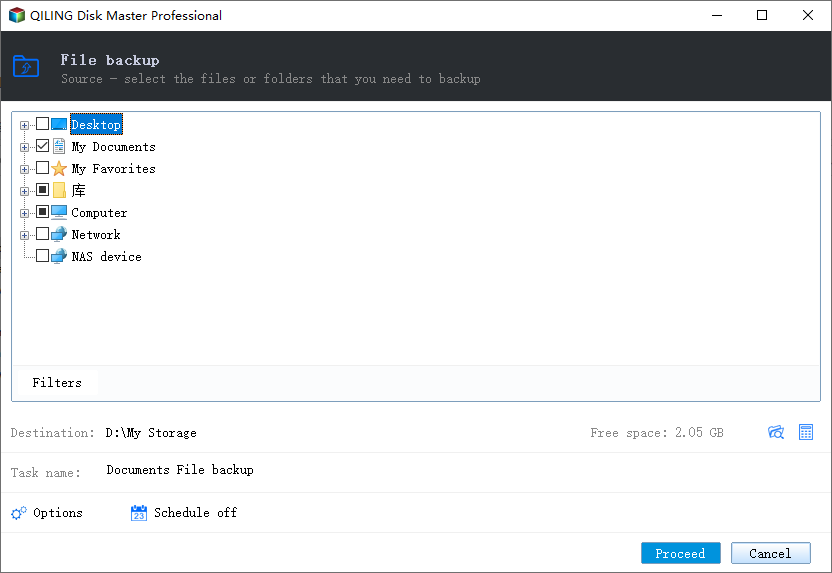
Step 2. Local and network files will be listed on the left, allowing you to expand directories to select the files to be backed up.
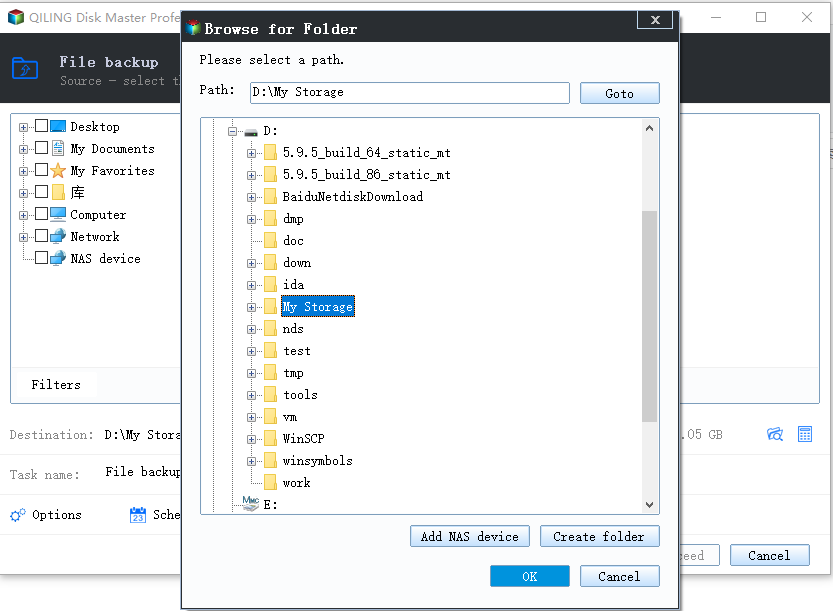
Step 3. Follow the on-screen guide to select the destination where you want to save the backup.
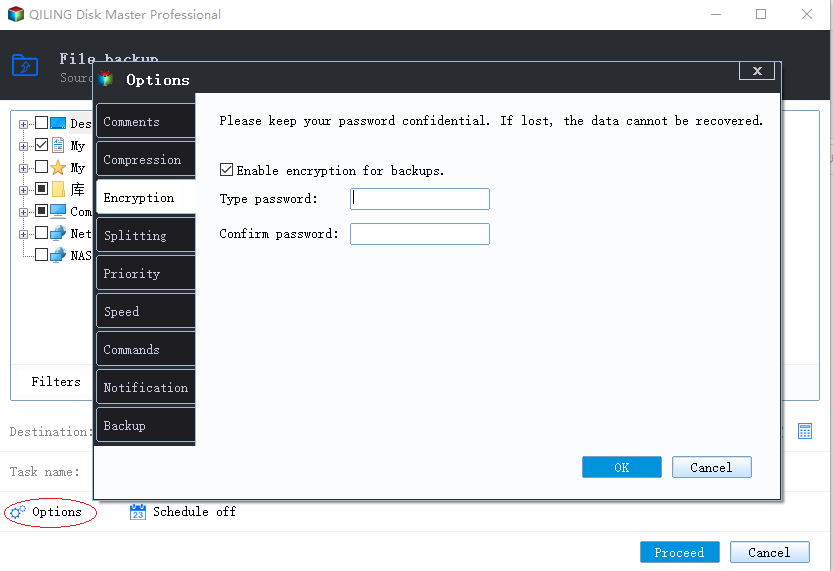
Step 4. Click "Options" to encrypt the backup with a password in "Backup Options". This allows you to customize the backup task with various other options available.
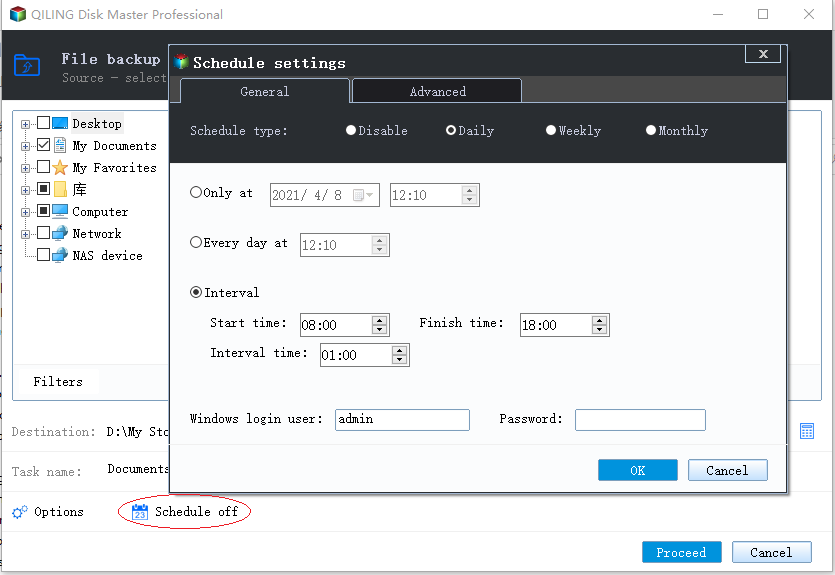
Set the backup schedule and choose to start backing up at a certain event in "Backup Scheme".
Step 5. You can store the backup to your local drive, Qiling's cloud service, or a Network-Attached Storage (NAS) device.
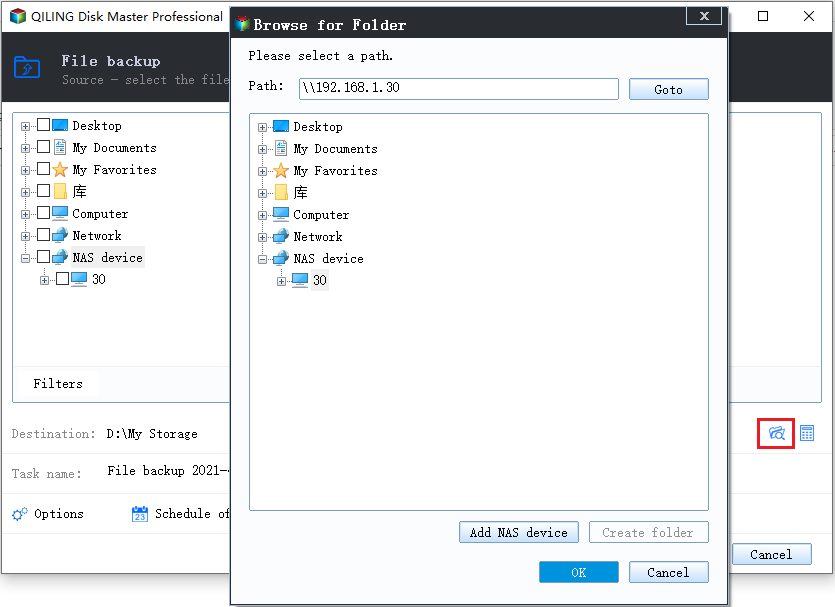
Step 6. Qiling Backup allows users to back up data to both third-party cloud drives and its own cloud drive, providing a convenient and secure way to store and manage their files.
To back up data to a third-party cloud drive, select Local Drive, scroll down to add a Cloud Device, add your account, and log in.
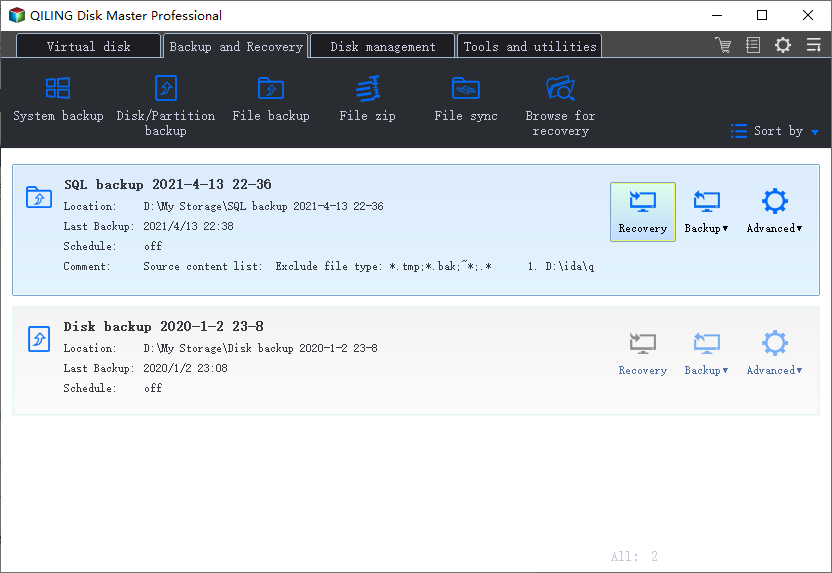
Step 7. Click "Proceed" to start the backup, and once it's completed, the task will be displayed as a card on the left panel. You can right-click on the task to further manage it.
To use the cloud and hard drive backup feature of Qiling Disk Master Back Free, download and install the free version of the software on your computer.
Related Articles
- How to Back Up Windows 10 Image to Cloud [Backup Strategy in 2022]
- Quick Answer: Is Virus Protection Necessary
- Backups vs. Antivirus: Have Both in One Tool
- Guideline: Backup Specific Folders to OneDrive on Windows 10/11
- What Size External Hard Drive Do I Need to Backup My Laptop | Quick Guide
To determine the size of the external hard drive you need, calculate the total amount of data you want to back up, including files, photos, and operating system. A general rule of thumb is to have at least 2-3 times the amount of data you currently have. - PC Won't Turn on All of A Sudden | Get 7 Reliable Ways to Fix Computer Won't Turn On
If your PC suddenly won't turn on, there are 7 reliable ways to fix the issue. In this article, we'll show you how to troubleshoot and resolve the problem, from checking the power cord and outlet to diagnosing issues with the power supply, motherboard, and other components.
Products
Articles & Tutorials
- Data Recovery
- Data Backup
- File Recovery
- File Backup
- System Backup and Restore
- Disk and Partition Clone
- Technical articles
- Mobile articles
- Disk Master Help
- Windows Data Recovery Tutorials
- Windows Secure Delete Tutorials
- Windows Partition Management Tutorials
- Windows File Backup and Restore Tutorials
- Windows System Backup and Restore Tutorials
- Windows Disk Backup and Restore Tutorials
- Windows Clone Tutorials