Make a Bootable Backup for Windows 11
Bootable Backup vs. Ordinary Backup
Creating a good backup of your data is a good practice, but there's a subtle difference between bootable and ordinary backup techniques. While ordinary backups simply store your files, bootable backups create a duplicate of your entire system, including the operating system, applications, and settings, allowing you to boot up your computer from the backup in case of a failure. This means that with a bootable backup, you can restore your system to a previous state, including all your files, settings, and applications, making it a more comprehensive and convenient backup option.
Bootable Backup
A bootable backup is a complete system backup that includes the Windows OS, settings, applications, and user accounts, allowing you to restore your entire system in case of a failure.
Bootable and Ordinary Backup Difference
A bootable backup is a type of backup that creates a system image on a device that can be used to boot your system and restore your data. Unlike ordinary backups, a bootable backup doesn't require a separate bootable device, but rather creates a self-contained image of your system that can be used to restore your entire system, including your operating system and data.
Ordinary backups save your files and data, but not your entire operating system, making them less useful when your system fails to boot. Bootable backups, on the other hand, can help you recover and boot up your system, making them a more reliable option.
Creating a bootable backup allows you to easily restore your computer to an earlier time, especially when you're unable to boot normally from your system. Simply boot your system from the bootable backup drive and you'll be able to restore your data.

Can I Create a Bootable Backup in Windows 11?
With many users shifting to Windows 11 since its release, it's essential to create a bootable backup for added security. Fortunately, creating a bootable backup is still possible under the new system. To do so, you can explore the available backup methods in Windows 11.
Windows 11 Backup Methods
- File History: File History is a built-in Windows backup utility that helps you create and restore backups of your files using a specific time through file history tracking.
- OneDrive Folder Syncing: OneDrive allows syncing of data, making it accessible on any device, but only backs up files and folders.
- Setting Syncing: Windows setting syncing is a new feature in Windows 11 that allows users to sync their settings across all their computers, effectively backing up their settings.
- Applications Backup: Apps backup allows you to save and restore apps to a specific point in time, making it easy to revert to a previous state.
- Backup and Restore (Windows 7): Windows 11 users can use the built-in backup utility to create a bootable backup, not just for restoring older backup files, but also for creating a new one. This is the only utility in the Windows system that allows users to make a bootable backup.
Windows 11 doesn't have a built-in feature to create a bootable backup, so users may need to look for alternative methods to achieve this.
Qiling Backup
Qiling Backup is an excellent data backup tool that allows you to create an automated backup for your Windows 11, with an extensive feature set and the ability to create a bootable backup.
Merits of Qiling Backup
- One-Click System Backup Feature: Acer Backup Manager has a minimal and sleek user interface that allows you to create Windows system backups, save your user settings, and create a bootable backup with just one click. It also enables you to restore your system in case of a crash.
- Cloud Drive and Network Drive: Qiling Backup offers a simple feature to save backup files directly on cloud and network drive.
- Customized Backup Plans: You have the power to design your own personalized backup strategy, tailored to your specific needs and preferences. This allows you to take control of your data protection and ensure that your most important files and information are safeguarded in a way that works best for you.
How to Create a Bootable Backup in Windows 11
While Windows 11 has various backup tools, only one feature allows for system backup. To create a bootable backup, follow the detailed steps, or consider a simpler method using Qiling Backup.
Method 1. Use the Backup and Restore (Windows 7)
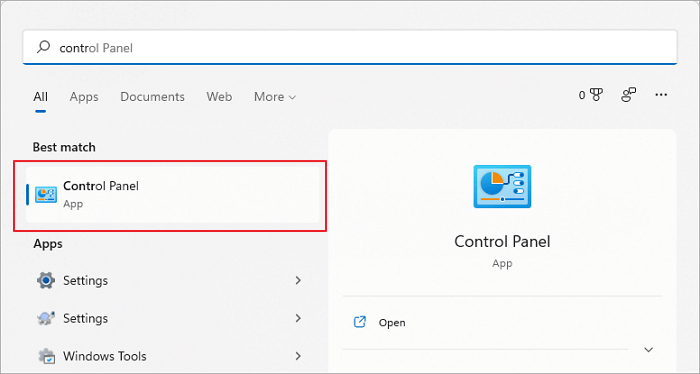
Step 1. Open Control Panel using the Windows 11 Taskbar.
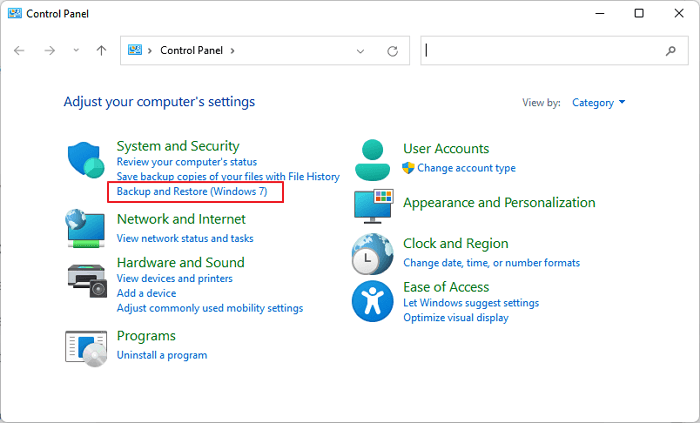
Step 2. To restore your computer to its previous state, click on the "Back and Restore" option in the Windows 7 Control Panel.
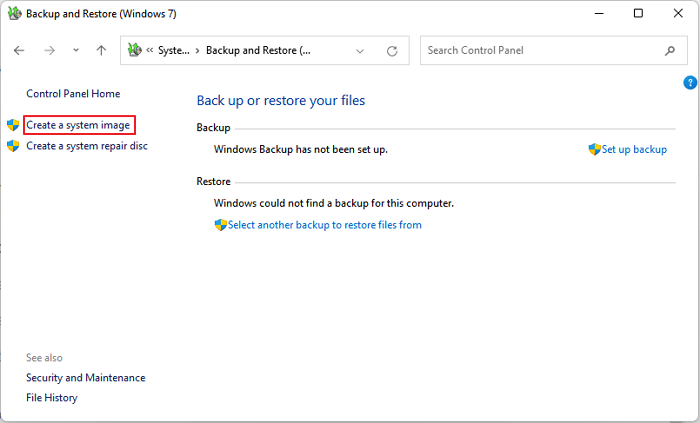
Step 3. Click the "Create a system image" option on the left panel.
Step 4. To create a bootable backup, you'll first need to prepare a backup drive, such as a USB, hard drive, DVD, or network drive. Once you have your drive selected, navigate to the destination where you want to create the backup and click the "Next" button.
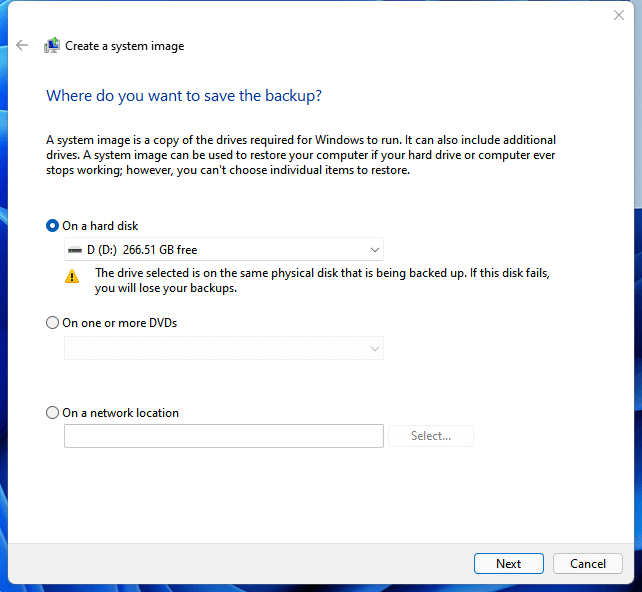
Step 5. Windows will automatically select your system drive. Click "Next" to proceed.
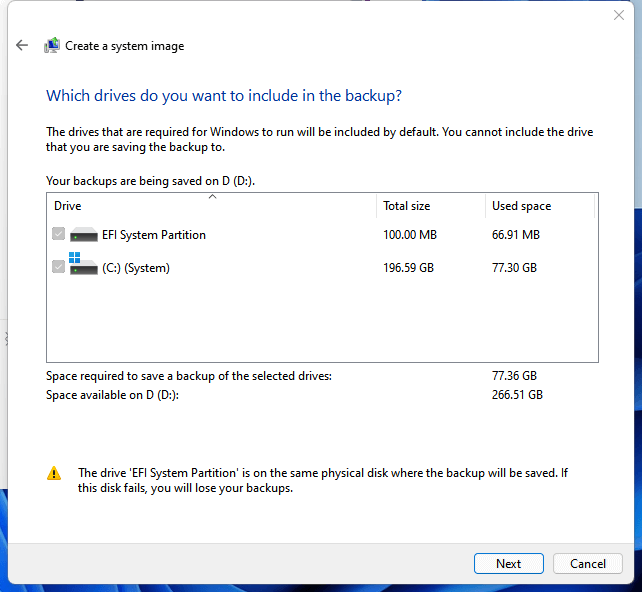
Step 6. Confirm your backup settings, and click the Start backup button.
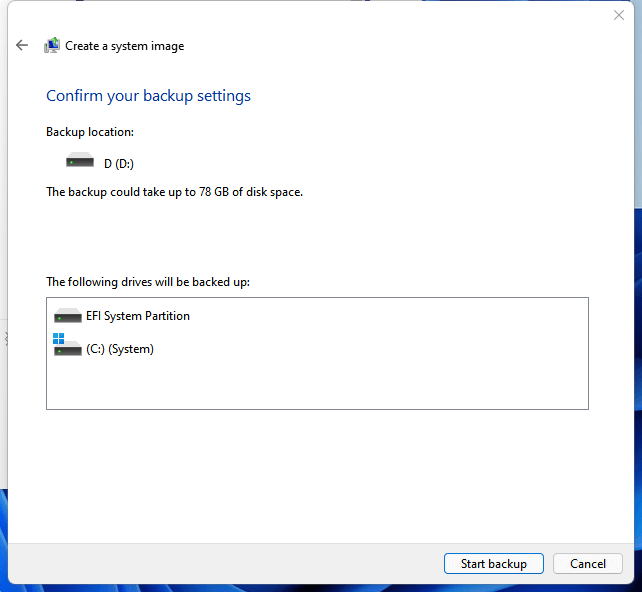
To create a bootable backup on Windows 11, follow these steps: insert the USB drive, go to the Windows 10 installation media creation tool, select the USB drive as the destination, and create the installation media. Next, open the Windows 10 installation media creation tool on the USB drive, select the USB drive as the destination, and create the installation media. Then, go to the Windows 10 installation media creation tool, select the USB drive as the destination, and create the installation media. Finally, the backup procedure will start, and you need to wait for it to complete. After completing these steps, you will have successfully created a bootable backup on your Windows 11.
Method 2. Use Qiling Backup
To create a system backup, download the Qiling Backup from the button below, and then follow the steps to complete the process.
Step 1. Launch Qiling Backup and choose "System Backup" on the home page.
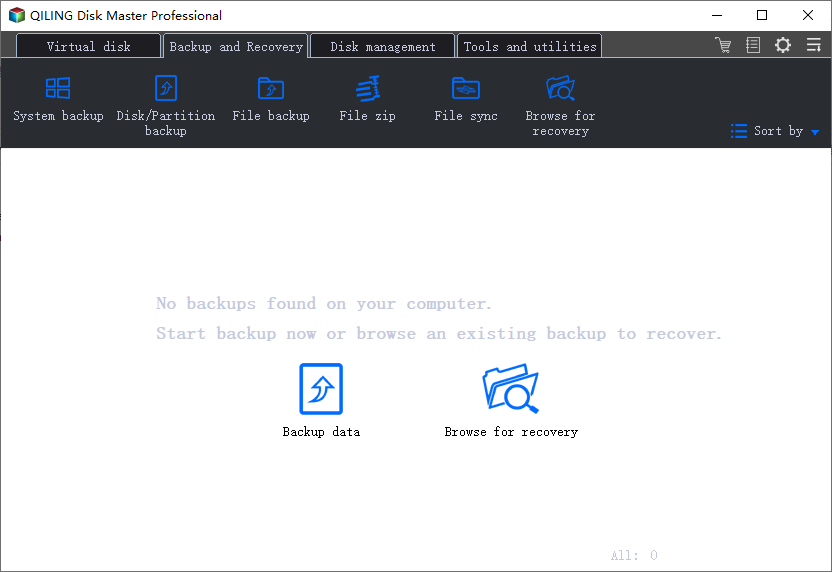
Step 2. The system partition will be automatically selected, you only need to choose the installation location.
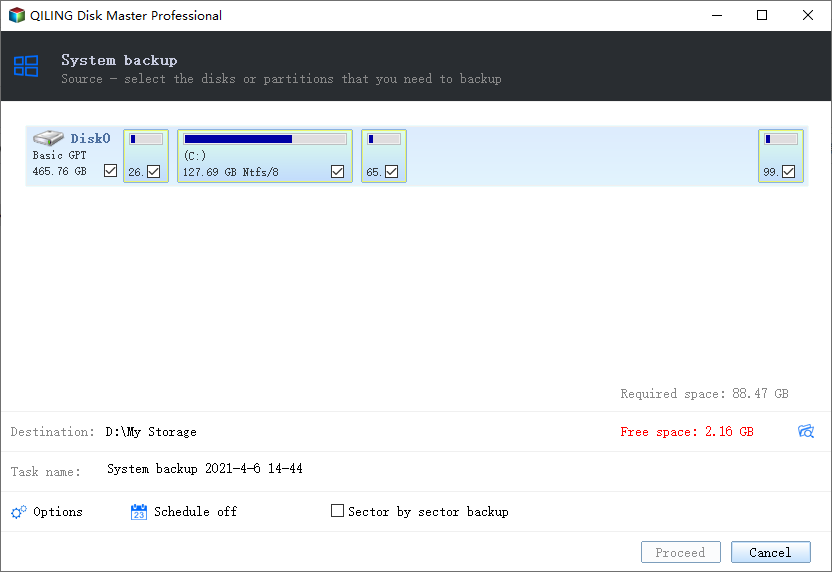
Step 3. You can save backup files to Local Drive, Cloud, NAS, or connect an external hard drive to preserve system backup files.
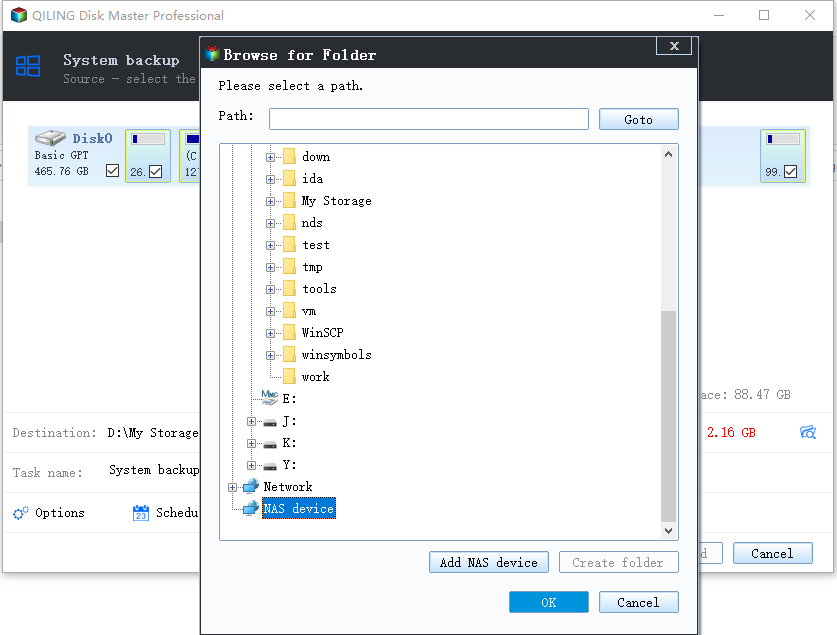
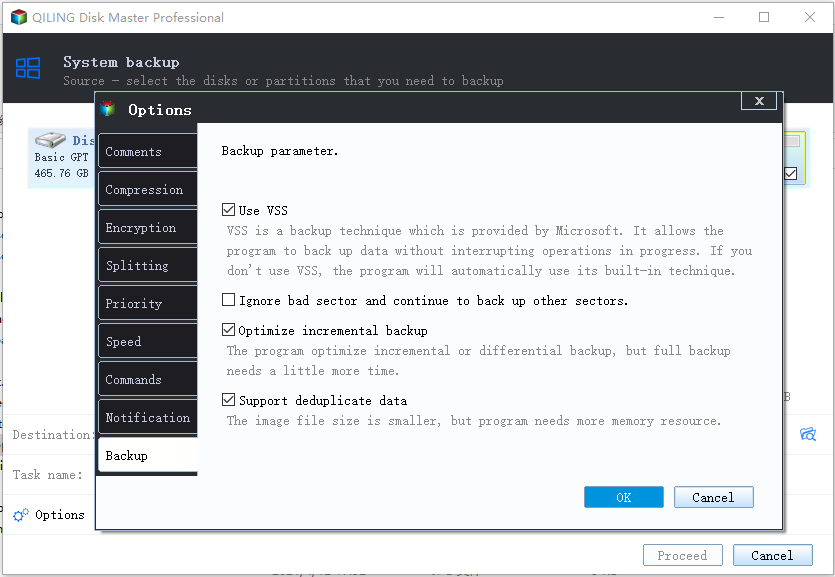
Step 4. You can customize the settings in "Options" at the left bottom, then click "Proceed" to start the process.
After completing the backup process, you can check the backup status, recover, open, or delete the backup by right-clicking on the backup task in the left panel.
How to Back Up Files on Windows 11?
To backup files on Windows 11, you can use the built-in backup utility, which offers more flexibility than before. You can either use the File History feature or take advantage of the Remember Apps and references options. This allows you to easily safeguard your important files and data.
Windows 11 backup
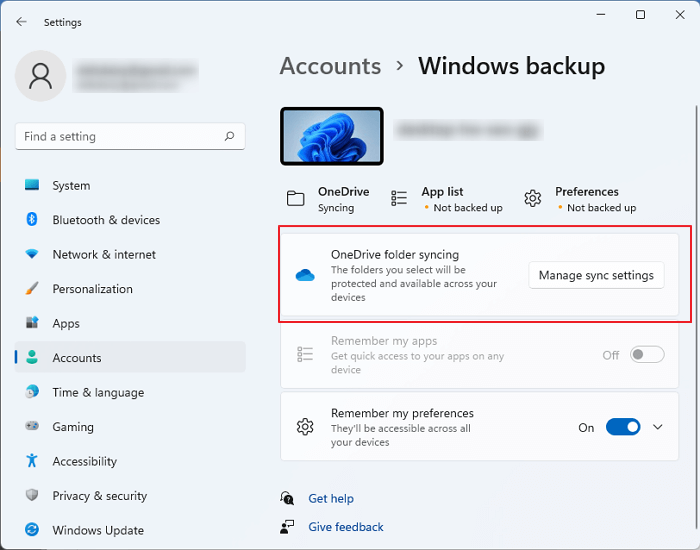
Step 1. Go to Settings > Accounts > Windows backup.
Step 2. OneDrive folder syncing is a backup option that allows users to sync their OneDrive folders to their computer, ensuring that their files are backed up and up-to-date. This feature enables users to access their files from anywhere, and also provides a safeguard against data loss in case of a computer crash or other disaster. By syncing their OneDrive folders, users can rest assured that their important files are safely backed up and can be easily recovered if needed.
Step 3. Click Manage sync settings.
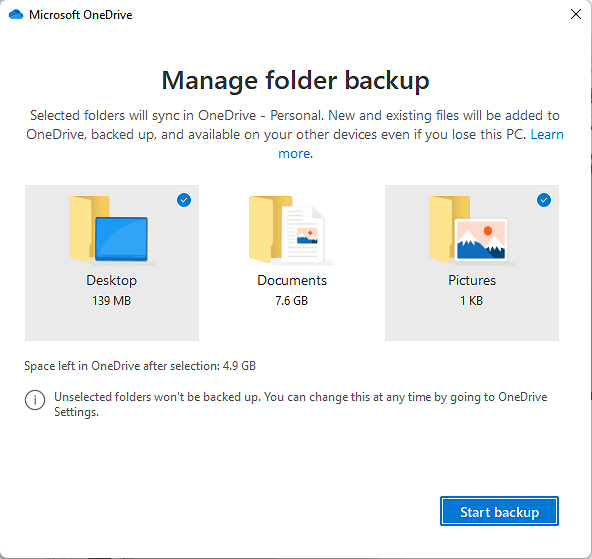
Step 4. To back up your Desktop, Documents, and Pictures folders, select the desired folders and click the "Start backup" button.
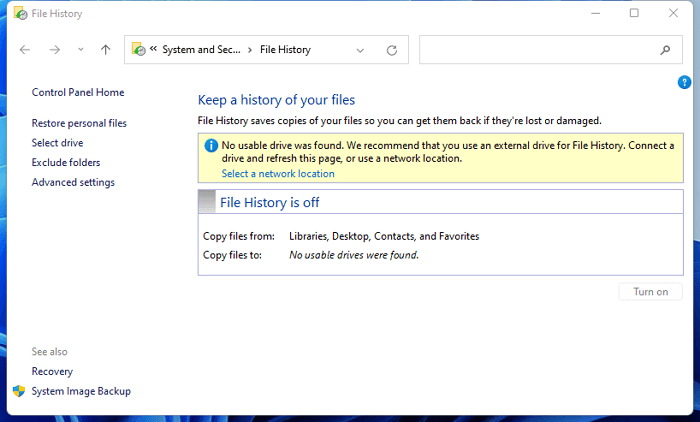
Windows 11 File History
Step 1. To access File History, search for it in the taskbar and click on the best match.
Step 2. Connect an empty external hard drive to your computer and turn on File History to automatically back up your files and folders.
Step 3. The default backup folders include Libraries, Desktop, Contacts, and Favorites, but you can also customize the specific folders you want to back up.
Conclusion
Windows 11 offers a more comprehensive backup option, bootable backup, which allows you to boot your device and restore all data in case of a system failure. This is more effective than a simple files backup. Additionally, Windows 11 provides other backup options, including File History, OneDrive folder syncing, Settings syncing, and Apps backup, to help protect your data.
Microsoft's adjustment of backup utilities in Windows 11 suggests a shift towards cloud backup, with OneDrive being the primary destination for backed-up content. While this method has its advantages, users who value offline backup may prefer alternative tools. Qiling Backup is a recommended option for Windows 11 users, offering features such as bootable backup, automatic backup, cloud and network backup, and more.
Related Articles
- Quick Answer: Is Virus Protection Necessary
- 2022: How to Installl Windows 11 on M.2 SSD (with Pictures)
- Azure File Backup: How to Back Up Files in Azure & Find Best Alternative
- Macrium Reflect Guide | How to Boot from Rescue Media (with Alternative)
- Automatic Backup data to NAS device with QILING Disk Master
NAS technology is advanced for data safeguard. Using QILING Disk Master to create automatic NAS backup makes data storage and protection easier and safer. - Clone Hard Drive in Windows 10 to New HDD or SSD Easily?
Cloning Windows 10 hard drive has a variety of usages. QILING Disk Master can help you clone hard drive in Windows 10 with a few simple steps.
Products
Articles & Tutorials
- Data Recovery
- Data Backup
- File Recovery
- File Backup
- System Backup and Restore
- Disk and Partition Clone
- Technical articles
- Mobile articles
- Disk Master Help
- Windows Data Recovery Tutorials
- Windows Secure Delete Tutorials
- Windows Partition Management Tutorials
- Windows File Backup and Restore Tutorials
- Windows System Backup and Restore Tutorials
- Windows Disk Backup and Restore Tutorials
- Windows Clone Tutorials