Azure File Backup: How to Back Up Files in Azure & Find Best Alternative
PAGE CONTENT:
As people become more aware of the importance of backing up files due to human errors, computer viruses, and hardware faults, they're seeking tools to help them recover crucial data. This necessity has led many cloud vendors to offer various backup services, making it easier for users to safeguard their files and access them when needed.
Nowadays, Azure Backup is popular as a cloud backup solution. In this post, we will take a closer look at Azure file backup and its best alternative software.
What Is Azure File Backup?
Azure File Backup Azure Backup is a cloud-based service that allows users to back up and restore data from Microsoft Cloud. Before utilizing it, it's essential to understand its benefits and drawbacks, enabling informed decisions on how to leverage its capabilities to best suit individual needs.
Pros:
- Azure Backup leverages the power of the Azure cloud to back up and deliver files, eliminating limits on inbound or outbound data transfers, allowing for unlimited scale.
- All-Security solutions are designed to protect data both in transit and at rest, ensuring confidentiality, integrity, and availability of sensitive information.
- It offers built-in monitoring and alerting capabilities in a Recovery Services vault.
- Offload on-Premises backup allows you to securely back up your on-premises files to the cloud, providing both short-term and long-term data protection.
Cons:
- If you don't set up the initial step, you might not receive notifications about backup failures.
- You can't access your data if you don't have Internet access, and high bandwidth is required to back up large files.
- Backup granularity (choose only some folders/files to back up)
- Disjointed is a collection of various backup components, which cannot meet all backup requirements individually, requiring a combination of components to achieve comprehensive backup.
How to Back up File in Azure
To backup files in Azure, start by creating a new Azure Storage account, which will serve as the repository for your backups. Next, upload the files you want to back up to the Azure Storage account using the Azure portal or Azure CLI.
Step1. Log into your account in the Azure portal
Step2. Set a recovery services vault
Choose a storage account, which will then display the sets of files shared in your account.
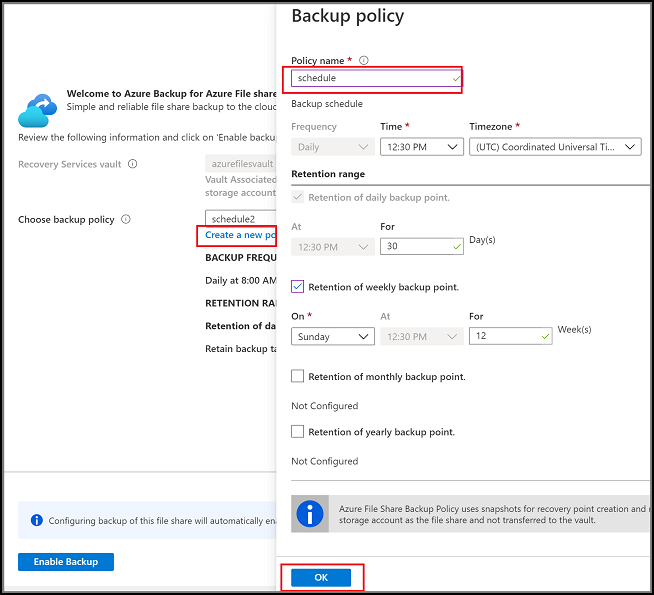
Step4. Create a backup policy, including schedules and retention range.
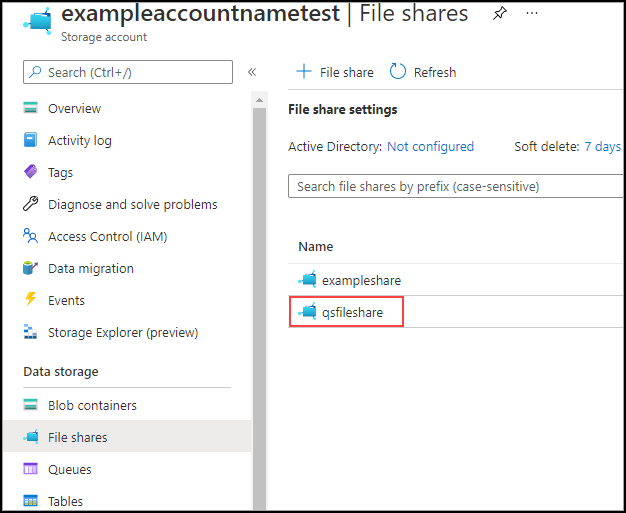
Step5. Select the file shares you want to back up.
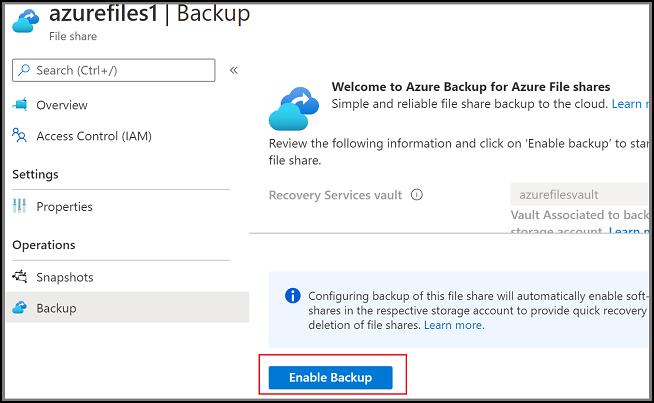
Step6. Select Enable backup to start backing up your files
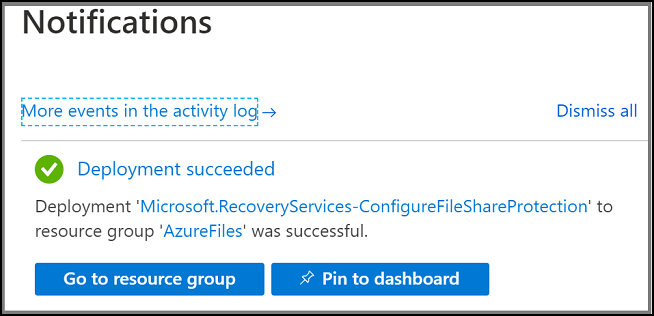
Step7. Track the backup process.
Azure File Backup may not be the best choice in every situation due to its limitations, so it's worth considering third-party backup options. Qiling Backup is a highly recommended alternative for backing up files.
Best Azure File Backup Alternative to Back up Files to Cloud & Local
Qiling Backup is a reliable and free backup software with 13 years of experience, allowing users to back up their files to the cloud and access them locally. Its outstanding merits include its ability to provide secure and convenient backup solutions.
- Supporting advanced backup options such as a backup scheme, incremental backup, or differential backup can make your backups more efficient and tailored to your specific needs. This allows you to customize your backup strategy to suit your requirements, ensuring that your data is properly protected and easily recoverable in the event of a disaster.
- Safe: support encrypting thebackup systemimages to make your data safe.
Here are the steps to back up your files:
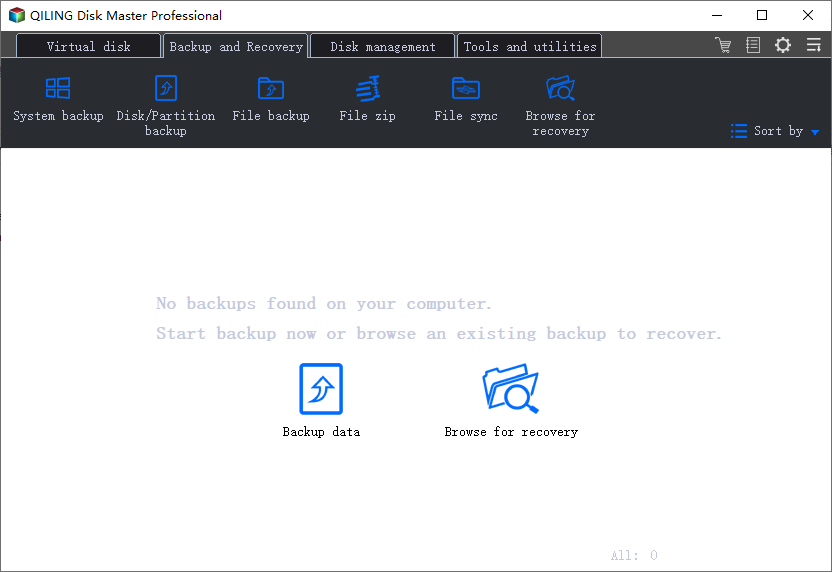
Step 1. To initiate a backup, click the File backup button on the Backup and recovery page.
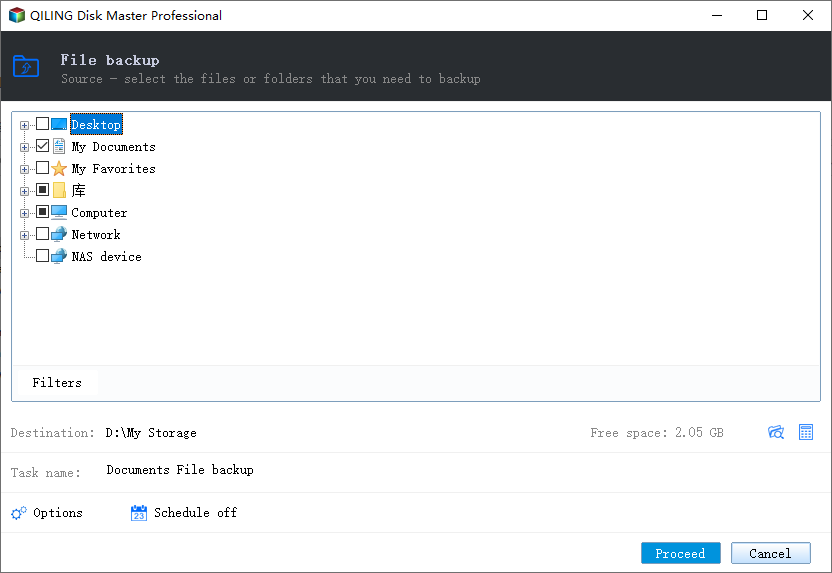
Step 2. On the left, both local and network files will be shown. You can expand the directory to select the backup files.
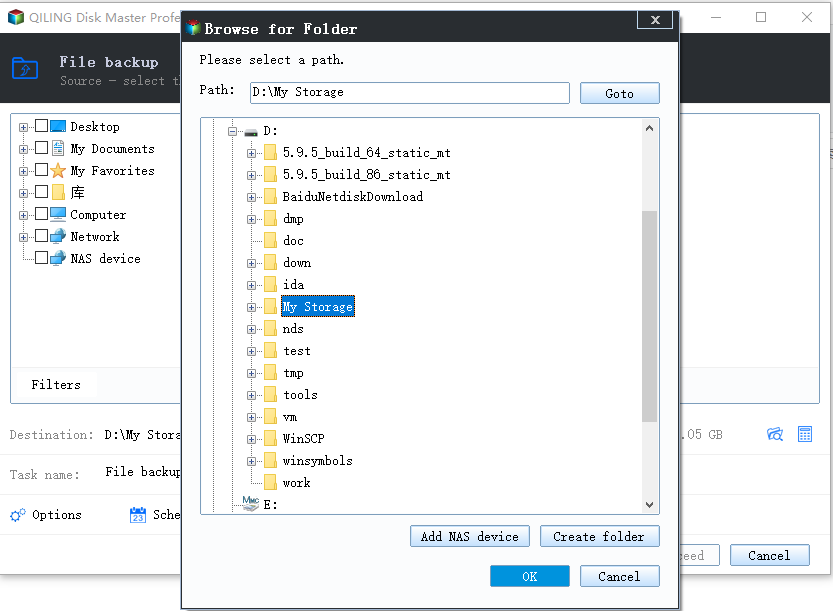
Step 3. Follow the on-screen instructions to choose a location to store the backup.
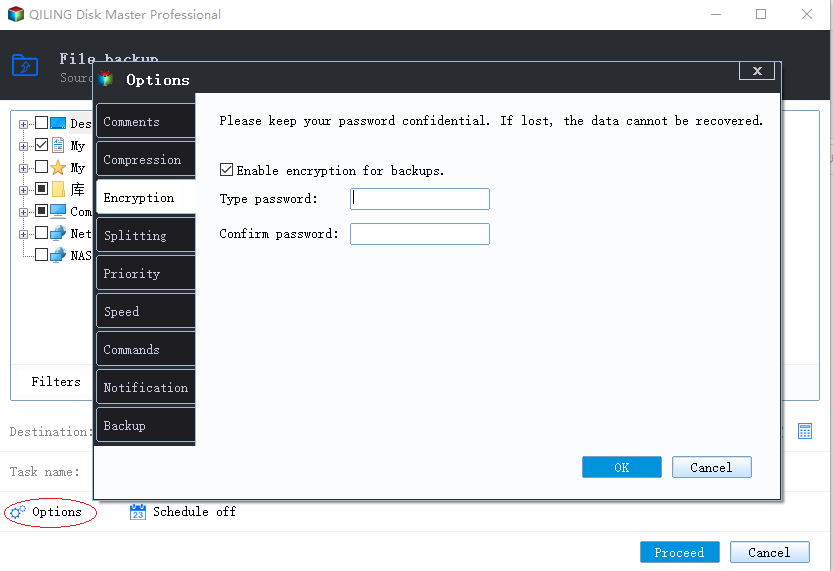
Step 4. To encrypt the backup with a password, click on "Options" in the "Backup Options" menu. This allows you to add an extra layer of security to your backup by requiring a password to access it. You can also explore other customization options in this menu to tailor the backup process to your specific needs.
Click on the Backup Scheme option to configure the backup schedule and initiate the backup process at a specified event.
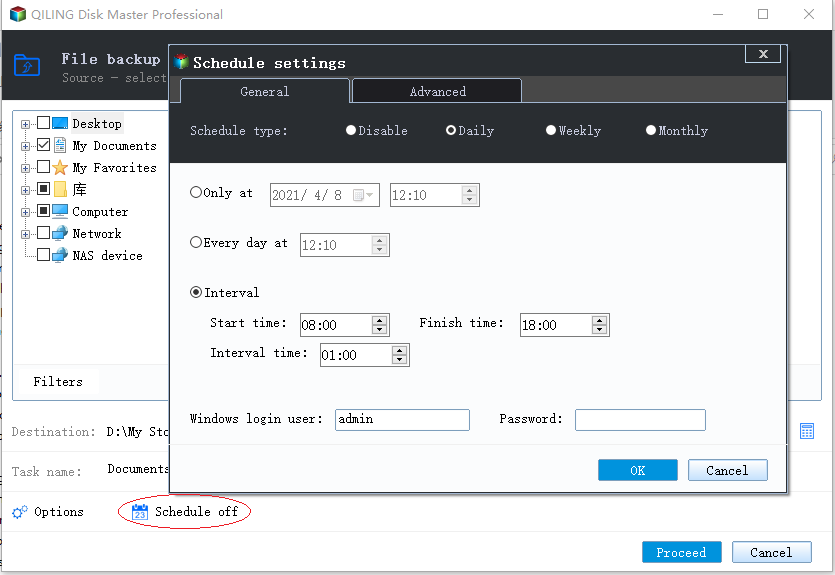
Step 5. The backup may be stored on a local disk, Qiling's online service, or NAS.
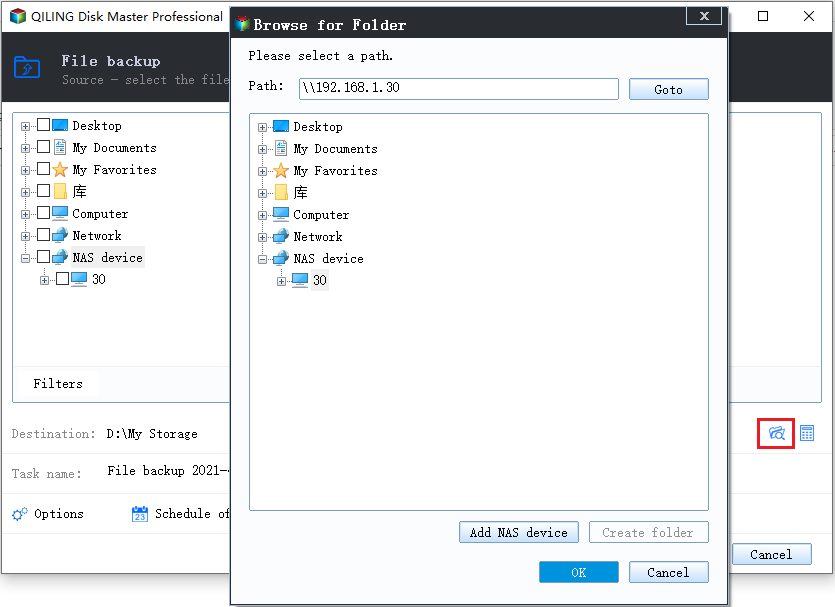
Step 6. Qiling Backup allows customers to back up their data to both a third-party cloud drive and Qiling's own cloud drive.
To back up data to a cloud drive provided by a third party, select Local Drive, scroll down to add Cloud Device, and then add and log in to your account.
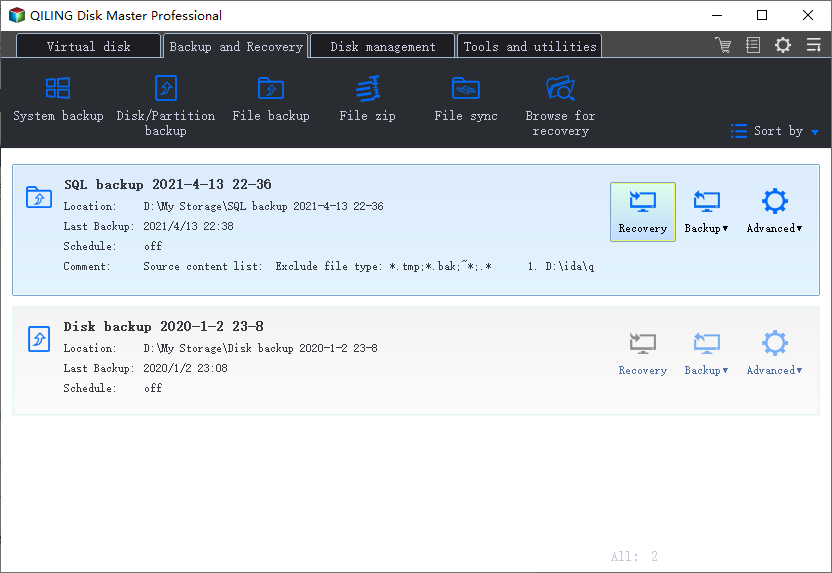
Step 7. Click Proceed to start the backup process. After completion, the backup job will be displayed as a card on the left side of the panel, where you can further manage it by right-clicking on it.
Azure Backup is a capable product for backing up files within the Azure cloud, but if you have higher requirements, you may need to consider alternative options. Evaluating Qiling Backup alongside Azure file backup can help you determine which tool best meets your needs in different situations. Regardless of the tool you choose, it's essential to follow the 3-2-1 backup rule, which involves keeping three copies of your data, on two different types of media, and one of them should be offsite, to ensure your files are properly backed up and protected.
FAQs:
What is Azure file share?
An Azure file share is a convenient location for cloud applications to write logs, metrics, and crash dumps, and can also be used as persistent volumes for stateful containers.
How do I deploy an Azure file to sync?
1. Prepare Windows sever
2. Deploy the storage sync service
3. Install the Azure file sync agent
4. Register Windows sever with storage sync service
5. Create a sync group, a cloud endpoint, and sever endpoint
6. To enable a server endpoint to proactively recall what changed in an Azure file share, you can use the Azure File Sync service's "Recall" feature. This feature allows you to specify a server endpoint to recall a set of files from an Azure file share, which can be useful for updating the server endpoint's cache with the latest changes.
7. Onboarding with Azure File Sync
What are Azure files?
Azure Files is an Azure File Storage service that allows you to share files and access development or debug tools remotely or on-premises via API through encrypted communications.
Related Articles
- How to React to Windows 11/10/8/7 Defender Security Warning
- For Backup Beginners: Windows 11 Backup vs Windows 10 Backup vs Qiling Backup
- How Do I Back Up PC Automatically in Windows 11 [Get 3 Ways]
- Top 3 Qiling Backup Options You Should Know
- How to Transfer Canon Inkjet Print Utility to Another Computer
Canon Inkjets Print Utility is a popular printing program for Canon printers, known for its straightforward configuration and settings. - Transfer Data, Software/Applications to Windows 10 or Windows 11
With the increasing adoption of Windows 10 and Windows 11, transferring data and applications from older operating systems or devices to the new platforms can be a significant challenge. There are indirect and direct ways to accomplish this.
Products
Articles & Tutorials
- Data Recovery
- Data Backup
- File Recovery
- File Backup
- System Backup and Restore
- Disk and Partition Clone
- Technical articles
- Mobile articles
- Disk Master Help
- Windows Data Recovery Tutorials
- Windows Secure Delete Tutorials
- Windows Partition Management Tutorials
- Windows File Backup and Restore Tutorials
- Windows System Backup and Restore Tutorials
- Windows Disk Backup and Restore Tutorials
- Windows Clone Tutorials