What's The Best Way to Backup A Nas? We Compared 3 Free Ways
What Is NAS Backup?
NAS (Network Attached Storage) is a storage system that allows computers to access storage over a local area network. It's commonly used for sensitive data storage, and setting up a backup for your NAS device is crucial to ensure data recovery in case of loss.
A NAS backup is a method for storing and securing data by backing up NAS data to another system or device over a network, effectively serving as a form of data backup. This approach also encompasses additional considerations, including the number of copies, retention periods and terms, and storage across different locations and platforms.
Although NAS is a secure data storage device, it's still essential to back up data on it to prevent unexpected data loss.
Two Free Ways to Create NAS Backups
- Solution 1. Backing up NAS Devices with Cloud Drive
- Solution 2. Create NAS Backups to the Directly Attached USB Hard Disk
Here are two ways to back up a NAS and protect against data loss and service disruption: You can use a NAS backup software to schedule automatic backups to a local drive, external drive, or cloud storage service, ensuring that your data is safe and easily recoverable in case of a disaster. Alternatively, you can use a cloud backup service to automatically back up your NAS data to a remote location, providing an additional layer of protection and peace of mind. This way, you can rest assured that your data is safe and can be easily recovered in case of any issues.
Solution 1. Backing up NAS Devices with Cloud Drive
Backing up NAS data to a cloud drive is also an option, but it's not commonly used.
With cloud backups, your data is safeguarded against physical data center disasters, and automatic backups are created and synced with cloud drive. This ensures that your files are not only backed up but also accessible from anywhere, providing a secure and convenient way to protect and access your data.
Google Drive, OneDrive, and Dropbox are cloud storage services that allow users to back up files from their computer, but they primarily focus on file storage and have limited control over backups.
You can back up files to a NAS (Network-Attached Storage) device using OneDrive as an example. OneDrive offers 5 GB of free storage, allowing you to store, share, and sync your files in a secure online location.
Guide: How to Back up NAS to OneDrive
To create backups, start by opening the Control Panel, then click on the "System and Security" option. From there, click on "Backup and Restore" and then select "Set up a backup" to create a backup of your files and settings.
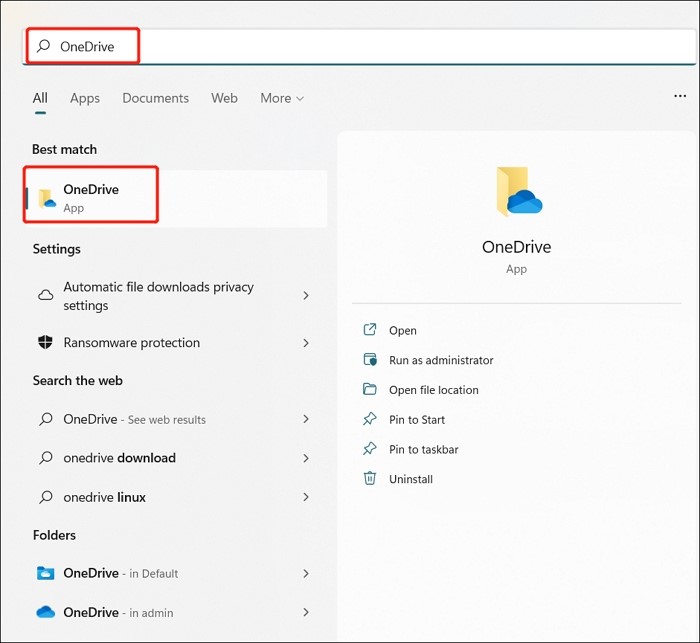
Step 1. Type OneDrive in the search box on the taskbar.
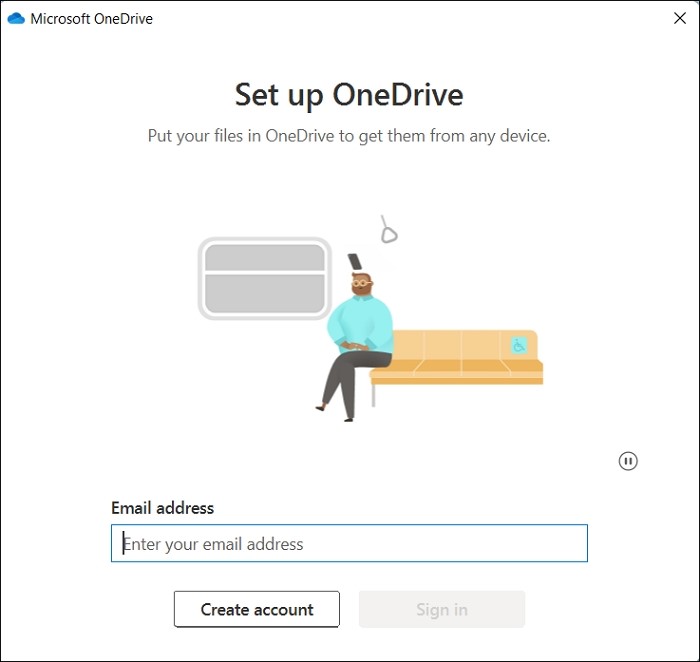
Step 2. Sign in to your account, and if you don't have a OneDrive account, you can create one. To sign in, go to the OneDrive website, enter your Microsoft account email address and password, and select the Sign in button.
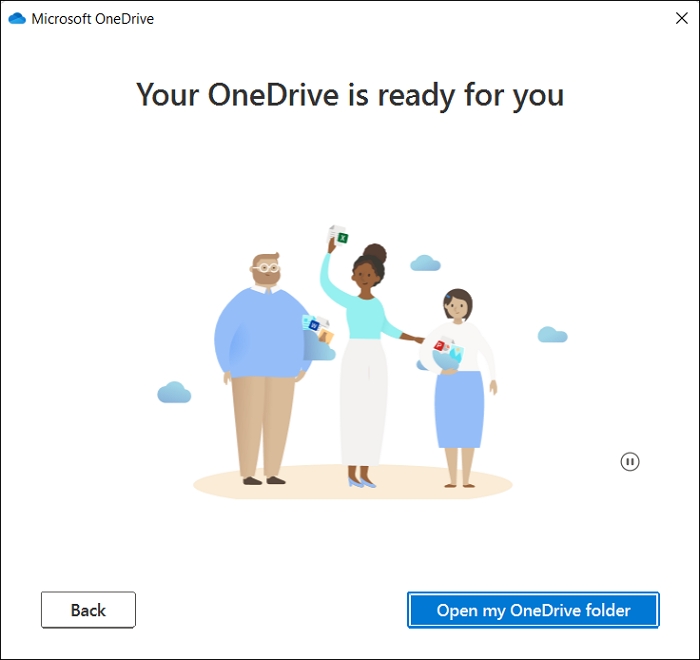
Step 3. After completing all the guides, your OneDrive is now ready for use.
Solution 2. Create NAS Backups to the Directly Attached USB Hard Disk
Connecting an external hard drive to a NAS device via USB ports is a simple and easy backup method. This involves duplicating the files you want to protect by mirroring them onto the external hard drive connected to the NAS device.
The traditional method of backing up data involves physically attaching the disk, starting the copy operation, and ensuring it completes successfully. However, this manual process is not automated and can be inconsistent, as backups may fail if files are opened or modified by applications while being copied.
Guide: How to Copy NAS to External USB Hard Drive
Step 1. Connect the NAS device with an external hard drive or USB drive.
Step 2. Open the NAS build-in page.
Step 3. Select the data or files you want to back up manually. This can include personal documents, photos, videos, and other important files. You can browse through your computer's folders and select the specific files you want to include in the backup.
Step 4. Wait for the transferring done, then disconnect the external hard drive or USB drive.
Bonus Tip: How to Back up to a NAS
You can also back up data to a NAS with disk backup software - Qiling Backup Free.
free backup software lets you automatically create backups of your system, disk, files, and more. With this software, you can easily make backups of various types of files, including pictures, videos, documents, and audio files, ensuring that your important data is safely stored and can be easily restored if needed.
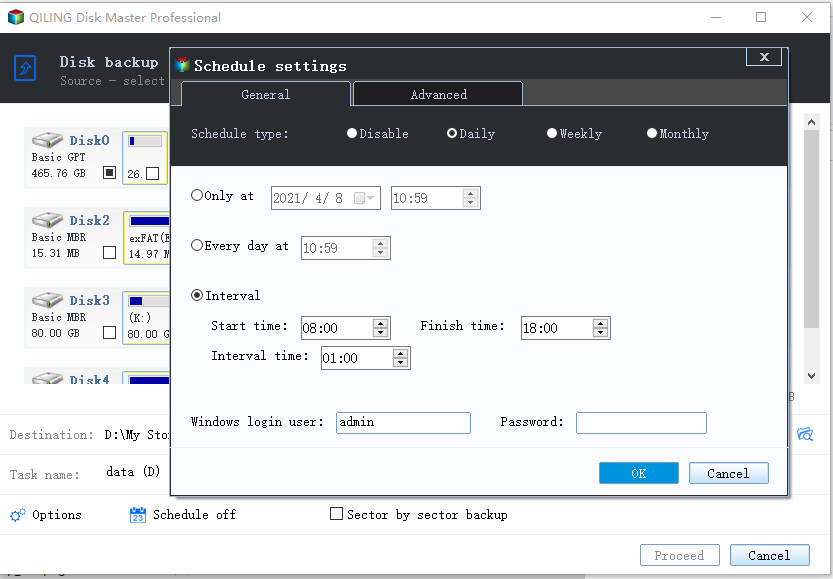
This free backup utility allows you to schedule backups, backup files in safe mode, and has many other useful features.
- This software offers powerful functions that enable users to create backups of their entire computer, including the operating system, applications, files, and partitions, providing a comprehensive and reliable backup solution.
- It is compatible with Windows 11/10/8/7 and Windows Vista.
- You can save your backups to various storage options, including local drives, NAS devices, a secure zone, and the cloud, giving you more flexibility and control over your data.
- This software can create different types of backups, including full, incremental, and differential backups.
Guide: How to Use Qiling Disk Backup
To create data backups to NAS with Qiling Backup Free, follow these detailed steps. You can use the guide to ensure a smooth process. The steps include follow the steps below.
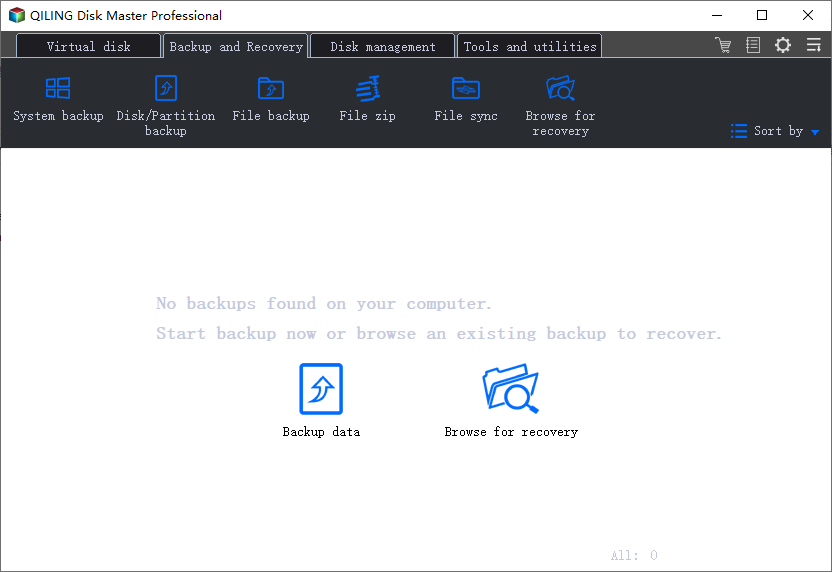
Step 1. To start a disk backup in Open Qiling Backup, navigate to the home page and select the "Disk Backup" option. This will begin the backup process.
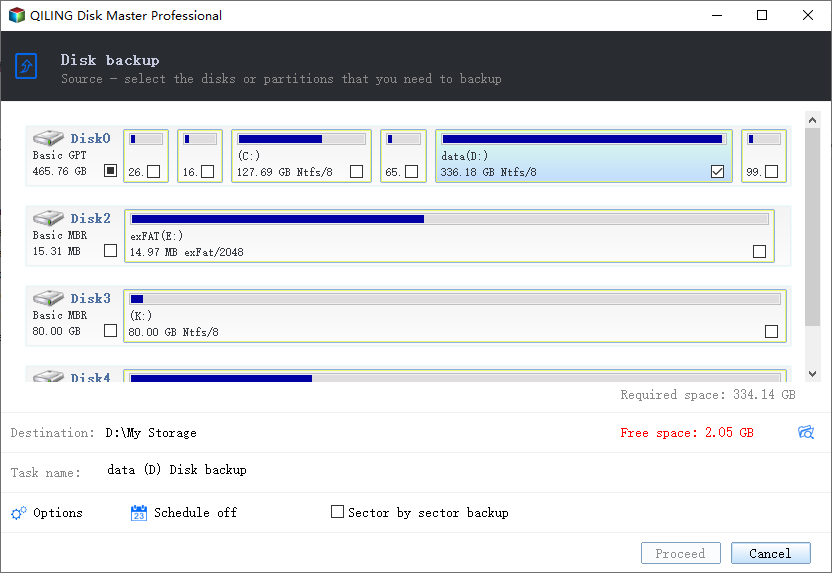
Step 2. Qiling Backup offers you options, allowing you to choose between backing up a whole disk or a specific partition, depending on your needs.
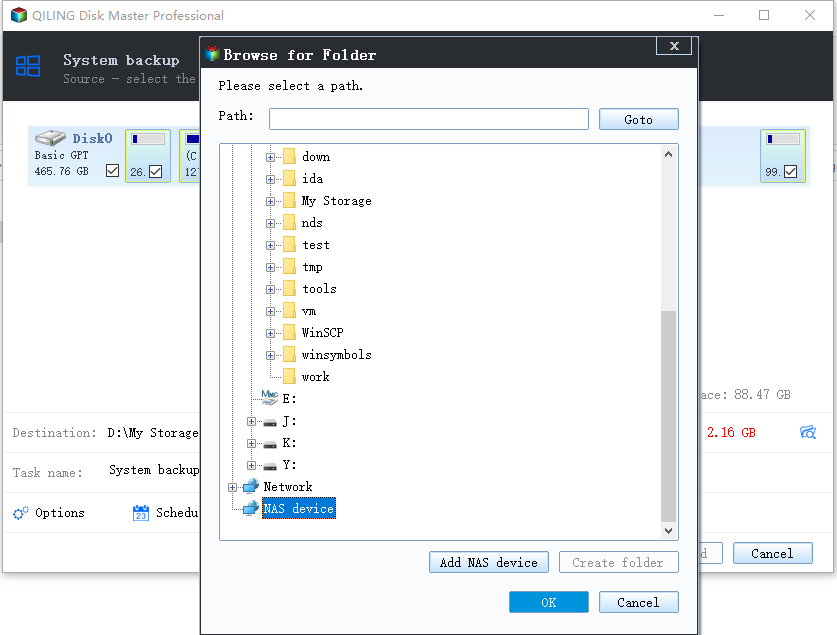
Step 3. Save the backup to a local drive or NAS.
Step 4. After the backup process is completed, click "Proceed", and then you can click the "Advanced" button of the task to further manage your backup, such as recovering it, creating an incremental backup, etc.
Conclusion: Which Is the Best Way to Back up a NAS
If you want to keep your data safe and secure, do not forget to back up your NAS. We highly recommend Qiling Backup Free to you.
Qiling Backup Free offers a comprehensive backup solution, allowing users to back up files, disks, and partitions, as well as automatically backing up SSDs to images or HDDs. Additionally, it provides cloud backup services with 250 GB of free storage, catering to the needs of home users, free users, and businesses alike.
Qiling Backup Free is a good choice for backing up a NAS, offering various tasks that can be performed using this backup tool.
FAQs
1. What are NAS and SAN?
Both SAN and NAS are methods of centrally managing and sharing storage with multiple hosts/servers, with the key difference being that NAS uses Ethernet connections, while SAN can utilize either Ethernet or Fibre Channel connections.
2. Can my NAS be hacked?
NAS devices can pose a security risk by providing access to hackers when connected to a network, although attacks on private individuals are less common.
3. How does NAS storage work?
NFS (not NAS) is a dedicated file storage system that allows multiple users and various devices to access a centralized storage capacity over a network. Users on a local area network can access the shared storage via a standard Ethernet connection. (Note: I corrected the acronym to NFS, as NAS typically refers to a Network Attached Storage device, which is a type of NAS, but the text seems to be describing the NFS protocol)
4. Can a NAS be a backup?
While NAS devices are useful for storing data, they shouldn't be relied upon as the sole backup solution, both in a work and personal context. This is because NAS devices are vulnerable to various threats, including device failure and physical damage, which can compromise the integrity of the stored data.
Related Articles
- How to Open Outlook Backup Files in PST Format: Step-by-Step Guide
- Top 6 Best Windows 7 Repair Tools in 2022 (Free)
- Acronis Universal Restore for Windows & Its Alternative
- For Backup Beginners: Windows 11 Backup vs Windows 10 Backup vs Qiling Backup
- Automatic Incremental Backup to External Hard Drive with Freeware
You can do automatic or scheduled incremental backup to external hard drive in Windows 7/8/10 with free backup software, Qiling Disk Master Standard. - How to Back Up HP Recovery Partition in Windows 11/10/8/7
There are several ways to back up HP recovery partition, but all with many limitations. To backup recovery partition on any OS, here's an easier way.
Products
Articles & Tutorials
- Data Recovery
- Data Backup
- File Recovery
- File Backup
- System Backup and Restore
- Disk and Partition Clone
- Technical articles
- Mobile articles
- Disk Master Help
- Windows Data Recovery Tutorials
- Windows Secure Delete Tutorials
- Windows Partition Management Tutorials
- Windows File Backup and Restore Tutorials
- Windows System Backup and Restore Tutorials
- Windows Disk Backup and Restore Tutorials
- Windows Clone Tutorials