How to Transfer Database from One Server to Another (5 Ways)
To copy a database from one SQL Server 2008 server to another, you can use the SQL Server Management Studio (SSMS) to back up the database on the source server and then restore it on the destination server. Here's a brief overview of the steps: On the source server, go to SSMS, right-click the database you want to copy, and select Tasks > Backup... to create a backup file.
| Workable Solutions | Step-by-step Troubleshooting |
|---|---|
| To transfer a database using Qiling server migration software, you can follow these steps: 1. First, ensure that the Qiling server migration software is installed and running on both the source and target servers. 2. | (Support SQL Server, Mysql, and Oracle Now) Launch Qiling Disk Master > Select the applications...Full steps |
| Fix 2. How to copy database with other four ways |
1. Using Copy Database Wizard...Full steps 2. Using backup and restore method...Full steps 3. Using Import and Export Wizard...Full steps 4. Using Generate Scripts...Full steps |
If you're facing the challenge of migrating critical databases from one Windows server to another or from one computer to another, we've got you covered. We offer five possible solutions to help you transfer a database from one server to another, each with its own level of complexity. By following each step, you'll be able to completely resolve the issue of database migration.
For beginners, the Qiling server migration software is the simplest solution requiring minimal effort, while the other four options are useful but require more extra knowledge.
P.S. Qiling Disk Master's latest version also supports transfer SQL Server 2008/2004/2019.
Qiling Disk Master Technician
Your smart Windows Server file transfer software.
- Unlimited file transfer between Servers.
- Transfer programs, apps without reinstallation.
- Transfer account, settings to new Server computer.
- Data rescue, find product key for installed programs.
Method 1. How to Transfer Database from One Server to Another with Qiling Server Migration Software
Qiling Disk Master is a highly-reputed software for PC-to-PC transfers, compatible with SQL servers 2004, 2008, and 2019. To use it, you'll first download the software on both PCs, which can run on Windows XP to Windows 11/10 and Windows 2003 to Windows 2019.
The Windows Server 2016 migration tool allows for the transfer of various data types, including programs, files, data, settings, user accounts, and server databases. This makes it a useful resource for migrating applications from one Windows server to another.
Qiling Disk Master allows bulk data transfer across multiple computers simultaneously and automatically, making database migration easy. Simply set up computers in the same LAN, select the source database, and click to transfer it to the target server over the internet.
- Important
- In a situation where computers are not on the same LAN, the "Backup & Restore" transfer mode can be used to transfer a database across servers, making it a suitable solution for non-internet environments.
Guide: How to transfer database over the internet
Step 1. Launch Qiling Disk Master on your source and target computers, and connect both PCs via the internet.
1. To continue, click on "File sync" at the "Backup and recovery" section.
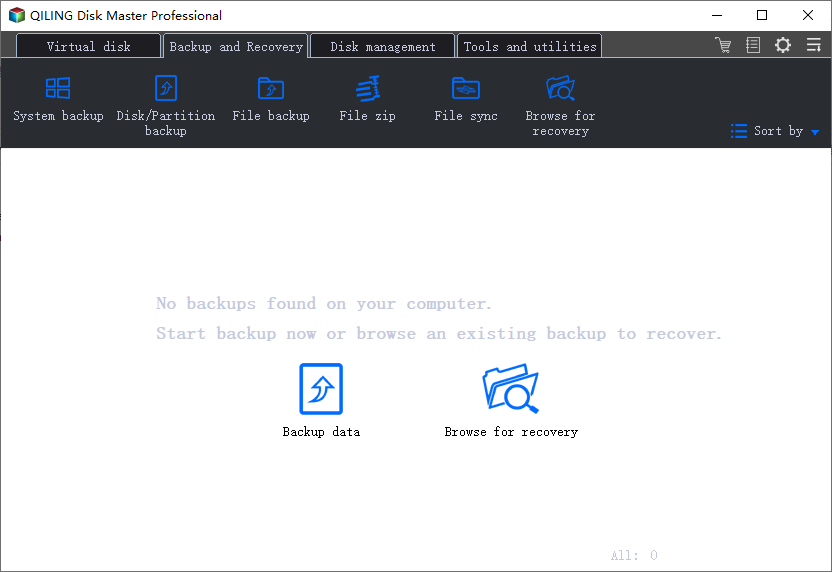
2. Select the target computer via its device name, then enter its account password or verification code, and choose the transfer direction. Click "Connect" to proceed.
You can check the verification code on the right top of the "PC to PC" main screen on the target computer.
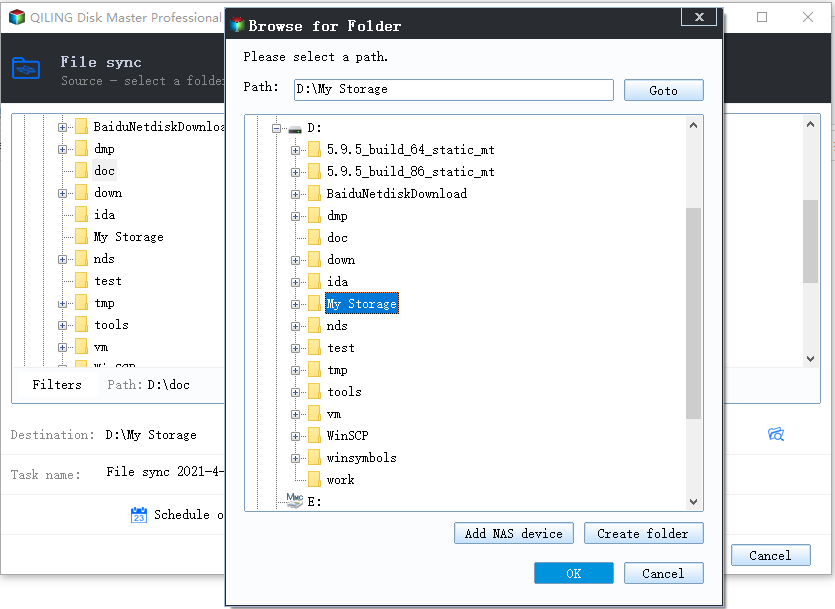
Step 2. To transfer data via the internet, you can select the categories of Applications, Files, and Accounts to move. This will allow you to transfer your installed apps, stored files, and online accounts to a new device or system.
To transfer data selectively, click "Edit" under each category and choose the specific items you want to transfer.
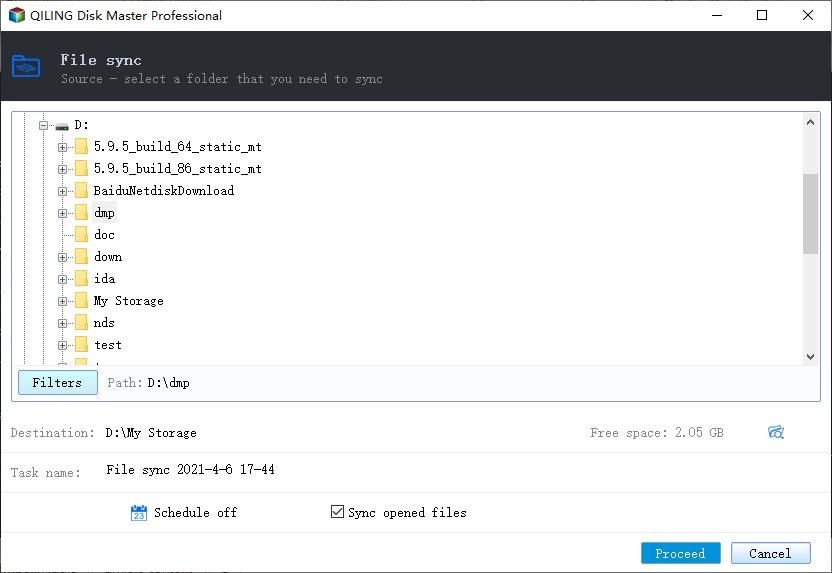
Step 3. To start transferring your apps/files/accounts from one computer to another computer via the Internet, click "Proceed".
The below methods contains many steps than this part, trying one of them with the correct steps.
Method 2. How to Copy Database from One Server to Another Using Copy Database Wizard
The Copy Database Wizard in SQL Server Management Studio allows administrators to migrate a database from one server to another, making it a convenient tool for server experts and administrators to utilize when planning database migrations between Server A and Server B.
There are some noticeable limits to know if you choose the Copy Database Wizard to copy a database from one server to the other. These limits include the inability to copy a database that is being used by another process, the inability to copy a database that is in use by another server, and the inability to copy a database that is larger than the maximum allowed size.
- The Copy Database Wizard is not available in the SQL Server Express edition, as it is a feature of the full edition of SQL Server. This means that users of the Express edition will not have access to this feature, which is used to create a copy of a database.
- A database cannot be moved or copied to an earlier version of SQL Server because the database schema and data structures may have changed between versions, making it incompatible with the earlier version. This is due to the fact that SQL Server versions have different database engines, and the newer versions often introduce new features, data types, and storage structures that are not compatible with older versions.
- The Copy Database Wizard cannot be used to copy or move databases that are in a specific set of states, including system, replication, Inaccessible, Loading, Offline, Recovering, Suspect, or Emergency Mode, and also excludes databases with data or log files in Microsoft Azure storage.
Open SQL Server Management Studio and follow the steps:
Step 1. Right-click on the database and select Tasks > Copy Database...
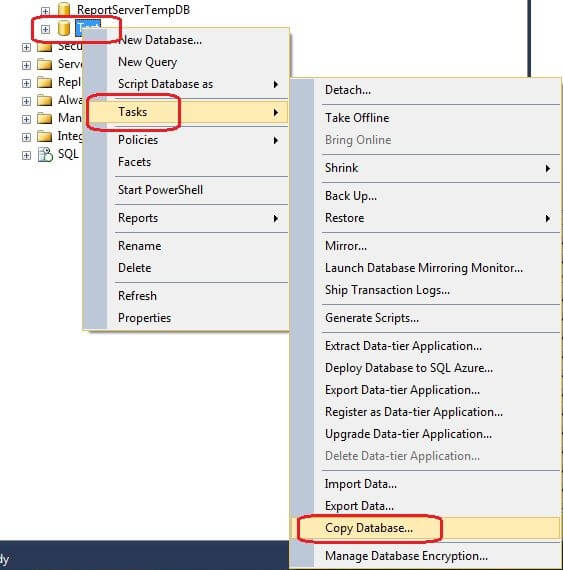
Step 2. On the Copy Database Wizard window, click Next to proceed.
Step 3. To select a source server, enter the server name, and choose between Windows authentication or SQL Server authentication, entering the user name and password as needed, then click Next.
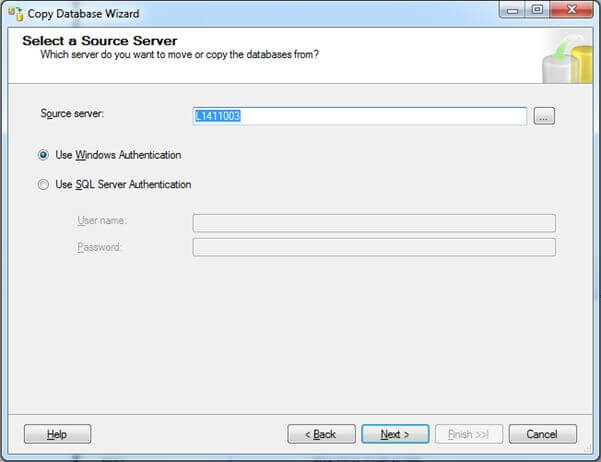
Step 4. Enter the destination server name and apply the authentication information this time. Click Next.
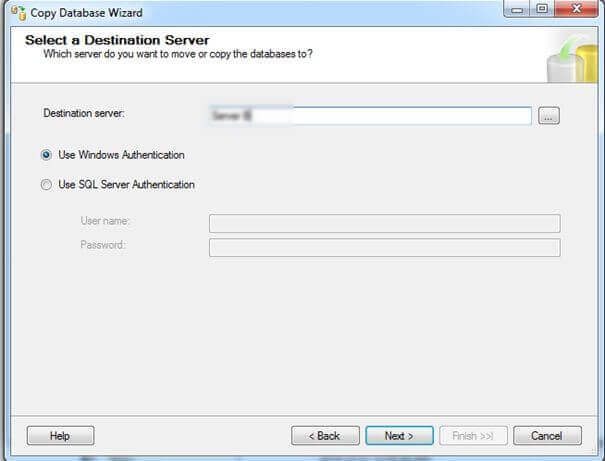
Step 5. Between the two transfer methods, choose to use the SQL Management Object method and click Next.
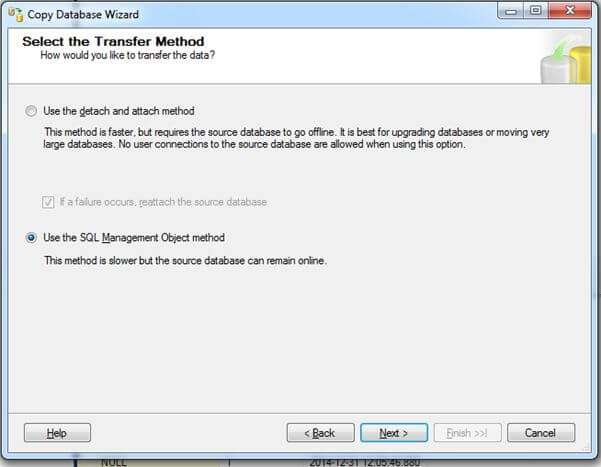
Step 6. After selecting the database, there are options to move or copy the selected database. Tick 'Copy' to keep it on the original server, or 'Move' to transfer it to the next server.
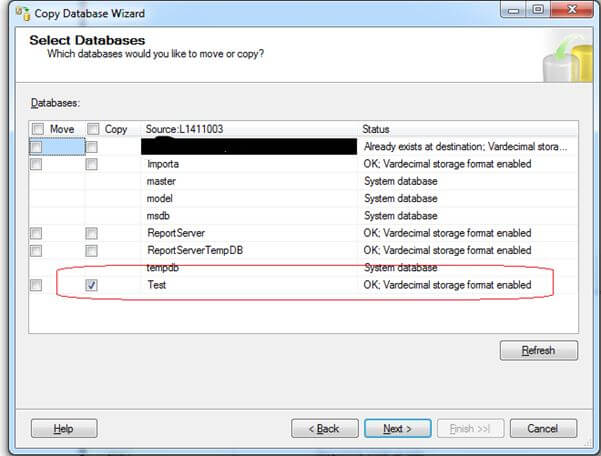
Step 7. The process involves checking the MDF and log file path on the destination machine, following the wizard to the final step, and verifying that the database is successfully transferred to the destination server machine.
Method 3. How to Move Database from One Server to Another Using Backup and Restore
SQL Server Management Studio is an all-around server management toolkit that allows you to transfer a database from one server to another using its backup and restore feature, in addition to the direct copy and move feature.
Follow the steps to create a full backup and restore it on the other server computer:
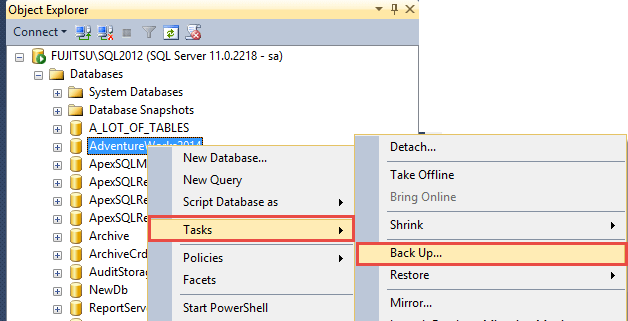
Step 1. In SQL Server Management Studio, right-click the database and select Tasks > Back Up...
Step 2. Make sure that the backup type here is Full. Click Add and specify the location and backup name.
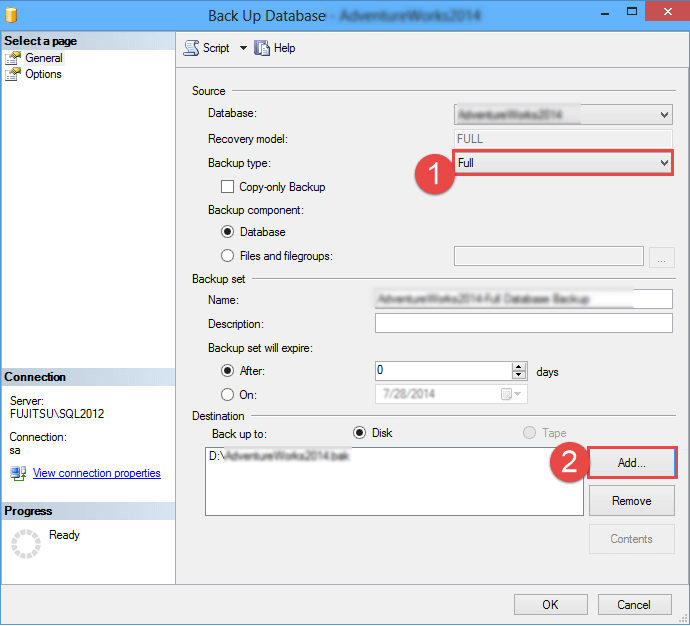
Step 3. After creating the full backup on the source server computer, copy the created backup file to another computer.
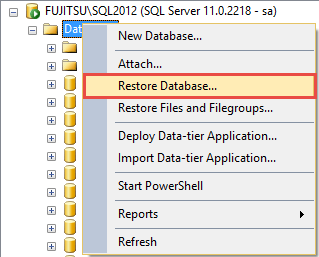
Step 4. To restore a database in SQL Server Management, open SQL Server Management on the destination computer, right-click the SQL Server instance, and select 'Restore Database...' from the context menu.
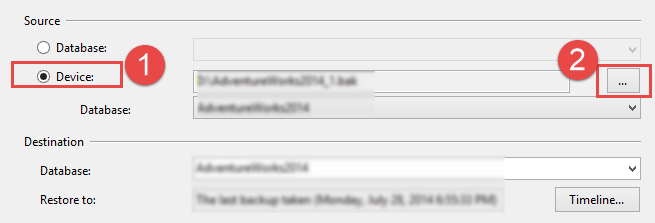
Step 5. Select the device you want to restore the backup to, and choose the created backup files on the source location and restore it to the destination location on the new computer.
Method 4. How to Copy Database in SQL Server Using Import and Export Wizard
Method 4 and method 5 are also built in the Microsoft SQL Server Management Studio. In addition to methods 1 through 3, the Microsoft SQL Server Management Studio also includes methods 4 and 5 for analyzing and managing SQL Server databases.
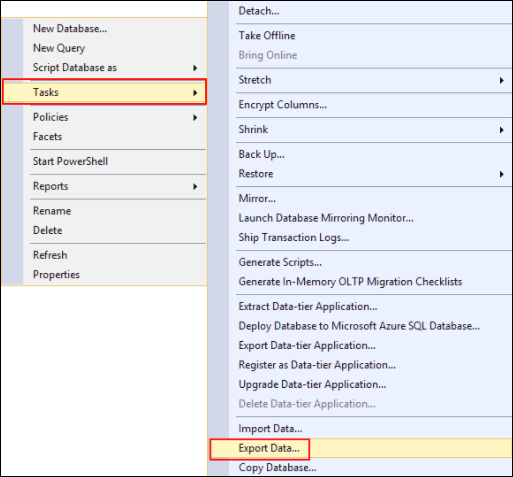
Step 1. To manage a database in Microsoft SQL Server Management Studio, open the application, right-click on the database in the Object Explorer, and select the "Tasks" option from the context menu. This will allow you to perform various tasks related to the database, such as backing up, restoring, and configuring database settings.
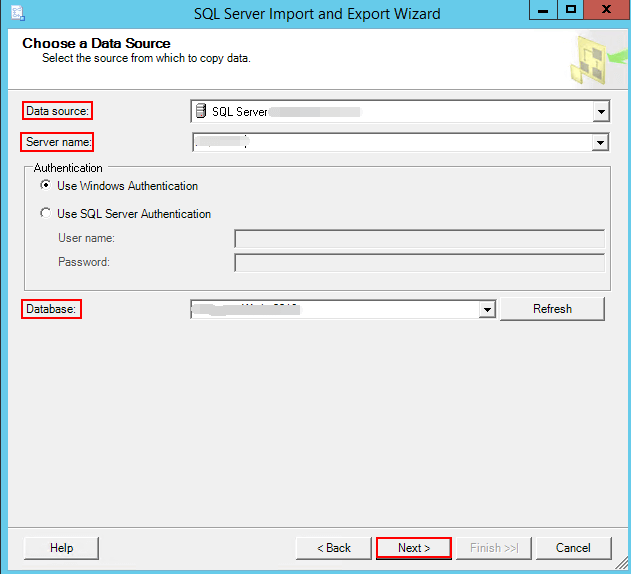
Step 2. To access the database, click the small triangle symbol and select the options in the following order: Data source, Server name, and Database.
Step 3. Next, choose a destination. Specify where to copy data to.
Step 4. Select source tables and views. And choose Next.
Once it completed, check your exported files.
Method 5. How to Copy File from One Server to Another Using Generate Scripts
Step 1. Open Microsoft SQL Server Management Studio.
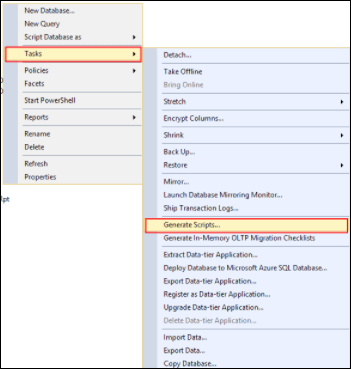
Step 2. Right-click the database > tasks > Generate Scripts >Next
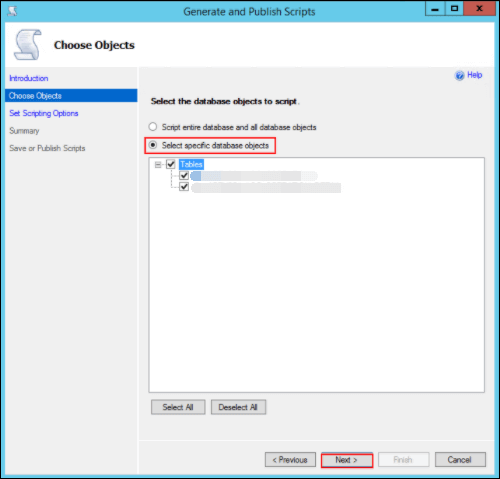
Step 3. Move to the Choose Objects and select specific database objects.
Step 4. Under the "Set Scripting Options", select the output type and choose "Advanced". Then, select "Save to new query window".
Step 5. In the Advanced Scripting Options, choose Schema and Data from the drop-down list and click OK.
Which Way Do You Prefer to Transfer Database from One Server to Another?
Transferring a Microsoft SQL database from one computer to another can be achieved through various methods. The Qiling server migration software, Copy Database Wizard, backup and restore method, Import and Export tool, and Generate Scripts are five effective ways to accomplish this task.
The first method of using Qiling Backup is the most straightforward and smartest, with the least chance of making mistakes, making it suitable for users of all technical levels, regardless of their familiarity with the server database copy wizard or backup and restore method.
Related Articles
- Transfer Programs from Windows 7 to Windows 11/10
- Transfer Unlimited Files with 2022 Best LAN File Sharing Software
- How to Move Fortnite to Another Drive/PC (Simple Clicks)
- How to Transfer Documents from PC to PC Windows 10 in 3 Different Ways
- How to Restore Windows 10 to Factory Settings
To restore Windows 10 to its factory settings, follow these steps: if your computer is not working properly or you're selling it, you can reset it to its original state. - Samsung Recovery Solution and Free Alternative in Windows 10
Wanna use Samsung Recovery Solution in Windows 10 to recover your Samsung laptop? Learn a quick guide to the tool from this page.
Products
Articles & Tutorials
- Data Recovery
- Data Backup
- File Recovery
- File Backup
- System Backup and Restore
- Disk and Partition Clone
- Technical articles
- Mobile articles
- Disk Master Help
- Windows Data Recovery Tutorials
- Windows Secure Delete Tutorials
- Windows Partition Management Tutorials
- Windows File Backup and Restore Tutorials
- Windows System Backup and Restore Tutorials
- Windows Disk Backup and Restore Tutorials
- Windows Clone Tutorials