What Size External Hard Drive Do I Need to Backup My Laptop | Quick Guide
The Answer to Know the Size of the External Hard Drive You Need to Backup Laptop

The Data You Want to Back up Determine the Size of the External Hard Drive
To back up your laptop, you need to select which file folders to include in the backup, excluding application files and temporary files, to determine the size of the external hard drive required.
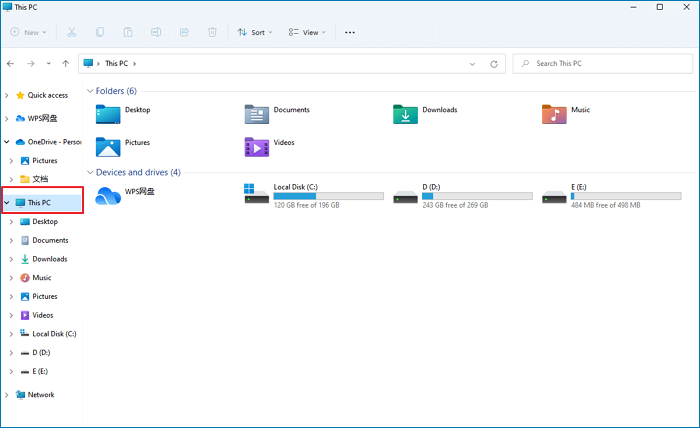
To determine the minimum capacity required for an external hard drive to store a complete backup of your PC, open File Explorer, click on "This PC" on the left side, and view the summary under "Devices and drives" on the right, which shows the total capacity minus free space. This will give you the minimum capacity needed for a complete backup.
The Smallest Size of an External Hard Drive
To ensure sufficient space for your backup, you should have at least 16 GB of free space available, whether you're using a USB flash drive or another disk. Keep in mind that the recovery drive's storage space is limited and won't back up personal files or third-party software.
The Largest Size of an External Hard Drive
If you plan to keep one system backup, your backup hard disk only needs to be as large as the combined size of all the hard drives in your computer. For example, a 500GB external hard drive would be sufficient if your computer's hard drive is also 500GB.
The back up disk can be slightly smaller because it's unlikely all hard drives will be full. If the external hard disk is larger than the computer drives, it won't utilize the excess space.
Here are two types of external hard drives: HDD (Hard Disk Drive) and SSD (Solid State Drive). You can choose one that suits your needs.
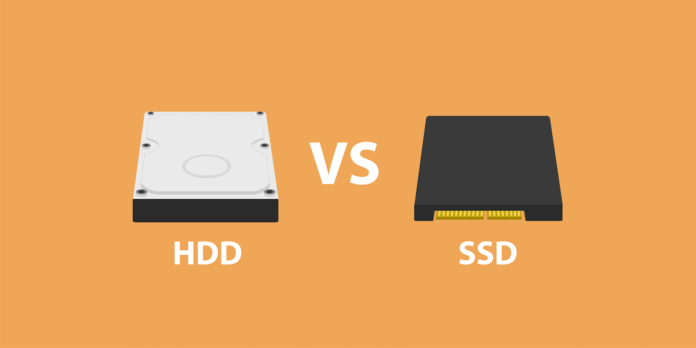
Compared to traditional hard disk drives (HDD), solid-state drives (SSD) offer faster read speeds and greater storage capacity, but at a higher cost. For a more in-depth look at the differences between HDD and SSD, check out our guide on the topic. If you're interested in upgrading to an SSD, you may also want to learn how to clone your existing HDD to the new drive, which can be done by following the detailed instructions provided in our separate guide on the subject.
Backup Laptops With a Better Way to Save Space in Your Laptop
Using a suitable method to back up your laptop can save your laptop's space. A trustable application like Qiling Backup, a high-performance, easy-to-use Windows backup software, can help you achieve this by saving disk space while increasing backup speed. This method can be a good solution to refer to.
- Functions:
- 1. The best way to create backup compression. Compression of backups can help optimize storage space by reducing data size through the elimination of repetitions and redundancies, effectively shrinking the file size by better encoding its contents.
- 2. Merge split file function. Qiling Backup Merge and Split feature allows you to split a large file into smaller ones to save disk space by backing up only the needed files, or merge multiple files into one large file to save backup time.
- 3. Highly supports backup options. You have three options for the backup destination: an external hard drive, manually entering the path to a network share or a cloud service. In the picture reserve strategy, you can specify how many days' worth of photographs to retain. You can also choose the backup frequency, such as daily, weekly, or monthly. Upgrading to the premium edition unlocks more advanced features like Smart Backup, global restore, and cloning a disk or partition. Additionally, you can use it for full, incremental, or differential backups.
- Pros:
- User-friendly
- Hassle-free refund
- An old brand for data backup and recovery
- Multiple different versions (Free, Home, Mac)
Here is the step to back up your data using Qiling Backup.
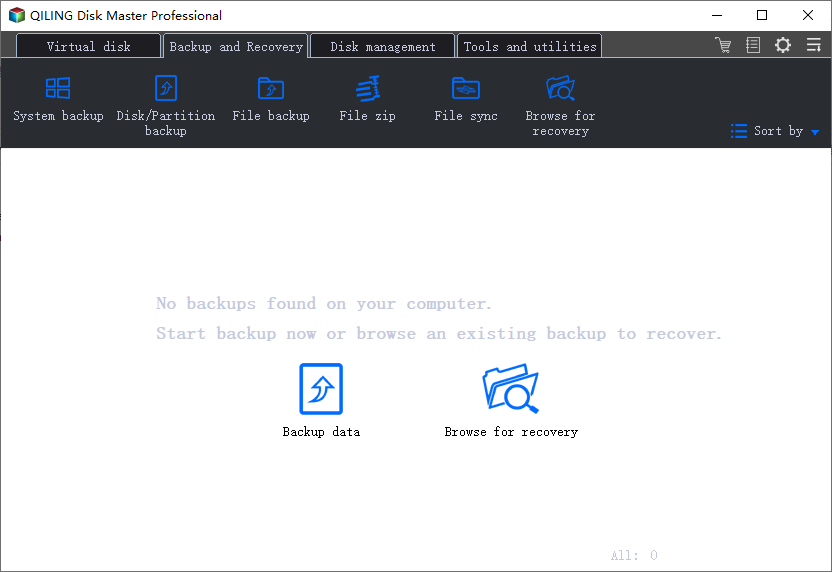
Step 1. Launch Qiling Backup on your computer, and click System Backup on the home screen.
Step 2. Your Windows operating system information and system-related files and partitions will be automatically selected, so you don't need to manually select anything at this step. Next, you'll need to choose a location to save the system image backup by clicking on the illustrated area.
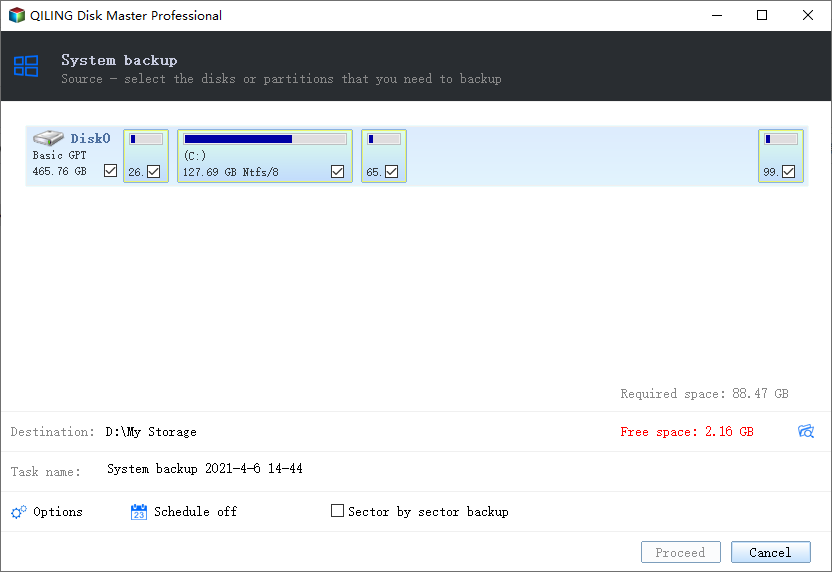
Step 3. The backup location can be another local drive on your computer, an external hard drive, network, cloud, or NAS. We recommend using an external physical drive or cloud to preserve system backup files.
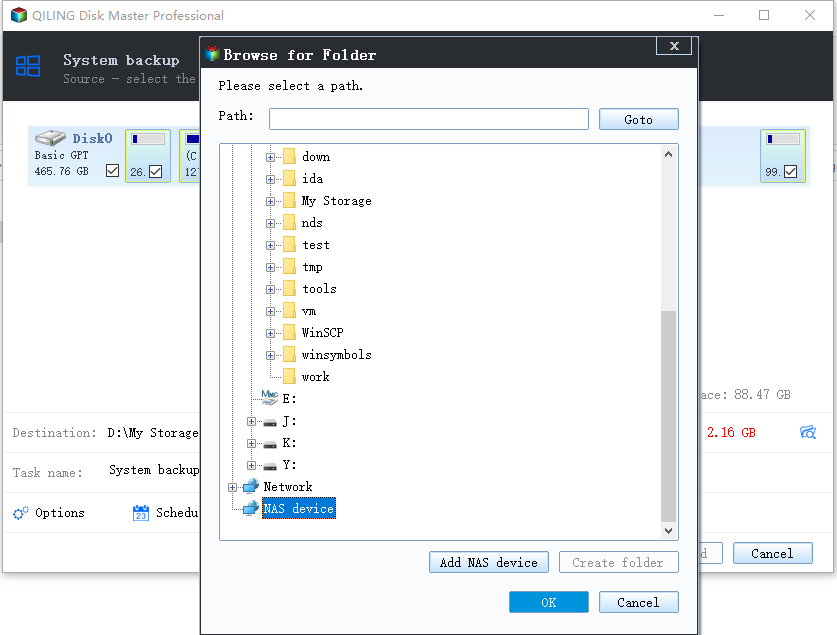
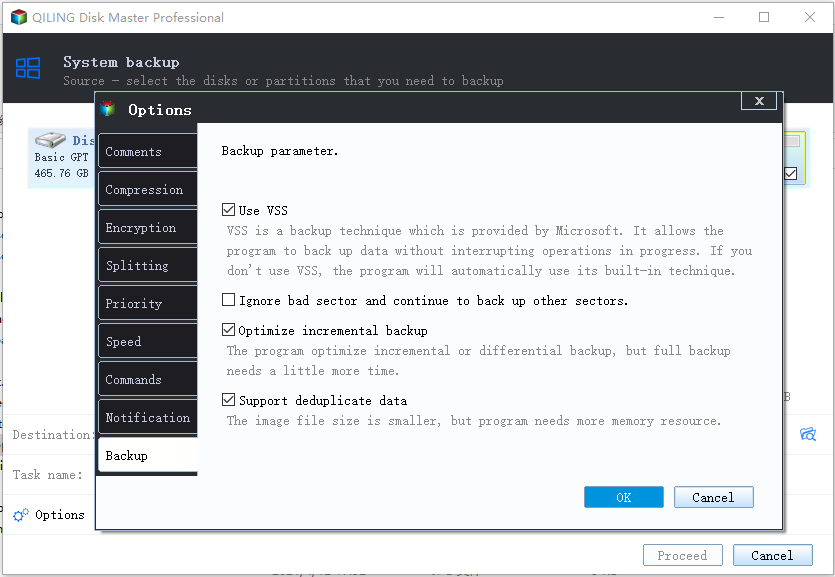
Step 4. Settings like enabling an automatic backup schedule in daily, weekly, monthly, or upon an event, and making a differential and incremental backup are available in the Options button. Clicking Proceed starts the Windows system backup process, which can be monitored on the left side in a card style once completed.
Final Thought
To determine the right size external hard drive for your laptop, consider backing up your data using a free software like Qiling Backup, which is a professional and user-friendly application that offers hassle-free refunds. By choosing the suitable type of external hard drive and using a backup software, you can save space on your laptop and make it run faster. With Qiling Backup, you can select from multiple versions (Free, Home, Mac) and enjoy the benefits of a reliable data backup and recovery system.
FAQ
1. How do I backup a folder to an external hard drive?
Connect the external hard drive to your computer, then click and drag the selected files or folders to the external drive to back them up, making sure each has a copy. This simple process can be easily overlooked.
2. How to back up my PC with File History?
To backup to a network site or external drive, use File History in Windows 10, and to access a backup, go to Start > Settings > Update & Security > Backup, then select an external drive or network location.
3. How many documents can 1TB hold?
According to the paper, a one-A terabyte container could hold 18,750,000 documents, assuming an average of four pages per document, since one terabyte typically contains 75 million pages.
Related Articles
- Download WinPE Builder for All Windows
- Is Windows Defender Good Enough to Protect My PC? Check the Best Answer
- [Fixed] Windows 11 Virus Protection Keeps Turning Off
- Qiling Backup vs. Macrium Reflect
- How Do I Move Files from One Google Drive Account to Another
Learn how to move files from one Google Drive account to another using sharing, download and upload, or transfer tools. - Free! How to Move Files from OneDrive to Another OneDrive
You can move files from OneDrive to another OneDrive using various methods, including manual copying, syncing, or Power Automate. This enables you to improve data safety, create backups, and free up storage space.
Products
Articles & Tutorials
- Data Recovery
- Data Backup
- File Recovery
- File Backup
- System Backup and Restore
- Disk and Partition Clone
- Technical articles
- Mobile articles
- Disk Master Help
- Windows Data Recovery Tutorials
- Windows Secure Delete Tutorials
- Windows Partition Management Tutorials
- Windows File Backup and Restore Tutorials
- Windows System Backup and Restore Tutorials
- Windows Disk Backup and Restore Tutorials
- Windows Clone Tutorials