(2022 Tips) Replace Hard Drive with SSD without Reinstalling Windows
Quick Navigation:
- 1. Why Should You Choose SSD not HDD?
- 2. Must I Reinstall Windows if I Want to Upgrade to SSD?
- 3. How to Clone Hard Drive to SSD
- 4. How to Boot from SSD?
As SSDs become more affordable, they're gaining popularity among computer users due to their superior performance, making them a likely replacement for traditional HDDs.
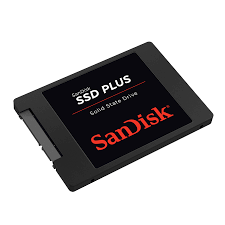
Why Should You Choose SSD not HDD?
Upgrading to an SSD can significantly improve a computer's performance and reliability by providing faster data access and storage, reducing the risk of mechanical failure, and increasing overall system efficiency.
- Advantages of SSD over HDD
1. Faster reading and writing speed
2. Stronger reliability and durability
3. Safer data restoring
- Benefits after you replace HDD with SSD
1. SSDs offer faster data access and processing compared to traditional hard disk drives (HDDs), resulting in quicker boot times, faster loading of games and programs, and overall improved system performance.
2. Solid-state drives (SSDs) are more durable and reliable than traditional hard disk drives (HDDs) because they have no moving parts that can break or fail, reducing the risk of data loss and mechanical failure.
Must I Reinstall Windows if I Want to Upgrade to SSD?
You can upgrade your hard drive to an SSD without reinstalling Windows by cloning your existing hard drive. This process allows you to transfer all your data and settings to the new SSD, making the transition seamless and hassle-free. With a few simple steps, you can replace your old hard drive with a new SSD without losing any of your files or having to reinstall Windows.
Qiling Disk Copy is a professional tool for cloning disks, systems, or other data, allowing for effortless upgrades and migrations to other computers.
How to Clone Hard Drive to SSD
- Preparations before Replacing
Before you are ready to start, you need to prepare a few things and pay attention to some important points, so as to ensure that everything is safe.
1. If you have files stored on your solid-state drive (SSD), it's a good idea to back them up before upgrading to a new SSD or performing any maintenance on your computer. This will ensure that your important files are safe and can be easily restored if anything goes wrong during the process.
* Cloning an HDD to a SSD will erase all data on the SSD, so it's recommended to back up any important files before proceeding. You can use a cloning software to transfer the data from the HDD to the SSD.
2. To ensure a smooth transition from using a traditional Hard Disk Drive (HDD) to a Solid-State Drive (SSD), it's essential to verify that the capacity of the SSD is sufficient to hold the used space on your HDD. This means that the total storage capacity of the SSD should be larger than the amount of data currently stored on your HDD.
* If the storage capacity of the SSD is not large enough, data may be lost or destroyed.
3. Ensure the partition style of the target disk matches the source disk's partition style. This typically means that both disks should be either MBR (Master Boot Record) or GPT (GUID Partition Table). Mixing MBR and GPT can cause issues during the cloning process.
- Step by Step Guide
When everything is ready, you can start by following the instructions below:
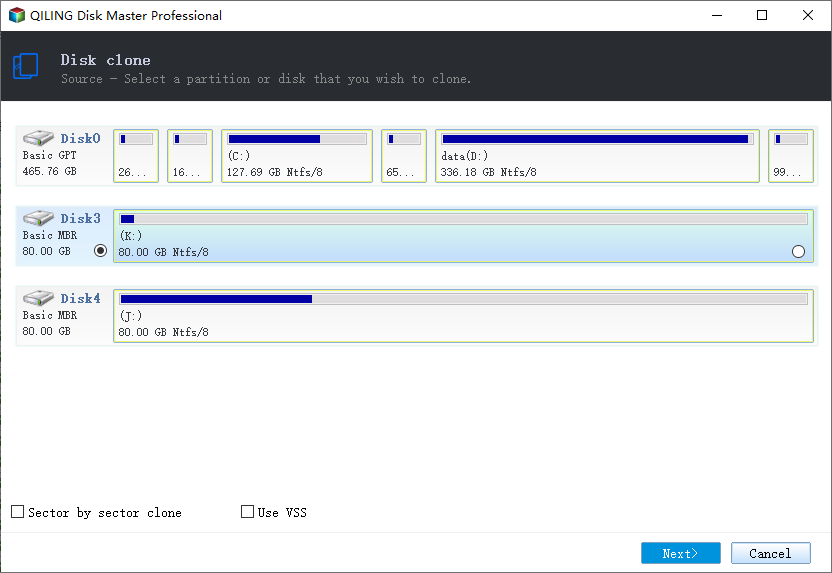
Step 1: Select the hard drive that you want to clone in the "Disk clone" section.
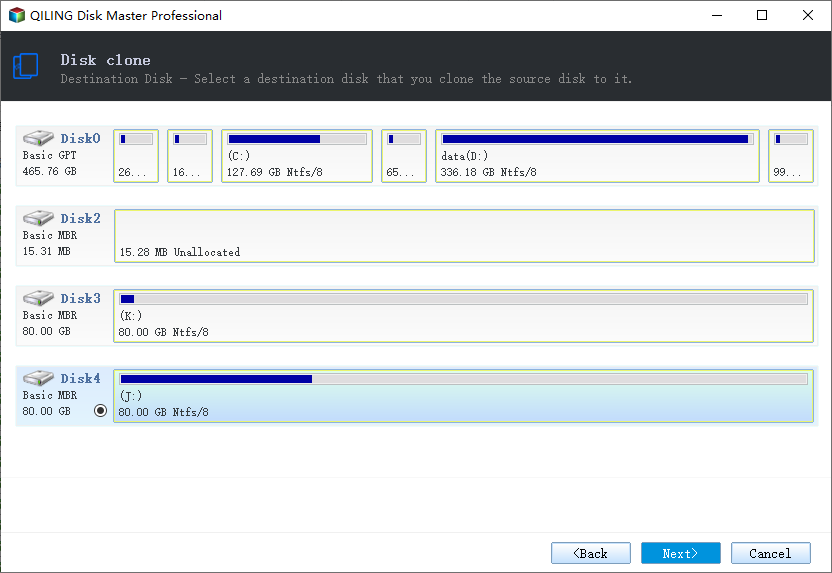
Step 2: Select the SSD as your destination.
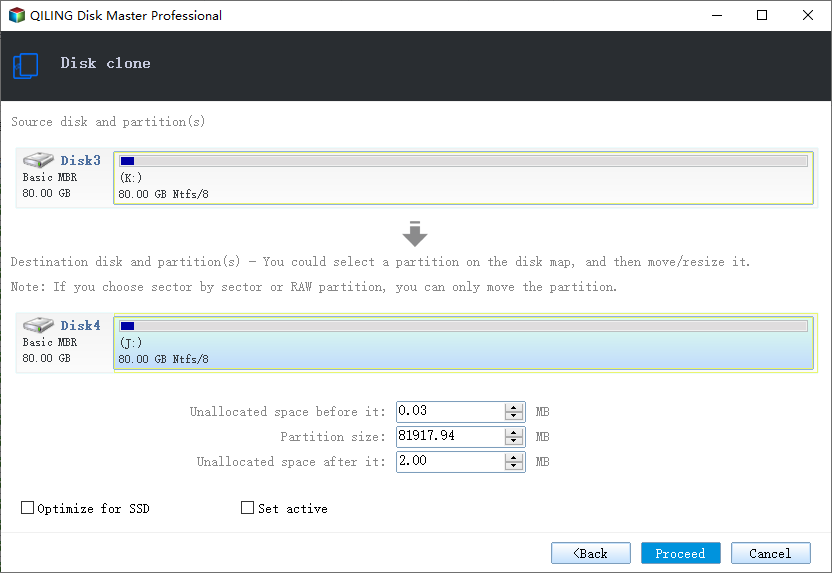
Step 3: Edit the disk layout and then click "Proceed" to continue.
When formatting a drive, you are advised to select the "Check the option if the target is SSD" box if the destination is an SSD.
A warning message appears, stating that the data on the SSD will be erased. If you don't have important data on the destination disk, click "OK" to proceed.
Step 4: Wait for the process to complete.
How to Boot from SSD?
Case 1. If you only want to keep the new SSD
1. Unplug the old hard drive or format it as a storage drive to remove it from the system.
2. To connect the SSD to your computer, insert the SSD into the computer's expansion slot and secure it with screws. Ensure the SSD is properly seated and the connections are secure.
3. Restart your computer.
Case 2. If you want to keep both the old disk and the new one
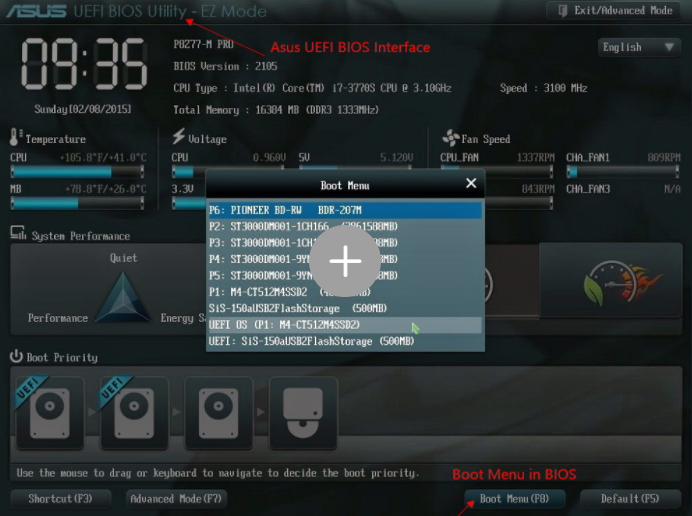
1. To restart your PC and access the BIOS settings, simply shut down your computer, wait a few seconds, and then press the F2 (or F8, F10, or DEL, depending on your specific computer model) key repeatedly as soon as the computer starts booting up. This will allow you to enter the BIOS settings, where you can make changes to your computer's configuration, such as setting the boot order, configuring the CPU, and more.
2. In the Boot option, select the new HDD/SSD as the new boot drive.
3. Exit BIOS and restart the computer.
If the cloned SSD won't boot, you can try cloning again.
Conclusion
Replacing your HDD with an SSD is a straightforward process that can be done without reinstalling your system or losing your files. With the help of a professional tool like Qiling Disk Copy, you can clone your HDD to the SSD, making the transition seamless. Simply download the tool, follow the instructions, and you'll be up and running with your new SSD in no time.
Before upgrading an older laptop, weigh the practical advantages of installing an SSD against compatibility and capacity.
Related Articles
- Beginner's Guide - How to Replace HDD with SSD on Windows 11
- (2022) Top 5 Easiest Disk Cloning Software
- [2022 updated] Clone HDD to SSD Windows 7 With 100% Safe Tool
- Clone Linux HDD to SSD Without Re-installing | Reliable Methods 2022
- How to Copy or Clone Dynamic Disk in Windows 7, 8,10?
How to clone dynamic disk to a new hard drive without any data loss? If you still have no idea, this guide can help by introducing powerful disk management software for Windows 7, 8, 10, and 11. - How to Clone Windows Server 2012 (R2) to SSD?
To clone Windows Server 2012 (R2) to SSD without losing data, you can turn to disk cloning software, Qiling Disk Master Server.
Products
Articles & Tutorials
- Data Recovery
- Data Backup
- File Recovery
- File Backup
- System Backup and Restore
- Disk and Partition Clone
- Technical articles
- Mobile articles
- Disk Master Help
- Windows Data Recovery Tutorials
- Windows Secure Delete Tutorials
- Windows Partition Management Tutorials
- Windows File Backup and Restore Tutorials
- Windows System Backup and Restore Tutorials
- Windows Disk Backup and Restore Tutorials
- Windows Clone Tutorials