How to Back Up iPhone to Windows 10
Quick Navigation:
- How to Back Up iPhone on Windows 10 Without iTunes
- How to Back Up iPhone to Windows 10 with iTunes
- How to Back Up iPhone to iCloud
- The Bottom Line
Backing up your iPhone, iPad, or iPod touch regularly is a good habit to prevent data loss, and it's especially useful for restoring data after an accidental deletion or other issues. To back up your iPhone on Windows 10, you can use iTunes, iCloud, or a third-party backup app, such as Qiling Disk Master, to transfer your data to your computer or cloud storage. This way, you can easily restore your data if something goes wrong, and you can also use these backups to transfer data to a new device if you need to replace your current one.
How to Back Up iPhone on Windows 10 Without iTunes
If you want to view iPhone backup files on Windows 10 or recover files selectively from a backup when needed, Qiling MobiMover, an iPhone data transfer and device backup software, can meet your needs. Its data backup and restore feature allows you to access and manage your iPhone backup files on Windows 10.
- Back up iPhone to computer selectively or all at once
- View the files in the backup
- Restore everything or specific items from the backup
This app allows for data transfer between devices, enabling users to transfer files from a PC to an iPhone, iPad, or iPod, as well as export text messages from an iPhone to a computer, making it a useful tool for managing and sharing data across different devices.
To back up iPhone on Windows 10:
Step 1. Connect your iPhone to your Windows 10 PC with a USB cable, then select the "Backup Manager" from the left panel and choose "Backup" to proceed.
Step 2. To back up all files from iPhone to computer, select the "Select All" option, choose the destination on the computer, and click on "One-Click Backup" to initiate the backup process.
Step 3. MobiMover will start immediately to back up iPhone files to your computer without requiring iTunes. The process will complete once it finishes.
How to Back Up iPhone to Windows 10 with iTunes
To back up an iPhone to a computer, the official solution is to use iTunes, which allows you to back up almost everything on your iPhone to the computer, enabling you to restore your iPhone data or sync everything to another iPhone.
Backing up an iPhone on Windows using iTunes has some drawbacks. While you can access the iPhone backup location on Windows, the backups are unreadable, making it impossible to access the files within. Additionally, when restoring data from the backup, you can't selectively choose which files to recover, and any existing files on your iPhone will be replaced by the content in the backup.
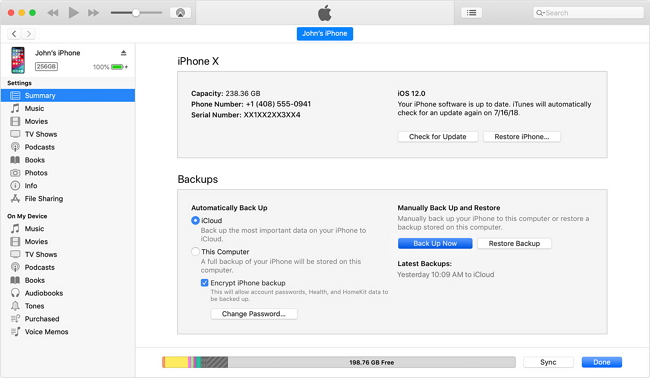
If you still want to back up your iPhone with iTunes, you can continue with the process. To do so, open iTunes on your computer, select your iPhone from the top left menu, and click on "Summary".
To back up your iPhone on Windows via iTunes:
Step 1. Connect your iPhone to your computer.
Step 2. Unlock the iOS device and trust the computer.
Step 3. Launch iTunes and ensure your device is detected by it.
Step 4. To back up your iPhone to Windows 10, click the "Device" icon and then click "Back Up Now" to initiate the backup process.
After making a backup, many people may want to do more with their iPhone backup, such as copying the files to an external hard drive or changing the backup location. To do so, follow these steps.
To copy or change iPhone backup files to an external hard drive, you can use the iTunes backup feature, which allows you to save backups on an external drive instead of the default location on your computer. This can be done by going to iTunes, selecting the iPhone, and clicking on "Preferences" or "Edit" > "Preferences".
Step 1. Create a new folder named "MobileSync" on your external drive and mark it as a backup directory.
Step 2. Open File Explorer and go to C:\Users\[PC name]\AppData\Roaming\Apple Computer\ MobileSync.
Step 3. Right-click on the current iPhone backup folder and select the "Copy" option.
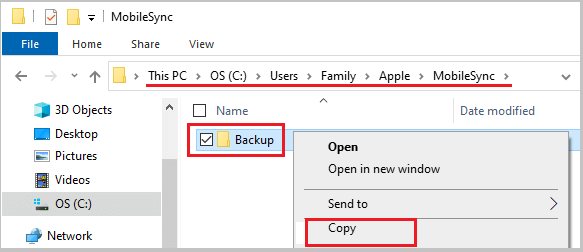
Step 4. Move the iPhone backup folder from its current location to the new MobileSync folder on your external hard drive.
Step 5. Go back to the default MobileSync folder and rename the current iPhone backup folder as "Backup (Old)".
To change the iPhone backup location to an external hard drive, you should first ensure that your external hard drive is connected to your computer and is recognized by your operating system. Next, open the iTunes or Finder application on your computer, depending on your operating system.
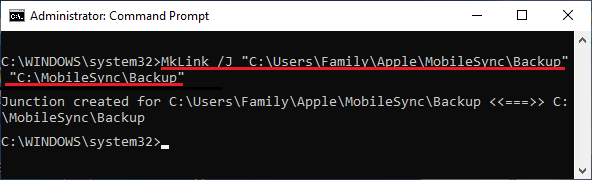
Step 6. Right-click on the Start button and click on "Command Prompt."
Step 7. Type MkLink /J "C:\Users\UserName\Apple\MobileSync\Backup" "C:\MobileSync\Backup" in Command Prompt window.
Step 8. If everything goes correctly, you will see a Symlink created in the MobileSync folder, indicating that your iPhone backup location has been successfully changed.
How to Back Up iPhone to iCloud
If you're unable to back up your iPhone to a Windows computer, either because your computer can't recognize your device or there's no computer available, you can still back up your iPhone without a computer by using iCloud to store your data.
With iCloud, you can back up your iPhone, iPad, or iPod touch to cloud storage, allowing you to store almost everything on your device. This can be done as long as you have a stable Wi-Fi connection and enough iCloud storage, making it possible to back up your device immediately.
To back up your iPhone to iCloud:
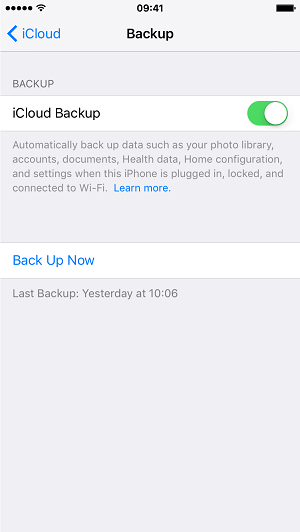
Step 1. Go to the Settings app.
Step 2. Tap your name and click "iCloud."
Step 3. Toggle on"iCloud Backup" and select "Back Up Now."
The Bottom Line
To back up an iPhone on Windows, you can use the methods mentioned, regardless of whether you're running Windows 10, 8, or 7. It's essential to make regular backups of your iPhone data and settings, as they can change frequently. This way, if you experience unexpected data loss, you can recover your data from the backup and avoid complete loss.
Related Articles
- How to Extract Music from iPhone to PC with Ease
- How to Transfer Photos from PC to iPhone 11/12/13 in 5 Ways
- How to Print HEIC Photos on Windows an Mac
- How to Back Up iPhone 8/8 Plus in Different Ways
Products
Articles & Tutorials
- Data Recovery
- Data Backup
- File Recovery
- File Backup
- System Backup and Restore
- Disk and Partition Clone
- Technical articles
- Mobile articles
- Disk Master Help
- Windows Data Recovery Tutorials
- Windows Secure Delete Tutorials
- Windows Partition Management Tutorials
- Windows File Backup and Restore Tutorials
- Windows System Backup and Restore Tutorials
- Windows Disk Backup and Restore Tutorials
- Windows Clone Tutorials