How to Wipe an iPad Without Passcode in 4 Methods
"Is there any way to wipe my iPad without the passcode? I do not care about anything that may be on the iPad, I want a clean slate. Thank you for any help."
- Question from Apple Community
Have you ever run into a similar problem as the case we introduced above? Perhaps you previously encountered or are experiencing it currently. Whatever your case is, this guide is written to get you out of the loop. In this guide, we will provide a couple of tips and tricks to wipe an iPad without a passcode. These tips also apply to unlocking iPhones without a password.
- Method 1. Wipe an iPad with Qiling MobiUnlock - One Size Fits All
- Method 2. How to Wipe a Disabled iPad without Passcode
- Method 3. Wipe an iPad without Apple ID Password via DFU Mode
- Method 4. Remotely Erase an iPad without Passcode via iCloud Website
Method 1. Wipe an iPad with Qiling MobiUnlock- One Size Fits All
Since Apple doesn't provide an official way to wipe an iPad without a passcode or Apple ID password, users have to resort to alternative methods. One of the simplest ways to achieve this is by using an iPhone password remover.
Qiling MobiUnlock is a tool that can unlock iPhone, iPad, or iPod without a password, helping to get rid of all kinds of lock screen passcodes, including 4-digit, 6-digit, Touch ID, and Face ID, but it will erase everything from your device.
You can quickly restore your iPad to its original condition using Qiling MobiUnlock on your computer. The process is straightforward and won't take long. Just download the software, and you'll be able to unlock your iPad and get it working like new again.
Step 1. Download and open Qiling MobiUnlock on your computer, then select "Unlock Screen Passcode" from its main screen.
Step 2. Connect your iPhone or iPad to the computer and wait for Qiling MobiUnlock to recognize your device. Once recognized, click "Start" to proceed.
Step 3. Check your device model and click "Next" to download the latest version of firmware for your device. If you've already downloaded the firmware, click "Verify" to proceed.
Step 4. Once the firmware is ready, click "Unlock Now" and enter the required information on the new screen that appears, then click "Unlock" again.
Step 5. Wait for this program to reset and erase your device. Afterwards, you can regain access to your device without entering the passcode.
With Qiling MobiUnlock, you can easily complete tasks such as unlocking Apple ID without a phone number, hacking Screen Time on iPhone, and retrieving saved app passwords on iPhone.
Method 2. How to Wipe a Disabled iPad without Passcode
If your iPad or iPhone has been disabled, you can fix it by performing a hard reset to unlock your iPad and then wiping it thoroughly via the Settings app. To do this, start by performing a hard reset, which will unlock your iPad. Once unlocked, go to the Settings app and wipe your iPad thoroughly.
- Make sure you have signed into iCloud and disabled the "Find my iPhone" feature.
- Connect your iPad to the internet.
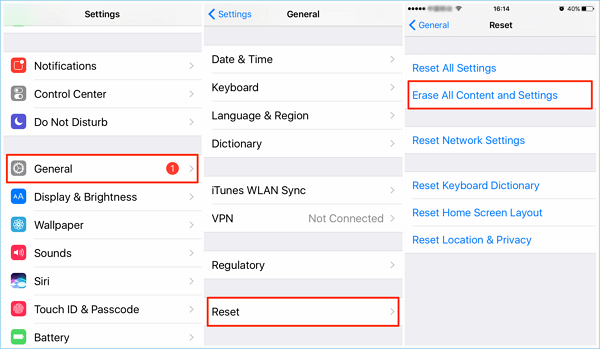
To wipe your iPad, go to Settings > General > Reset > Erase All Content and Settings. This will completely erase all data, settings, and apps on your iPad, returning it to its factory settings.
Step 1. Unlock the iPad by performing a hard reset.
1. To hard reset an iPad with a Home button, press and hold both the Power button and the Home button at the same time. Wait for the device to reboot, then release the buttons when the Apple logo appears.
2. To restart an iPad with no Home button, press and release the Volume Up button, then press and release the Volume Down button, and finally press and hold the Power button until the iPad restarts.
Step 2. Erase iPad from Settings.
1. Make sure your iPad is fully charged.
2. Go to your Settings > General > Reset.
3. To reset the iPad to its factory settings, go to Settings, then General, and select Erase All Content and Settings. Depending on your iOS version, you may be prompted to enter your Apple ID password to disassociate the iPad from your account. If you don't have your password, you can try to recover it or use another method to erase the iPad.
Method 3. Wipe an iPad without Apple ID Password via DFU Mode
No, it's not possible to wipe an iPad without knowing the Apple ID password, as the iPad will require the password to be entered before it can be wiped. This is a security feature designed to prevent unauthorized access to the device and its data.
Yes, you can put your iPad in DFU mode and use iTunes to do a factory reset. To do this, follow these steps:
Step 1. Install the latest version of iTunes on your Mac or PC, then run it.
Step 2. Connect your iPhone, iPod touch, or iPad to your computer using a USB cable. This will allow you to transfer files, sync your device, and potentially restore your device from a backup.
Step 3. Press and hold both the Sleep/Wake button and the Home button on your iPhone or iPad at the same time for a few seconds to initiate a force restart. This will shut down your device and then restart it.
Step 4. Hold the power button and the volume down button on your iPhone for 10 seconds, or until the Apple logo appears. If the logo appears, you'll need to start again. If not, your iPhone will turn off. You can then turn it back on by pressing and holding the power button until the Apple logo appears.
Step 5. To force restart your iPhone, hold the Home Button and let go of the Sleep Button. Hold the Home Button for about 5 seconds, but not so long that you see the "Plug into iTunes" screen. If you see that screen, you'll need to start again.
Step 6. If the screen stays black, that means your iPhone, iPod touch, or iPad should now be in DFU mode. This means your device is in a state where it's not booting up normally, but it's also not in recovery mode, which is a state where it's stuck on the Apple logo. If your device is stuck in recovery mode, you can try the quick fixes provided in the article.
Step 7. Run iTunes, and you will see an alert from iTunes saying that your device has been detected. Click OK to proceed.
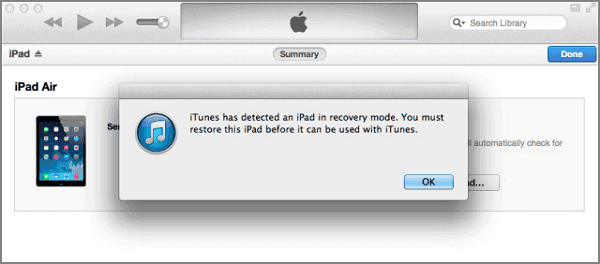
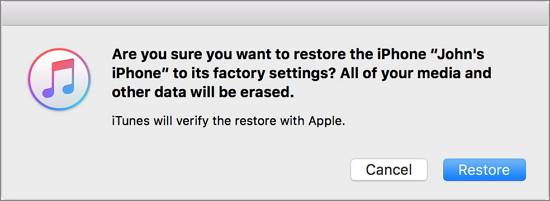
A window will prompt you to cancel the process or restore your iPad. To erase your iPad, click "Restore".
Method 4. Erase iPad without Passcode Remotely via iCloud Website
If your iPad is lost or stolen, you can remotely erase all its data using iCloud, but you need to have "Find My iPhone" enabled on the device. To do this, follow the steps to erase the iPad without a passcode.
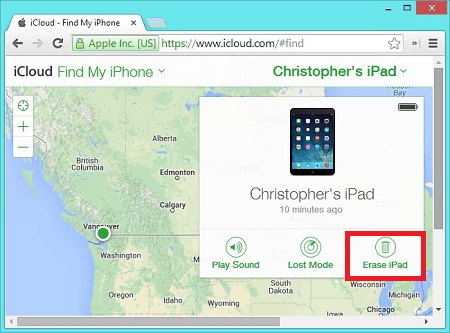
Step 1. Go to iCloud.com and visit its Find My iPhone section.
Step 2. To remotely wipe an iPad, click on the "All Devices" option and select the iPad you want to wipe.
Step 3. Select the "Erase iPad" feature and confirm your selection.
Step 4. It will wipe the iPad without a password.
The Bottom Line
If you plan to give your iPad to others, you can quickly wipe it using one of the four solutions mentioned, each with its own features, to make the process hassle-free.
- The most recommended solution is Solution 1, which can completely remove all data from the iPad without any limitations.
- Solution 2 is more complex and involves multiple steps, but it does not require installing any additional software on the computer.
- Solution 3 can be applied to individuals whose iPad has been stolen or lost.
Related Articles
- What to Do When You Failed iPhone Passcode Attempts
- Regret Updating Your iOS Software? Here Is How to Downgrade from iOS 14
- Qiling MobiUnlock: Best Password Manager for iPhone
- How to Remove iCloud from iPhone with or Without Password
Products
Articles & Tutorials
- Data Recovery
- Data Backup
- File Recovery
- File Backup
- System Backup and Restore
- Disk and Partition Clone
- Technical articles
- Mobile articles
- Disk Master Help
- Windows Data Recovery Tutorials
- Windows Secure Delete Tutorials
- Windows Partition Management Tutorials
- Windows File Backup and Restore Tutorials
- Windows System Backup and Restore Tutorials
- Windows Disk Backup and Restore Tutorials
- Windows Clone Tutorials