Notification Not Working in iOS 11 iPhone or iPad? Fixed Here!
Quick Navigation:
- 1. Reset Network Settings
- 2. Turn off Do Not Disturb
- 3. Turn on Allows Notifications
- 4. Turn on Notification for Certain App
- 5. Restart the Device
- 6. Downgrade to iOS 10
The user's iPhone 6 notifications aren't working properly after upgrading to iOS 11. They've enabled notifications in the app and settings, but still don't receive any notifications. They're looking for a solution to fix the issue.
One of the common problems encountered by users who have updated to iOS 11 on their iPhone 7/6/5 is the notification issue, which may be caused by software conflicts. This issue prevents the iPhone from vibrating or lighting up the home screen to remind users to check notifications, making it difficult to stay informed. To resolve this problem and enjoy iOS 11 perfectly, users can refer to the provided solutions.
To fix notification not working on iOS 11 iPhone and iPad, try restarting your device, checking for software updates, and ensuring that notifications are enabled in Settings. Also, check that the app you're trying to receive notifications from is allowed to send notifications in its app settings.
Fixing notification issues on an iOS 11 iPhone or iPad is a relatively straightforward process. You can try the following 6 tips one by one until the issue is resolved:
1. Reset Network Settings
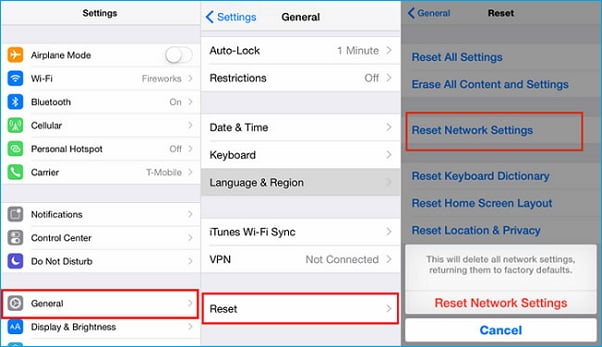
The Wi-Fi or cellular connection problem may cause a network-dependent application to malfunction without notification. To resolve this, try resetting the network settings by going to Settings > General > Reset > Reset Network Settings > Confirm resetting. Additionally, a Wi-Fi connection issue can also cause problems, and fixing it with correct guides may resolve the issue.
2. Turn off Do Not Disturb
If Do Not Disturb is enabled, calls and alerts will be blocked while the screen is locked. To disable it, go to Settings and turn it off.
3. Turn on Allows Notifications
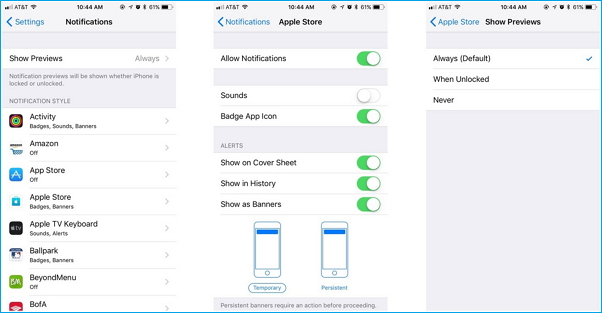
To confirm that notifications are turned on, go to Settings > Notifications > [Your App Name] to see if they are enabled. If they are not, tap the toggle switch to turn them on. If you're still not receiving notifications, check for any iOS updates and install them, as they may have changed the settings.
To ensure notifications work when the screen is locked, go to Settings > Notifications > Show Previews and select "Always". This will allow notifications to be visible even when the screen is locked, rather than only when unlocked or not at all.
4. Turn on Notification for Certain App
That's because the app you're trying to receive notifications from has its own notification settings turned off, not the device's overall notification settings. You should check the app's settings to turn on notifications for that specific app.
To enable notifications for an app, go to Settings > Notifications, select the app, and turn on Allow Notifications. Additionally, turn on Show on Lock Screen and Show as Banners to display notifications on the lock screen and as banners. If the Alert Tones is set to None, change it to a different sound, such as Note, Aurora, Bamboo, or Chord.
5. Restart the Device
Restarting your iPhone with iOS 11 can be a simple yet effective solution for various issues. Sometimes, the simplest approach can resolve problems, making it worth trying before exploring other troubleshooting methods.
To power off your iPhone, press and hold the Sleep/Wake button for 10 seconds until the red slider appears. Then, slide the slider to the right to turn off your iPhone. Wait a few seconds, and press and hold the Sleep/Wake button again until the Apple logo appears to turn it back on.
6. Downgrade to iOS 10
If you've tried all the tips and iOS 11 notification issues persist, consider downgrading to iOS 10, but note that iOS 11 backups can't be restored to an iOS 10 device. Ensure you have an iOS 10 backup before downgrading. After downgrading, use a free iPhone manager like Qiling MobiMover to sync data, such as adding ringtones to your iPhone.
Related Articles
- How to Sync Contacts from iPhone 8/8 Plus/X to iCloud
- [Solved] Can't Delete Apps on iPad Pro/Mini/Air in iOS 11
- How to Export and Read iPhone Messages on PC
- Practical Fixes | iPhone Videos Won't Play on Windows 10 PC
Products
Articles & Tutorials
- Data Recovery
- Data Backup
- File Recovery
- File Backup
- System Backup and Restore
- Disk and Partition Clone
- Technical articles
- Mobile articles
- Disk Master Help
- Windows Data Recovery Tutorials
- Windows Secure Delete Tutorials
- Windows Partition Management Tutorials
- Windows File Backup and Restore Tutorials
- Windows System Backup and Restore Tutorials
- Windows Disk Backup and Restore Tutorials
- Windows Clone Tutorials