How to Turn off iTunes Backup Encryption with or without Password
If you've forgotten your iTunes backup encryption password, you can't reset it, but you can turn off encryption for future backups. To do this, go to iTunes, select your iPhone, and click on "Summary" in the left sidebar. Then, click on "This computer" and uncheck the box next to "Encrypt local backup." This will turn off encryption for future backups, but any existing backups will remain encrypted. To remove the encryption from existing backups, you'll need to restore your iPhone from a non-encrypted backup.
Part 1. Why Do You Encrypt Your iPhone Backup with a Password
When backing up your iPhone via iTunes or Finder, you can choose to encrypt the local backup with a password, which securely stores sensitive data like saved passwords, Health data, and website history. Once encrypted, all future backups will be automatically encrypted with the same password, and when restoring your iPhone, you'll need to enter the password to access the encrypted backup. This adds an extra layer of security to your iPhone backups.
Encrypting your iPhone backup allows you to store more data and add an extra layer of protection to your backup by using a password or biometric authentication, making your data more secure.
Part 2. Turn off iTunes Backup Encryption without Password
The encrypted backup password is crucial as it's required to restore an iPhone from a backed-up encrypted file. However, since backups are often automated, it's easy to forget the password if not written down.
To remove the encrypted backup password from your iPhone, you can either restore your iPhone from a backup that doesn't require a password, or use iTunes to back up your iPhone without encryption. This will allow you to access and manage your iPhone's data without needing to remember or reset the encrypted password.
Method 1. Turn Off iTunes Backup Encryption with a Forgotten Password using Qiling MobiUnlock
Qiling MobiUnlock is a reliable tool to unlock iPhone without a password and remove iPhone backup password, allowing you to turn off iTunes backup encryption from your iPhone in a few easy steps with no data loss.
Qiling MobiUnlock not only helps remove encryption but also offers various features to address common iOS device issues. It enables access to an iPhone without a password, removes Activation Lock on an iPhone without a password, and allows users to turn off Screen Time with a forgotten password. These features provide a comprehensive solution for users facing password-related problems with their iOS devices.
- iPhone Unlocker - To unlock your iPhone, you can use a 4 or 6-digit password, or take advantage of advanced biometric security features like Touch ID or Face ID.
- iCloud Activation Unlocker - Remove Activation Lock from iPhone without a password
- Screen Time Remover - Disable Screen Time on iPhone and iPad
- iOS Password Manager - Access the Keychain on iPhone and export passwords from iPhone
- The iPhone Backup Password Remover is a tool that helps remove the encrypted backup password from an iPhone, allowing users to access and restore their device's data without entering the password. This software can bypass the password protection and decrypt the backup, making it possible to extract and restore the data.
Step 1. To remove iTunes backup encryption, open Qiling MobiUnlock on your computer, connect your iPhone or iPad, and navigate to the "Remove iTunes Backup Encryption" option.
Step 2. Qiling MobiUnlock will start to recognize your device. If prompted, trust the PC on your iPhone. Once your device is detected, click "Unlock Now" to proceed.
Step 3. Qiling MobiUnlock will start removing the iTunes backup encryption from your iPhone. Keep your device connected during the process.
Step 4. After completing the process, you'll be able to get rid of the iTunes backup encryption. This will allow you to set up your iPhone without any issues.
Method 2. Turn off iTunes Backup Encryption with the Option "Reset All Settings"
If you're running iOS 11 or later on your iPhone, you can turn off iTunes backup encryption by resetting your iPhone's settings, which will also reset display brightness, Home Screen layout, and wallpaper. This process is straightforward and easy to proceed with.
Step 1. Go to "Settings" > "General" > "Reset" on your iPhone.
Step 2. To reset all settings, select "Reset All Settings" and enter your password. Then, confirm the action by tapping "Reset All Settings."
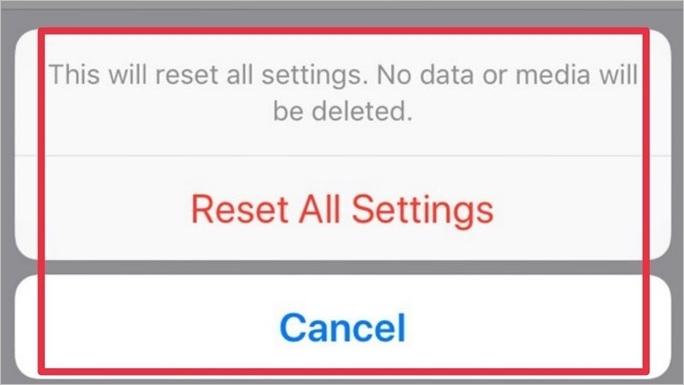
With the two steps, you can remove the iTunes backup password from your iPhone without affecting your data. This method is only applicable for iOS 11 and later versions, and it allows you to reset your iPhone backup password. If you are running iOS 10 or earlier, you cannot reset your iPhone backup password using this method.
Part 3. How to Turn Off iTunes Backup Encryption with Password
To disable iPhone backup encryption, you can turn it off in iTunes by following these steps: simply go to iTunes, select your iPhone, click on the "Summary" tab, and uncheck the box next to "Encrypt local backup." This will disable encryption for future backups. Note that disabling encryption means your backups will not be secure, so it's recommended to keep encryption enabled for added security.
Step 1. Connect your iPhone to your PC and open iTunes on your PC. Click the phone icon to locate your iPhone.
Step 2. Untick "Encrypt local backup" under the "Backups" option and enter the password.
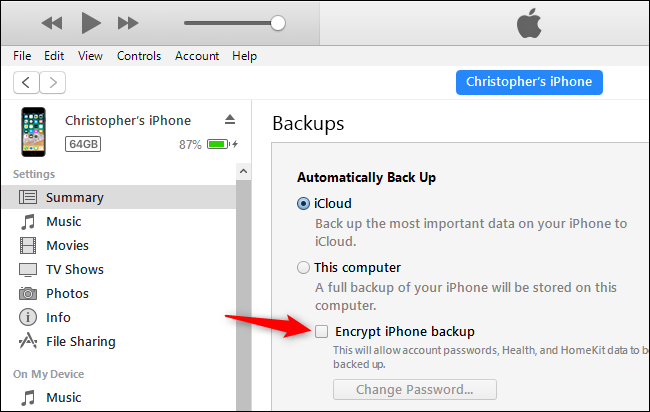
Once you uncheck this option and enter the password, future backups will no longer be encrypted. However, existing encrypted backups will remain encrypted and still require the password for restoration.
The Final Words
This article provides solutions to disable iTunes backup encryption, allowing you to create unencrypted backups on your PC. If you're experiencing issues with encrypted backups, this should help address the problem. For additional topics or concerns, feel free to let us know.
Related Articles
- How to Unlock iPad without Passcode with or without Computer [Updated]
- How to Unlock iPhone with/without Siri
- Partition Is Missing in Windows 10? Easily Recover It! (Video)
Are you experiencing a missing partition issue in Windows 10? This article provides an easy solution to recover your partition and data. - C Drive Data Recovery | Recover Deleted Files from C Drive
How to recover deleted files from C drive? This post gathers several methods to help you recover permanently deleted files from C drive. Check it out!
Products
Articles & Tutorials
- Data Recovery
- Data Backup
- File Recovery
- File Backup
- System Backup and Restore
- Disk and Partition Clone
- Technical articles
- Mobile articles
- Disk Master Help
- Windows Data Recovery Tutorials
- Windows Secure Delete Tutorials
- Windows Partition Management Tutorials
- Windows File Backup and Restore Tutorials
- Windows System Backup and Restore Tutorials
- Windows Disk Backup and Restore Tutorials
- Windows Clone Tutorials