How Do I Format Disk to exFAT in Command Prompt
The term "format disk to exFAT in Command Prompt" can be overwhelming, but it's actually a straightforward process. exFAT is a file system that helps organize and store data on a disk, making it useful for transferring files between devices. To format a disk to exFAT using Command Prompt, you can follow two methods, which will be explained in detail. This will ensure that your computer can efficiently manage and store data on the disk, making it easier to transfer files between devices.
Formatting a disk to exFAT can be done using either the Command Prompt (CMD) or Qiling Disk Master, a user-friendly software. Using CMD, you can follow the steps outlined in the following sections to achieve this. Alternatively, you can use Qiling Disk Master, which offers a more straightforward approach with helpful features. Both methods can help you format your disk to exFAT, but the choice between them depends on your personal preference.
| 🆚Comparison | 💡Qiling Disk Master | 💡CMD |
|---|---|---|
| 🚩Complex Level |
|
|
| 🔎Suitable Users |
|
|
| 💻Pros |
|
|
| ⚙️Cons |
|
|
Qiling Disk Master offers a more straightforward and user-friendly experience, making it suitable for users of all skill levels, and can be downloaded and used to format a disk to exFAT.
Comparing the two methods of formatting a disk to exFAT, Qiling Partition Master is a user-friendly option that is easy to use and carries a lower risk of data loss. On the other hand, CMD requires more technical knowledge and poses a higher risk of potential data loss if not used correctly. Now that we've compared the methods, we can proceed with step-by-step guides on how to format your disk to exFAT using both these methods.
Tutorial: Format Disk to exFAT in Command Prompt - Difficult
Before formatting a disk to exFAT in Command Prompt, be careful as this method requires precision. To proceed, follow these steps carefully and take your time. [Note: the rest of the text is not provided as it is not clear what the steps are]
To format a disk to exFAT in Command Prompt, you can use the following commands: `format /fs:exFAT [drive letter]`, where [drive letter] is the letter of the drive you want to format. For example, to format the drive C:, you would type `format /fs:exFAT C:` and press Enter. Make sure to replace [drive letter] with the actual letter of the drive you want to format.
- list disk
- select disk * (* represent the disk number which you want to format)
- list partition
- select partition * (* represent the partition number you want to format)
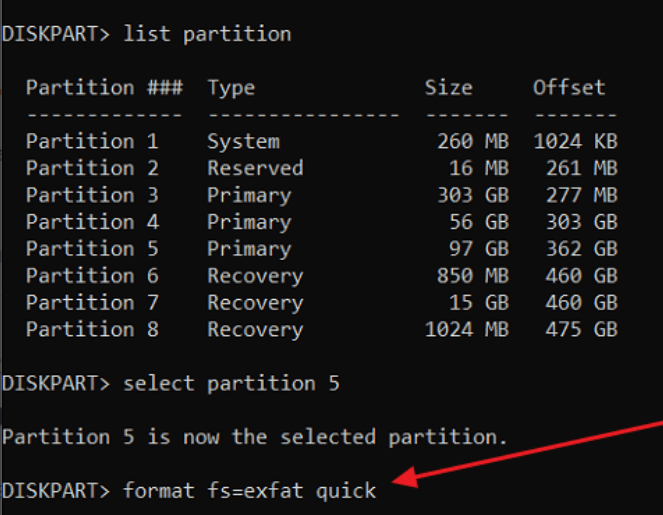
- format fs=exfat quick
Next, you can get a step-by-step and detailed guide. Let's start.
Step 1: To access the Diskpart tool on Windows, press the "Win+R" keys at the same time to open the Run dialog box, then type "diskpart" and press Enter. This will open a Command Prompt window where you can interact with the Diskpart tool, and you may need to confirm administrative permissions by clicking "Yes" to proceed.
Step 2: To view a list of all the disks connected to your computer, type "list disk" and press the "Enter" key.
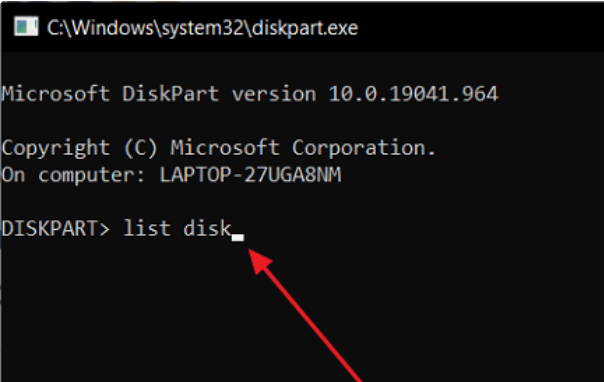
Step 3: To format a drive to exFAT, first, select the disk you want to format by typing "select disk X" (replace X with the actual disk number), then run the "list partition" command to view a list of all partitions on the selected disk. This will prepare the drive for the formatting process.
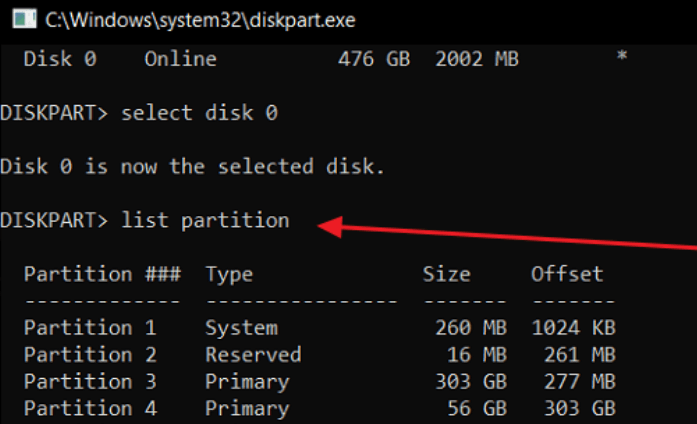
Step 4: To format a drive to the exFAT file system, first identify the partition number of the drive you want to format. Note down the partition number, then run the command "select partition 2" (replace 2 with your targeted partition number). Finally, type "format fs=exfat quick" and press "Enter" to quickly format the selected partition to the exFAT file system.
Formatting a disk to exFAT using CMD can be a complex process that may not be suitable for everyone. For a more user-friendly approach, consider using a tool like Qiling Disk Master, which offers an easier way to format disks to exFAT without the need for complex commands.
Command Prompt Alternative to Format Disk to exFAT - Easier
Using Command Prompt to format a disk to exFAT can be complex, but an alternative tool, Qiling Disk Master, provides a user-friendly interface that makes the process much easier, whether you're a beginner or experienced user. One significant advantage of Qiling Disk Master is its ability to format disks larger than 32GB to either FAT32 or exFAT.
This simplifies the disk management process, allowing users to perform tasks such as deleting all disk partitions, performing a surface test to check for health issues, and initializing disks with ease.
Step 1. Open Qiling Disk Master, right-click the hard drive partition you intend to format and select "Format" from the context menu.
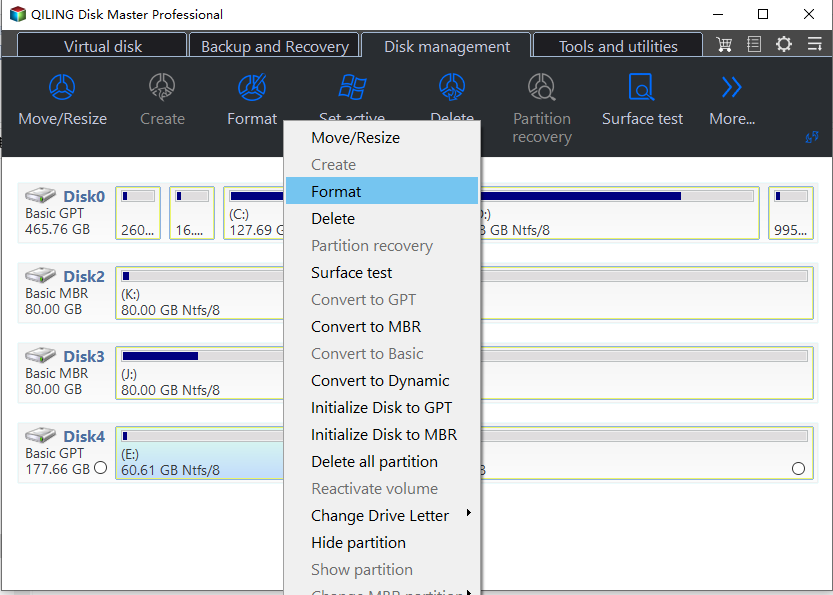
Step 2. Set the partition label, file system, and cluster size for the new partition in the new window.
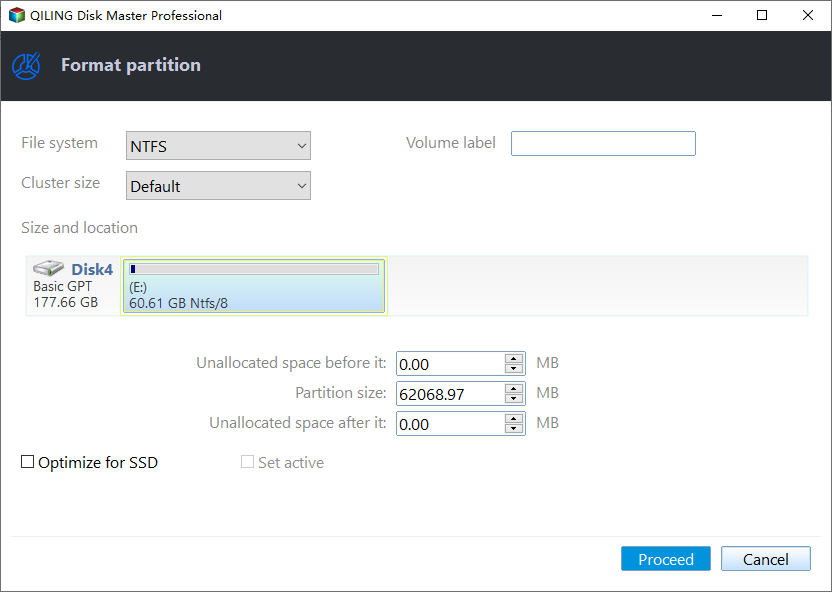
Step 3. To start the formatting process, click the "Proceed" button. This will initiate the partition formatting on your hard drive.
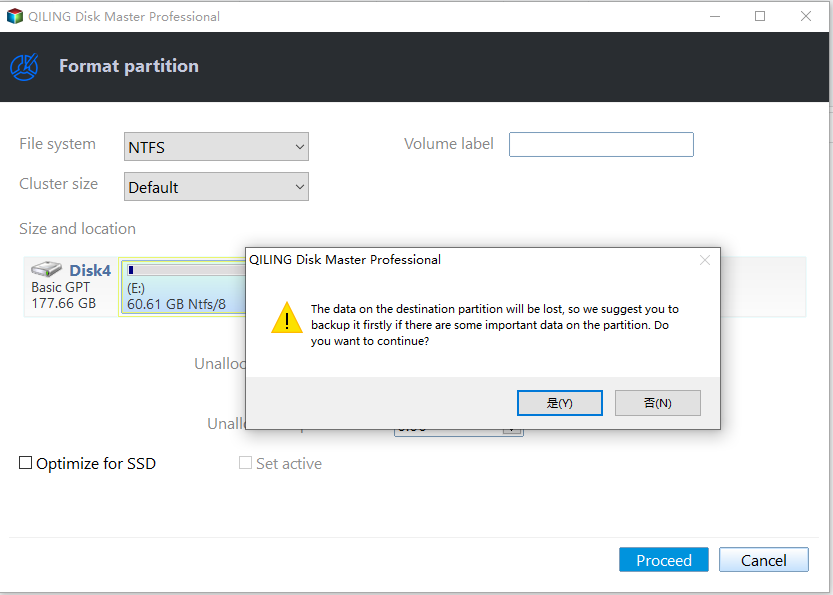
Step 4. Then you will see a warning window, click "Yes" in it to continue.
Now, let's help you with the steps of using Qiling Disk Master to format your disk to exFAT:
Key Features of Qiling Disk Master
- The new UI updates have been implemented to provide a more streamlined and user-friendly interface, making it easier for users to navigate and interact with the system.
- Easily format disks or wipe partitions without any hassle.
- Use the undo button to provide added safety for your disks in case of accidental formatting, and prevent data loss.
- To make the most of your disk's free or unallocated space, you can extend the system partition or C drive. This process involves adding the available space to the existing partition, effectively increasing its size.
- To optimize data storage and retrieval, create partitions for your data based on specific criteria, such as date ranges, user groups, or categories. This helps in reducing data redundancy, improving query performance, and making data management more manageable.
- This tool allows you to combine multiple partitions into a single, larger partition, making it easier to manage your storage space.
If you're looking for a simple and effective way to format your disk to exFAT, Qiling Disk Master is a highly recommended tool. With its user-friendly interface and powerful features, it's perfect for users of all levels of expertise. Download it today and take control of your disk management with ease.
Conclusion
Formatting your disk to exFAT is essential for better data management and compatibility with different devices. There are two methods to achieve this: using the Command Prompt (CMD) and the user-friendly Qiling Disk Master. While CMD can be effective for tech-savvy users, it requires precision and carries some risk of data loss if not used correctly, making Qiling Disk Master a more user-friendly alternative.
Qiling Disk Master offers a simpler and safer alternative for formatting a disk to exFAT, making it suitable for users of all skill levels. To use it, simply back up your important data, then follow the easy-to-follow process to format your disk. This hassle-free experience is a great option for those who want to avoid any accidental data loss. If you found this information helpful, consider sharing it with others who might benefit from it.
You may also like:
Format Disk to exFAT in Command Prompt FAQs
If you have questions about formatting your disk to exFAT using Command Prompt, don't worry, we've got answers. Users worldwide have asked about this topic, and we're here to help. Whether you're looking for a specific detail or just want to know how to get started, we've can help.
1. How to format a disk with CMD Command?
To format a disk to exFAT using the Command Prompt (CMD), first search for cmd, right-click it, and choose 'Run as Administrator'. In the CMD, type 'diskpart' and press 'Enter'. Then, run the 'list disk' command to see a list of connected disks, and note the disk number you want to format, such as disk 1. Next, type 'select disk 1' (replacing 1 with the actual disk number) and press 'Enter'. Finally, type 'format fs=exFAT' and press 'Enter' to format the disk to exFAT.
To format a specific partition on a disk, first type 'list partition' to view all partitions on the disk. Next, identify the partition number you want to format and type 'select partition [partition number]' to select it. Finally, type 'format fs=exfat quick' to format the selected partition to exFAT.
2. Does Diskpart support exFAT?
Diskpart supports formatting a hard drive, SD card, or USB drive to the exFAT file system through the Command Line, making it easy for those familiar with Command Prompt to do so.
3. How to fix Windows 10 format exFAT option not available error?
If you're having trouble with the exFAT option not showing up when formatting in Windows 10, it's likely due to a problem with the disk or Windows configuration. Try updating your Windows to the latest version or checking for driver updates for your storage device to resolve the issue.
Run a disk error check using CHKDSK to fix file system issues, and if the problem persists, consider using Qiling Disk Master for easy and hassle-free disk formatting to exFAT.
Related Articles
- How to Upgrade PS5 SSD [Step-by-step Guide]
- How to Wipe a Hard Drive in Windows XP Without CD
- 8 Fixes for There Is Not Enough Memory Or Disk Space to Run Word Error
- How to Fix External Hard Disk Slow to Respond in Windows 11/10/8/7
- How to Fix Data Error Cyclic Redundancy Check on External Hard Drive
If you're experiencing a data error cyclic redundancy check on your external hard drive, - you can find effective solutions in this post. You can try using the Qiling partition tool, a professional file system checker, to check and fix disk errors. - Fix DiskPart I/O Device Error in Windows 10/8/7
If you're experiencing issues with DiskPart, specifically receiving the error message “DiskPart has encountered an error: the request could not be performed because of an I/O device error”. This issue can be resolved with a few simple solutions.
Products
Articles & Tutorials
- Data Recovery
- Data Backup
- File Recovery
- File Backup
- System Backup and Restore
- Disk and Partition Clone
- Technical articles
- Mobile articles
- Disk Master Help
- Windows Data Recovery Tutorials
- Windows Secure Delete Tutorials
- Windows Partition Management Tutorials
- Windows File Backup and Restore Tutorials
- Windows System Backup and Restore Tutorials
- Windows Disk Backup and Restore Tutorials
- Windows Clone Tutorials