How to Format USB/External Hard Drive to ExFAT [Windows & Mac]
To format your USB or external hard drive to ExFAT in Windows or macOS, follow this page and learn how to do it yourself.
| Workable Solutions | Step-by-step Troubleshooting |
|---|---|
| 1. Format to ExFAT on Windows | To format USB or external hard drives, there are 4 major USB formatters that you can have a try...Full steps |
| 2. Format to ExFAT on Mac |
To connect your external hard drive or USB drive to your Mac, simply plug it in and it should be automatically recognized. If it's not, you can use the Disk Utility app to format and mount the drive. To do this, press the Command + Space keys, type "Disk Utility," and then select the drive you want to format from the list on the left. From there, you can choose the format type and start the formatting process. Once the drive is formatted, you can eject it and use it as needed. |
ExFAT - Best Format for USB/External Hard Drive on Windows and Mac
ExFAT, short for Extensible File Allocation Table, is a newer file system introduced by Microsoft in 2006, designed to optimize performance on flash memory devices such as USB flash drives, SD cards, and external hard drives, replacing the older FAT32 system.
ExFAT is a file system that can be used on both Windows and Mac computers, particularly for USB and external hard drives, where NTFS is not supported. It has a greater file-size limit than FAT32, at 4GB, and is the default file system for SDXC cards larger than 32GB.
ExFAT is a file system that is widely used for removable storage devices, such as USB flash drives and external hard drives. It is recommended as the default format for these devices because it is a cross-platform file system that can be read and written by Windows, macOS, and Linux operating systems.
| Features | ExFAT |
|---|---|
| Compatibility |
|
| Maximum File Size |
|
| Maximum Partition Size |
|
| Usage |
|
To format your USB drives for external hard drives to work on both Windows and Mac, follow the tutorials below for a full guide on formatting USB or external hard drives on Windows and Mac, which will show you how to set them to ExFAT.
Format USB/External Hard Drive to ExFAT on Windows [4 ExFAT Formatters]
When it comes to formatting USB or external hard drives, there are four major formatters that you can try: FAT32, exFAT, NTFS, and HFS+. Each has its own advantages and disadvantages, and the choice of which one to use depends on the specific needs of the user.
- Warning
- Before formatting your USB or external hard drive into ExFAT, make sure to back up all essential files as formatting will completely clean up and remove all data on the storage device.
#1. Format to ExFAT with File Explorer
The Easiest ExFAT Formatter in Windows
Step 1. Connect the USB or external hard drive to your Windows PC or laptop.
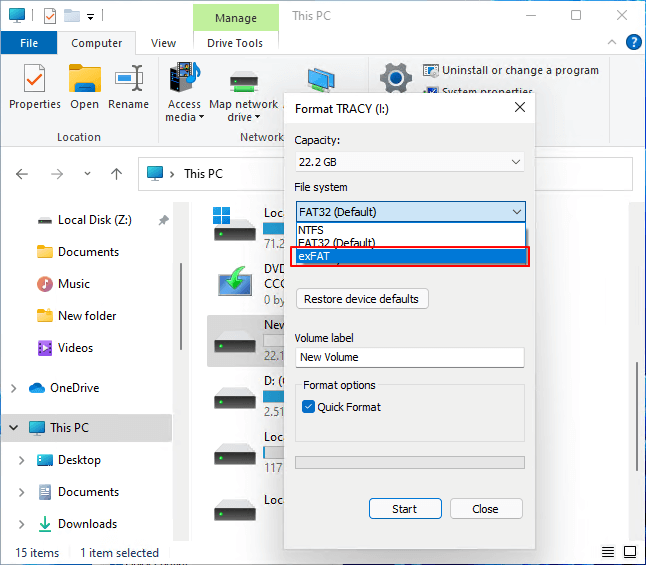
Step 2. To format a USB or external disk, open File Explorer, right-click on the device, and select the "Format" option from the context menu.
Step 3. Set the file system to "ExFAT" and check the box for "Perform a quick format" before clicking "Start".
#2. Format to ExFAT Using Qiling Formatting Tool
All-In-One Disk Formatter and Disk Manager
Qiling Partition Master simplifies the formatting procedure into several clicks. It can be used to format USB or external hard drives, as well as manage internal disks on Windows computers with flexibility.
Qiling Partition Master - Reliable ExFAT Formatter
- To format a USB drive or external hard drive to various file systems, you can use the built-in formatting options on your computer. For Windows, go to "This PC" or "Computer", right-click on the drive, and select "Format". In the "Format" window, choose the desired file system from the "File system" dropdown menu, such as ExFAT, Ext2/3/4, NTFS, or FAT32.
- Convert from NTFS to FAT32 or FAT32 to NTFS without formatting.
- You can convert an internal disk from MBR to GPT or vice versa without losing any data using a tool like Qiling Partition Master. These programs can resize partitions, merge non-adjacent free spaces, and convert the disk from one format to another without affecting the operating system or data.
- Migrate OS to HDD/SSD without reinstallation.
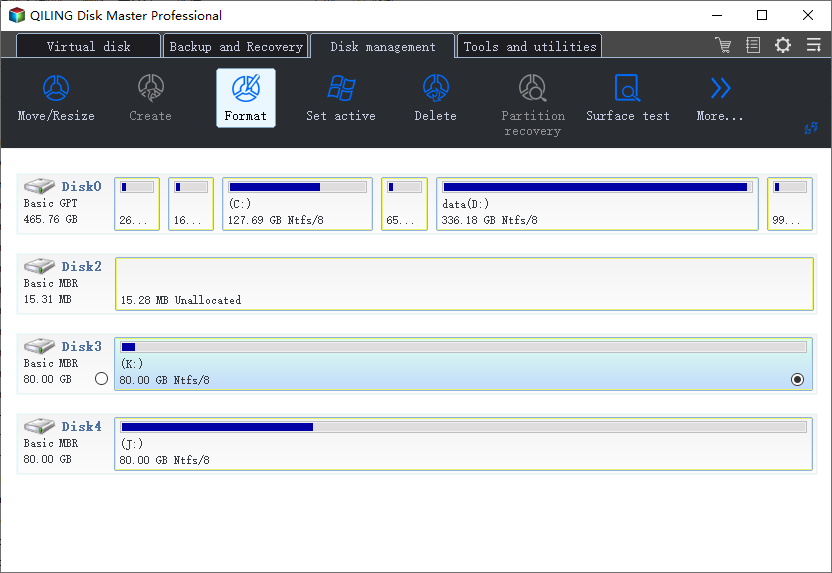
Step 1. Launch Qiling Partition Master, click on the partition of your external hard drive/USB/SD card that you want to format, and select the "Format" option.
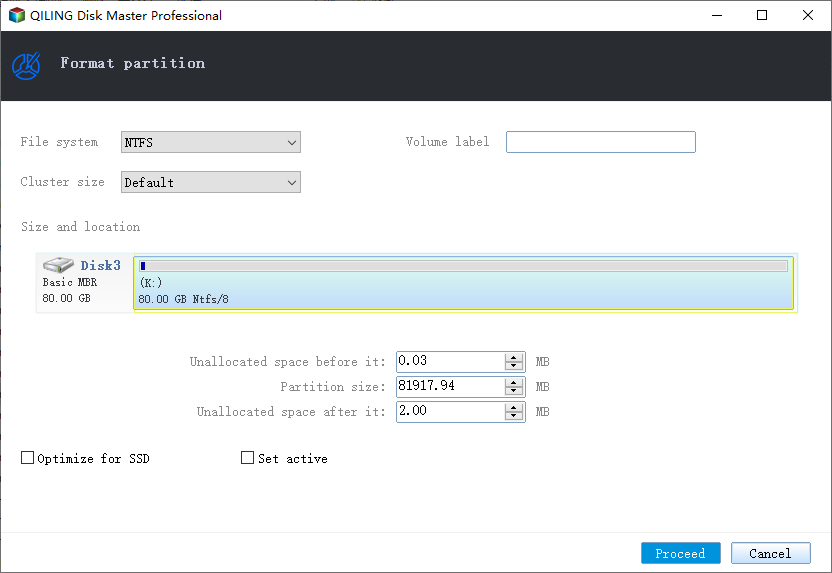
Step 2. Assign a new partition label, file system (NTFS, FAT32, EXT2, EXT3, EXT4, exFAT), and cluster size to the partition, then click "Proceed".
Step 3. Click "OK" in the Warning window to begin formatting your external hard drive, USB, or SD card, allowing the formatting process to start.
To learn more about the featured functions in Qiling exFAT formatted, follow this video. It provides additional information and insights into the capabilities and features of Qiling exFAT formatted.
#3. Format to ExFAT Using Disk Management
Windows Built-in Formatter
Step 1. Connect external hard drive or USB drive to Windows computer.
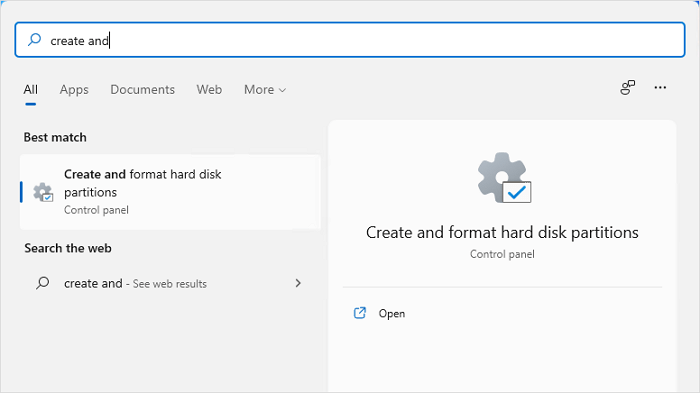
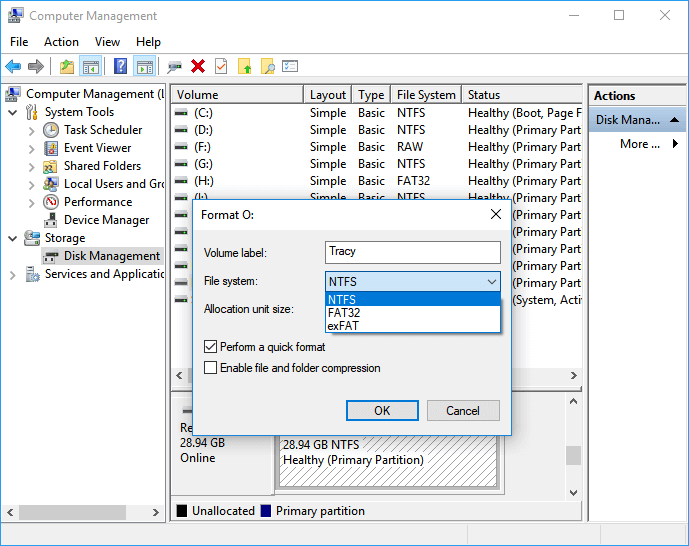
Step 2. To create and format hard disk partitions, click on the Start button, type "Create and format hard disk partitions" in the search bar, and click on the "Disk Management" result to open it.
Step 3. Right-click the USB or external hard drive, select "Format".
Step 4. Select the file system as "exFAT" and click "OK" to confirm the quick format.
#4. Format to ExFAT via DiskPart
Windows Administrator Formatting Tool
Step 1. Connect the USB or external hard drive to a Windows computer.
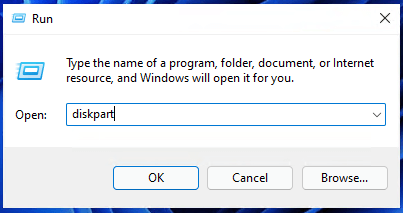
Step 2. Press Windows + R keys, type diskpart and click "OK" to open it.
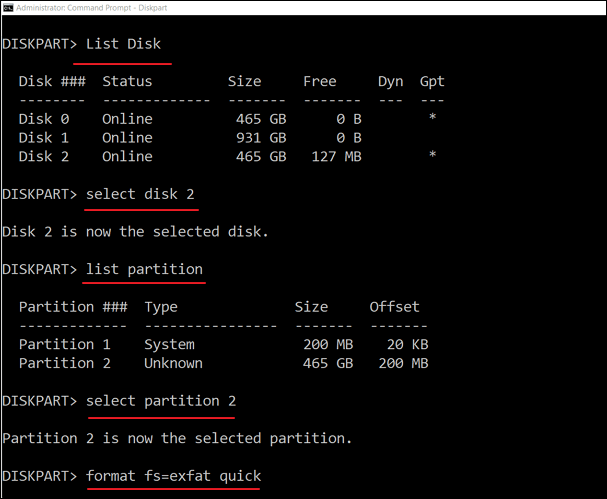
Step 3. Type the following command lines one by one, and make sure that you type in the right command lines each time. Hit "Enter" to execute the operations:
- list disk
- To select the disk where you want to install Windows, type "select disk 2" (replace 2 with the actual number of your USB or external drive) and press Enter. This will set the disk as the target for the installation process.
- list partition
- The command `SELECT PARTITION 2` is used to select the second partition of a disk, where 2 would be replaced with the volume number of your USB or external disk. This command is typically used in the context of disk management and is not a standard SQL command.
- format fs=exfat quick
After formatting the USB or external hard drive, you can connect it to both your Windows and Mac computers, allowing you to transfer and share files seamlessly between the two systems.
Format USB/External Hard Drive to ExFAT on Mac
If you're using a Mac and need to format a USB or external hard drive to ExFAT, you can use Disk Utility. Beforehand, it's a good idea to copy and back up any useful files to another location to avoid losing them.
Here is the full guide:
Step 1. Connect your external hard drive or USB flash drive to your Mac computer.
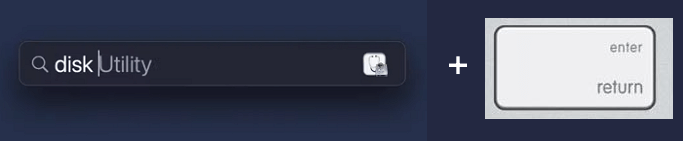
Step 2. To open Disk Utility, press the Command + Space keys, type "Disk Utility" in the spotlight, and hit "Return" to open it.
Step 3. Select the USB or external hard drive on the left pane in Disk Utility, and click "Erase" on the top menu.
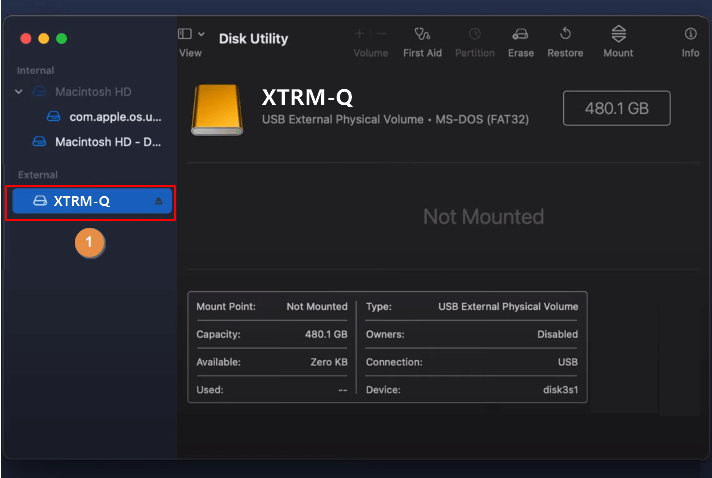
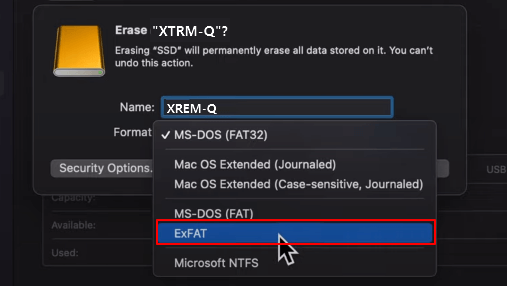
Step 4. Select ExFAT as the file format from the Format dropdown list.
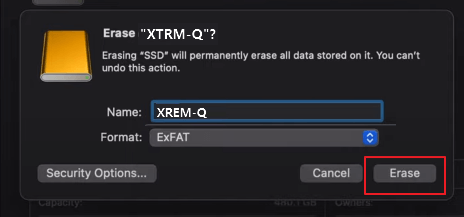
Step 5. Last, click "Erase" to confirm the operation.
Format USB/External Hard Drive to ExFAT for Windows and Mac with The Best ExFAT Formatter
The best format for USB and external hard drives on both Windows and Mac is ExFAT, making it the ideal choice for cross-platform compatibility.
Formatting a USB or external hard drive to ExFAT is a straightforward process. On Windows, you have four ExFAT formatters to choose from, while on Mac, you can use a reliable disk formatting tool to achieve the same result. Regardless of the method you pick, formatting your drive to ExFAT is a relatively easy process.
For a quick tip, here is Qiling Editors' Pick:
- On Windows, For formatting removable devices, consider using File Explorer or Qiling Partition Master as your go-to tools. These programs provide a user-friendly interface and are capable of handling various formatting tasks with ease.
- On Mac, When it comes to formatting a device, Disk Utility should always be the top selection. This is because it provides a safe and reliable way to erase data and prepare the device for new content.
Just follow the tips above for help now.
Related Articles
- Why Is Windows Server Slow and Tips to Speed Up Windows Server in 2026
- How to Convert Primary to Logical or Logical to Primary in Windows 11 [2022 Guide]
- How to Partition SSD Safely in 2026 | Complete Guide
- How to Install Windows 11/10 on External Hard Drive [2 Ways]
- How to Convert System Boot Disk to GPT without Losing Data?
Need to convert system disk to GPT, but not want to reinstall the OS? Here, you can learn how to convert MBR system disk to GPT without losing data or Windows operating system in Windows step by step. - Windows Convert to GPT Grayed Out? Solve it Easily!
If you're unable to convert a disk to GPT in Disk Management, ! There are ways to successfully convert a disk to GPT. You can try using other tools or methods to achieve this.
Products
Articles & Tutorials
- Data Recovery
- Data Backup
- File Recovery
- File Backup
- System Backup and Restore
- Disk and Partition Clone
- Technical articles
- Mobile articles
- Disk Master Help
- Windows Data Recovery Tutorials
- Windows Secure Delete Tutorials
- Windows Partition Management Tutorials
- Windows File Backup and Restore Tutorials
- Windows System Backup and Restore Tutorials
- Windows Disk Backup and Restore Tutorials
- Windows Clone Tutorials