Can I Run Windows Disk Speed Test with Command Line? Sure, Your Guide Is Here
Some users like Windows 11 for its modern features, but others experience slow performance and freezing issues, especially with multiple programs open.
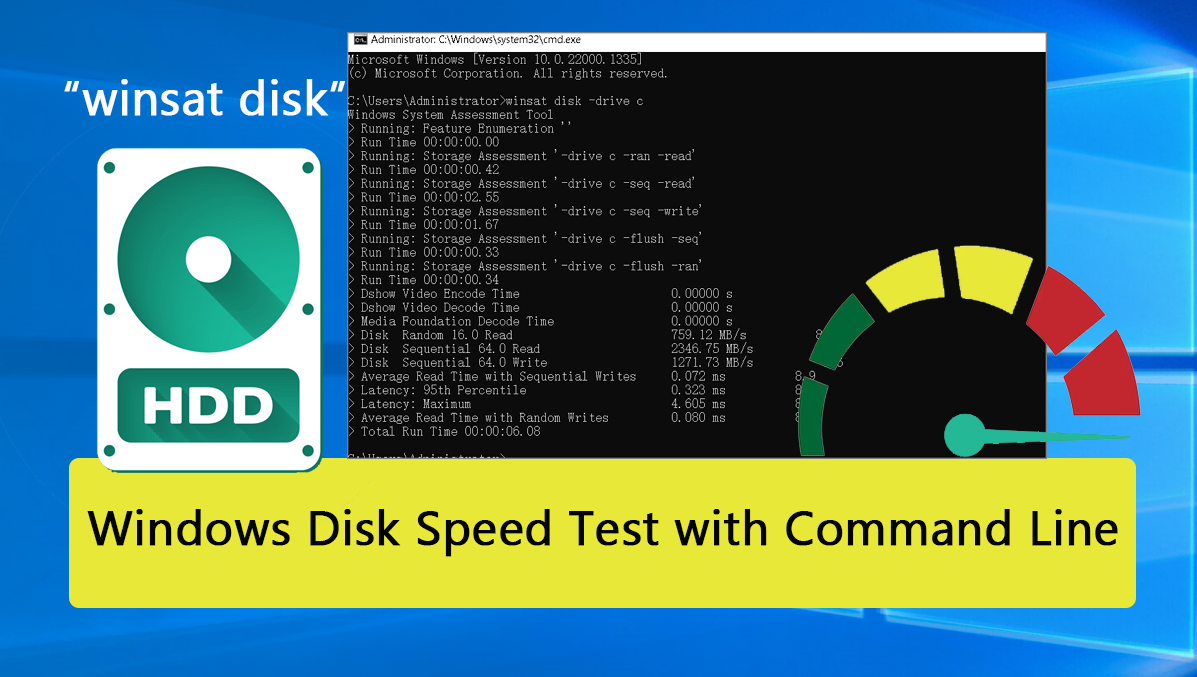
A full C drive, high CPU usage, insufficient RAM, or slow disc speeds are common causes of computer slowdowns. You can optimize your Windows 11 hard drive immediately by following the steps outlined, which provide a comprehensive guide for checking the disk's speed in Windows 11 (also applicable to other Windows versions).
What Is the Command to Check Disk Speed in Windows?
To check your command, follow these steps: search for "CMD" in the Start menu's search bar, click "Run as Administrator" (which can prevent potential issues), and then type "winsat disc" into the terminal. Wait a few moments for the output, and you'll be able to view your read/write speeds.
| ✅ Pros | ⛔ Cons |
|---|---|
| The procedure is simple and takes virtually no time. | You can only control which hard drive to use if you have more than one, you might enter incorrect commands, and the data can be easily exported. |
The disc management problems can be solved using the Qiling Disk Master software, which features a "Disk Mark" tool that quickly and accurately assesses your hard disk's performance and examines all relevant attributes.
With Qiling Disk Master, you can boost your hard drive's speed without risking data loss, and a drive scan can even help recover deleted files.
If you want to do something, take action now. To make it easier, you can use Qiling Disk Master as a helpful tool that can replace the need for command line operations.
How to Run Windows Disk Speed Test with Command Line [2024 Guide]
You're probably curious about the read/write speeds of your Windows 11 disc, and checking the disc speed is essential. This post will guide you through two approaches to check the disc speed: using the native tool and other applications, to help you understand your disc's performance.
Then, use Windows 11's in-built tool to test your disk's transfer rate.
You can use the Command Prompt on Windows 11, 10, and earlier versions to check the transfer rates of your hard drive. This can be done by opening the Command Prompt, typing the command "wmic diskdrive get name, size, transferreates," and pressing Enter. This will display the transfer rates for each disk drive connected to your computer, allowing you to see the performance of your hard drive.
The Command Prompt is a built-in Windows terminal that allows users to monitor their hard drive's activity and get real-time information. It can be used to track hard drive usage, CPU and memory usage, and other system resources, providing valuable insights for system maintenance and optimization.
Step 1. To open the terminal, go to the "Start" menu and use the search bar to look for "cmd." Alternatively, you can open the "Run" box by pressing the Windows key plus R and then typing "cmd" to launch the terminal.
Step 2. Right-click on "cmd" in the Start menu, then select "Run as administrator" from the context menu.
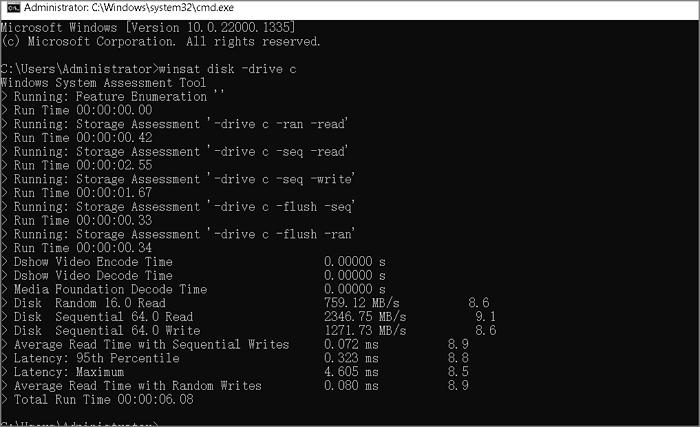
Step 3. To run the Windows System Assessment Tool (Winsat) and assess the performance of a specific drive, you can enter the command `winsat disc -drive c` at the command prompt, replacing `c` with the letter of the drive you want to assess.
Perform Windows Disk Speed Test with Command Line Alternative Software
The disc management problems can be solved by using the Qiling Disk Master software, which includes the "Disk Mark" tool to quickly and accurately assess hard disk performance and examine all relevant attributes.
The "DiskMark" feature in Qiling Partition Manager simplifies running disk speed tests, providing detailed reports on read/write or I/O operations with just one click, making it easy to check your SD card's performance.
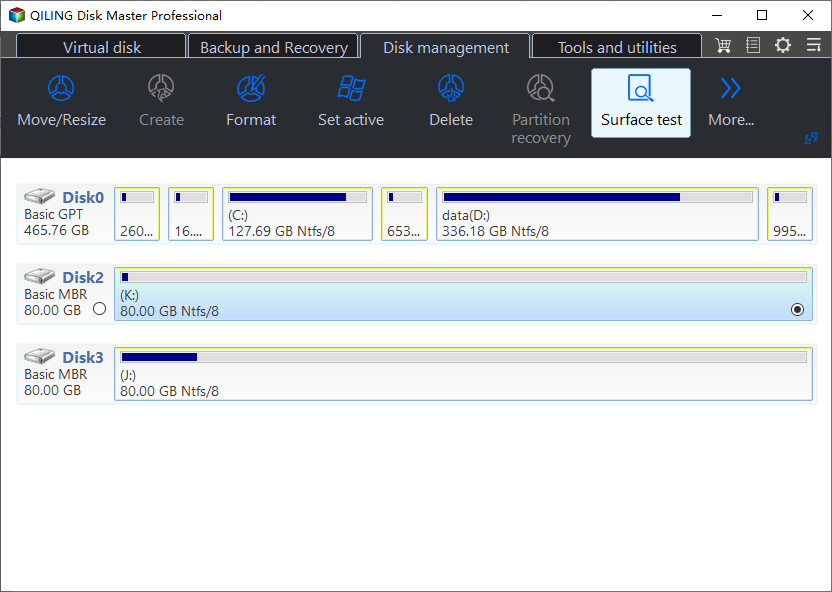
Step 1. Launch Qiling Disk Master, click the download button to activate the "Surface test" feature under the "Disk management" section.
Step 2. To select the test parameters, click on the drop-down box and choose the target drive, test data, and block size.
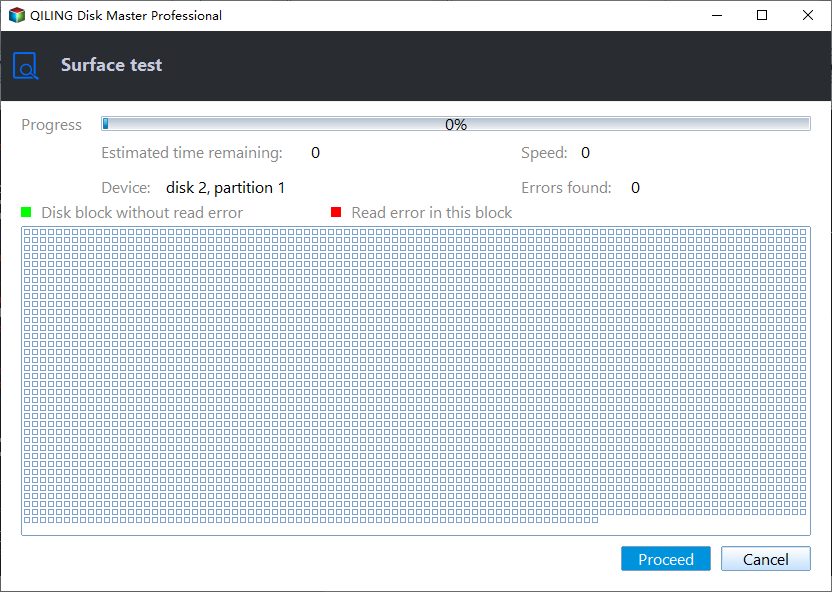
Step 3. Once everything is configured, click "Proceed" to initiate the disk test, and the Sequential read speed, I/O, and Delay data will be displayed.
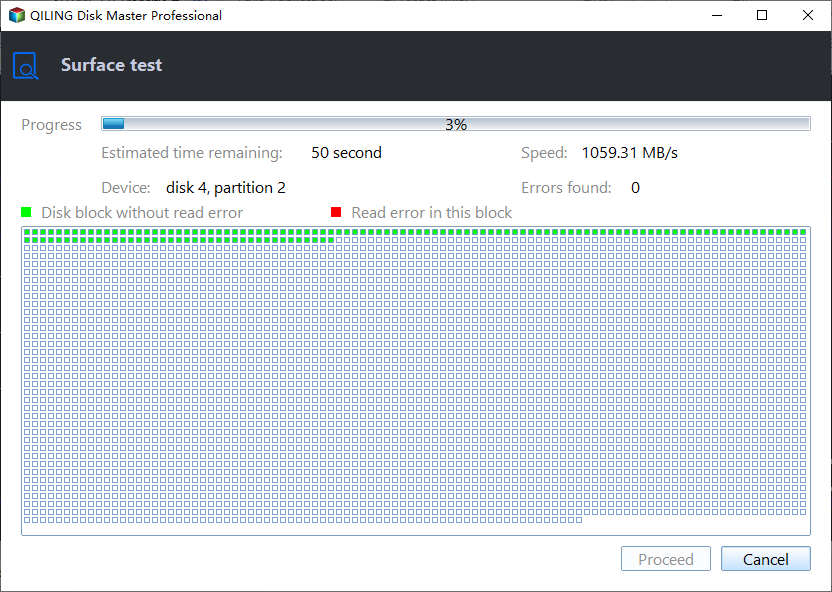
Partition Master offers numerous advantages, including features such as disk partitioning, disk wiping, and disk cloning, among others. These features provide users with a comprehensive toolset for managing their hard drives and optimizing their system performance. With Partition Master, users can resize, move, and merge partitions, as well as create, delete, and format partitions, all from a single interface.
- Damaged parts of a hard drive can be quickly found and fixed by testing the disc's surface.
- The utility can help monitor and control the hard drive's health and performance, providing insights into its condition and any potential issues.
- Windows 10 users can easily check the health of their SSD with the "Disk Health" utility, which quickly and accurately determines how well the hard disk is doing.
- The program makes it easy to manage storage space by letting you split up discs.
- To prepare the computer for sale, you can use a program to delete all data from the hard drive and fix any remaining issues. This process helps move around the information on the hard drive, effectively wiping it clean and making it ready for new data.
- Unfortunately, making the partitions bigger on a hard disk doesn't make the hard disk itself run faster. The speed of a hard disk is determined by its mechanical components, such as the spindle motor, heads, and platters, which are responsible for reading and writing data.
Download it and enjoy its amazing features!
Conclusion
Upgrading your hard drive to a faster one can provide a smoother experience by getting data to the processor faster, making it wiser to consistently keep up with your hard drive's performance.
This tutorial offers two reliable approaches for a Windows disk speed test command line, but we recommend using the Qiling Disk Master software for a more straightforward experience. With this software, you can safeguard your data and speed up testing, and even manage and customize your disc partitions.
FAQs About Windows Disk Speed Test with Command Line
If you still have confusions you can go through the frequently asked questions to make them clear
1. How to check disk read/write speed in Windows 10?
To begin, right-To view read/write speeds, click the taskbar at the bottom of your screen, select "Task Manager" from the context menu, choose "Performance" from the top menu, and select the solid-state drive (SSD) from the left column.
2. Can I run an SSD speed test in Windows 10?
First, you should right-To view read/write speeds on your computer, click the Task Bar at the bottom of your screen and select "Task Manager" from the context menu that appears. Then, in the new windows that have opened, select the "Performance" tab. Finally, choose the solid-state drive (SSD) from the left column to view your read/write speeds.
3. What does winsat disk mean?
System performance can be evaluated using the Windows System Assessment Tests (WinSAT), which assess CPU, memory, disc space, and graphics processing. The results are reported as Windows Experience Index (WEI) scores in the Performance Information and Tools Control Panel.
Related Articles
- How to Fix New Simple Volume Greyed Out Error in Windows Disk Management
- Top 3 Easy Disk Drive Repair Software for Windows 10/8.1/8/7
- Windows 11 Shrink Partition: 3 Ways to Shrink Windows Partition
- Windows 10 Slow: Why Is My Computer So Slow All Of A Sudden [ 7+ How-To Fixes]
- How Do I Reset Hard Drive on My Own? Here Is the Complete Guide
If you're looking to reset your hard drive, this article provides a clear guide to help you do so on your own. - How to Resize/Remove Dynamic Volume
Step-by-step tutorial to resize or remove GPT dynamic volume with Qiling Partition Master on Windows XP/Vista/7/8 and Server 2003/2008/2012.
Products
Articles & Tutorials
- Data Recovery
- Data Backup
- File Recovery
- File Backup
- System Backup and Restore
- Disk and Partition Clone
- Technical articles
- Mobile articles
- Disk Master Help
- Windows Data Recovery Tutorials
- Windows Secure Delete Tutorials
- Windows Partition Management Tutorials
- Windows File Backup and Restore Tutorials
- Windows System Backup and Restore Tutorials
- Windows Disk Backup and Restore Tutorials
- Windows Clone Tutorials