CHKDSK Cannot Run Because the Volume Is in Use by Another Process
CHKDSK Can't Run Because the Volume Is in Use by Another Process is a Windows error message that appears when the user attempts to run the Check Disk (CHKDSK) command while logged into Windows, but the volume is currently being used by another process.
CHKDSK needs exclusive access to scan and fix potential errors, which can be achieved by scheduling it to run before Windows fully loads or running it in the recovery environment.
Now that we know the error and its reason, we can back up critical data before starting and executing CHKDSK. If you find all this complex, you can skip to Part 3 for the best alternative to CHKDSK - Qiling Disk Master, in disk scanning and repairing.
Fixes: CHKDSK Cannot Run Because the Volume Is in Use by Another Process
To resolve the issue, follow the fixes mentioned below, which will ensure that the volume is not in use, allowing CHKDSK to perform its tasks.
Fix 1. Close Other Programs Using CHKDSK
Closing all running applications might be a solution to the "CHKDSK cannot run because volume is in use" error, and can be done quickly with a few clicks.
To resolve the "CHKDSK cannot run because the volume is in use" issue, press Ctrl + Alt + Delete, then Alt + T to open Task Manager, select all running programs by pressing the down arrow key and Shift + down, and finally close them by pressing Alt + E, Alt + F, and X. This will close all running programs and may resolve the issue.
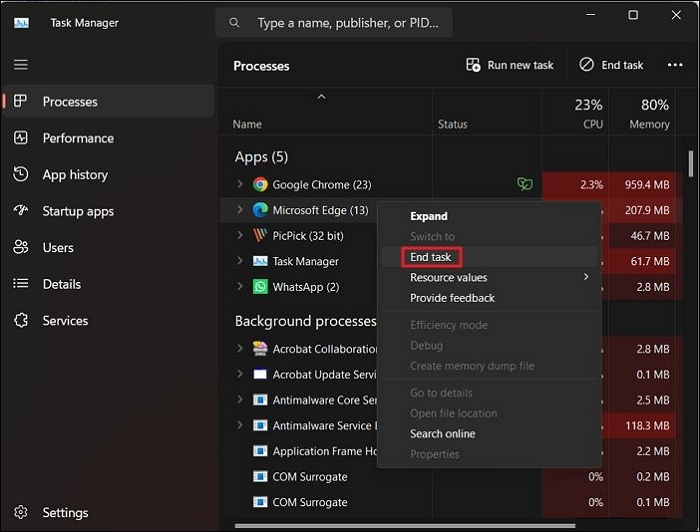
Note: When you finish a task, the application will close instantly, so be sure you have saved any unfinished work before you end a task. Also, avoid ending any system processes, as this could cause system instability or even a crash.
If you're looking to improve your mental health, there are several strategies you can try. One approach is to practice mindfulness, which involves being present in the moment and focusing on your thoughts, feelings, and physical sensations without judgment.
Fix 2. Run CHKDSK After a Reboot
Running CHKDSK after rebooting your PC can be one of the possible solutions to the "Windows cannot run disk checking" error. To do this, simply restart your PC, then press the Windows key + E to open File Explorer, right-click on the affected drive, select "Properties", and then click on the "Tools" tab. From there, click on "Check" and select "Scan for and attempt recovery of bad sectors".
- Launch Run by pressing Win + R.
- To open a new window in the Run window, type "cmd" in the Run window and hold the keys Ctrl+Shift+Enter simultaneously. This will open a new command prompt window.
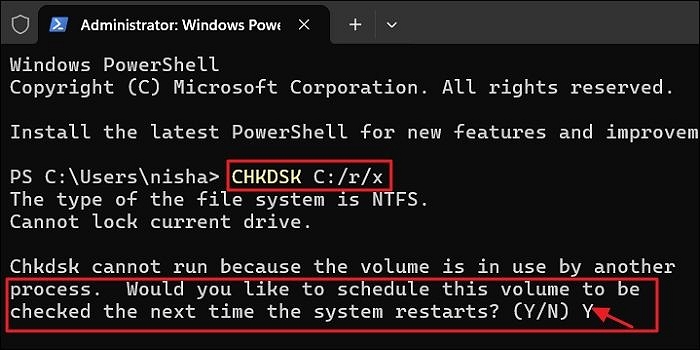
- To run the Check Disk (CHKDSK) utility on your C: drive, open the Command Prompt as an administrator and enter the command "CHKDSK C:/r/x" followed by pressing the "Enter" key. This will initiate a scan of the drive for any errors or issues.
- To confirm the volume check, click "Y" and press Enter. A message will appear stating "This volume will be checked the next time the system restarts."
- After restarting your PC, the Check Disk utility will automatically run on the system drive to scan and fix any errors or issues.
Fix 3. Running CHKDSK from the Pre-Boot Environment
Running CHKDSK from the Pre-The Boot Environment effectively diagnoses and potentially repairs disk issues before the operating system starts, ensuring a comprehensive inspection and often resolving problems.
Step 1. To open the Run box, press the Windows key + R on your keyboard. This will open a small window where you can type a command or path to open a specific application, folder, or file.
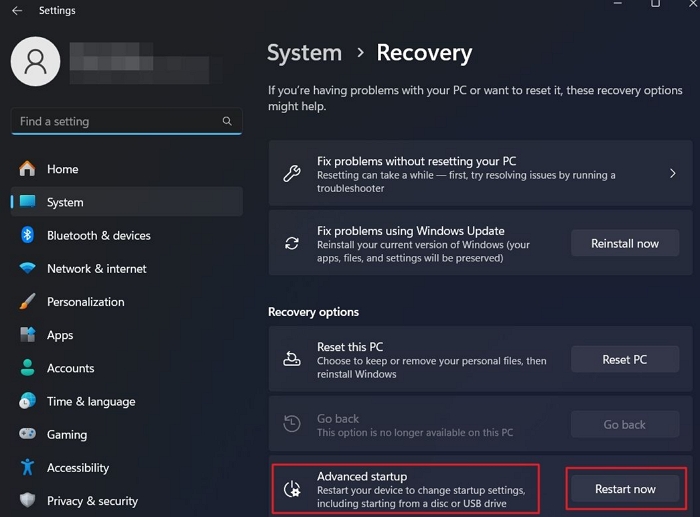
Step 2. Type ms-settings:recovery and press OK.
Step 3. Press the Restart Now button next to Advanced Startup, then click Restart now when prompted, and save your work beforehand.
Step 4. To troubleshoot the issue, navigate to the Troubleshoot option and click on the Advanced options button.
Step 5. Open Command Prompt and type the chkdsk command.
Step 6. Select the account you want to continue working within the following window.
Step 7. Type your account password in the dialog box that appears, then select Continue.
Step 8. To run a disk check on your C drive, open the Command Prompt, type `chkdsk c: /x`, and press Enter.
Step 9. Type the chkdsk command in the Command Prompt window. After the program has finished running, click Continue and close the window.
Best Alternative to CHKDSK in Disk Scanning and Repairing
Qiling Disk Master is a tool designed to help manage computer hard disk partitions, but it may also help resolve errors or irregularities that can occur on a hard drive, such as those caused by sudden power failures, software malfunctions, or physical damage to the disk.
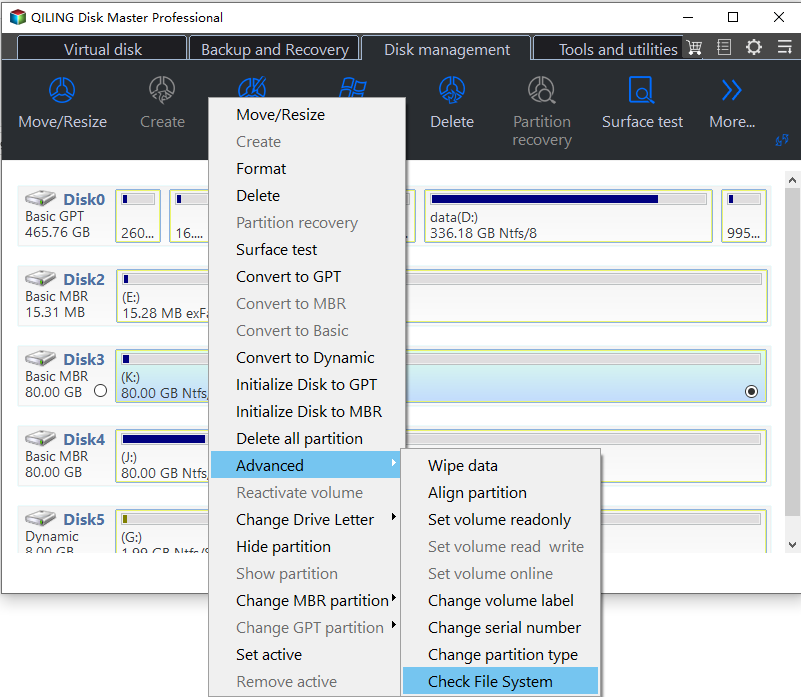
To check your partitions for issues, use the Qiling Disk Master function, which may display a check file system error message if a problem is found. The Check File System option, available under Advanced > Check File System and accessible by right-clicking, will scan the disk or partition and attempt to repair the error.
Step 1. Open Qiling Disk Master, locate the disk, right-click the partition, and choose "Advanced" > "Check File System" to check the file system of the partition.
Step 2. In the Check File System window, select the "Fix the error on the disk" option and click "Proceed".
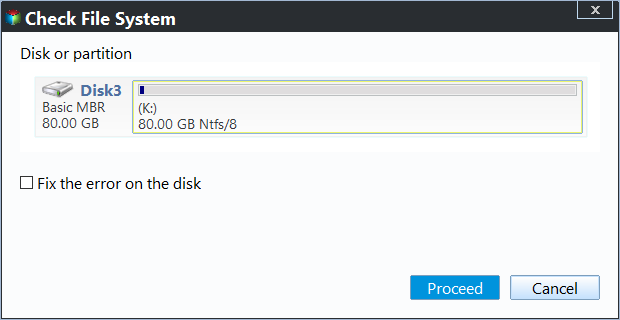
Step 3. The software will start scanning your partition file system on your disk.
Qiling Disk Master allows you to manage your disks in Windows with advanced capabilities, including the features listed below.
- Check hard drive or SSD health
- Check bad sectors via a disk surface test
- When Windows detects file system corruption, it may display a "Check and repair file system" error. This error usually occurs when the file system becomes damaged due to a power outage, virus infection, or other system crashes.
- Test hard drive read and write speed
- Enable or disable write protection on a disk
Don't miss out on this powerful disk manager! Install it on your PC to unlock its capabilities and take your storage management to the next level.
Conclusion
If CHKDSK can't run because the volume is in use by another process, it means a service or app on your computer is using the drive. You can try running CHKDSK from the Pre-Boot Environment or use a third-party tool like Qiling Disk Master to scan and repair the disk. Before running CHKDSK, save any open files and close active apps to avoid data loss.
CHKDSK Can't Run Because the Volume In Use FAQs
If CHKDSK can't run because the volume is in use by another process, you may want to check out the frequently asked questions and their answers below for more information.
1. How to fix CHKDSK cannot run because the volume is in use by another process?
To resolve the issue, run the command "chkdsk C: /r /x" in the command prompt to schedule CHKDSK to run at the next system restart, or launch CHKDSK from the Windows Recovery Environment or use the Task Manager to end any open processes before launching CHKDSK.
2. How do I run CHKDSK on a specific volume?
To execute the CHKDSK command on a specified volume, open and run Command Prompt as an administrator, then type `chkdsk [volume]: /f /r` and press Enter, replacing `[volume]` with the drive letter you want to check (e.g., `chkdsk C: /f /r`).
3. How to fix Windows can't run disk checking on this volume because it is write protected?
Users may encounter the "Windows cannot run disk checking on this volume because it is write-protected" error. This issue typically arises when a drive or volume is read-only or damaged. Utilizing software, the Command Prompt, or the Registry Editor can help remove the write protection and resolve the problem.
Related Articles
- How to Extend C Drive in Windows 7/8/10
- How to Resize USB Flash Drive Partition with Magic Partition Software
- How to Partition Hard Drive (including C drive) in Windows 11/10 Without Formatting
- Best Hard Disk Speed Test Software Free Download for Windows 11/10 in 2024
Discover the best hard disk speed test software for Windows 11/10 and measure your disk performance in 2024 with the top-rated, free program. This software provides you accurate and reliable results, helping you understand what is hard disk speed test software and how it works. - How to Clone C Drive on Windows 10 in 2024 [Newest Solution]
Cloning the C drive on Windows 10 can be a straightforward process with the right tool. To do this, you'll need a safe and efficient tool that can help you clone your C drive without any data loss or system crashes. - How to Clone C Drive to Larger SSD in 2024 [Full Guide]🔥
If your C drive is running low on space due to the operating system and programs, consider upgrading to a larger SSD. This article provides a step-by-step guide on how to clone your C drive to a larger SSD, allowing you to transfer all your files, programs, and settings to the new drive.
Products
Articles & Tutorials
- Data Recovery
- Data Backup
- File Recovery
- File Backup
- System Backup and Restore
- Disk and Partition Clone
- Technical articles
- Mobile articles
- Disk Master Help
- Windows Data Recovery Tutorials
- Windows Secure Delete Tutorials
- Windows Partition Management Tutorials
- Windows File Backup and Restore Tutorials
- Windows System Backup and Restore Tutorials
- Windows Disk Backup and Restore Tutorials
- Windows Clone Tutorials