Ultimate Guide on SSD Benchmark, Everything You Should Know
Key Takeaways of SSD Benchmark:
- An SSD (solid-A storage drive benchmark is a test that measures the performance of a solid-state drive (SSD) by evaluating its speed, I/O operations per second, and other factors.
- The benchmark provides crucial information and details to determine an SSD's speed and performance in real-world applications, making it matter.
This tutorial article offers valuable guidance for individuals and businesses to benchmark SSD performance, helping them make informed decisions when purchasing or upgrading to an SSD. It provides a step-by-step guide on how to perform SSD benchmarking on your own, allowing you to assess the performance of your SSD and make a well-informed decision.
Tips for SSD Benchmark Tools Selection
Choosing a reliable SSD benchmarking tool is crucial when using an SSD and wanting to test and optimize it. A good tool should have a range of features, from basic to advanced, to provide accurate results and help you get the most out of your SSD.
When choosing a reliable SSD benchmarking tool, consider the following key factors. Look for tools that are widely recognized and trusted within the tech community, such as CrystalDiskMark, AS SSD, and HD Tach.
| 🎉Features: | This tool provides precise and accurate results for key metrics like read/write speeds, IOPS, and access/latency times, giving you the information you need to make informed decisions. |
| 👨💻Supported OS: | Compatible with Windows or macOS |
| 💵Price: | Free, or budget-friendly with a free trial. |
| ☎️Technical Support: | 24/7 technical support options, including user manuals, online forums, and direct developer support, are available to assist users with any issues they may encounter. |
| 🎯Bonus Features: | To maintain the performance of your SSD, consider adding features such as SSD optimization or monitoring. This can help ensure that your SSD continues to run at its best, providing a smooth and efficient user experience. |
By following the tips listed in the table, you can easily find and select a reliable SSD benchmark utility to test read and write speed and detect the healthy status of your SSD. Even if you don't have the time or skill to find a qualified tool, the next part will provide a complete tutorial guide to help you accomplish the task with ease.
SSD Benchmark Tool Recommend and Free Download
The best and most reliable SSD benchmarking tool that contains all features from basic to advanced is Qiling Disk Master. It provides a DiskMark feature for SSD benchmarking, allowing not only SSD speed testing but also several other features.
The SSD benchmarking tool provides detailed and accurate results for key metrics such as read/write speeds, IOPS, and access/latency times, allowing for optimized SSD performance.
| SSD Benchmark Feature - DiskMark | Bonus Features for SSD Performance Optimization |
|
|
| Reviewed by G2: Qiling Disk Master is an all-Disk partitioning software helps users manage and manipulate hard disk drives and partitions, allowing them to create, delete, resize, extend, shrink, clone, convert, and migrate disk partitions as needed. | |
No more waiting or searching for a benchmark tool - Qiling Disk Master can help. This versatile tool offers a wide range of options, from SSD speed testing to partition management, and more. Download it now and take advantage of its countless features!
You can use this tool to determine if your SSD is fast or new by running a benchmark test. Alternatively, you can share this tool with friends to help them determine if their SSDs are fast or new, allowing them to run an SSD benchmark test on their own.
Guide on Running SSD Benchmark for Free
Qiling Disk Master is a reliable SSD benchmark tool that comes with a feature of DiskMark for SSD testing. Using it is easy and simple, and it provides 100% accurate reports quickly. You can follow the complete instructional steps to use it effectively.
Follow the instructional steps to test your SSD quickly through the Qiling Disk Master DiskMark feature:
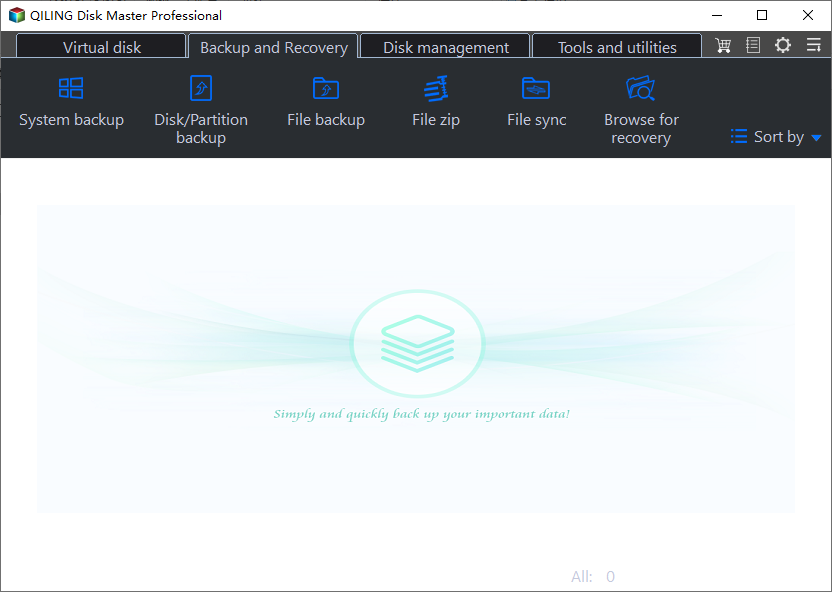
Step 1. Launch Qiling Disk Master and click the download button to activate the "Surface test" feature under the "Disk management" section.
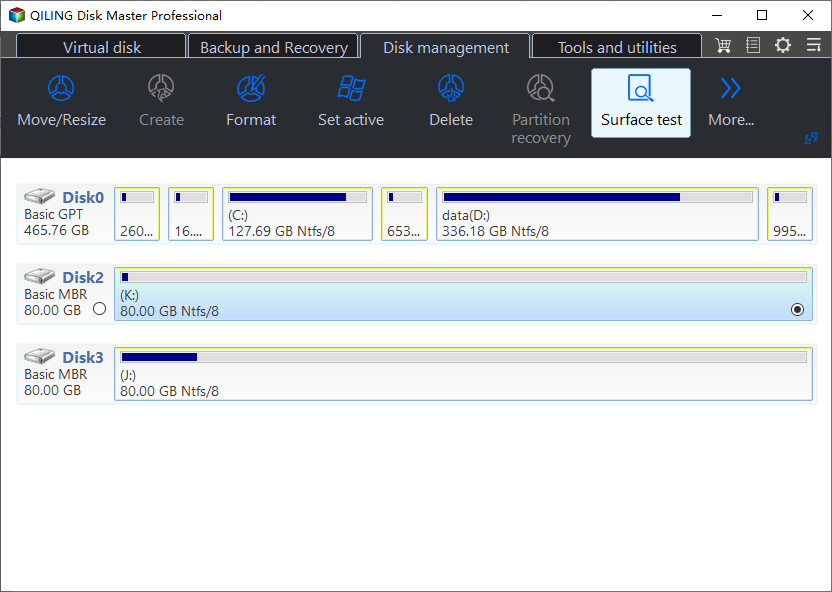
Step 2. Select the target drive, test data, and block size from the drop-down menu options.
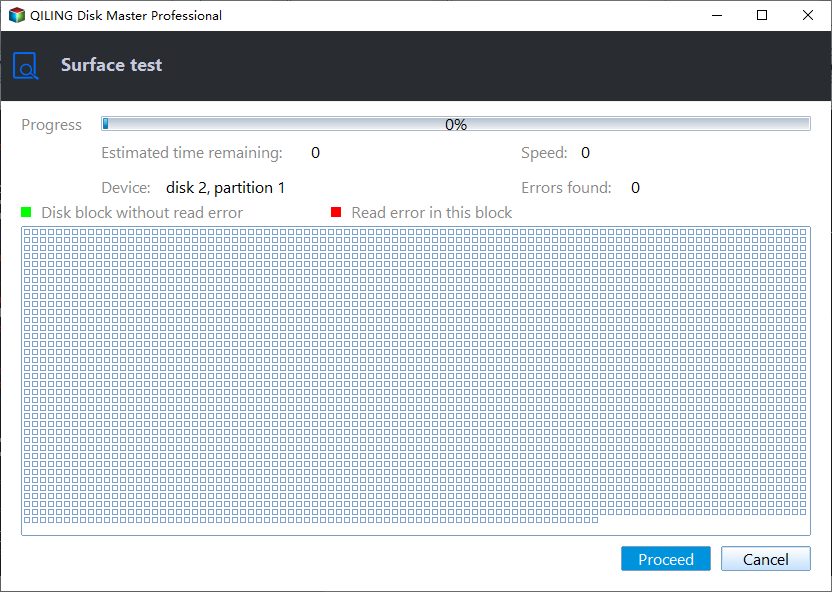
Step 3. Once everything is configured, click "Proceed" to begin the disk test, which will then display the Sequential read speed, I/O, and Delay data.
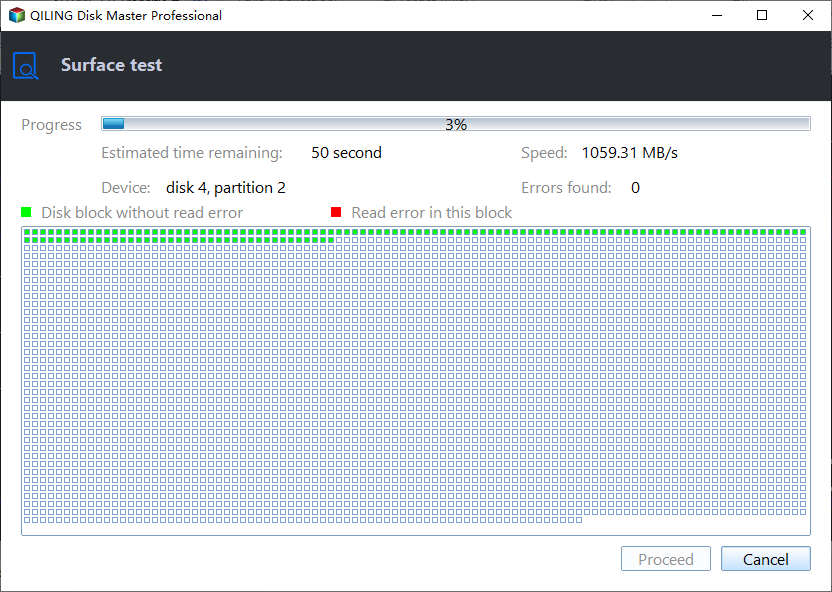
Compare and Check The SSD Performance After Running SSD Benchmark
After running the SSD benchmark, the next step would be to analyze and understand the test results, which can help optimize the SSD's performance and identify any potential issues.
After running the SSD benchmark, take a few steps to ensure you get the most out of your results. First, verify that the test was run in a controlled environment, free from any background programs or processes that could interfere with the test.
- 1️⃣Saving the test report
- 2️⃣Comparing or matching your results to average SSD speeds
- 3️⃣And learning tips for improving SSD performance
#1. Compare SSD Speed Test Result with Average SSD Performance Data
Here are some average performance data for SSDs you can compare with yours: Sequential read and write speeds typically range from 450-550 MB/s, while random read and write IOPS (input/output operations per second) usually fall between 5,000-10,000 IOPS. 4KB random read and write speeds are often around 70-90 MB/s and 40-60 MB/s, respectively.
- Read speeds: 200-550 MB/s
- Write speeds: 450-500 MB/s
To check if your SSD is still performing well, take a look at its benchmark test results. If the read and write speeds are within the average range, your SSD is likely still in good condition and you can continue using it as usual. However, if the speeds are lower than expected, you can try the tips listed here to instantly optimize your SSD's performance and get it back up to speed.
#2. Improve SSD Performance
Here are some tips to improve your SSD performance:
- Don't keep too much data or avoid filling your SSD.
- Keep some free space on your SSD.
- Enable TRIM to maintain your SSD's performance and longevity. TRIM (TRIM Command) is a feature that helps remove deleted data from solid-state drives (SSDs), which is necessary for maintaining their performance and longevity.
- Update firmware for improved performance and drive reliability.
- Defragmenting your hard drive is not necessary and can actually be harmful to the drive itself. It's a process that rearranges the data on the drive to improve performance, but modern operating systems and file systems are designed to handle this automatically, making manual defragmentation unnecessary.
For more details, you may follow this tutorial as a guide:
How to Improve SSD Performance in Windows 11
To improve SSD performance on Windows 11, This guide shows you how to prevent issues and optimize your solid-state drive for better performance. Read more
Video Tutorial on SSD Benchmark
If you're looking for a clear guide on benchmarking SSDs and understanding their real speed, this video tutorial is here to help.
Extended Reading: What Is SSD Benchmark and Why Does It Matter?
An SSD benchmark is a test that measures a solid-state drive's performance in terms of speed and I/O operations, providing an estimate of transfer speeds under various disk access scenarios. It runs a series of tests to calculate metrics and produce a score that represents the overall performance of the SSD.
The firmware number and the number of writes it has already absorbed are important because they tell you whether your drive needs a firmware upgrade, providing insight into how long it will last and how many more writes it can handle.
SSD benchmarking often involves evaluating the performance of solid-state drives using various metrics and factors. These typically include several common metrics, such as read and write speeds, sequential and random access times, and IOPS (input/output operations per second), among others.
- Sequential Read speeds (MB/s): This shows how fast an SSD can read data from contiguous memory spaces, which is useful for accessing large files, game level loading, and some types of gameplay.
- Sequential Write speeds (MB/s): The drive's sequential write speed indicates how quickly it can write data to memory spaces in a continuous sequence, making it useful for tasks such as backing up large documents.
- Random Read speeds (IOPS): The drive's performance in reading data from non-contiguous memory spaces is a key factor in its overall speed and responsiveness, making it suitable for tasks such as browsing the web, loading applications, and starting up a computer.
- Random Write speeds (IOPS): The drive's performance is measured by its ability to complete tasks like web browsing, file compression, and loading applications quickly, as well as its ability to write data to non-contiguous memory spaces.
- Input/output operations per second (IOPS): IOPS measures the number of read/write operations a drive can perform per second, indicating better performance for tasks requiring many small, random reads and writes.
- Access time: The measure of how long it takes for a drive to respond to a read/write request is known as access time, with lower access time being important for applications that require low latency.
- Latency: This measure assesses the time it takes for a drive to initiate a read/write operation after receiving a request, with lower latency enhancing the system's responsiveness.
Read Also:
Conclusion
SSD benchmarking is a crucial tool for those looking to purchase or upgrade an SSD, providing essential information and details to determine an SSD's speed and performance in real-world applications. A reliable SSD benchmarking tool with features such as read/write speeds, IOPS, and access/latency times is necessary for accurate results, and Qiling Disk Master's DiskMark feature offers detailed and accurate results for these metrics.
The tool includes features to improve and optimize SSD performance, and running a benchmark test can help identify potential issues that can be addressed through the tool's features.
Try Qiling Disk Master for its SSD speed testing and partition management features.
FAQs About SSD Benchmark
If you have more questions about the SSD benchmark, you can find answers in the FAQs below, which cover a range of queries.
1. How do I perform SSD benchmark on Mac?
You won't find any built-Unfortunately, there isn't a native feature on Mac to check SSD speed. Unlike other devices, Apple doesn't provide a built-in option to examine hardware specifications, including SSD speed. To perform an SSD benchmark on your Mac, you'll need to rely on third-party tools, such as Blackmagic Disk Speed Test, which can provide a reliable assessment of your SSD's performance. This lack of transparency regarding hardware components is a characteristic that Apple has maintained over the years, making users dependent on external software to gain insights into their device's specifications.
2. What is the best SSD benchmark tool?
Qiling Disk Master stands out among other SSD benchmarking tools with its DiskMark feature, offering the most accurate results. This tool provides a wide range of features, including not only SSD benchmarking but also comprehensive disk and partition management.
3. Can I run SSD benchmark online?
Running an SSD benchmark online is challenging due to the need for direct access to your computer's hardware. To overcome this, you'll need to download and install a benchmarking tool on your computer that's compatible with your operating system and hardware. For a detailed guide, you can visit the link: Run SSD Speed Test Online.
Related Articles
- 3 Ways to Fix Convert to Dynamic Disk Greyed Out
- (10 Quick Access) How to Open Command Prompt in Windows 10
- How to Remove Write Protection and Format Write Protected SSD [6+ Fixes]
- Learn How to Repartition Hard Drive in Windows 10, 8, 7
The right way to repartition a hard drive is to use Qiling Partition Asssitant to repartition a hard drive. - How Do I Write Protect My USB Flash Drive, Help
This article will help you learn how to write-protect your USB drive, preventing your data from being changed or written. Two solutions were provided. - How to Check NVMe SSD for Health, Help
Checking the health of an NVMe SSD is not a difficult task. This article will provide a reliable tool and quick method to check the health of NVMe SSDs.
Products
Articles & Tutorials
- Data Recovery
- Data Backup
- File Recovery
- File Backup
- System Backup and Restore
- Disk and Partition Clone
- Technical articles
- Mobile articles
- Disk Master Help
- Windows Data Recovery Tutorials
- Windows Secure Delete Tutorials
- Windows Partition Management Tutorials
- Windows File Backup and Restore Tutorials
- Windows System Backup and Restore Tutorials
- Windows Disk Backup and Restore Tutorials
- Windows Clone Tutorials