AOMEI Partition Assistant vs Qiling Disk Master
AOMEI Partition Assistant is a partition manager; it should not be confused with AOMEI Backupper. Qiling Disk Master combines disk management with backup and cloning tasks. If you need to free space for C: or reorganize a data disk, start with the current partition map. The location of free space determines which operation is appropriate.
Feature comparison
| Need | AOMEI Partition Assistant | Qiling Disk Master |
|---|---|---|
| Resize or move a partition | Included in its partition-management workflow. | Use Move/Resize in Disk management. |
| Use nonadjacent free space | Professional edition lists Allocate Free Space; check the current edition. | Inspect the partition order and determine whether moving a partition is required. |
| Convert a system disk | Professional edition lists system-disk conversion; check boot-mode requirements. | Check the exact disk layout, edition, and boot requirements before conversion. |
| Make a system image | AOMEI Backupper is the separate backup product. | System Backup is available in Disk Master's backup area. |
AOMEI's Standard and Professional editions do not expose the same set of advanced tools. Check the edition table before making a plan, and do not treat a grayed-out menu command as an error that can be bypassed safely.
Why the position of free space matters
Suppose C: is followed by a Recovery partition, then unallocated space. Windows Disk Management cannot simply extend C: across the intervening partition. A partition manager may offer a move or allocation workflow, but moving data takes time and increases the importance of a verified backup. If the free space is on a different physical disk, it is not a normal extension of C: at all.
Do not delete EFI or Recovery partitions to create an apparent shortcut. First determine whether the partition is used to boot Windows or to restore it. Save your BitLocker recovery key and confirm the disk is healthy before editing the layout.
Protect the system before resizing
This section prepares a restorable image; it does not perform a resize, move, or deletion.
Step 1. Open Qiling's Backup and Recovery area and choose System backup. Check that it refers to the Windows installation you intend to protect.
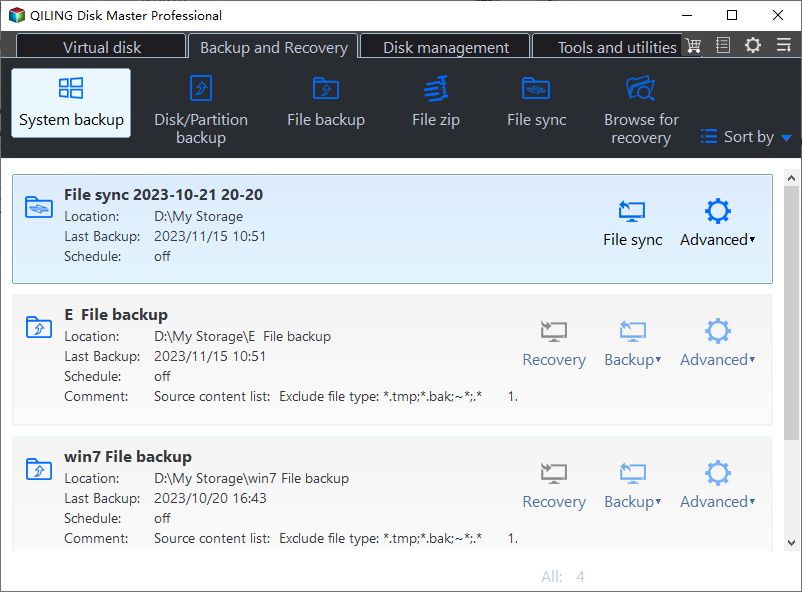
Step 2. Save the image to an external or separate physical disk, not a partition on the disk you will modify.
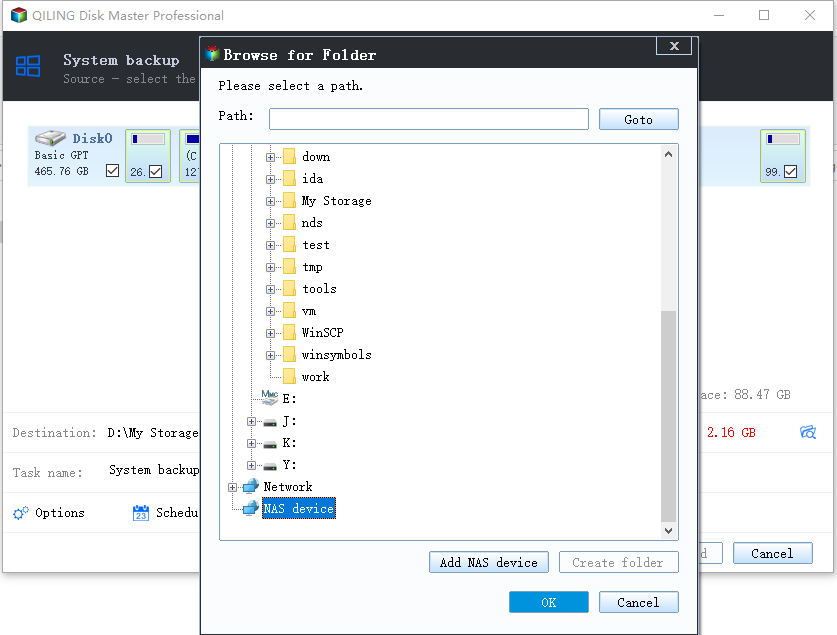
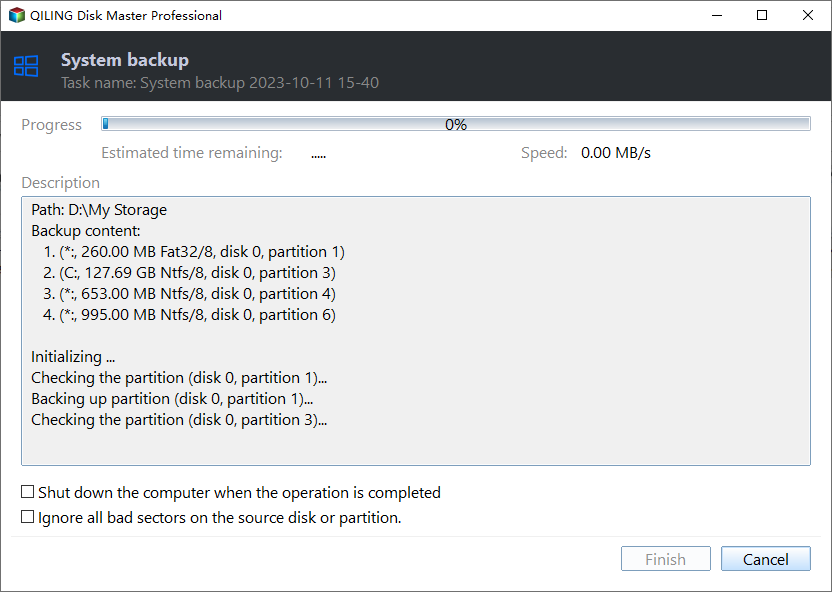
Step 3. Review the source and destination, click Proceed, and wait for the backup to finish. Locate the completed image and plan how you would restore it.
When to choose each
If you need AOMEI's edition-specific allocation feature and have confirmed it fits your layout, Partition Assistant may be suitable. If backup and disk management in one interface are important, consider Qiling. For either tool, describe your disk order first; a feature name alone cannot tell you whether the proposed change is safe or even possible.
Related Articles
- Qiling vs MiniTool Partition Wizard
See another Windows partition-manager comparison. - Move Unallocated Space Behind C Drive
Understand why partition order affects C-drive expansion.
Products
Articles & Tutorials
- Data Recovery
- Data Backup
- File Recovery
- File Backup
- System Backup and Restore
- Disk and Partition Clone
- Technical articles
- Mobile articles
- Disk Master Help
- Windows Data Recovery Tutorials
- Windows Secure Delete Tutorials
- Windows Partition Management Tutorials
- Windows File Backup and Restore Tutorials
- Windows System Backup and Restore Tutorials
- Windows Disk Backup and Restore Tutorials
- Windows Clone Tutorials