How to Troubleshoot Critical Process Died Error in Windows 10/8/7 (10 Solutions)
On this page, you will learn:
- 1. What is Critical Process Died error
- 2. How does Critical Process Died error occur
- 3. How to fix blue Critical Process Died on Windows 10/8/7
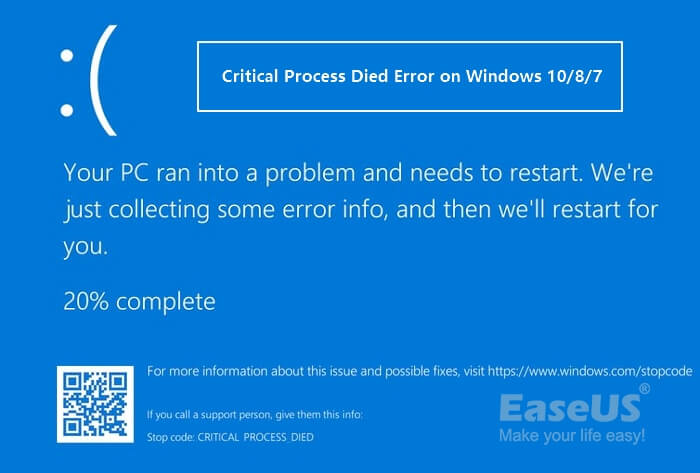
Quick Guide to Fix Critical Process Died Error on Windows 10/8/7
- Step 1. Reboot PC into Safe Mode or use Clean Boot.
- Step 2. Fix file system error using Qiling partition manager tool.
- Step 3. Update the disk driver.
- Step 4. Run antivirus.
- More details...
How Do I Fix Blue Critical Process Died Error on Windows 10/8/7?
"A Critical Process Died is a common error in Windows that occurs when a critical system process crashes. This can be caused by various factors such as driver issues, overheating, or corrupted system files. To resolve this issue, try restarting your PC, checking for driver updates, and running a System File Checker (SFC) scan. If the issue persists, you may need to reinstall your graphics drivers or even perform a System Restore to a previous point when your PC was working properly.Hey guys, do you have any clues about what is Critical Process Died error with error code - 0x000000EF or blue screen?
I received such an error code with a blue screen while I was playing a game on my computer, I was totally out of my mind. Can anyone of you offer me a solution to this problem? It would be highly appreciated if you do know how to fix this error."
If you encounter a sudden blue screen of death with a "Critical Process died" error on your computer, don't panic. To resolve the issue, check and follow the fixes to get rid of the critical process died error immediately.
| Workable Solutions | Step-by-step Troubleshooting |
|---|---|
| Fix 1. Reboot PC into Safe Mode | Restart Windows 10, press Shift + F8 to bring up the recovery mode...Full steps |
| Fix 2. Perform a Clean Boot | Type msconfig Type "msconfig" in the Search box and hit enter to open System Configuration...Full steps |
| Fix 3. Run CHKDSK to Fix File System | Open Command Prompt and Type chkdsk e: /f /r /x and hit Enter...Full steps |
| More Fixes | Run Qiling Partition Master > Right-click disk and select "Check File System"...Full steps |
Overview of Critical Process Died
This section covers two topics: understanding what "Critical Process Died" means and how this error occurs. You will learn about the definition of "Critical Process Died" and the circumstances that lead to this error, providing a comprehensive overview of the issue.
What Is Critical Process Died Error?
The Critical Process Died error occurs when a critical system process fails to run, causing the operating system to not boot up, resulting in a Blue Screen with error code 0x000000EF.
How Does Critical Process Died Error Happen?
The Critical Process Died error occurs when a critical component of Windows detects that data has been modified when it shouldn't have been, or when a process essential for running the Windows operating system, such as Windows 10/8/7, ends abruptly for some reason.
This error can be caused by a variety of factors, including a bad driver, a corrupted file system, or a memory error, and often occurs suddenly while users are working on their PC.
When Will This Error Occur?
The Critical Process Died error occurs when a critical process, such as Windows Explorer, fails to close properly, causing the system to become unstable and resulting in a Critical Process Died error. This can happen in various situations, including when a program or service crashes, when a system file becomes corrupted, or when a hardware issue occurs. In some cases, the error may be caused by a third-party program or driver that is not compatible with the system or is malfunctioning.
- Critical Process Died after Windows Update
- Critical Process Died when Wake PC from Sleep
- Critical Process Died after Login
- Critical Process Died while Gaming
- Critical Process Died on Startup
- Critical Process Died with Windows 10 restarting repeatedly
Finding a solution for the Critical Process Died error in Windows 10/8/7 is crucial for users experiencing this issue. Qiling provides practical solutions to fix the Windows 10/8/7 Critical Process Died error with 0x000000EF code, helping users resolve the problem on their computers.
10 Solutions to Fix Critical Process Died Error on Windows 10/8/7
If you're seeing a blue screen with the message "Your PC ran into a problem and needs to restart. We're just collecting some error info, and then we'll restart for you," it's likely a minor glitch that can be resolved by simply restarting your PC. This error is often caused by a software issue or a minor hardware problem, and a simple reboot can resolve the issue.
To resolve the Critical Process Died error on your Windows 10/8/7 computer, try one of the practical fixes listed here. You can pick up the solution that suits you best to get rid of this issue on your PC now.
- #1. Reboot PC into Safe Mode
- #2. Use Clean Boot
- #3. Run CHKDSK to Fix File System
- #4. Use File System Error Checker - Qiling Partition Master
- #5. Run SFC Command
- #6. Use DISM Command
- #7. Update Disk Driver
- #8. Run Antivirus Software
- #9. Uninstall Recent Windows Update
- #10. Perform System Restore
Solution 1. Reboot PC into Safe Mode
To reboot your Windows 10 PC into Safe Mode, follow these steps: Restart your PC and immediately start tapping the F8 key. This will open the Advanced Boot Options menu.
To fix the Critical Process Died error, start by booting up your PC. Then, follow these steps:
Step 1. To restart Windows 10 and access the recovery mode, press Shift + F8 while the computer is booting up. This will bring up the recovery mode, allowing you to troubleshoot and repair the operating system.
Step 2. Go to Advanced Boot Options and set boot mode as Safe Mode.
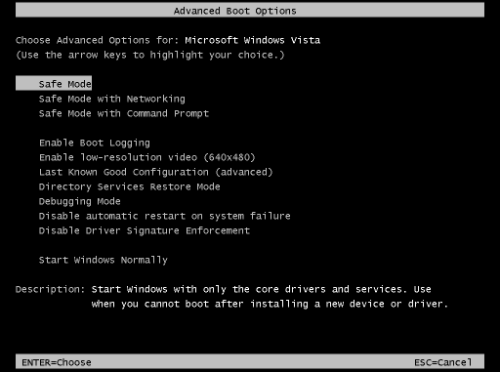
To resolve the issue, you can try restarting your PC several times, then enter the Troubleshoot menu, select Advanced Options, choose Startup Settings, restart your PC again, and finally enable Safe Mode. This should help you troubleshoot and potentially resolve the issue.
Step 3. Save the changes and then startup Windows PC.
Solution 2. Perform a Clean Boot
After booting up your PC from Safe Mode, you can proceed to configure a Clean Boot in System Configuration.
Here are the steps:
Step 1.To open System Configuration, type msconfig in the Search box and hit enter.
Step 2. To start your computer in a selective startup, go to the General tab in the System Configuration Utility, check the boxes next to "Load system services" and "Load startup group" under the Selective startup section.
- "Load system services"
- "Use original boot configurations"
Step 3. Click "OK" to confirm.
Step 4. To disable all Microsoft services, go to the Services tab, check the box next to "Hide all Microsoft services" and click "Disable all".
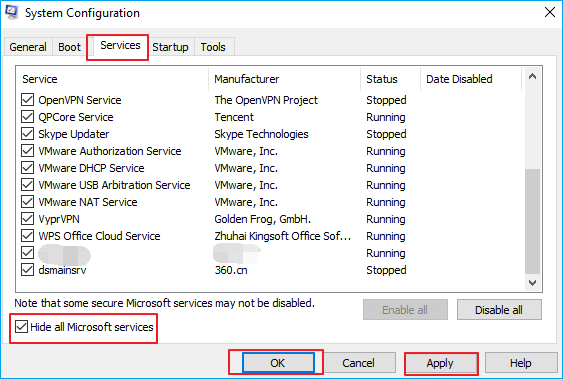
Step 5. Click "OK" and "Apply" to save the changes, then restart the PC.
Solution 3. Run CHKDSK to Fix File System Error
You can try to fix a Critical Process Died error on your PC by booting into safe mode and running the CHKDSK command to check and repair file system errors on the system hard drive. This may resolve the issue and allow your PC to boot normally again.
Step 1.To run the Command Prompt as Administrator, first type cmd in the Search box. Then right-click on Command Prompt in the search results and select "Run as Administrator".
Step 2.Type diskpart and hit Enter to bring up DiskPart window.
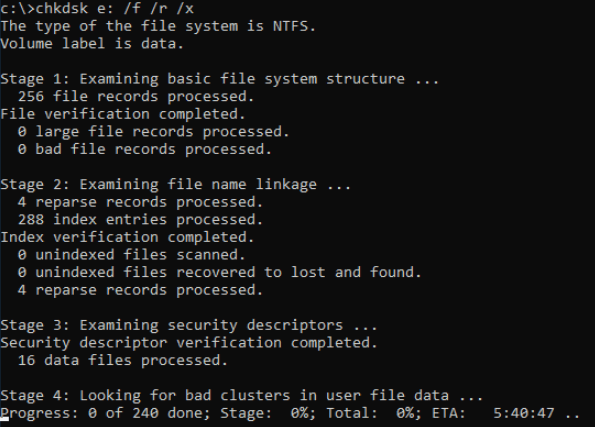
Step 3. You can run the built-in Windows utility chkdsk by typing the command "chkdsk e: /f /r /x" in Command Prompt, replacing "e:" with the drive letter of your system drive or disk, and then pressing Enter. This will run a thorough check on the disk, fixing any errors it finds, and then prompt you to restart your computer. The /f option tells chkdsk to fix any errors it finds, the /r option tells it to locate bad sectors and recover readable information from them, and the /x option forces chkdsk to dismount the volume before scanning it.
Solution 4. Use File System Error Checker - Qiling Partition Master
To fix file system errors that cause Critical Process Died issue on Windows, you can use Qiling Partition Master Free, which allows you to check and fix system file errors with ease.
Here are the steps to check and fix errors under Windows 10/8/7:
Step 1. Click the target partition that has a problem.
Step 2. Choose "Advanced" > "Check File System".
Step 3. In the Check File System window, select the "Fix the error on the disk" option.
Step 4. Click "Proceed" to check errors on your partition.
Solution 5. Run SFC Command
To resolve a Critical Process Died issue on your computer, you can run the SFC command to scan and replace corrupted system files, which may have contributed to the error. This command can help identify and fix any issues with system files, potentially resolving the Critical Process Died issue.
Here are the steps:
Step 1.To run the Command Prompt as an administrator, type cmd in the search box, right-click on the Command Prompt result, and select "Run As Administrator".
Step 2. At the command prompt, type sfc /scannow and hit Enter.
The SFC utility will run for a while and on discovering any corruption or error, it will replace them on reboot, fixing any issues.
Solution 6. Use DISM Command
The DISM command is more advanced than the SFC command in fixing disk errors, as it can check and restore system health.
To fix the Critical Process Died error on a Windows PC, you can run the DISM (Deployment Image Servicing and Management) command to check and fix any corrupted system files. Open Command Prompt as Administrator, type the following command and press Enter: `dism /online /cleanup-image /restorehealth` .
Step 1. Open Command Prompt as Administrator.
Step 2. You can check the system health by running the command `systemctl status` and hitting Enter. Then, run `systemctl status systemd-journald` and hit Enter again.
dism /online /cleanup-image /scanhealth
dism /online /cleanup-image /checkhealth
dism /online /cleanup-image /restorehealth
Step 3.Type DISM /Online /Cleanup-Image /RestoreHealthand hit Enter.
After making these changes, exit Command Prompt and restart your PC to keep the changes. If you successfully boot up your PC, you've successfully resolved the error.
Solution 7. Update Disk Driver
If your system disk driver is outdated, it may cause Windows boot-up issues, including the Critical Process Died error. To resolve this, you can try updating the disk driver by following these steps.
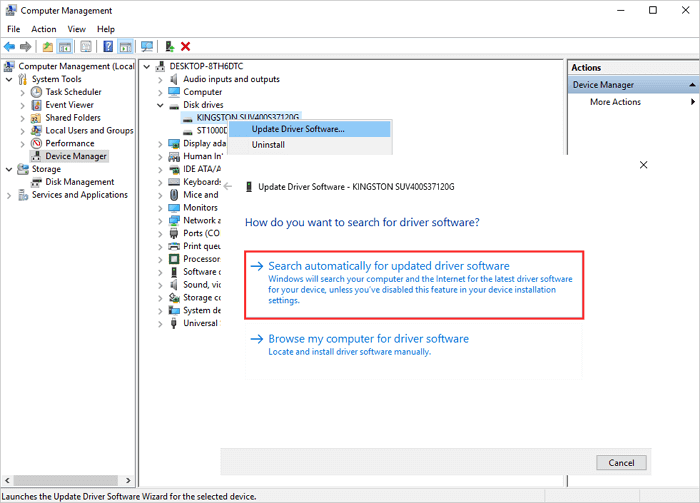
Step 1. Right-click This PC, click "Manage". Go to Device Manager.
Step 2. To update your disk driver, double-click on "Disk driver" to expand it, then right-click on your disk driver and select the option to "Update Driver Software".
Step 3. Click on the "Search automatically for updated driver software" option in the pop-up window.
The computer will search for and install the latest driver software, which may take a few minutes to complete. Once the installation is finished, the computer will restart to apply the changes.
Solution 8. Run Antivirus Software
To fix system boot issues and OS crash errors on Windows 10/8/7, running antivirus software can be a helpful regular solution, as it can detect and remove viruses or malware that may be causing the problem.
Or you can use Windows' built-in antivirus too - Windows defender for help:
Step 1. To open Windows Defender, go to Start, type "Windows Defender" and click to open the Windows Defender Security Center.
Step 2. Click the Shield icon on the left pane, then click "Advanced scan".
Step 3. Check "Full scan" and click "Scan now" to run antivirus.
Note that the steps may vary if you are using a different Windows OS version, but most operations are similar.
Solution 9. Uninstall Recent Windows Update
Windows users, particularly those with Windows 10, may encounter a "Critical Process Died" error, which can often be resolved by uninstalling the most recent Windows update.
Here are the steps for you to go:
Step 1. Go to Settings > Update & Security > Windows Update.
Step 2. Click "View update history" under Windows Update.
Step 3. Click "Uninstall updates".
Step 4. To uninstall updates, select the update(s) that you want to remove and click the "Uninstall" button.
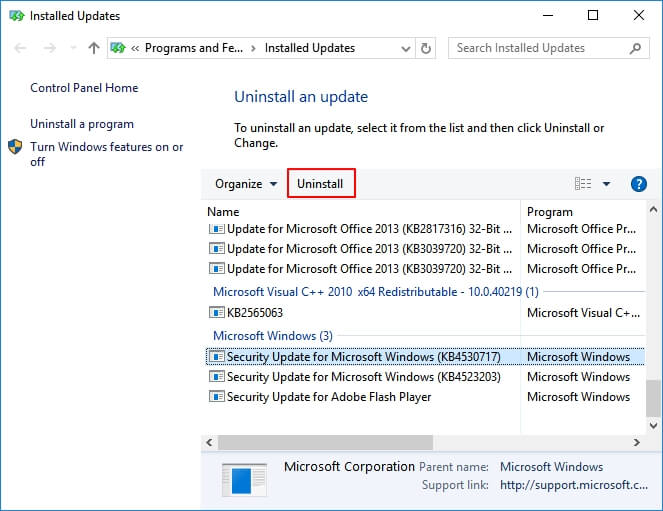
To resolve the error, follow the on-screen instructions to complete the process, then restart your PC to see if the issue has been resolved.
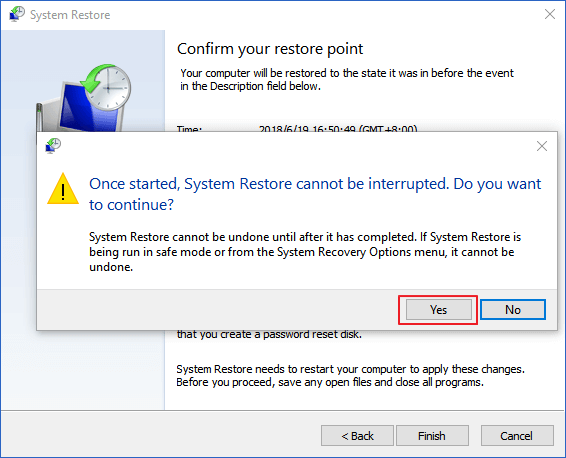
Solution 10. Perform System Restore
Here are the steps to run system restore:
Make sure to back up any new data you've created on your computer to an external hard drive before taking any further steps.
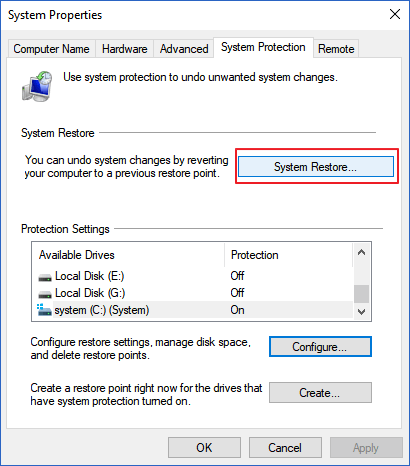
Step 1. To create a restore point in Windows, open the Start menu and search for "Create a restore point" in the search box. Click on the top result to open the "System Properties" window.
Step 2. To restore your computer to a previous state, click the System Restore button to view all the restore points you've created.
Step 3. After clicking "Next", select the restore point that you want to use and restore on your PC.
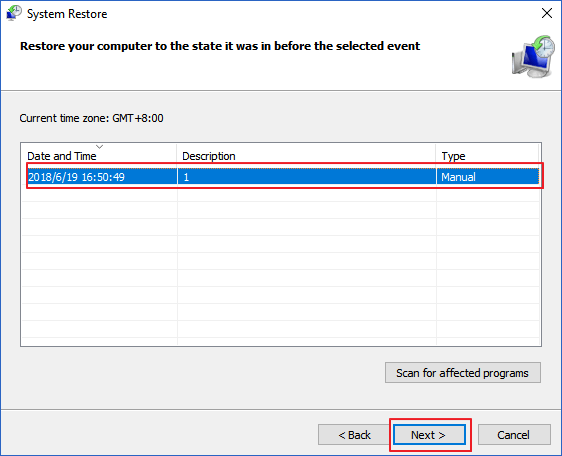
Step 4. To confirm the restore point, click "Finish" and then click "Yes" to execute the System Restore on your PC.
Conclusion
On Windows PC, the Critical Process Died error occurs randomly, and its causes are not well understood. To troubleshoot this issue, it's recommended to create a system backup in advance, as the error can come out unexpectedly.
To create a Windows 10 backup system image, you can use the built-in tool "Backup and Restore (Windows)" or third-party software. The system image will include all installed programs, settings, and files, allowing you to restore your system to its current state in case of a disaster.
To resolve the internal file system error on your computer drive, start by booting your PC in safe mode. Next, use Qiling Partition Master to correct the issue.
If you're experienced in computer management, you can also use CHKDSK, SFC, and DISM commands to troubleshoot and resolve the Critical Process Died error. These commands can help identify and fix system file corruption, which may be contributing to the error.
Related Articles
- FIX: Missing Operating System (Operating System Not Found) for Windows 10/8/7/XP/Vista
- How to Install Windows 11/10 on External Hard Drive [2 Ways]
- [Fixed] Windows Cannot be Installed to This Disk. The Selected Disk is of the GPT Partition Style
- How-to: Create USB Bootable Partition Manager to Manage Partitions Safely
- Top 5 Free Disk Formatter Recommend for Windows & Mac
To format your SD card, you can use the built-in formatting tools on your device or computer. On Windows, you can right-click on the SD card drive, select “Format,” and follow the prompts. On Mac, you can use Disk Utility to format the SD card. - Blue Screen While Playing Games? 2024 Fixes Here
If your computer crashes with a blue screen while playing games, there are several solutions you can try. One approach is to use automatic repair tools, such as Windows' built-in diagnostic and repair tools, to identify and fix the problem.
Products
Articles & Tutorials
- Data Recovery
- Data Backup
- File Recovery
- File Backup
- System Backup and Restore
- Disk and Partition Clone
- Technical articles
- Mobile articles
- Disk Master Help
- Windows Data Recovery Tutorials
- Windows Secure Delete Tutorials
- Windows Partition Management Tutorials
- Windows File Backup and Restore Tutorials
- Windows System Backup and Restore Tutorials
- Windows Disk Backup and Restore Tutorials
- Windows Clone Tutorials