Easy Way to Install Windows 11/10 on SSD
| Workable Solutions | Step-by-step Troubleshooting |
|---|---|
| To install Windows 10 on an SSD using OS Migration-Partition Manager, you can simply install the software, connect the SSD, and let the tool migrate the operating system to the new drive, effectively replacing the old hard drive with a faster SSD. This process is often referred to as a "clean install" and can be a great way to breathe new life into an old computer. By using this method, you can enjoy the benefits of a faster and more efficient operating system without having to reinstall all of your programs and settings. | Step 1: Select "Migrate OS" from the top menu. Select the SSD or HDD as the destination disk and click "Next"...Full steps |
| To reinstall Windows 10 on an SSD using the Windows 10 installation media, follow these steps: Create a bootable USB drive with the installation media, insert the drive into the computer, and restart it. Then, follow the on-screen instructions to select the language, time, and keyboard input method. Next, click on "Next" to proceed with the installation. | Step 1: Remove the old HDD and connect the new SSD to your computer; Step 2: Insert the bootable USB flash drive...Full steps |
What's the Best Procedure to Install Windows 11/10 on SSD?
To transfer your Windows 10 OS from the old 1TB WD hard drive to the new SSD, you can use a tool called Qiling Disk Master. These tools allow you to clone the entire OS, including the operating system files, from the old hard drive to the new SSD. This way, you can easily transfer the OS without having to reinstall it, and the new SSD will become the boot drive. You can also use the built-in Windows feature called "System Image Backup" to create a backup of your current OS on the old hard drive, and then restore it to the new SSD. This method is also easy and straightforward. Either way, you'll be able to keep your current OS and settings, and the new SSD will become your primary boot drive.
You can install Windows 10 on an SSD in two ways: cloning the existing Windows installation from the source drive to the target drive, or reinstalling Windows 10 on the SSD from scratch. Both methods are viable, but cloning is generally the recommended approach as it is the most straightforward and time-efficient way to get Windows 10 up and running on your SSD.
If you want to reinstall Windows 10 on an SSD, you'll need to consider a few things. If you're upgrading from a previous Windows version, Windows 10 is free. However, if you want a fresh install, you'll need a legitimate product key for Windows 10. Alternatively, you can clone the system partition to the SSD using a simple process to transfer Windows 10 OS to the new drive.
#1. How to Install Windows 10 on SSD by OS Migration
To install Windows 10 on an SSD, you'll need a partition manager, such as Qiling Partition Master, to help you migrate your old Windows system to the new SSD. You can either install the old Windows system on the SSD and then upgrade to Windows 10, or migrate the new Windows 10 partition to the SSD after a successful upgrade. This magic partition tool allows you to install Windows 10 on SSD from HDD/SSD within just a few clicks.
Note:The process of migrating an operating system to an SSD or HDD will erase and remove existing partitions and data on the target disk if there's insufficient unallocated space, which means important data saved there will be lost. To avoid this, it's recommended to back up important data to an external hard drive beforehand.
Step 1. Select "Migrate OS" from the tools page.
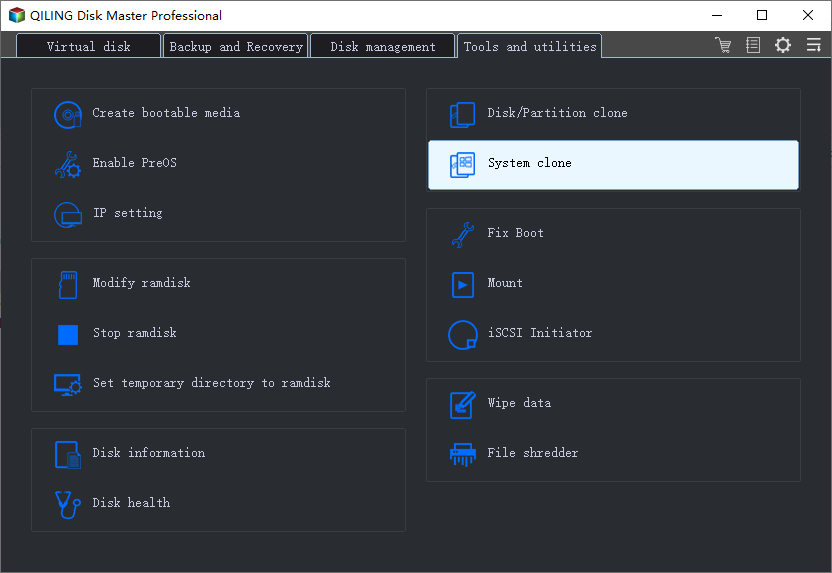
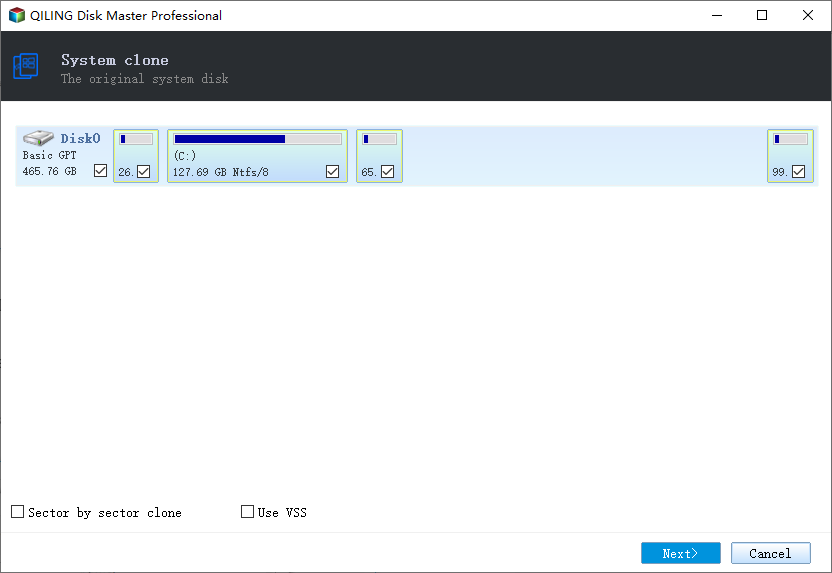
Step 2. The system partition will be selected automatically, and then click "Next".
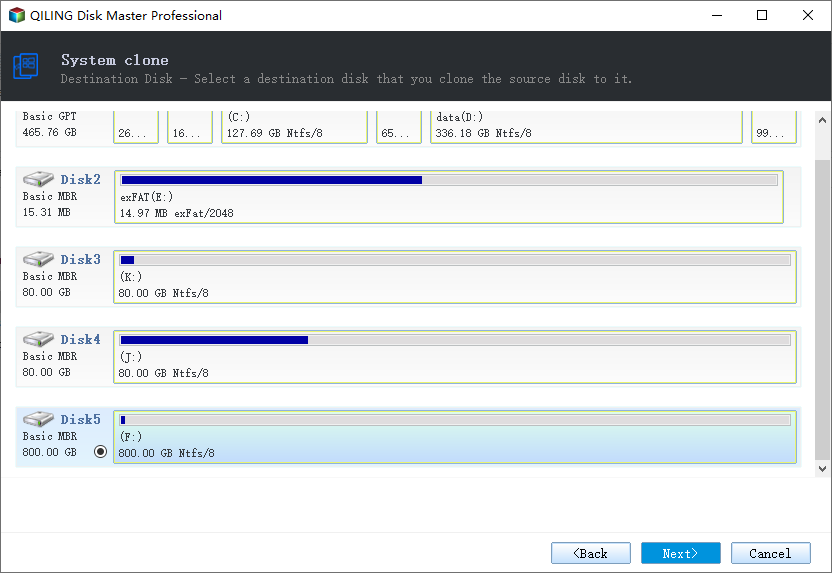
Step 3. Select the SSD or HDD as the destination disk and click "Next".
Step 4. Preview the layout of your target disk, and optionally customize it. Then click "Proceed" to begin migrating your OS to the new disk.
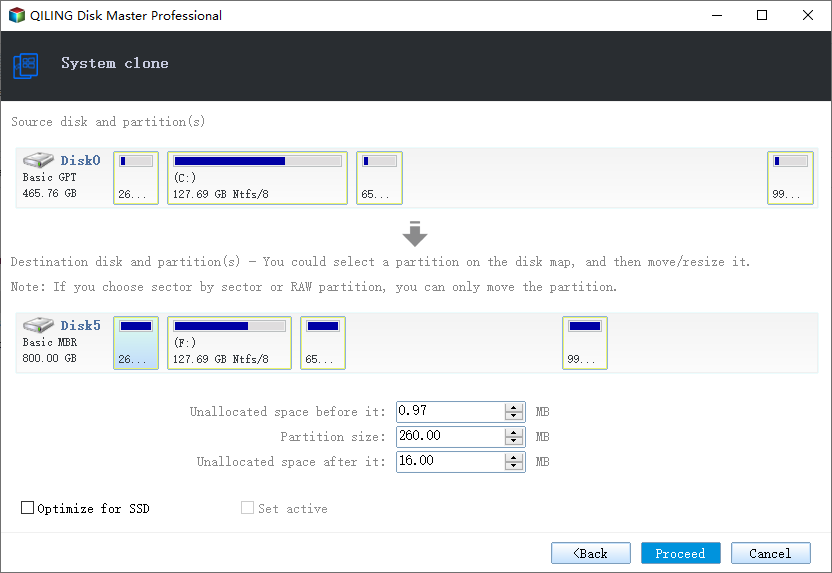
Step 5. To proceed with the disk resizing, click "OK" to acknowledge the warning message. This will initiate the process of deleting data and partitions on the target disk, which will be completely erased. It's crucial to have backed up any vital data beforehand, as it will be lost in the process. If you haven't already, take this opportunity to back up your important files. Once you've confirmed, the resizing process will begin.
#2. How to Reinstall Windows 10 on SSD by Windows 10 Installation Media
Sometimes you need to start fresh with a new Windows 10 installation, often due to a crashing or freezing current OS. With careful preparation and following a guide, you can install a fresh OS on a new SSD, making it possible to do it on your own.
- Important
- Instead of copying the old OS from the HDD, it's recommended to perform a clean install of Windows 10 on the SSD for a smoother and more efficient user experience.
To reinstall Windows 10 on an SSD manually, you'll first need to create a bootable installation media, such as a USB flash drive or CD/DVD disc, using the Media Creation Tool.
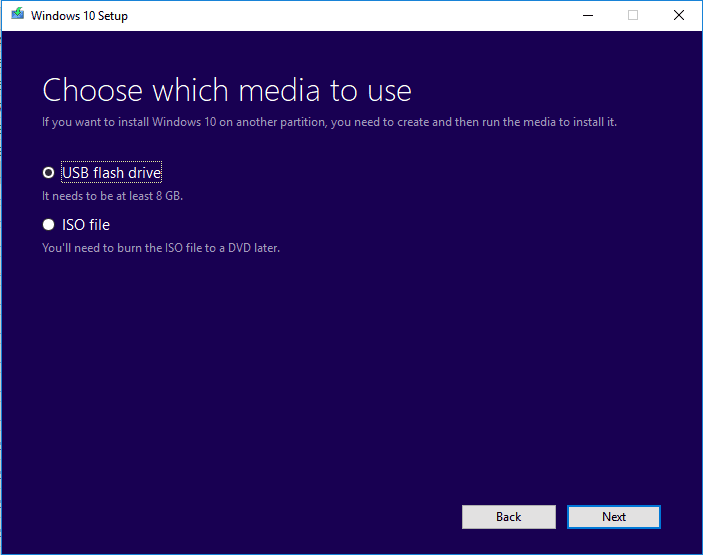
With the bootable installation media created, proceed to the detailed steps to reinstall Windows 10 on your SSD. To do this, insert the installation media into your computer, restart it, and enter the BIOS settings.
Step 1.Remove the old hard drive and connect the new solid-state drive to your computer.
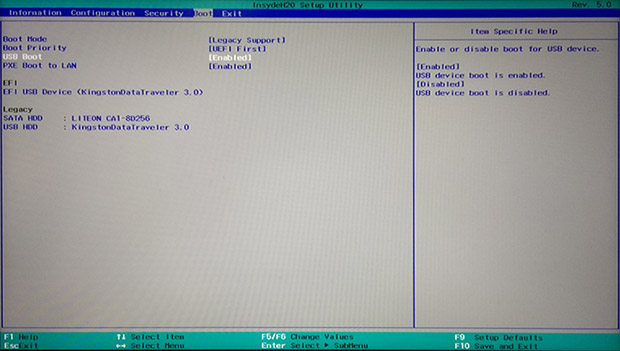
Step 2.Insert a bootable USB flash drive, change the computer's boot order to the USB drive in BIOS settings, and ensure the PC boots from the installation media to start the installation process.
Step 3.To avoid issues during the installation process, skip the steps that ask for a product key and select the option "I am Reinstalling Windows 10 on this PC". This will allow your PC to activate automatically using a digital entitlement stored on Microsoft servers.
Step 4.During installation, your system will automatically reboot. After the reboot, you may need to adjust your BIOS settings to prioritize booting from the new SSD. This ensures the installation process doesn't restart. Keep the installation media plugged in until the process is complete.
Step 5.When Windows 10 installation is complete, shut down your computer and remove the installation media. Next time you start your computer, it will automatically boot from the new SSD.
What If You Cannot Install Windows 11/10 on SSD?
If you're trying to reinstall Windows 10 on an SSD using the installation media, you might encounter some unexpected error messages that prevent the OS from being installed on the selected drive.
1. Can't install Windows 10 on a new SSD
For a new SSD that hasn't been initialized, you'll need to connect it to your computer and initialize it as either MBR or GPT, after which you can install an operating system on it.
2. Windows cannot be installed on this disk. The selected disk is of the GPT partition style.
The error message "Windows cannot be installed onto this disk" may appear due to hardware incompatibility, and can be resolved by enabling the disk's controller in the computer's BIOS menu, as described in the article "how to fix Windows cannot be installed to this disk".
You can easily fix issues like an uninitialized SSD or a GPT partition style disk using Qiling Partition Master, and then proceed with installing Windows 10 on the SSD without any hassle.
Related Articles
- Format to FAT32 for USB or External Hard Drive in Windows 10
- How Do Experts Free Disk Space in Windows Server in 2022 [5 Ways]
- SSD Slow Boot Windows 11 | Boot Windows 11 from SSD
- How to Format SSD for Windows & Mac Installation
- How to Transfer Files from PC to PC Using OneDrive
This post covers the step-To transfer files from one PC to another using OneDrive, follow these steps: first, sign in to OneDrive on both PCs with the same Microsoft account; next, move the files you want to transfer to the OneDrive folder on the source PC; then, on the destination PC, open... - How to Migrate Windows 7 to SSD in Two Easy Ways
How to migrate Windows 7 to SSD? How to move Windows 7 from HDD to SSD without reinstalling Windows? This article shows you two easy ways to upgrade OS hard disk to SSD without boot problem.
Products
Articles & Tutorials
- Data Recovery
- Data Backup
- File Recovery
- File Backup
- System Backup and Restore
- Disk and Partition Clone
- Technical articles
- Mobile articles
- Disk Master Help
- Windows Data Recovery Tutorials
- Windows Secure Delete Tutorials
- Windows Partition Management Tutorials
- Windows File Backup and Restore Tutorials
- Windows System Backup and Restore Tutorials
- Windows Disk Backup and Restore Tutorials
- Windows Clone Tutorials