Move Recovery Partition to End of Disk in Windows
A recovery partition is often placed after the C drive. When unallocated space is behind that recovery partition, Disk Management may not let you extend C drive because the free space is not adjacent.
Understand the Windows Disk Layout First
Windows usually uses several small partitions besides C drive, such as EFI System Partition, Microsoft Reserved Partition, and Recovery Partition. Disk Management can shrink and extend some volumes, but it cannot freely move a recovery partition. That is why C drive may remain blocked even when the disk has enough free space.
Before moving anything, check whether BitLocker is enabled and suspend it if needed. Also make sure the PC is connected to power, because an interrupted partition move can damage the file system.
Should You Move or Delete the Recovery Partition?
Moving is safer when you still want Windows recovery options. Deleting may free space, but it can remove local recovery features. Back up important data before changing any partition layout.
Move the Recovery Partition with Qiling Disk Master
Step 1. Open Qiling Disk Master and choose the partition management tool.
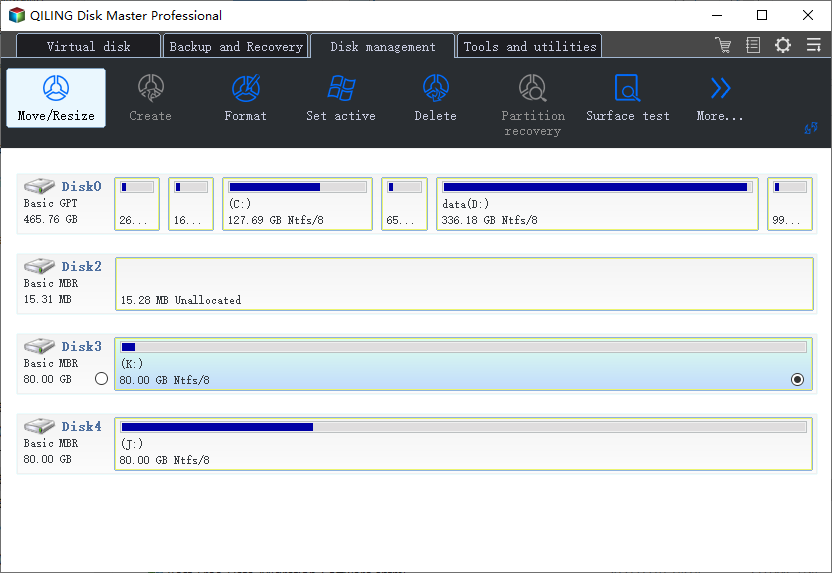
Step 2. Select the recovery partition. Use resize or move to place it after the unallocated space or at the end of the disk.
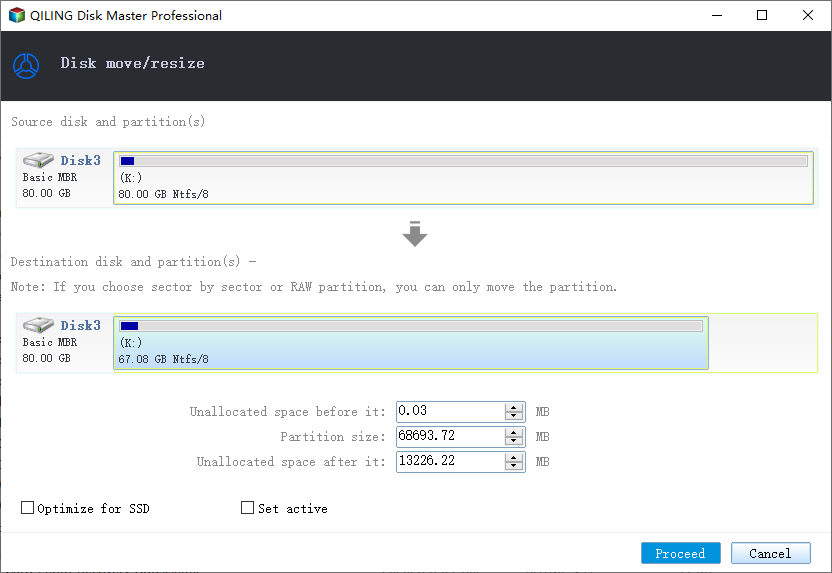
Step 3. Extend the C drive into the adjacent unallocated space if that is your goal.
Step 4. Preview the pending operations carefully, then click Proceed.
After Moving the Partition
Restart Windows if required and check whether C drive has the expected size. Also confirm that Windows recovery options still open correctly.
Conclusion
Moving the recovery partition to the end of the disk can solve the common problem where C drive cannot be extended. Keep a backup and review the layout before applying changes.
Related Articles
Products
Articles & Tutorials
- Data Recovery
- Data Backup
- File Recovery
- File Backup
- System Backup and Restore
- Disk and Partition Clone
- Technical articles
- Mobile articles
- Disk Master Help
- Windows Data Recovery Tutorials
- Windows Secure Delete Tutorials
- Windows Partition Management Tutorials
- Windows File Backup and Restore Tutorials
- Windows System Backup and Restore Tutorials
- Windows Disk Backup and Restore Tutorials
- Windows Clone Tutorials