SD Card Benchmark for Raspberry Pi on Windows
A Raspberry Pi depends heavily on its microSD card. A slow or unstable card can make booting, updates, and projects feel unreliable even when the board is fine.
This guide explains how to test a Raspberry Pi SD card from Windows, what the numbers mean, and how to prepare a better card without risking the current image.
PAGE CONTENT
- What This Problem Means
- Before You Start
- Use Windows Built-in Tools First
- Use the Qiling Product Workflow
- Check the Result
- FAQs
What This Problem Means
Benchmarking shows whether the card can handle random reads and writes, not just the large sequential speed printed on the package.
- Low random write speed can make Raspberry Pi OS freeze during updates.
- Fake-capacity cards may corrupt files after they pass simple copy tests.
- A nearly full or worn card can slow down even if it was fast when new.
- Testing before cloning helps you decide whether the card should be replaced.
- 顦?/i> Important
- If the card contains a working Raspberry Pi system, create an image backup before formatting, resizing, or rewriting it.
Before You Start
Use a reliable card reader and cancel any Windows prompt that asks to format Linux partitions.
- Confirm the exact disk, partition, USB drive, SD card, or Windows installation you are changing.
- Copy irreplaceable files to another drive if the device is still readable.
- Check whether BitLocker, Secure Boot, UEFI/Legacy mode, or a vendor recovery partition is involved.
- Avoid formatting, deleting, wiping, or running DiskPart clean until you know whether data must be recovered first.
Use Windows Built-in Tools First
Windows can confirm capacity and run speed checks before you use the card again.
Step 1. Insert the card into a USB 3.0 reader and open Disk Management to verify capacity and partitions.
Step 2. Run a trusted benchmark tool with a small test size first to reduce card wear.
Step 3. Record sequential read/write and random 4K results.
Step 4. Retest with another reader or port if the result is far below the card rating.
Step 5. Back up or clone the card before formatting it for a fresh Raspberry Pi OS installation.
Detailed Qiling Disk Master Workflow
Use Qiling Disk Master when Disk Management cannot finish the operation, the option is grayed out, or you need a clearer preview before changing a partition. Back up important files before resizing, formatting, converting, or deleting anything.
Step 1. Open Qiling Disk Master and locate the target disk or partition. Confirm the drive letter, capacity, file system, and position.
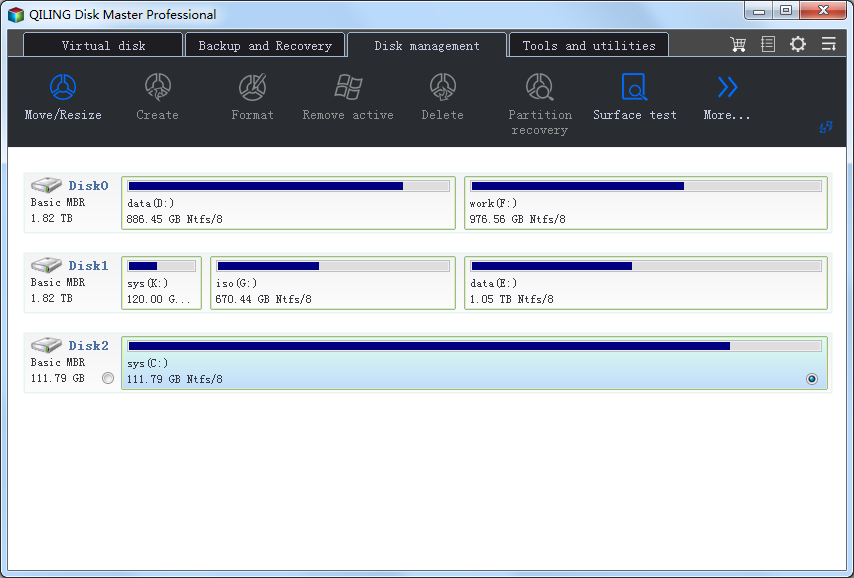
Step 2. Select the required task, such as resize/move, create, format, check partition, convert disk, or change a drive property.
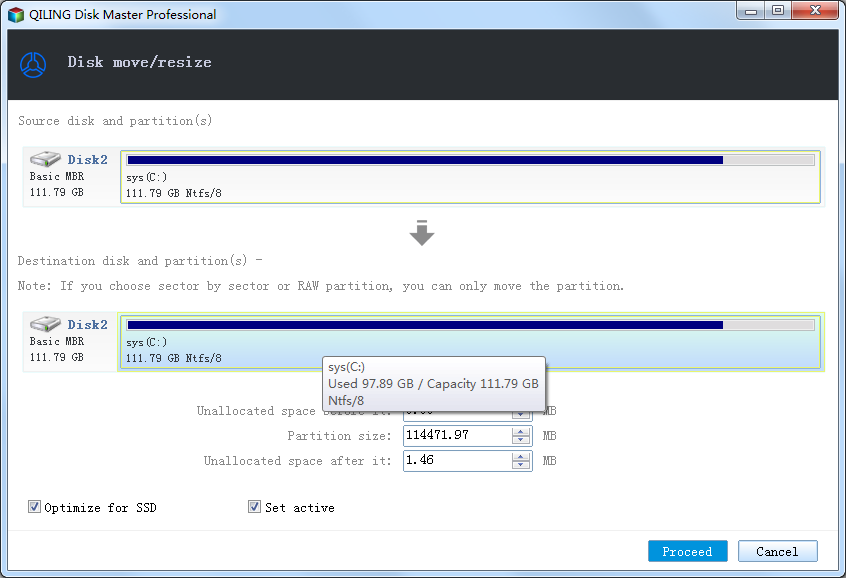
Step 3. Configure the operation. For resize, drag the partition border or enter the size. For format, choose the file system and label. For checking, choose disk health or partition check.
Step 4. Preview the pending operation list. Make sure EFI, System Reserved, Recovery, and data partitions still appear correctly.
Step 5. Click Proceed and keep the computer powered on until the operation completes.
Step 6. Restart if prompted, then reopen Disk Management and File Explorer to verify the result.
Check the Result
Boot the Raspberry Pi and watch for file system errors, update failures, or sudden read-only behavior.
- Restart Windows and confirm the drive, partition, backup task, or cloned disk appears as expected.
- Open several files instead of only checking that a drive letter exists.
- Keep one recent backup on an external drive before making another high-risk change.
- If the same error returns, check hardware health, cable quality, firmware, and Event Viewer before repeating the same operation.
FAQs
What speed matters most for Raspberry Pi?
Random read and write speed matters most because the OS writes many small files.
Can I benchmark without erasing the card?
Yes, but back up a working card before heavy write tests.
Should I clone a slow card to a faster one?
Yes, if the old card is readable. Clone first, then expand the file system if needed.
Conclusion
A good Raspberry Pi card should be genuine, reliable, and strong at random I/O. Test it in Windows, back it up, and use Qiling Disk Master when you need to inspect or prepare the layout.
Related Articles
- Best Free Partition Manager Software of 2026
- How to Clone HDD to SSD in Windows 10/11/7
- Windows System Backup and Restore Tutorials
- Windows Data Recovery Tutorials
Products
Articles & Tutorials
- Data Recovery
- Data Backup
- File Recovery
- File Backup
- System Backup and Restore
- Disk and Partition Clone
- Technical articles
- Mobile articles
- Disk Master Help
- Windows Data Recovery Tutorials
- Windows Secure Delete Tutorials
- Windows Partition Management Tutorials
- Windows File Backup and Restore Tutorials
- Windows System Backup and Restore Tutorials
- Windows Disk Backup and Restore Tutorials
- Windows Clone Tutorials