Free Download WD Quick Formatter to Format External Drive in Windows 11/10/8/7
Download WD Quick Formatter Alternative to Format External Hard Drive
- 1. Launch Qiling Partition Master and right-click the partition on your external hard drive, then choose the Format option.
- 2. Assign a new partition label, file system, and cluster size to the selected partition.
- 3. Click the "Proceed" button to start formatting your WD hard drive.
Everything About Wd Quick Formatter - Wd External Hard Drive Format Tool
WD Quick Formatter, also known as WD Advanced Format Utility, is a tool that allows you to reformat your WD external hard drive to NTFS, FAT32, or other file systems in Windows 11/10/8/7. It's typically used to repair corrupted hard disks that are unrecognized or inaccessible, fix format issues when Windows can't complete the format, change file systems, or optimize drive performance. However, it's essential to note that WD Quick Formatter is only for external drives and will result in a single partition on the drive after formatting, which is necessary for optimal performance.
Part 1. How to Reformat WD External Hard Drive Using WD Quick Formatter
WD Quick Formatter is available on the Western Digital official website and can be used to repair a corrupted external hard disk. The typical symptoms of a corrupted external hard disk include the power LED being on but the drive being inaccessible, accompanied by error messages.
- You need to format the disk before you can use it.
- Drive X: is not accessible. Access is denied.
To get access to your external hard drive, the most effortless way is to format it using the WD Quick Formatter. To do this, follow the steps: 1. Download and install WD Quick Formatter on your computer.
Step 1. Connect your WD external hard drive to your Windows PC and download the WD Quick Formatter to format it.
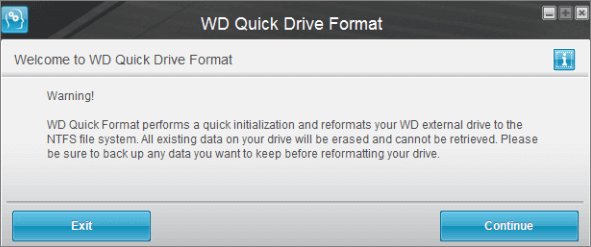
Step 2. Click "Continue" on the welcome screen to proceed to the next step.
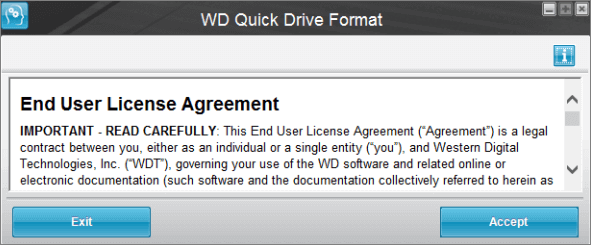
Step 3. In the End User License Agreement page, click "Accept".
Step 4. The WD Quick Formatter tool will scan for WD external drives to be formatted.
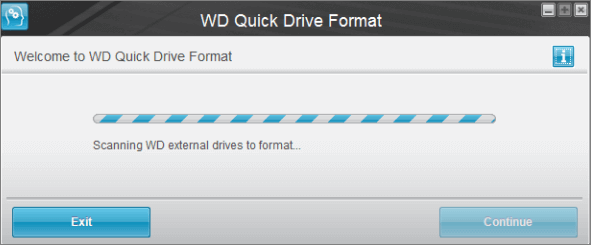
To format a drive for use with a Windows system, select the XP Compatible option if the computer is running XP, or select the corresponding option for Windows 11/10/8/7. If the drive won't be used with Windows, choose Factory Default. Then, select the drive from the list and click "Format Drive".
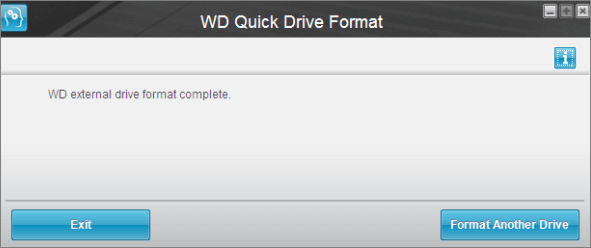
Step 5. Once the Format is completed, click the "Format Another Drive" button to select another drive to format, or click the "Exit" button to exit the program.
Also read: How to Format WD My Passport for Mac and PC
Part 2. Format Wd External Hard Drive Using Qiling Free Partition Software
If WD Quick Formatter fails to format your WD external hard drive due to errors, a reliable alternative is Qiling, a free partition tool that can successfully complete the disk formatting job in Windows 11/10/8/7. Many users have used this tool to format their WD external drives when the WD Quick Formatter tool failed.
- Right-click the external drive or USB you intend to format and choose "Format".
- Set the Partition label, File system (NTFS/FAT32/EXT2/EXT3/EXT4/exFAT), and Cluster size, then click "Proceed".
- Click "OK" to format the hard drive partition.
Conclusion
If WD Quick Formatter fails to format an external drive, you can try using Qiling Partition Master, a free alternative that can format HDD, SSD, SD card, or USB drive.
| Comparison | Qiling Partition Master | WD Quick Formatter |
|---|---|---|
| Supported Device | HDD, SSD, external hard drive, USB, SD card, etc | Only external hard drive |
| Supported Operating Systems | Windows XP - Windows 11/10 | macOS 10.5-10.9 &Windows XP/2000 |
| Interface | New and user-friendly | old-fashioned |
| Easiness | Very easy | A little bit hard |
| Other features | Partition a hard drive, migrate OS, wipe data, clone a hard drive | / |
WD Format Tool Frequently Asked Questions
If you have other questions about the Western Digital format tool, you can read the questions and answers below.
How do I check my WD firmware version?
Your firmware version can be found by accessing the device's web interface and locating the Firmware section.
How do I reformat a WD external hard drive on Mac?
Step 1. Connect WD My Passport to your Mac.
Step 2. Once that's done, double left-click on the Mac HD, the internal Mac hard drive visible on the top-right corner of the desktop screen, and select "Applications > Utilities > Disk Utility".
Step 3. Select your WD My Passport on the sidebar, choose "Erase".
Step 4. To format a drive, select the drive you want to format, click on the "Format" button, select the desired file system (such as MS-DOS (FAT) or ex-FAT File System), and then click "Erase" to complete the formatting process.
How do I update my WD firmware?
- 1. Connect your computer to the My Passport Wireless Wi-Fi network, then select your current firmware in the My Passport app.
- 2. Using a web browser, open the My Passport Wireless dashboard.
- 3. Go to Firmware Tab.
- 4. Under the section Auto Update.
- 5. Confirm the upgrade by clicking OK in the pop-up.
How do I format my WD external hard drive for Windows 11/10?
Step 1. To format a WD My Passport, open Windows File Explorer, locate the drive, right-click on it, and select "Format" from the context menu. This will open the Format dialog box where you can choose the file system and other settings.
Step 2. The drive should be renamed and its file system should be reset to FAT32 or exFAT.
Step 3. Click "Start" to begin the formatting.
Which is better exFAT or NTFS?
NTFS is ideal for internal drives, while exFAT is ideal for flash drives, both with no realistic file-size or partition size limits. If a device is not compatible with NTFS, exFAT is a good alternative to FAT32.
Related Articles
- Repair and Restore Not Working/Failed/Dead SSD
- [Solved] Antimalware Service Executable High Disk Usage Windows 11/10 2022
- FREE MBR Repair Tool: How to Fix MBR on Internal and External Hard Disk
- How Long Does It Take to Format a Hard Drive? Hard Drive Takes Forever to Format Fixes
- Should I Convert to Dynamic Disk in Windows 7/8/10?
Should I convert to Dynamic disk in Windows 11/10/8/7? The article provides the best advice to weigh pros and cons of dynamic disk, and show you how to convert basic disk to dynamic without losing data. - 2 Ways: Upgrade RAID 5 Drives to Larger Capacity without Data Loss
When you need to upgrade RAID 5 drives to larger capacity, you can read this article and learn how to increase RAID 5 disk size via two different methods.
Products
Articles & Tutorials
- Data Recovery
- Data Backup
- File Recovery
- File Backup
- System Backup and Restore
- Disk and Partition Clone
- Technical articles
- Mobile articles
- Disk Master Help
- Windows Data Recovery Tutorials
- Windows Secure Delete Tutorials
- Windows Partition Management Tutorials
- Windows File Backup and Restore Tutorials
- Windows System Backup and Restore Tutorials
- Windows Disk Backup and Restore Tutorials
- Windows Clone Tutorials