Why Do I Have 2 Recovery Partitions and How to Fix It
After Windows upgrades or disk migration, you may see two recovery partitions in Disk Management.
One may be active, while the other may be an old recovery partition left behind.
PAGE CONTENT
- What This Problem Means
- Before You Start
- Use Windows Built-in Tools First
- Use the Qiling Product Workflow
- Check the Result
- FAQs
What This Problem Means
Windows creates or updates recovery partitions when the old one is too small for newer WinRE files.
- The active WinRE partition is shown by reagentc /info.
- OEM recovery partitions may contain factory reset tools.
- Deleting the wrong partition can break recovery.
- Keeping two small recovery partitions is usually harmless.
- 顦?/i> Important
- Do not delete either recovery partition until you have a system backup and know which one WinRE uses.
Before You Start
Create a full system image and recovery USB before changing recovery partitions.
- Confirm the exact disk, partition, USB drive, SD card, or Windows installation you are changing.
- Copy irreplaceable files to another drive if the device is still readable.
- Check whether BitLocker, Secure Boot, UEFI/Legacy mode, or a vendor recovery partition is involved.
- Avoid formatting, deleting, wiping, or running DiskPart clean until you know whether data must be recovered first.
Use Windows Built-in Tools First
Use Windows commands to identify the active recovery environment.
Step 1. Open Command Prompt as administrator and run reagentc /info.
Step 2. Compare the Windows RE location with Disk Management partition order.
Step 3. Check partition sizes; the newer WinRE partition is often larger.
Step 4. If unsure, leave both partitions in place.
Step 5. If you need to extend C drive, move or resize partitions carefully instead of deleting blindly.
Detailed Qiling Disk Master Workflow
Use Qiling Disk Master when Disk Management cannot finish the operation, the option is grayed out, or you need a clearer preview before changing a partition. Back up important files before resizing, formatting, converting, or deleting anything.
Step 1. Open Qiling Disk Master and locate the target disk or partition. Confirm the drive letter, capacity, file system, and position.
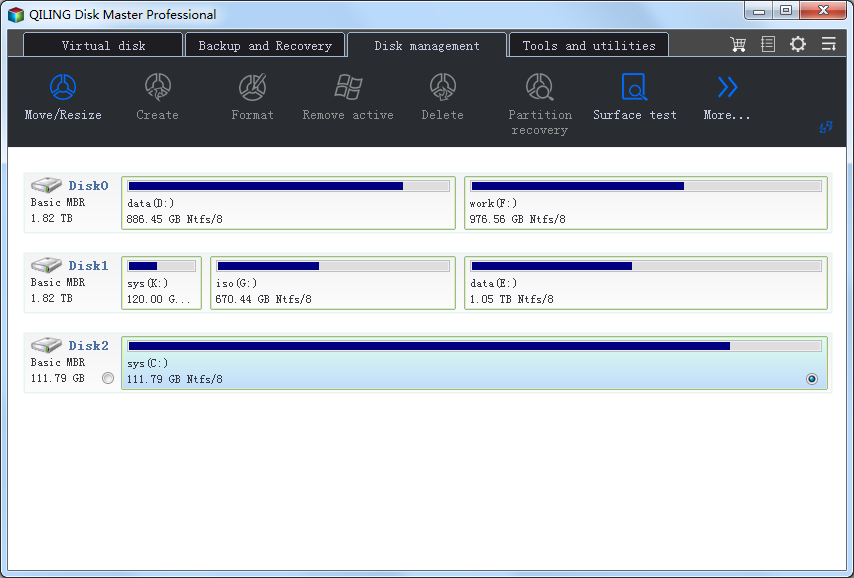
Step 2. Select the required task, such as resize/move, create, format, check partition, convert disk, or change a drive property.
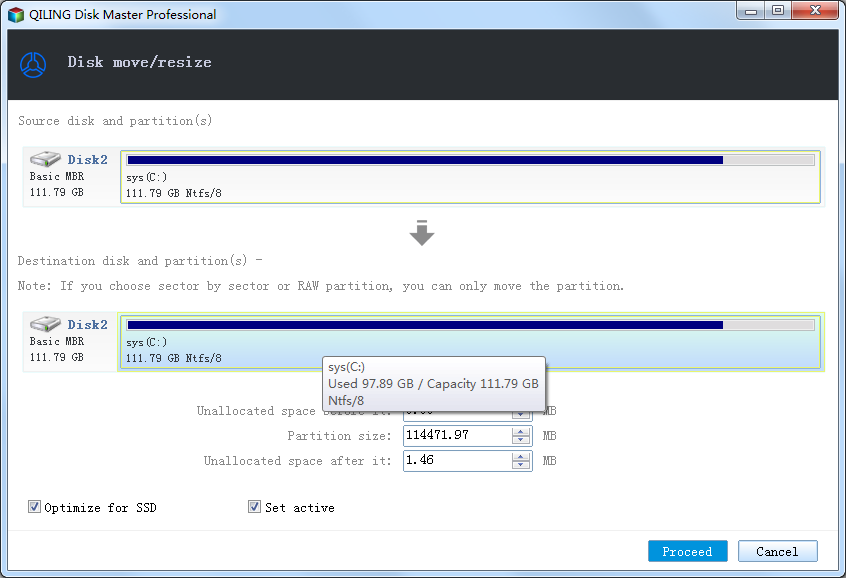
Step 3. Configure the operation. For resize, drag the partition border or enter the size. For format, choose the file system and label. For checking, choose disk health or partition check.
Step 4. Preview the pending operation list. Make sure EFI, System Reserved, Recovery, and data partitions still appear correctly.
Step 5. Click Proceed and keep the computer powered on until the operation completes.
Step 6. Restart if prompted, then reopen Disk Management and File Explorer to verify the result.
Check the Result
Run reagentc /info again and test Advanced startup.
- Restart Windows and confirm the drive, partition, backup task, or cloned disk appears as expected.
- Open several files instead of only checking that a drive letter exists.
- Keep one recent backup on an external drive before making another high-risk change.
- If the same error returns, check hardware health, cable quality, firmware, and Event Viewer before repeating the same operation.
FAQs
Is it normal to have two recovery partitions?
Yes, especially after major upgrades or cloning.
Can I delete the old one?
Only after identifying the active WinRE partition and creating a backup.
Why did Windows create another one?
The old partition may have been too small for updated recovery files.
Conclusion
Two recovery partitions are usually not urgent. Identify the active one first, back up the system, and use Qiling Disk Master only when you need to reorganize space.
Related Articles
- Best Free Partition Manager Software of 2026
- How to Clone HDD to SSD in Windows 10/11/7
- Windows System Backup and Restore Tutorials
- Windows Data Recovery Tutorials
Products
Articles & Tutorials
- Data Recovery
- Data Backup
- File Recovery
- File Backup
- System Backup and Restore
- Disk and Partition Clone
- Technical articles
- Mobile articles
- Disk Master Help
- Windows Data Recovery Tutorials
- Windows Secure Delete Tutorials
- Windows Partition Management Tutorials
- Windows File Backup and Restore Tutorials
- Windows System Backup and Restore Tutorials
- Windows Disk Backup and Restore Tutorials
- Windows Clone Tutorials