4 Top Best Windows 11 Formatter Free Download with Tutorials
| Workable Solutions | Step-by-step Troubleshooting |
|---|---|
| 1. Qiling Partition Master | Option 1. Wipe Partition; Option 2. Wipe Disk...Full steps |
| 2. File Explorer | Step 1. Press Windows+E; Step 2. Click on This PC; Step 3. Head to the partition you wish to format; Step 4. Right-click...Full steps |
| 3. Disk Management | Step 1. Open Windows 11 search by hitting the Windows button on your keyboard; Step 2. Type Disk Management and...Full steps |
| 4. CMD | Step 1. Press Windows+R on your keyboard; Step 2. Type CMD and enter; Step 3. Type Diskpart in CMD and enter...Full steps |
4 Top Best Windows 11 Formatter Free Download with Tutorials
If you're looking to format your internal and external drives more efficiently in Windows 11, there are four top-notch formatters you should consider using. These formatters can help you optimize your drives for better performance, and we'll explore them in more detail. By using these formatters, you can improve the overall speed and efficiency of your drives, making it easier to manage and access your files.
Windows 11 has been available for free download for 6 months, following its release by Microsoft. While some users have experienced issues with the operating system, others have adopted it without problem. Today, we'll explore Windows 11 and provide tutorials on how to get started with it.
Microsoft continuously sends updates to users to fix bugs and problems within its system.
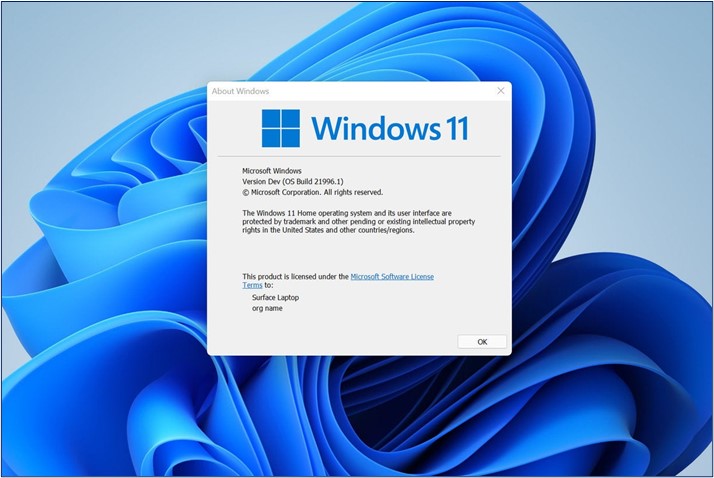
Windows 11 offers many exciting new features, but finding certain functions, such as formatting drives, can be a challenge for new users. Fortunately, there are four formatting options available that can help users manage their storage needs. These options can be used to format drives and ensure that their computer's storage is running smoothly and efficiently.
How Do I Format a Drive/SSD, USB, or External Hard Drive in Windows 11
Formatting storage devices such as SSDs, hard drives, external hard drives, or USB drives in Windows 11 can be tricky, as simply finding the drive in your computer and formatting it may not always work. This is often due to the fact that Windows may not recognize the drive or may have issues accessing it, making it difficult to format using the usual method. However, there are alternative ways to format these devices, such as using the built-in Disk Management tool, which can help you to identify and format the drive correctly. By using this tool, you can ensure that your storage device is properly formatted and ready for use.
- USB or external drives might encounter a problem.
- Damaged partitions or boot sectors prevent a format.
- Lack of primary partitions.
- Lack of boot sectors such as GPT or MBR.
Formatting a drive in Windows 11 can be done using built-in disk management, command prompt, or third-party programs. However, the reasons behind formatting are not as simple as just wiping data from storage, as it can be due to various reasons such as reinstalling Windows, removing malware, or preparing the drive for use with a different operating system.
- Change the file system or format on an external device, i.e., External Hard Drive or USB USB flash drive.
- Clean or wipe unnecessary data or viruses from a drive.
- Reformat Windows 10 and Windows 11.
- Remove data or break partitions to reinstall operating systems.
All these reasons can lead to better system performance. However, getting there is the first challenge any Windows 11 user faces today.
4 Best Windows 11 Formatter Free Download
If you're unsure about using the in-built programs, you can consider using third-party tools, but be cautious as some may be scams that only take your money.
We'vethis guide can help, as we've carefully selected the best options for you, including:
Here's how these tools compare against one another:
| Features | Qiling Partition Master | Windows File Explorer | Disk Management | Diskpart CMD |
|---|---|---|---|---|
| Formatting |
Yes |
Yes | Yes | Yes |
| Changing drive letters | Yes | No | Yes | Yes |
| Changing file system | Yes | No | No/Formatting Required | No/Formatting Required |
| Shrink or extend volume | Yes/No data loss | No | Yes | Yes/data loss |
| Convert boot sector | Yes/No data loss | No | No | Yes/data loss |
| Split Partition | Yes | No | No | Yes/data loss |
| Resize/Move Without Losing Data | Yes | No | No | No |
As you can see, using a third-Qiling Partition Master is a party tool that saves you from a lot of hassle, such as losing your data, making it the best option for formatting your drives.
Here's why:
Pros:
- No data loss during any formatting
- No data loss during the file-system conversion
- No data loss during boot sector conversion
- Easily split, merge or extend partitions
- Migrate operating system from one tool to another
Cons:
- Need to download, while other tools are in-built
Considering the advantages and disadvantages, you can see how helpful this tool can be for you. However, here are some reasons to choose it over other options:
- The website is mostly free, with the exception being the need to access advanced options.
- The system supports multiple file systems, including FAT, NTFS, exFAT, ExT4, HFS Plus, and more.
- Supports formatting the primary partition.
Qiling Partition Master is free to download, but some advanced options may require a premium version. However, formatting is not one of those options, making it a good choice for Windows 11 users.
If you're looking to keep things simple, consider using Windows File Explorer or Qiling Partition Master. Both tools are easy to use and can help you manage your partitions without getting bogged down in complicated settings.
Qiling Partition Master allows for easy formatting of the OS drive to reinstall the operating system, making it a convenient option for users.
1. Format Hard Drive, SSD, USB, or External Disks with Qiling Partition Master
Qiling Partition Master stands out as the top Windows 11 formatter, outperforming its competitors in various aspects, making it the best option available today.
We've set two options for you to wipe data. Choose the one you need.
Option 1. Wipe Partition
- Choose "Wipe Data" in Tools and utilities page.
- To erase all data from a partition, open the software, select the partition, set the time for the wipe, and click "Proceed" to confirm the action.
- Check the message. Then click "OK".
Option 2. Wipe Disk
- Choose "Wipe Data" in Tools and utilities page.
- Select the HDD/SSD drive you want to wipe data from, set the number of times to wipe data, and then click "Proceed" to initiate the data wiping process.
- Check the message. Then click "OK".
The importance of disk maintenance cannot be overstated, as it directly affects the overall performance and longevity of your computer. Regular disk maintenance, such as running disk cleanup and defragmentation tools, can help eliminate errors, improve data access times, and prevent data loss. By keeping your disks in optimal shape, you can ensure that your computer runs smoothly and efficiently, which is especially crucial for tasks that require high processing power and data storage.
- To convert file systems without formatting, you can use the `convert` command in Windows. This command allows you to convert the file system type (e.g., from NTFS to FAT32) and the partition table type (e.
- For file system conversion, see the FAT32 to NTFS converter guide before you format the drive.
- If an SD card or USB drive cannot be formatted, check SD card repair tool, SD card shows 0 bytes, or failed to format the selected partition 0x80070057 for targeted fixes.
- Change drive letter or label
- Migrate OS to HDD or your SSD
- Partition Recovery, in case of virtual damage
- Apply a hard disk health check
This tool is ideal for maintaining physical drives, offering a straightforward dashboard to monitor drives' health and ensure the best upkeep.
2. Format Partition, USB or External Hard Drive in File Explorer
The other most convenient way for you to format your partition, USB, or external hard drive is through file explorer.
Here's how:
Step 1. Press Windows+E.
Step 2. Click on This PC.
Step 3. Head to the partition you wish to format.
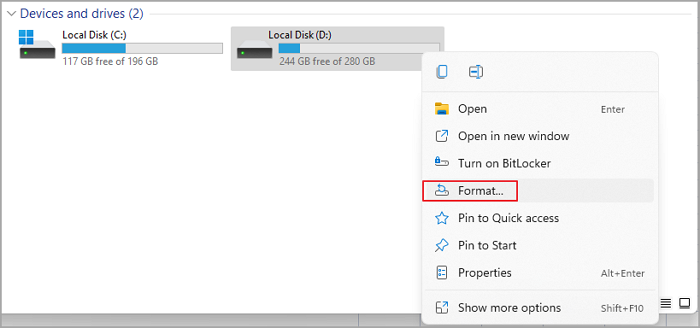
Step 4. Right-click on the pertaining drive.
Step 5. Navigate down the options and click on "Format….".
Step 6. The file system for the USB drive has been set to NTFS. This choice allows for large storage capacity and compatibility with Windows operating systems. The other options, FAT, FAT32, and exFAT, are also available for selection if preferred.
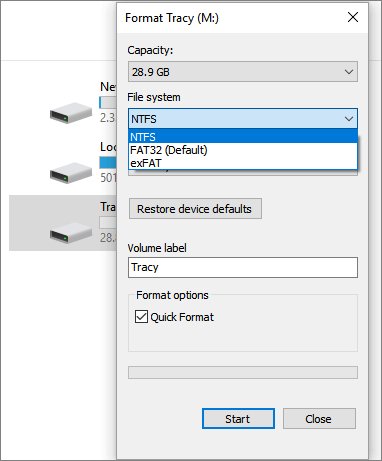
Step 7. Leave Allocation unit size to default.
Step 8. Pick Quick Format.
Step 9. Click Start.
Once you're done, your USB or any other partition will appear clean, just like a whistle.
3. Format Disk or External Storage Device Using Disk Management
To format your drives using Disk Management, follow these steps: Open Disk Management by typing "diskmgmt.msc" in the Run dialog box. In the Disk Management window, right-click on the drive you want to format and select "Format." Choose the file system you want to use (FAT32, exFAT, or NTFS), assign a drive letter, and optionally, check the "Perform a quick format" box to speed up the process.
Step 1. To open Windows 11 search, hit the Windows button on your keyboard.
Step 2. Type Disk Management and open the program.
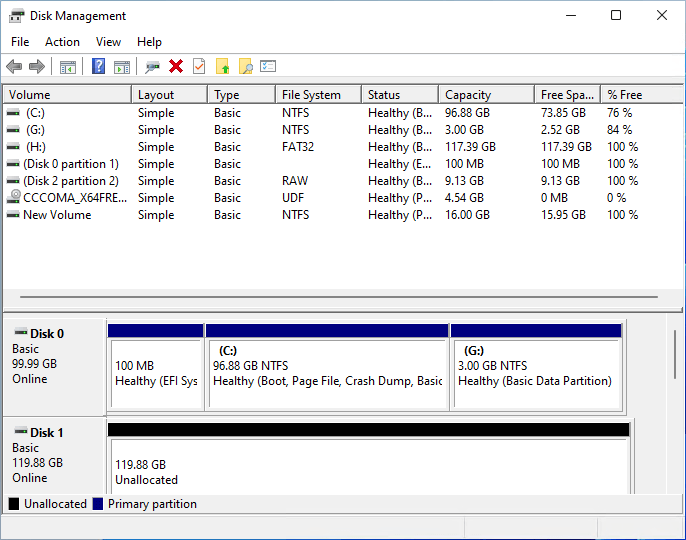
Step 3. Right-click on the disk you wish to format.
Step 4. Click on Format.
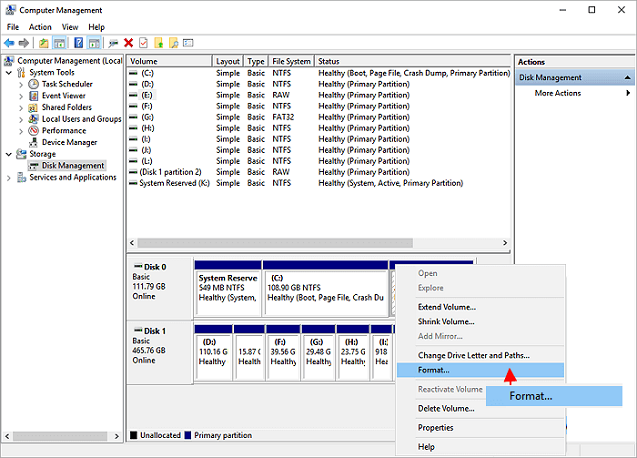
Step 5. A dialogue box will appear; click Yes.
Step 6. Pick your file system; in this case, it's NTFS.
Step 7. Select Perform a quick format and click OK.
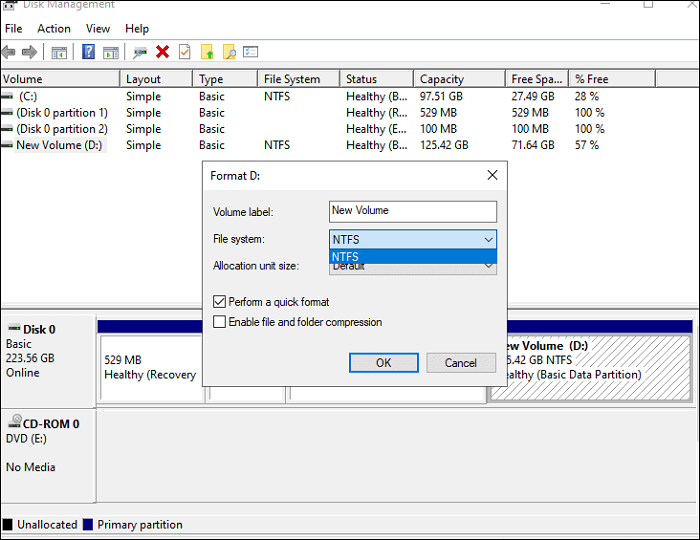
To format any drive using disk management, follow these steps: Open Disk Management, select the drive you want to format, right-click on it, and select "Format" from the context menu. Make sure to select the correct drive letter to avoid formatting the wrong drive. If you're unsure, you can also use the "Delete" option to remove the drive letter and then add it back again.
4. Format HDD/SSD or External USB drives Using CMD
The final option is to use CMD or Diskpart to format your desired drive. Here's how to do it.
Step 1. Press Windows+R on your keyboard.
Step 2. Type CMD and enter.
Step 3. Type Diskpart in CMD and enter.
Step 4. Type list disk.
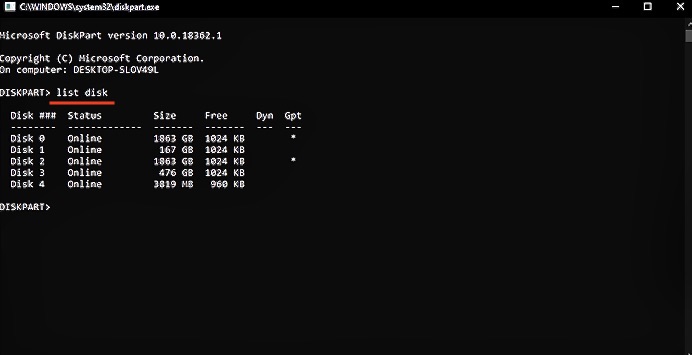
Step 5. Select the disk you want to format, and then follow the on-screen instructions to format it. In this case, it's Disk 4. To format Disk 4, you would:
Step 6. Therefore, type "Select Disk 4".
Step 7. Type clean.
Step 8. Type Create partition primary.
Step 9. Then type Format fs=NTFS.
Step 10. Lastly, type Assign E - 'E' is the drive letter.
This procedure will fix any errors or problems you might face earlier on.
Conclusion: File Explorer & Qiling Partition Master Are The Easiest Windows 11 Formatters
The process of formatting a drive can be made easier for the common user by using alternative methods such as the Qiling tool or Windows Explorer, which are more user-friendly compared to other options like Disk Management and Diskpart.
Related Articles
- How to Remove Write Protection from Pen Drive
- How to Convert Simple Volume to Primary Partition
- How to Safely Resize Partitions in Windows 11 Without Losing Data
- 3DS SD Card Format | How to Reformat 3Ds SD Card
- How to Break Windows 10 Hard Drive Limit without Data Loss?
What's the maximum hard drive size for Windows 10? How to break the hard drive size limit in Windows 10? All are explained right here. - How to Move Windows 10 Recovery Partition without Data Loss?
If Windows 10 Recovery partition is in the way of extending C: partition, you can move recovery partition in Windows 10 safely with a free tool.
Products
Articles & Tutorials
- Data Recovery
- Data Backup
- File Recovery
- File Backup
- System Backup and Restore
- Disk and Partition Clone
- Technical articles
- Mobile articles
- Disk Master Help
- Windows Data Recovery Tutorials
- Windows Secure Delete Tutorials
- Windows Partition Management Tutorials
- Windows File Backup and Restore Tutorials
- Windows System Backup and Restore Tutorials
- Windows Disk Backup and Restore Tutorials
- Windows Clone Tutorials