Can RAID 0 Be Recovered? Get Answers Here
Can RAID 0 be recovered? Yes! Can you recover data from RAID 0? Yes!
This page provides an overview of RAID 0. If your RAID 0 disk fails or becomes corrupted, don't worry - you can easily rebuild RAID 0 and recover data from RAID 0 disks using the solutions provided.
What Is RAID 0

RAID 0 is a data storage technology that combines two or more disks of equal capacity to distribute data evenly across them, improving performance and capacity.
| Pros | Cons |
|---|---|
|
|
What is RAID 0 used for? RAID 0 is a popular choice among server managers, website owners, IT professionals, and database managers due to its ability to provide high performance and capacity. By striping data across multiple disks, RAID 0 allows for faster data access and retrieval, making it ideal for applications that require high-speed data processing, such as video editing, gaming, and data analytics.
- Server service providing.
- Server Database, store libraries storages.
- Website service serving.
- Generating huge storage pool
- Improves the reading and writing speed on computers.
What Happens If a Drive Fails in RAID 0
RAID 0 is a storage structure ideal for servers and websites, offering fast access speeds and large storage capacity. However, its vulnerability to damage or corruption can be a concern.
In a RAID 0 configuration, if one drive fails, the entire RAID 0 structure fails, meaning all data is lost. This is because RAID 0 simply splits data across multiple drives without redundancy, so there's no backup or duplicate copy to fall back on if one drive fails.
When a hard drive fails, you'll meet the following issues:
- Hard drive failure, dying, or failing hard drives.
- Total data loss on all RAID 0 disks.
- RAID 0 structure broken, RAID 0 drives becomes logical partitions.
- RAID 0 drives become inaccessible.
Can RAID 0 Data Be Recovered? How to Fix a Failed RAID 0 Without File Loss [4 Methods]
While RAID 0 doesn't provide redundancy, data recovery is still possible if one drive fails. To recover RAID 0 data, professional data recovery solutions are often necessary.
4 methods to fix a failed RAID 0 drive include using data recovery software, sending the drive to a professional data recovery service, using a hardware-based RAID recovery solution, and using a third-party RAID recovery tool.
- Method 1. Run RAID Data Recovery Software - Recommended
- Method 2. Turn to RAID 0 Data Recovery Service
- Method 3. Connect RIAD 0 Disks to a New Computer and Recover Data
- Method 4. RAID 0 Reconstruction
- Editors Recommend - Quick Guide to Pick a Right Method:
- To check the state of your RAID 0 set, open the Disk Management tool. This can be done by right-clicking on the Start button and selecting Disk Management.
- If you have RAID 0 drives, you can turn to other methods first, such as Method 1, 2, or 3, before considering the steps to convert RAID 0 drives into logical partitions.
- If you have a single RAID 0 drive or multiple drives that are displaying as Offline or unknown, you can try the following solution.
Method 1. Run RAID Data Recovery Software
| Pros: Quick and safe to recover RAID 0 data. | Cons: Not free. |
When a RAID 0 drive fails, it becomes inaccessible. However, if Disk Management can still detect and recognize the drive, a reliable RAID data recovery software can be used to help recover the data.
Data Recovery Wizard can scan and find missing files from your RAID 0 drives using Qiling RAID data recovery software.
Deep Data Recovery
- Recover data from inaccessible RAID drives.
- To recover data from failed RAID 0, RAID 1, RAID 5, RAID 10 drives, you can use specialized data recovery software such as Disk Drill, Deep Data Recovery, or R-Studio. These tools can scan the drives, identify the RAID configuration, and recover data from the failed array.
- Recover lost, deleted, or formatted files from RAID volumes, including RAID 0, RAID 1, RAID 5, and RAID 10 configurations.
- Recover files from virus-infected RAID disks.
Note: To prevent further data loss, save the recovered RAID 0 files to a secure location like an external hard drive.
Step 1. Select file types
To recover lost data, download and install Deep Data Recovery on your Windows 11/10 64-bit computer, select the desired file types, and click "Fast Scan" to initiate the recovery process.
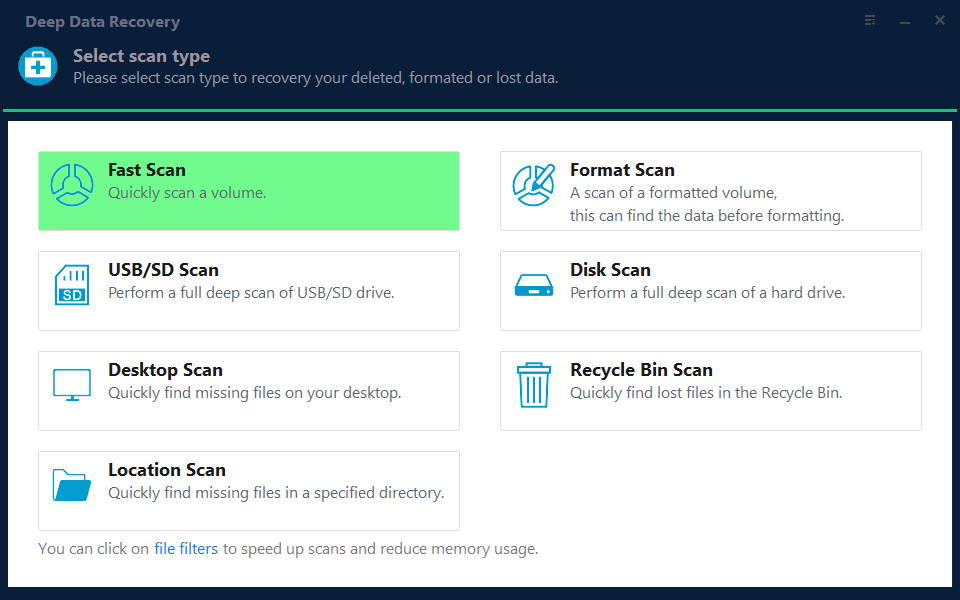
Note: You can choose different search modes based on where and why the data was lost.
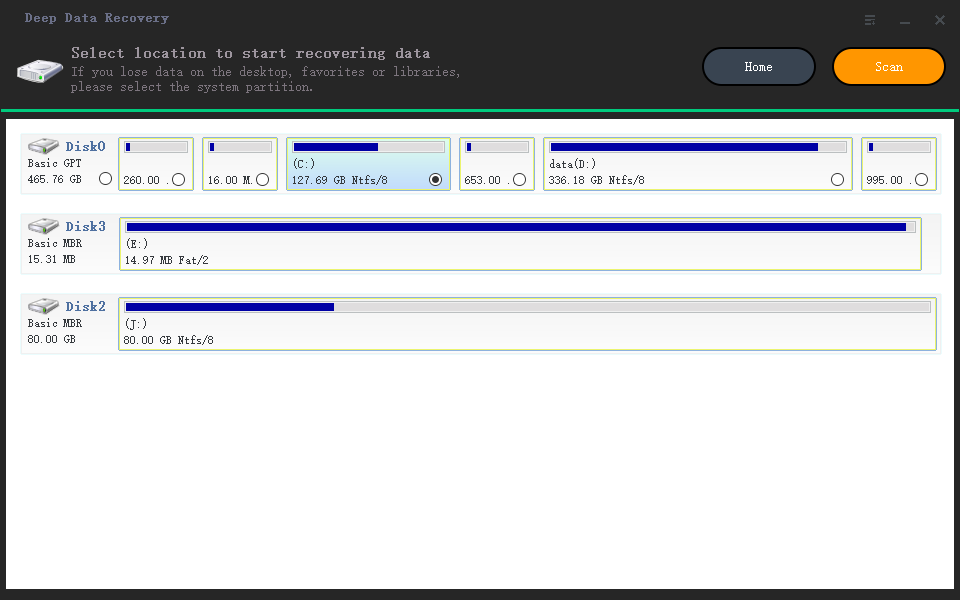
Step 2. Scan the RAID drive
To recover data from a RAID drive, select the drive you want to recover from and click "Scan". Wait for the scanning process to complete, and the deleted files will be displayed one by one.
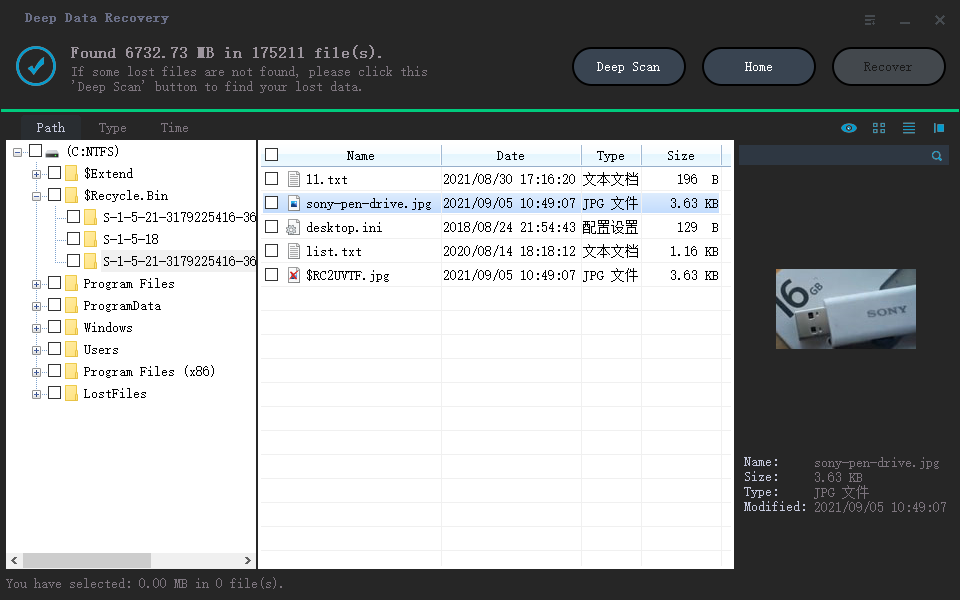
Step 3. Find and preview lost RAID files
You can use the "Filter" feature to quickly locate deleted or lost files, or use the search function to find files by name or extension.
Step 4. Restore lost RAID drive files
Select the wanted files and click "Recover". Browse to save these files to another secure location.
Method 2. Turn to RAID 0 Data Recovery Service
| Pros: Quick and safe to recover RAID 0 data. | Cons: Not free, Rebuild RAID 0 structure. |
If you're unable to recover your valuable RAID 0 data using the first method, consider turning to professional RAID 0 data recovery services as a second option. These services specialize in retrieving data from RAID 0 configurations and can provide a high success rate in recovering your lost files.
If Deep Data Recovery fails to find your RAID 0 disk files, the Qiling Support team offers a RAID 0 data recovery service.
- 1. Data can be restored from various RAID levels, including RAID 0, RAID 1, RAID 5, RAID 6, RAID 10, and others, allowing for recovery of data from different types of RAID configurations.
- 2. Recover data from enterprise RAIDs such as QNAP, Synology, WD, Buffalo, etc. by using specialized software to extract data from damaged or corrupted storage devices, even if they are no longer accessible due to hardware failure or other issues.
- 3. Retrieve lost RAID data caused by any issues
- 4. Recover data from RAID remotely, no need to ship
Method 3. Connect RAID 0 Disks to a New Computer and Recover Data
| Pros: Free. | Cons: Recover only partial data or nothing, low success rate. |
If you're experiencing issues with a RAID 0 setup, you may want to try disconnecting the problematic drives and connecting them to another computer to check and recover any data. This can help you determine if the problem lies with the drives themselves or with the RAID setup on the original computer.
Step 1. Disconnect the RAID 0 drives from your current PC.
Step 2. Connect the RAID 0 drives to another computer.
Step 3. Check if you can access and visit data on the drives.
If yes, copy and save the files to another secure drive.
Method 4. RAID 0 Reconstruction
| Pros: Rebuild broken RAID 0 structure. | Cons: Complex. |
Many professionals agree that once a RAID 0 drive fails, you can simply rebuild or reconstruct the RAID 0 structure. Qiling Data Recovery experts suggest that there are two ways to fix a failing hard drive or rebuild the RAID 0 structure, although specific details are not provided.
Option 1. Clone Failed RAID Drive to A Working One and Rebuild RAID 0
If you're a professional in disk management, you can try the following tips to fix a failed RAID 0 drive and rebuild it on your own.
Step 1. To replace a failed RAID 0 drive, you can prepare a new drive with the same capacity as the original failed drive. This will ensure that the RAID array can be rebuilt with the same amount of storage space, maintaining its original performance and capacity.
Step 2. Clone the failing hard drive to the new drive.
Step 3. Replace the failing drive with the newly cloned one, and install the cloned disk on your computer.
Step 4. To convert a new disk to dynamic in Disk Management and re-create a RAID 0 construction with your drives, follow these steps: Enter Disk Management, select the new disk, and click on "Add a Mirror" or "Add a RAID" (the exact option may vary depending on your system). Then, select the other drives you want to include in the RAID 0 and click "OK".
Option 2. Take RAID 0 Disks for Repair in Professional Data Recovery & Repair Center
Take the RAID 0 drives for repair and re-construct the RAID 0 structure with your drives in a local professional data recovery and disk repair center.
Step 1. Take your RAID 0 disks to a local repair center.
Step 2.Clone and backup data from the failed or broken RAID 0 drive to a new drive to ensure the data is safely transferred and preserved. This step is crucial in recovering the data from the failed drive.
Step 3. To rebuild a RAID 0 array with new disks, it's recommended to use professional reconstruction tools, such as those provided by the RAID controller manufacturer or specialized software like RAID recovery tools. These tools can help to rebuild the array with the new disks, ensuring a seamless and efficient process.
If you cannot find a local repair center for help, Qiling local data recovery service as recommended in Method 2 can help.
Extended Reading: Causes, What to Do If RAID 0 Fails, and Tips to Protect RAID 0 Data
Some people may also want to learn about the causes of RAID 0 drive failure, what to do when RAID 0 drives fail, and how to protect their data on RAID 0 disks.
Check the information below, you'll get desired answers.
1. What Causes RAID 0 Drives Failing or Failure
Here are the main reasons:
- Power failure or sudden power off.
- Operating System failing or failure.
- OS disk becomes RAID.
- The RAID card is damaged.
- The disk contains bad sectors.
- Disk failure.
- The disk is totally or partially broken or damaged.
- Damaged controller.
2. Do's and Dont's If RAID 0 Drives Failed
| Do's | Dont's |
|---|---|
|
|
3. How to Protect RAID 0 Data
- Create a backup of RAID 0 data regularly.
- If files get lost on a RAID 0 disk, consider using professional RAID data recovery software like Deep Data Recovery for assistance.
- Operate and use RAID 0 disks correctly.
- Run antivirus software regularly.
Conclusion: RAID 0 Data Can Be Recovered with Professional RAID 0 Recovery Solutions
This page explains what RAID 0 is and what happens if a RAID 0 fails, providing solutions to resolve the issue. RAID 0 is a disk configuration that stripes data across multiple disks for improved performance, but it lacks redundancy, making it vulnerable to data loss if a disk fails. If a RAID 0 fails, data can be lost, and the structure may be damaged.
Remember: If your files are on the failed RAID 0 disk, try to restore them first using Qiling RAID data recovery software or Qiling local data recovery service before proceeding with the rest of the instructions.
After restoring data from a RAID 0 setup, you can use professional tools to rebuild the RAID 0 structure.
While RAID 0 data may seem irretrievable, professional RAID 0 recovery solutions can actually recover lost data. Additionally, creating a backup of all valuable files on your RAID 0 disks is a crucial step in ensuring that your important data is safe, even in the event of a data loss.
Related Articles
- Solved: Hard Drive Not Showing Files Though They Still Exist
- Free CF Card Recovery Software to Recover Data in Windows/Mac
- 5 Ways | How to Fix Data Error Cyclic Redundancy Check
- Memory Card Recovery Software: Recover Data from Memory Card
- Recover Deleted or Unsaved PowerPoint Files
This page includes two ways - using powerful PowerPoint recovery software or the manual method to help you recover deleted or unsaved PowerPoint files without quality loss. With Qiling Data Recovery, it is a piece of cake to recover deleted PowerPoint files in Windows 11/10/8.1/8/7. - Email Recovery for Gmail, Yahoo, Outlook, Hotmail
How do I recover permanently deleted emails in Gmail? If you're struggling to find out how to recover deleted emails, read this article to learn how to recover deleted emails in Gmail, Outlook, Hotmail, or AOL.
Products
Articles & Tutorials
- Data Recovery
- Data Backup
- File Recovery
- File Backup
- System Backup and Restore
- Disk and Partition Clone
- Technical articles
- Mobile articles
- Disk Master Help
- Windows Data Recovery Tutorials
- Windows Secure Delete Tutorials
- Windows Partition Management Tutorials
- Windows File Backup and Restore Tutorials
- Windows System Backup and Restore Tutorials
- Windows Disk Backup and Restore Tutorials
- Windows Clone Tutorials