Fixes for The Type of the File System Is RAW, CHKDSK Is Not Available for RAW Drives
When you connect a storage device like a USB flash drive, SD card, or external hard drive to your computer, you may encounter the error "The type of the file system is RAW. CHKDSK is not available for RAW drives." This article explains what causes this error and provides step-by-step methods to fix it without losing your data.
"The type of the file system is RAW. CHKDSK is not available for RAW drives."
When trying to use the CHKDSK command to check and repair disk errors, you may get the error message "The type of the file system is RAW. CHKDSK is not available for RAW drives." This occurs when the file system type of the drive is RAW, which is not supported by the CHKDSK command.
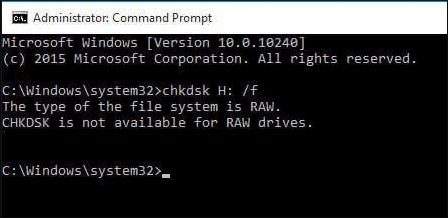
The error message indicates that running CHKDSK on the drive was unsuccessful due to an issue with the drive's file system. This suggests that the drive's file system is corrupted or damaged, preventing the CHKDSK process from completing. To resolve this issue, you may need to run a more advanced disk check or repair the file system using tools like the Command Prompt or a disk repair software.
What Does RAW File System Mean?
A RAW file system is a file system that a computer can't recognize. This occurs when a hard drive, storage device, or USB flash drive's file system becomes corrupted or damaged, causing it to become unreadable by the computer. The reasons for this can include a power failure during a file system operation, a virus or malware infection, or physical damage to the storage device.
- The file system is missing or damaged
- The RAW drive has not been formatted with a file system, making it unreadable by the computer
- The computer is unable to identify the current file system of the drive, preventing access to its contents
When a hard drive or storage medium becomes RAW, running CHKDSK fails, resulting in a "RAW file system" message. Additionally, you may receive a notification to format the drive, and you'll be unable to access files stored on the device.
How to Fix "The type of the file system is RAW. CHKDSK is not available for RAW drives."
When the file system of your drive or external storage device goes RAW, it becomes inaccessible and unusable. To fix this, you need to convert RAW to NTFS or other Windows-compatible file systems by formatting, which will erase the existing files on the storage medium. Formatting allows you to assign a new file system to the drive, making it usable again. However, keep in mind that formatting will delete all data on the drive.
- Recover data from the RAW drive
- Format the drive
If your hard drive is empty or you don't need the files on it, you can directly format it. This will erase all data and restore the drive to its factory settings.
Procedure 1. Recover Data from the RAW Drive
Although you can't access the existing files on a RAW drive, a data recovery tool can help recover deleted data, formatted data, and lost partitions, as well as files from drives that have gone RAW and become inaccessible.
To recover data from a drive or storage device that shows a RAW file system, you can use a data recovery software. These tools can scan the device and recover files that were not affected by the RAW file system issue.
Step 1. Select file types
Launch Qiling file recovery software on your Windows computer, select the file types, and click "Fast Scan" to start the recovery process.

Note: You can choose different search modes based on where and why the data was lost.
Step 2. Select and scan the RAW partition
If the RAW partition has a label, you can select it from the drive list and scan for lost files. If it's lost its label, it will be listed as "Lost Partition" and scanning the entire drive will initiate a search for lost files.

Step 3. Preview found data from the scan result
After the scan is completed, all available files in the RAW hard drive will be displayed, allowing you to view and select the files you want to recover. You can sort the scanned data by file format or search directly in the "Search files or folders" box to find specific files.

Step 4. Recover data from RAW partition
Select all files and click "Recover" to retrieve all data. Then, choose another internal or external hard drive to save the recovered data and click "OK" to initiate the RAW drive recovery process.
You can still recover RAW data with our manual data recovery services, which can help salvage your important files even when the system is not bootable.
Consult with Qiling data recovery experts for a one-on-one manual RAW recovery service. After a free diagnosis, we offer a range of services, including manual RAW recovery, to help recover your lost data.
- Repair damaged RAW drive without formatting
- Recover data from RAW drives, including BitLocker encrypted drives
- Recover RAW partitions, USB drives, flash drives, and external hard drives
Procedure 2. Convert RAW to NTFS/FAT32 by Formatting
After recovering all the files from the RAW drive, you can format the drive using one of the following methods:
Method 1. Format RAW Drive with File Explorer
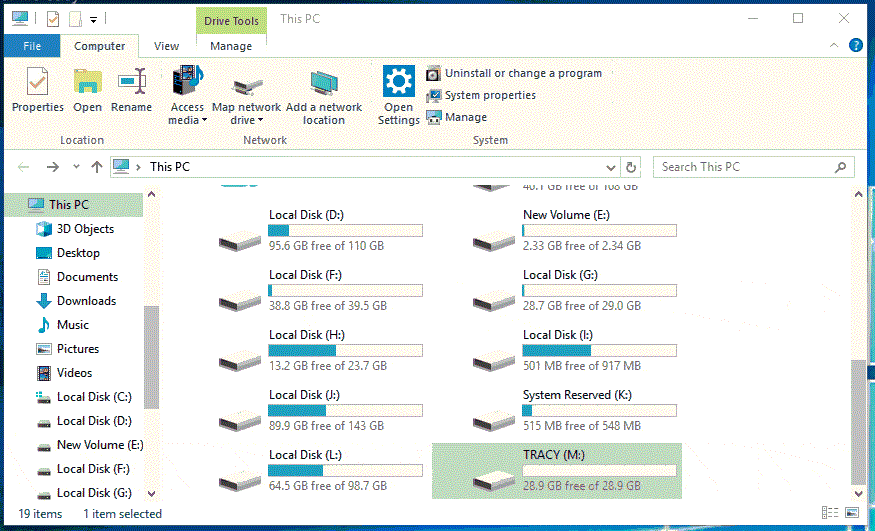
Step 1. Open This PC, right-click the RAW partition, and select Format.
Step 2. Select a file system (NTFS, FAT32, or exFAT) for your drive and click Start.
Step 3. Select Yes in the prompt to start formatting your drive.
Method 2. Repair RAW to NTFS/FAT32 Using Diskpart
Diskpart is a command-line utility used to manage a computer's disk partitions, allowing users to create, delete, modify, and format partitions.
Step 1. Press Windows + R, type diskpart, and hit Enter.
Step 2. Enter the following commands hitting Enter after each line:
list volume select volume X ("X" means the volume number of the RAW drive) format fs=ntfs quick (or format fs=fat32 quick) exit
Method 3. Change RAW to NTFS/FAT32 with A Format Tool
If you prefer to keep it simple, you can use free partition software like Qiling Partition Master to format your drive. This tool supports not only the formats supported by Windows OS, but also EXT2 and EXT3. Additionally, it allows you to merge, check, and delete partitions.
To format a hard drive using Qiling Partition Master, follow the steps in the article about formatting a hard drive in Windows 10.
The Bottom Line
The "The type of the file system is RAW. CHKDSK is not available for RAW drives" error occurs due to various reasons such as a virus infection, format failure, accidental shutdown, power outages, and other factors.
You can recover files from a RAW inaccessible drive and then format it to make it reusable. This guide provides a solution for those who need to recover files from a RAW drive. If you found this guide helpful, please share it with others who may benefit from it.
If files disappeared after a CHKDSK repair, preserve readable files and inspect the repaired volume before running another repair.
Related Articles
- How to Recover Files after Reinstalling Windows 11/10/8/7
- 4 Methods | Convert RAW to FAT32 for Micro SD Card/USB
- How to Fix Memory Card Locked Error Without Losing Data in 4 Ways
- How Do I Disable OneDrive in Windows 10? Your Complete Guide
- How to Recover OBS Recording Deleted, Crashed and Corrupted
Any way to recover OBS recordings that were accidentally deleted, not fully finished due to software crash or corrupted after computer suddenly turns to black or blue screen? Read the post and figure out whether your OBS video recordings can be retrieved or not. - How to Recover Permanently Deleted Files from Dropbox
You can recover permanently deleted files from Dropbox through two methods: recovering from Dropbox Trash, where you can restore files deleted within the past 30 days, or using Qiling file recovery software to retrieve files from Dropbox's temporary files.
Products
Articles & Tutorials
- Data Recovery
- Data Backup
- File Recovery
- File Backup
- System Backup and Restore
- Disk and Partition Clone
- Technical articles
- Mobile articles
- Disk Master Help
- Windows Data Recovery Tutorials
- Windows Secure Delete Tutorials
- Windows Partition Management Tutorials
- Windows File Backup and Restore Tutorials
- Windows System Backup and Restore Tutorials
- Windows Disk Backup and Restore Tutorials
- Windows Clone Tutorials