Files Missing After Windows Signs In with a Temporary Profile
A temporary Windows profile can show an unfamiliar desktop and empty Documents folder even when the original files still exist under the old user folder. Do not assume the data was deleted. First preserve any new files made during this temporary session, because they may be lost after sign-out.
Find the original user folder
Step 1. Copy files created or edited during the temporary sign-in to an external drive. Note the username displayed by Windows, then open C:\Users in File Explorer and look for the original profile folder by name and size.
Step 2. Check that folder's Desktop, Documents, Downloads, and Pictures. If OneDrive was enabled, also inspect the original profile's OneDrive folder and online account. Do not move or rename Windows profile folders while troubleshooting sign-in.
Step 3. Restart and sign in to the intended account once. If the profile still loads temporarily, keep using an administrator account for diagnosis rather than repeatedly creating files in the temporary one.
Back up the accessible profile first
Step 1. Open Qiling Disk Master Pro, choose Backup and Recovery > File backup, and select the original user's folders directly in the source tree.
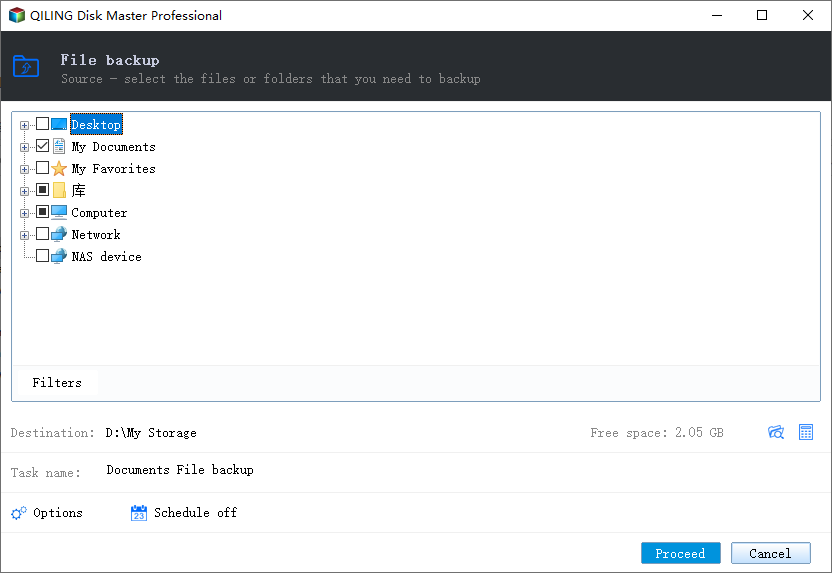
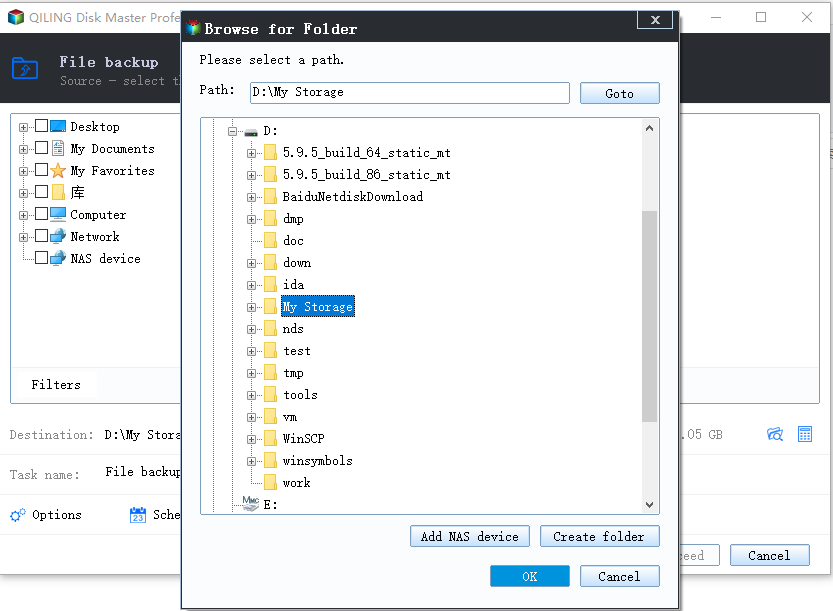
Step 2. Check Filters so hidden or system files are included only if needed, then choose a separate external destination. Confirm the displayed source and destination paths, click Proceed, and verify the backup task completes.
If the original folder is empty because files were truly deleted, stop writing to that disk. Qiling Deep Data Recovery can then scan that physical volume, but a scan cannot fix a damaged Windows account. Restore access to the account separately after the files are safe.
Related Articles
- Backup Task Uses an Old Profile Path
Check a backup task after a profile name or path changes. - Recover Truly Deleted Files
Use recovery scanning only after checking the original profile folder.
Products
Articles & Tutorials
- Data Recovery
- Data Backup
- File Recovery
- File Backup
- System Backup and Restore
- Disk and Partition Clone
- Technical articles
- Mobile articles
- Disk Master Help
- Windows Data Recovery Tutorials
- Windows Secure Delete Tutorials
- Windows Partition Management Tutorials
- Windows File Backup and Restore Tutorials
- Windows System Backup and Restore Tutorials
- Windows Disk Backup and Restore Tutorials
- Windows Clone Tutorials