Unparalleled RAID Recovery Services for RAID 0, 1, 5, 6 & 10
What Is RAID
RAID, or Redundant Array of Independent Disks, is a technology that combines multiple physical hard disks to form a single, logical hard disk, providing improved storage performance and data backup capabilities compared to a single disk. The various configurations of disk arrays are referred to as RAID levels.
Causes of RAID Failure
While RAID disks offer higher redundancy and fault tolerance, they are not immune to disk failures. In fact, RAID arrays can become inaccessible, RAID configurations can be damaged or rebuilt, resulting in the loss of data. Common causes of RAID data loss include:
- Unintentional data deletion
- File system corruption
- Controller failure
- Incorrect RAID rebuilds
- Corrupted or broken RAID structure
- Virus or malware attack
- Abrupt power outage or surge
What Are RAID Recovery Services on Windows
When a RAID failure occurs, immediately stop using the RAID drives and shut down the system. Do not attempt to reset the RAID or repair the file system by checking the disk.
If you have a RAID system with corrupted data, you may need to look for professional RAID recovery services. Qiling offers effective RAID data recovery options, including manual recovery services and affordable fixes for corrupted RAID disks, as well as a NAS RAID recovery software that can retrieve data from Synology, QNAP, and other NAS drives.
Remote RAID Recovery Services, No Need to Ship RAID Arrays
Qiling 1 on 1 Remote Assistance offers premium technical support to solve a wide range of OS and device problems through remote desktop sessions, utilizing dedicated engineers with over ten years of experience in data recovery.
Consult with Qiling data recovery experts for a one-on-one manual recovery service, which includes a free diagnosis, followed by a range of services, including repairing damaged RAID structures and restoring data from all RAID levels, utilizing the expertise of our decades-experienced engineers.
- Data can be restored from various RAID levels, including RAID 0, RAID 1, RAID 5, RAID 6, RAID 10, and others, allowing users to recover their data even if a failure occurs in the RAID setup.
- Recover data from enterprise RAIDs such as QNAP, Synology, WD, Buffalo, and more. These systems are designed to provide high-capacity storage and redundancy, but they can still fail or become inaccessible.
- Retrieve lost RAID data caused by any issues
- Fix disks that become GPT protected partitions
- Recover data from RAID remotely, no need to ship
For RAID recovery services, our experts can help you repair and recover data from inaccessible, faulty, rebuilt, or damaged RAID disks, regardless of the cause.
We offer remote data recovery services, allowing you to avoid shipping your RAID disks to us and minimizing wait times. Our service is convenient and timely.
Super-Easy NAS RAID Recovery Software, No Need to Take Disks Out
Network Attached Storage (NAS) offers users a range of data storage, management, and sharing solutions across various platforms. It utilizes multiple RAID configurations, including RAID 0, RAID 1, RAID 5, and RAID 10, to provide a robust and reliable storage solution.
If there's an issue with your NAS RAID device, such as accidental deletion, file system corruption, RAID formatting, or virus infection, Qiling NAS data recovery software can help you rescue and restore files efficiently.
Qiling NAS data recovery software highlights:
- "Recover data from various NAS devices, including Synology, QNAP, ASUSTOR, Buffalo, and Western Digital, with the help of data recovery software and experts. These devices store vast amounts of data, making them a crucial part of many businesses and individuals' digital lives.
- Restore files from Btrfs and EXT4 file system drives
- Retrieve NAS data on Windows 11/10 and Windows Server 2022/2019/2016
Step 1. Select a NAS server and start recovering.
Download and install Deep Data Recovery on your Windows 11/10 64-bit computer. Open the software, select "NAS Recovery", and it will automatically list all connected NAS servers. Choose your target NAS device and click "Scan" to begin the recovery process.
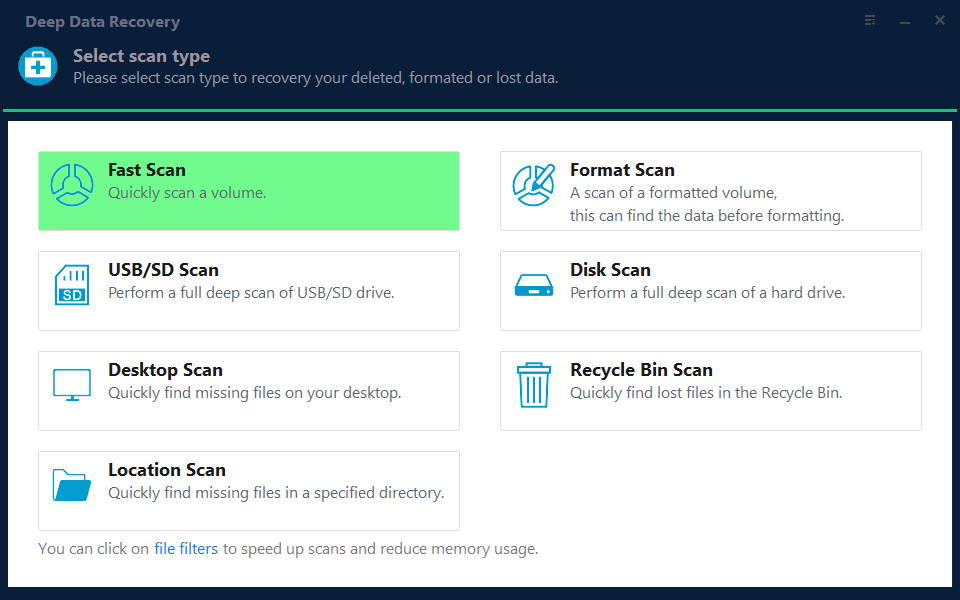
Note: You can choose different search modes based on where and why the data was lost.
Step 2. Enable SSH service on the NAS server.
To enable remote access, go to the "Control Panel" and navigate to "Terminal & SNMP". Check the box next to "Enable SSH service" and note the port number for remote access. Then, in the Deep Data Recovery software, click "Next" after opening the port.
Step 3. Connect to the NAS server remotely.
This software automatically detects your IP and Port, requiring only your username and password to be inputted. If the IP or Port is incorrect, you can manually correct it. Once complete, click "Connect Now" to proceed.

Step 4. Recover lost/deleted NAS data
Qiling data recovery software will connect to your NAS and perform a scan, displaying all deleted, lost, or existing files on your NAS server.
To find lost files on a hard drive, use the "Filter" feature or click "Search files or folders" to locate them. Select the desired NAS files and click "Recover" to save them to a different location.
Click the "Recover" button to restore the selected NAS files to a safe location.

Read More: Common RAID Levels
RAID technology has evolved from RAID 0 to more advanced levels, with some combinations of basic levels, such as RAID 10 (a combination of RAID 0 and RAID 1), RAID 50 (a combination of RAID 0 and RAID 5), and others. These different levels offer varying levels of storage performance, data security, and cost, with the most commonly used forms being the focus of this discussion.
| Level | Definition |
|---|---|
| RAID 0 | RAID 0, also known as Stripe or Striping, offers the highest storage performance by combining two hard disks into one, dividing data continuously across each disk. However, this setup does not provide data protection, making it unreliable for critical areas that require high data availability, as any damage to a hard drive will result in complete data loss. |
| RAID 1 | RAID 1 uses disk mirroring to provide data redundancy, creating a backup of data on two independent disks. This setup offers high data security and availability, as the system can automatically switch to the mirror disk if one fails without needing to reassemble the failed data. However, this approach comes at a cost, as the total capacity of the RAID 1 array is limited to that of a single hard disk, making it the most expensive option among disk arrays. |
| RAID 5 | RAID 5 is a storage solution that balances performance, security, and cost, offering the same read speed as RAID 0, higher disk utilization, and lower cost than RAID 1, making it a popular choice. |
| RAID 6 | RAID 6 technology builds upon RAID 5 by adding an extra layer of data protection, providing even higher data redundancy. However, this comes at the cost of reduced write efficiency due to the additional parity, and a more complex control system design, which also results in reduced effective storage space. |
| RAID 10 | RAID 10 is a hybrid storage solution that combines the benefits of both RAID 1 and RAID 0. It uses parity check to implement stripe mirroring, providing high data protection and recovery capabilities like RAID 1, while also offering high read/write efficiency like RAID 0. This makes RAID 10 a cost-effective option, as it leverages the strengths of both RAID levels. Most RAID controller cards support RAID 10, but it comes with a trade-off: storage capacity utilization is only 50% as efficient as RAID 1. |
The Bottom Line
Repairing RAID disks and restoring data can be a challenging task for non-technical users. If you find yourself in this situation, don't hesitate to reach out to us for timely RAID recovery services. We offer two options: remote recovery services or NAS data recovery software, allowing you to choose the best solution based on your specific needs.
Related Articles
- Old Myspace Photos Not Loading? Recover Old Myspace Photos, Messages, and Videos
- How to Repair Windows 11 and Fix Corrupted Files [2022 Guide]
- Top 10 Best Free SD Card Data Recovery Software (100% Working)
- Cerber Ransomware Decrption Tool: Decrypt/Restore .cerber Encrypted Files
- How to Recover Deleted Call Recordings on Android [2022 Guide]
Recover deleted call recordings on Android from recorder apps, backups, cloud storage, or phone storage with practical recovery methods. - Recover Deleted Files from GoPro [Files and Videos]
Do you want to recover deleted files from GoPro? If you permanently delete files, we shows you how to recover deleted photos and videos from GoPro with professional recovery software. If you are a GoPro Plus member, you can recover deleted files from the GoPro Plus cloud backup.
Products
Articles & Tutorials
- Data Recovery
- Data Backup
- File Recovery
- File Backup
- System Backup and Restore
- Disk and Partition Clone
- Technical articles
- Mobile articles
- Disk Master Help
- Windows Data Recovery Tutorials
- Windows Secure Delete Tutorials
- Windows Partition Management Tutorials
- Windows File Backup and Restore Tutorials
- Windows System Backup and Restore Tutorials
- Windows Disk Backup and Restore Tutorials
- Windows Clone Tutorials