Recover Data from Dead, Failed or Crashed SSD in Windows 11/10
I replaced my old hard drive with a Samsung SSD drive and upgraded my computer from Windows 7 to Windows 10 about half a year ago. However, the SSD disk suddenly stopped working for an unknown reason.
Yes, it's possible to recover data from a dead or failed SSD, but it requires professional assistance and specialized tools. You can try contacting a data recovery service or a reputable company that specializes in SSD data recovery. They will assess the condition of your SSD and provide a quote for the recovery process. Note that the success of data recovery depends on the severity of the SSD failure and the type of data stored on it.
Is It Possible to Recover Data from a Dead, Failed, or Crashed SSD
- How to recover data on a failed SSD?
- If an SSD crashed/dead/failed, can files on it be recovered?
- Can data be recovered from a failed SSD?
- What to do if my SSD dies with no backup?
When an SSD drive crashes or fails to boot, the first priority is often data recovery, as the data on the drive is still intact even if the drive itself is malfunctioning. Fortunately, data saved on a failed or dead SSD drive can typically be recovered.
How to Recover Data from Dead, Failed, or Crashed SSD
For most users unfamiliar with SSD data recovery, the task can be challenging. However, with the right approach, it becomes much more manageable. The best way to recover data from a dead or failed SSD is to consider two options.
- SSD Repair at a local storage device repair center
A manual data recovery service and repairing a failed SSD can be costly, typically ranging in the hundreds of dollars, and is often a time-consuming process, taking around 1 week or more to complete.
- Apply reliable data recovery software for help
Professional data recovery software typically requires a reasonable price for its services, allowing users to initiate the recovery process as soon as the software is downloaded.
Qiling Data Recovery Wizard is a software designed to recover lost files from a failed hard drive, SSD disk, or other storage devices after a disaster.
We personally suggest you try the second way for dead SSD data recovery. It's instant and secure for protecting your personal data and private information. And you can refer to either method here below to perform dead SSD data recovery.
Solution 1. Recover Data from Dead SSD on a Healthy Computer
Applies to: dead SSD data recovery on another healthy computer
If you have two computers, you can follow these guidelines to restore data from a dead SSD disk to a secure device on a healthy computer. This process serves as a guide to help you recover data from a non-functional SSD disk.
1. Connect Dead, Failed SSD to Another Computer as a Data Disk
Step 1: Remove the dead SSD disk from the source computer and connect it to another healthy computer as a data disk.
Step 2:To resolve the issue, restart your computer and verify if you can access the saved data on the SSD. This step is crucial in determining if the problem lies with the operating system or the SSD itself.
- If your SSD is running fine, that means the issue lies with the hardware of your computer, not the SSD itself. This could be due to a variety of reasons such as a faulty motherboard, a malfunctioning power supply, or a problem with the computer's BIOS or UEFI. In this case, you may need to consult the user manual or contact the manufacturer for further assistance. Alternatively, you can try running a diagnostic test on your computer to identify the specific issue.
- If not, Follow the guide steps below to restore data from the dead SSD.
2. Recover Data from a Dead SSD with Qiling SSD Recovery Software
Deep Data Recovery offers a powerful data recovery solution that can recover data from failed or crashed SSDs with ease, thanks to its intuitive interface and robust capabilities.
Here is the step-by-step guide:
Step 1. Select file types and click "USB/SD Scan" to start
To recover data, open Deep Data Recovery, select the desired file types, and click "USB/SD Scan" to initiate the process.
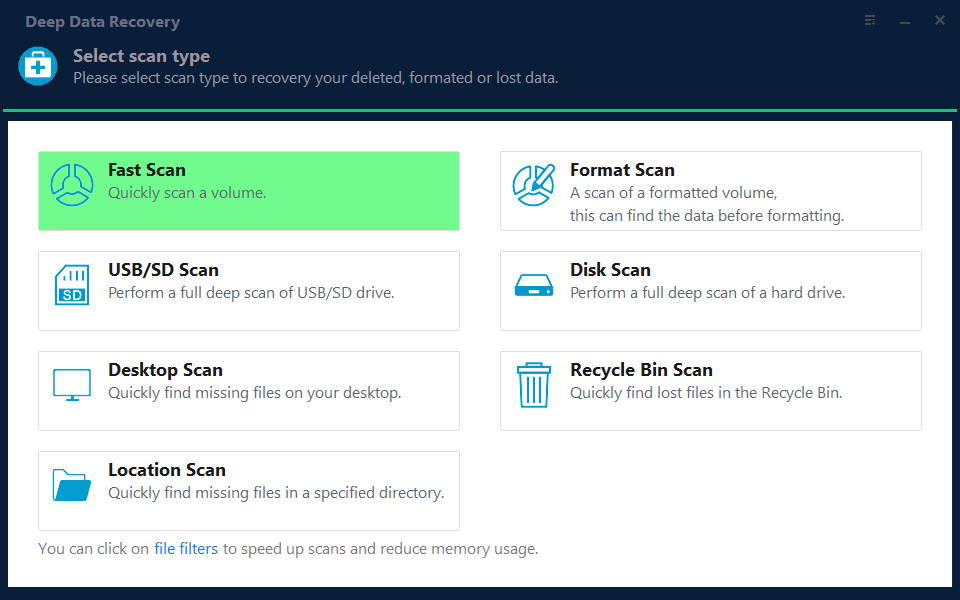
Note: You can choose different search modes based on where and why the data was lost.
Step 2. Scan the SSD
To recover lost data from a specific SSD, select the desired drive from the list, and then click the "Scan" button. This will initiate the scanning process to locate and retrieve the lost files.

Step 3. View the results
After the scanning process is complete, you can recover lost SSD data by using the filter and search options to locate the deleted files and other lost files in the "Deleted Files" and "Other Lost Files" folders.

Step 4. Recover SSD files
Select the desired data and click the "Recover" button to recover lost SSD files.
The data should be saved to another secure device after being restored.
Solution 2. Recover Data from Dead SSD on the Source Computer
To recover data from a dead SSD disk on the source computer, you can try using software that specializes in SSD data recovery. This software can scan the SSD for recoverable data, even if it's no longer recognized by the operating system.
If you don't want to unplug the dead SSD and connect it to another computer, you still have a choice. You can use an empty external hard drive or a second disk to save the restored data.
- If the dead SSD was used as a data disk on your computer, go back to step 2 and use the Qiling SSD data recovery software to recover data from the dead SSD.
- If the dead SSD was a system disk on your PC, to restore the data, you'll need Deep Data Recovery with Bootable Media for help.
To do so, you'll need to go through the steps below for a guide:
Step 1. Create a bootable disk
To prepare a USB for creating a bootable disk, first copy any important data on it to another device to avoid losing it. Then, you can use Deep Data Recovery WinPE Edition to create a bootable disk on the USB. This process will erase the existing data on the USB, so be sure to back up any important files beforehand.
Connect a USB drive to your PC, then launch Deep Data Recovery WinPE Edition. Select the USB drive and click "Create" to create a bootable disk from it.
Step 2. Boot from the bootable USB
Connect a bootable disk to the PC that won't boot, then change the boot sequence in the BIOS settings, typically by pressing F2 at startup to access the BIOS, and restart the computer.
To boot the PC from a source other than the hard drive, press F10 to save and exit the settings, allowing you to select booting from a removable device or CD/DVD drive.
Note: You can choose different search modes based on where and why the data was lost.
Step 3. Recover data from a hard drive that won't boot
When you boot from a USB, you can run Deep Data Recovery from the WinPE bootable disk, and select the drive you want to scan to find all your lost files.
Click "Scan" to start the scanning process.
After scanning your computer or laptop, you can preview all recoverable files, select the targeted files, and click the "Recover" button to restore your files. It's recommended to save the recovered data to another location to avoid data overwriting.
After completing the tutorial steps on this page, you've successfully restored all lost data on the SSD disk. You can now follow the link to repair a not working, failed, or dead SSD.
Solution 3. Use Data Recovery Services to Restore Lost Data
If data recovery software fails to retrieve data from a crashed SSD, there's still a chance to recover data by using Qiling's manual data recovery services.
After a FREE diagnosis, Qiling Data Recovery Experts can offer one-on-one manual recovery service, which includes manual data recovery, data backup, and data transfer. This service is designed to provide personalized support for users who need assistance with recovering their data. The experts will work closely with the user to understand their specific needs and provide tailored solutions to help them recover their lost data.
- To repair corrupted RAID structure, unbootable Windows OS, and damaged virtual disk files (.vmdk, .vhd, .vhdx, etc.), you can try the following steps: First, attempt to boot the system in safe mode or with a minimal set of drivers to isolate the issue. If that doesn't work, try running a System File Checker (SFC) scan to check and replace corrupted system files.
- Recover/repair lost partition and re-partitioned drive
- Unformat hard drive and repair raw drive (BitLocker encrypted drive)
- Fix disks that become GPT-protected partitions
Related Articles
- Fix Unknown USB Device - Device Descriptor Request Failed
- Fixed: WD External Hard Drive Not Recognized/Working with Light On
- Solved: What to Do with A Dying Hard Drive
- Memory Card Unlocker: How to Unlock SD Card Without Losing Data
- How to Recover Unsaved, Deleted, and Lost WordPad Documents in Windows 10/8/7
You may lose a WordPad document unsaved due to a program or computer failure, or accidentally delete it. However, you can recover lost WordPad documents by searching for temp files or using a data recovery software like Qiling. Just give it a try. - How to Recover Deleted Files from LaCie External Hard Drive
To recover files from an external hard drive on a Mac or Windows computer, follow these steps. First, connect the external hard drive to your computer and ensure it is recognized.
Products
Articles & Tutorials
- Data Recovery
- Data Backup
- File Recovery
- File Backup
- System Backup and Restore
- Disk and Partition Clone
- Technical articles
- Mobile articles
- Disk Master Help
- Windows Data Recovery Tutorials
- Windows Secure Delete Tutorials
- Windows Partition Management Tutorials
- Windows File Backup and Restore Tutorials
- Windows System Backup and Restore Tutorials
- Windows Disk Backup and Restore Tutorials
- Windows Clone Tutorials