CMD File Recovery - Recover Deleted Files Using Command Prompt
How to recover deleted files from USB using CMD?
You can try to recover the deleted files from your USB flash drive using the Command Prompt. To do this, follow these steps: Open Command Prompt as an administrator, navigate to the drive letter of your USB flash drive (e.g., D:), and use the "chkdsk" command to check for any errors. If the file is still recoverable, you may be able to find it using the "dir" command. If you're still having trouble, you can try using a third-party data recovery software like Deep Data Recovery or Qiling file recovery software. However, please note that the effectiveness of these methods depends on various factors, including the type of file system used on your USB drive and the timing of the deletion.
The Command Prompt, or CMD, is a built-in Windows tool that allows users to execute commands to perform advanced administrative functions and troubleshoot issues. It can be used to recover lost files, repair bad sectors on storage devices, and even convert file systems from RAW to NTFS. This page will focus on using the CMD to recover files.
How to Recover Files from USB Flash Drive Using Command Prompt
The attrib command is used to recover lost and hidden files from various storage devices, including USB flash drives, hard drives, SD cards, and external hard drives, by correcting mistaken settings or virus attacks.
- Tip
- This command prompt only allows you to recover files from a USB flash drive if they are hidden instead of deleted. If your files are permanently deleted, the CMD won't be helpful, and you need to use data recovery software as an alternative.
1. To open a Command Prompt window as an administrator, press the Windows key + R to open the Run dialog, type "cmd" in the text box, and then press Enter. This will open a Command Prompt window with administrator privileges.
2. To run a check disk on a Windows drive, type `chkdsk E: /f` in the Command Prompt, replacing `E` with the drive letter of the drive you want to check, and press Enter. This will scan the drive for errors and attempt to fix them. The `/f` option forces the check to be run even if the drive is in use.
3. Type: Y and hit Enter to continue.
4. To recover deleted files from a Windows device, first, ensure the device is safely disconnected from the internet and any other connected devices. Then, download and install a reliable file recovery software, such as Deep Data Recovery or Qiling file recovery software, on another device. Next, connect the device with the lost files to the device with the recovery software.
5. The command `attrib -h -r -s G:\*.* /s /d` is used to remove the hidden, read-only, and system attributes from all files and subfolders on the G drive. This command is useful when you need to recover files or data that were accidentally marked as hidden, read-only, or system files. To use this command, simply type it in the Command Prompt, replacing `G` with the drive letter of the device where you lost files or data, and then press Enter.
Manual execution of the command line is not recommended for non-professionals, as it can cause more harm than good. Instead, Qiling CleanGenius is a user-friendly tool that can perform tasks such as checking and fixing file system errors, enabling or disabling write protection, and updating the system with just one click.
Follow the simple steps below to show hidden files using this 1-click-fix software. The steps are straightforward and easy to follow, allowing you to quickly access and view hidden files with minimal effort required.
Step 1. DOWNLOAD Qiling CleanGenius for Free.
Step 2. Start Qiling CleanGenius, choose "Optimization" on the left panel. Next, click "File Showing" on the right panel.
Step 3. Select the hard drive and click "Execute".
Step 4. After the operation completes, click the here link to check the hidden files.
After the process, refresh your device and your lost files should appear on an SD card, USB drive, or hard drive. If the CMD fails to recover your lost file, you can try using Qiling Data Recover Wizard to recover deleted files from a USB flash drive or other storage devices.
How to Recover Lost/Deleted Files with a CMD Alternative
Deep Data Recovery is the best alternative to CMD for recovering lost files due to various reasons, allowing users to recover deleted files from various storage devices.
If you have lost data exceeding 2GB, you can upgrade to Qiling Data Recovery Pro to recover unlimited data. To recover deleted files from your USB flash drive, download and install the software on your Windows 10/8/7, then follow the steps.
Step 1. Select file types and click "Fast Scan" to start
Launch Deep Data Recovery. Select the file types you want to recover and click "Fast Scan" to proceed with the recovery process.
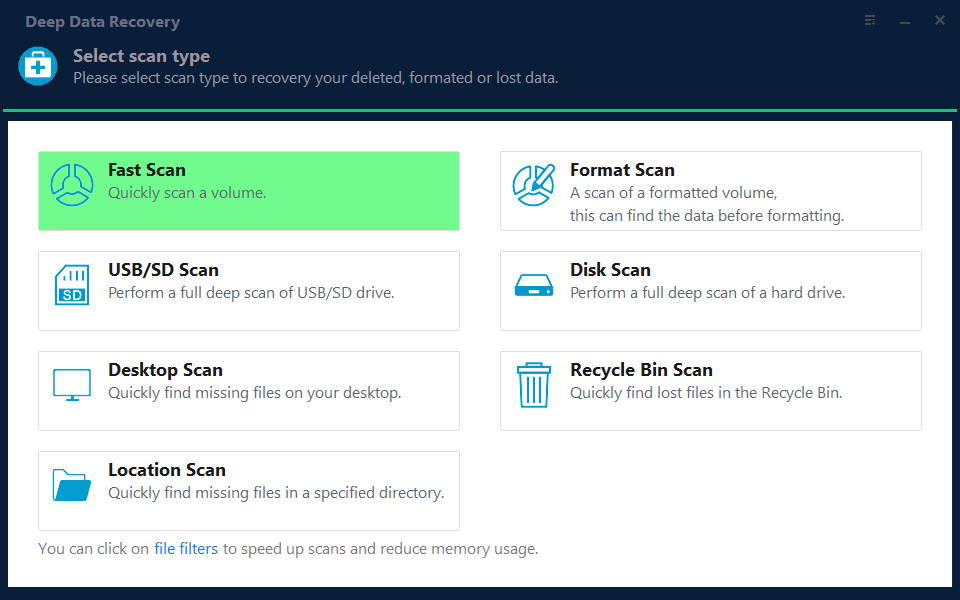
Note: You can choose different search modes based on where and why the data was lost.
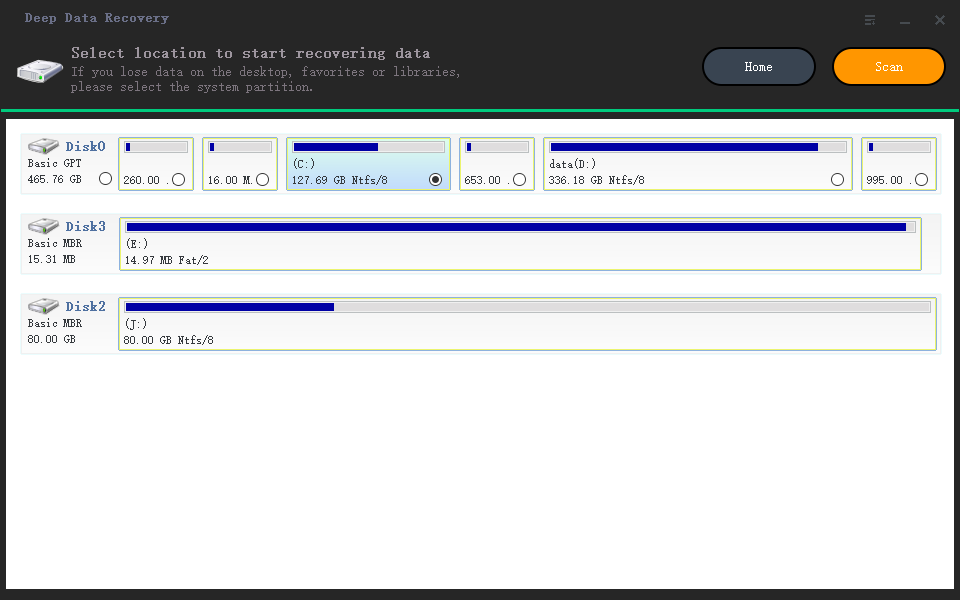
Step 2. Select a location and start scanning
To recover deleted files, hover over the partition/drive where the files were stored. Click the "Scan" button to initiate the recovery process and locate the lost files.
Step 3. Select the files you want to recover
After the scanning process is complete, select the deleted files you want to recover. You can filter the results by file type using the filter option. If you remember the name of the file you're looking for, you can also search for it using the "Search files or folders" box, which can be the quickest way to locate the desired file.
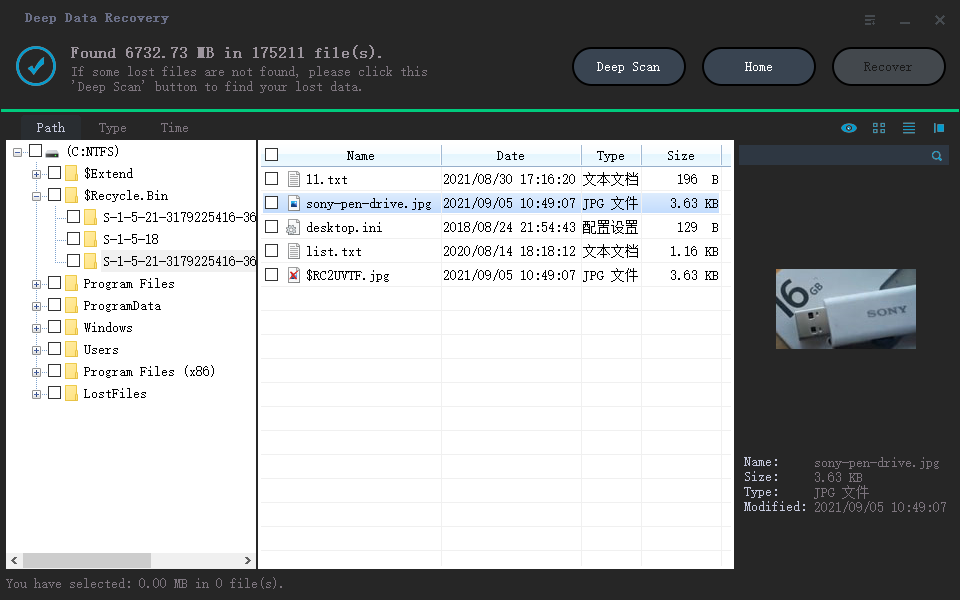
Step 4. Preview and recover deleted files
Preview the recoverable files, select the ones you want to restore, and click "Recover" to save them to a new storage location, replacing the lost data on the original disk.
Related Articles
- Top 11 Best Photo Repair Software for PC/Mac
- How to Recover Permanently Deleted Files in Linux Redhat/Ubuntu/Mint
- How to Remove Password from Excel with or Without Password
- Microsoft Word Has Encountered a Problem and Needs to Close
- You Want to Perform SWF File Recovery? Got it
If you've accidentally deleted SWF files from your hard drive, memory card, or SD card, you can recover them with Qiling data recovery software. To get back your lost .swf video files, follow these post. - Terraria Load Failed No Backup Found (Terraria Data Recovery)
If you're experiencing the “Terraria Load Failed No Backup Found” issue, you can recover lost data using Qiling data recovery software.
Products
Articles & Tutorials
- Data Recovery
- Data Backup
- File Recovery
- File Backup
- System Backup and Restore
- Disk and Partition Clone
- Technical articles
- Mobile articles
- Disk Master Help
- Windows Data Recovery Tutorials
- Windows Secure Delete Tutorials
- Windows Partition Management Tutorials
- Windows File Backup and Restore Tutorials
- Windows System Backup and Restore Tutorials
- Windows Disk Backup and Restore Tutorials
- Windows Clone Tutorials