How to Recover Files After Format
If you've formatted your disk due to a hard disk crash, corrupted files, power outage, or low performance, you may be facing the challenge of recovering your files. This article aims to help you navigate the process of restoring your files after a format.
Quick steps to recover files after format
- 1. Download and install the Qiling format files recovery tool on your computer.
- 2. Launch the software and select the hard drive to scan.
- 3. Check and select files to recover.
- 4. Choose Recover to get back selected files.
Can I Recover Files after Format
Formatting a storage device erases all old data, but doesn't necessarily mean it's gone forever. When you format a drive, the data remains until it's overwritten by new content. If you haven't added new files or folders, you may still be able to recover the old files after formatting.
The fastest way to recover data after a format is by using a third-party tool, such as Deep Data Recovery.
How to Recover Files After Format with Qiling Data Recovery Software
Deep Data Recovery is a professional disk recovery software that can recover all deleted files after formatting a hard drive, external hard drive, USB flash drive, SD card, or other Windows-compatible devices, offering a high success rate and excellent data recovery quality.
Download the file recovery software and follow the steps in the video to recover your files after formatting your computer.
If you've accidentally formatted a device such as an external hard drive, USB, or SD card, you can still recover your lost files. Simply connect the device to your computer and follow the steps outlined below to retrieve your data. Whether it's a personal computer, laptop, or mobile device, the process remains the same, making it easy to recover files after a format.
Note: To ensure a high data recovery chance, install Qiling data recovery software on a separate disk, rather than the formatted one.
Step 1. Launch Deep Data Recovery software, select file types, and click "Format Scan" to initiate the recovery process.
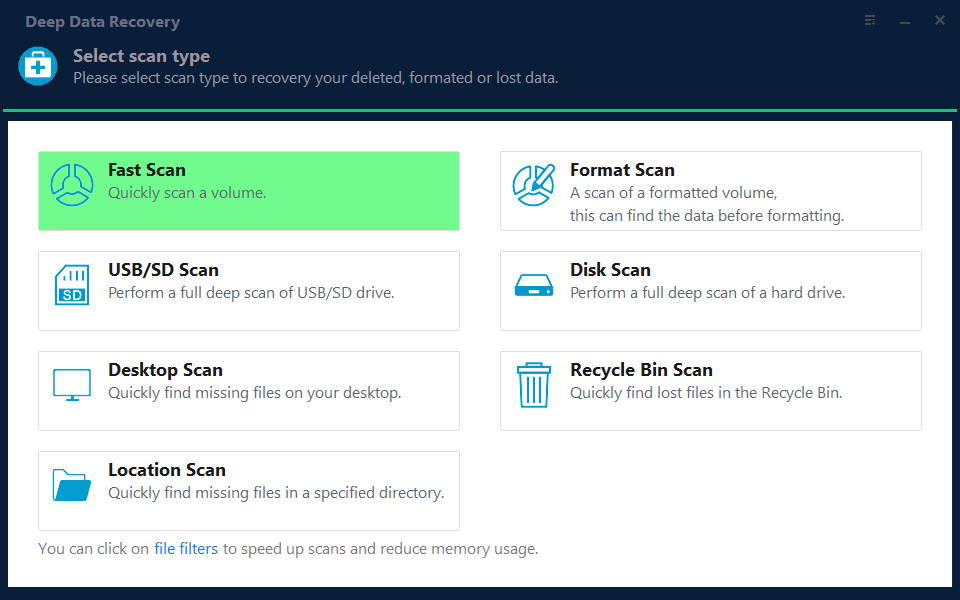
Note: You can choose different search modes based on where and why the data was lost.
Step 2. The first step to recover data from a formatted hard drive partition is to choose the partition that was accidentally formatted and click the "Scan" button. This will initiate the scanning process, allowing the software to search for any recoverable data on the partition.

Step 3. This software will scan the hard drive to find lost data and files. After scanning, you can filter specific file types to quickly find the files you need, or search for specific files or folders to select the data you want to recover.

Step 4. To recover files from a corrupted drive, first preview the scanned files. Then, select the ones you want to recover and click "Recover". Choose a new location to store the files and click "OK".
Deep Data Recovery is a powerful tool that can recover lost data, not just formatted data, but also data after reinstalling OS, retrieving content from lost partition, and recovering files after emptying the recycle bin. It's a top-notch data recovery software for Windows that's definitely worth trying.
Recover Files After Format with Data Recovery Service
If you need further help to recover data in a very complex situation, you can resort to Qiling 1 on 1 Remote Assistance to get premium technical support.
Consult with Qiling Data Recovery Experts for a one-on-one manual recovery service. After a free diagnosis, we can offer the following services.
- The command line tool `chkdsk` can be used to repair corrupted RAID structure, unbootable Windows OS and corrupted virtual disk file (.vmdk, .vhd, .vhdx, etc.). It can be run from a Windows installation media or a Linux live USB.
- Recover/repair lost partition and re-partitioned drive.
- Unformat hard drive and repair raw drive(Bitlocker encrypted drive)
- Fix disks that become GPT protected partitions
Why We Need Format Recovery Software
When converting the FAT File System to NTFS, users must format their hard disk, which deletes all existing content, including important files, making format recovery the only solution to access them again.
Drive formatting can be of two types:
- Low-level formatting: It marks the disk's surface with sector markers indicating the start of a recording block, which effectively resets the disk to its factory condition, erasing all previous data.
- High-level formatting:Quick formatting is also referred to as quick formatting, which typically occurs during operating system installation or when adding a new disk.
If you forget to back up your hard drive data, reliable data recovery software can help you recover your files. However, once a formatted partition is overwritten with new content, the chance to restore your important files is lost forever. In such cases, a specialized data recovery service like Deep Data Recovery can safely and efficiently recover lost files after format.
Things about secure erase data on the hard drive
1. Make a backup plan before formatting.
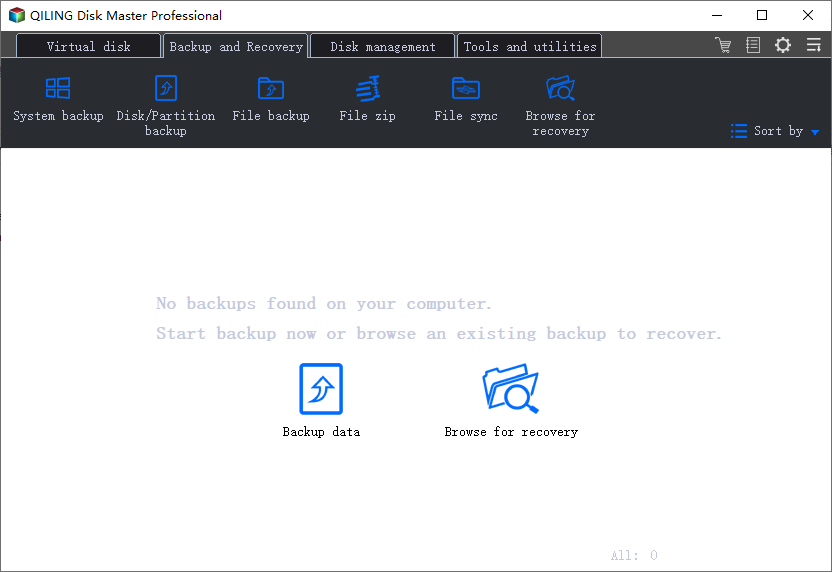
If you're about to format your device, it's a good idea to save your drivers first. You can back up your files by date and time to ensure their security. Fortunately, there's free backup software available for download and installation, which can be a helpful helper in case of data recovery.
2. Utilize user-trusted software in formatting operation.
- Qiling Partition Master.
- File Explorer.
- Windows Disk Management.
Related Articles
- How Long Will An SSD Hold Data Without Power (SSD Lifespan)
- Recover Deleted DCIM Folder from Android
- Free CF Card Recovery Software to Recover Data in Windows/Mac
- [Self-Check-and-Repair]: How to Repair External Hard Disk Not Detected in Windows 10
- How to Fix USB Drive Not Formatted Error [2026]
When you see a pop-up tell you the USB drive is not formatted. It is an error which you can fix. this articale tell you how to fix it. - Fix Win 10 PC Won't Shut Down – ShutDown Computer via CMD
If Windows 10 PC won't shut down even after clicking the shutdown feature from the Menu bar, then this article will help you to learn about the fix and the reason why it is occurring in the first place.
Products
Articles & Tutorials
- Data Recovery
- Data Backup
- File Recovery
- File Backup
- System Backup and Restore
- Disk and Partition Clone
- Technical articles
- Mobile articles
- Disk Master Help
- Windows Data Recovery Tutorials
- Windows Secure Delete Tutorials
- Windows Partition Management Tutorials
- Windows File Backup and Restore Tutorials
- Windows System Backup and Restore Tutorials
- Windows Disk Backup and Restore Tutorials
- Windows Clone Tutorials